What US Coins Are Silver? A Year-by-Year Guide
Here is the short answer: any US dime, quarter, half dollar, or dollar dated 1964 or earlier is 90% silver. A few special issues add to that list, and a couple of exceptions trip people up. This guide walks through exactly which US coins contain silver, year by year, and how to check in seconds.
Key takeaways
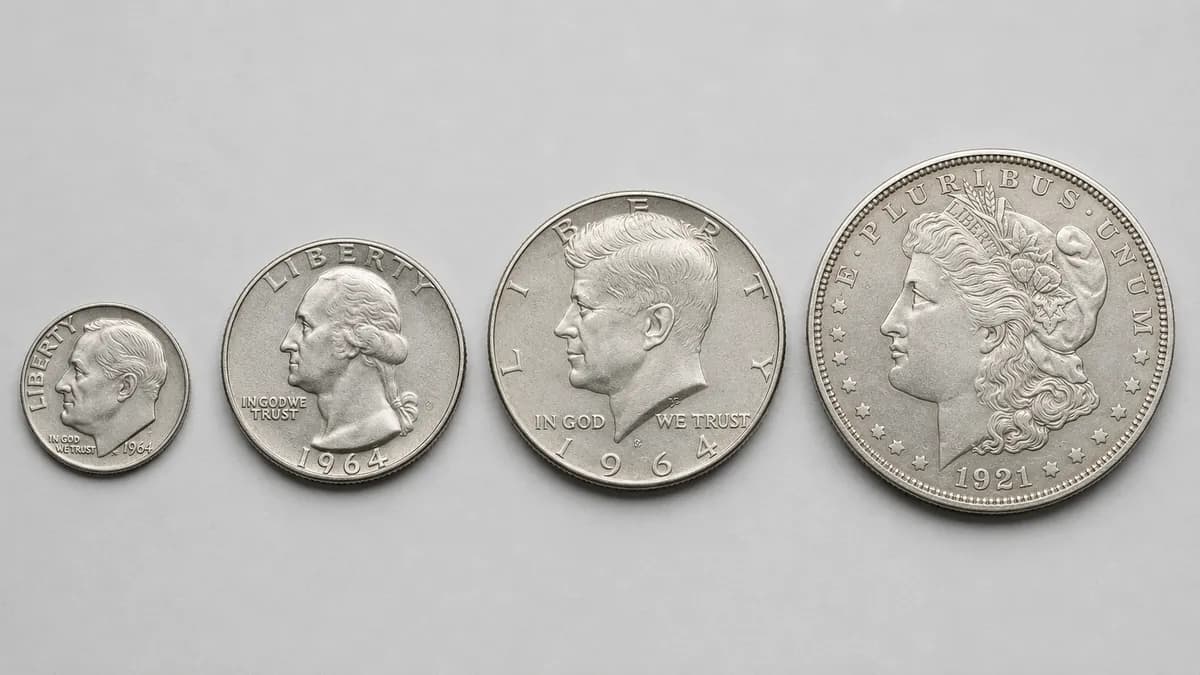
- The simple rule: US dimes, quarters, half dollars, and dollars dated 1964 or earlier are 90% silver.
- Kennedy half dollars dated 1965-1970 are 40% silver, and Jefferson war nickels from 1942-1945 are 35% silver.
- Pennies, regular nickels, and dimes or quarters dated 1965 and later contain no silver.
- American Silver Eagles, struck since 1986, are 99.9% silver bullion, separate from everyday circulating coins.
What is the quick rule for silver US coins?
If a US dime, quarter, half dollar, or silver dollar is dated 1964 or earlier, it is 90% silver. In 1965 the Mint removed silver from dimes and quarters and switched them to a copper-nickel clad composition, so 1965-and-later dimes and quarters have no silver at all.
That single date — 1964 — answers the question for most coins people find. The rest of this guide covers the issues that sit outside the simple rule.
The 90% silver coins (1964 and earlier)
These are the heart of US silver coinage, each 90% silver and 10% copper: Roosevelt and Mercury dimes, Washington and Standing Liberty quarters, Walking Liberty, Franklin, and 1964 Kennedy half dollars, and Morgan and Peace silver dollars. Barber dimes, quarters, and halves are 90% silver too.
Their silver drives the melt value; a $1 face value of these coins holds about 0.715 troy ounces of silver. Scarce dates and high grades are worth more than melt — see what your coins are worth.
The 40% silver Kennedy halves (1965-1970)
The Kennedy half dollar is the main exception to the 1964 rule. From 1965 through 1970, Kennedy halves were struck in 40% silver rather than dropped to clad like dimes and quarters. They contain about 0.1479 troy ounces of silver each.
Collector versions of the 1976 Bicentennial quarter, half, and dollar sold by the San Francisco mint were also struck in 40% silver. The Bicentennial coins that actually circulated are clad.
Silver war nickels (1942-1945)
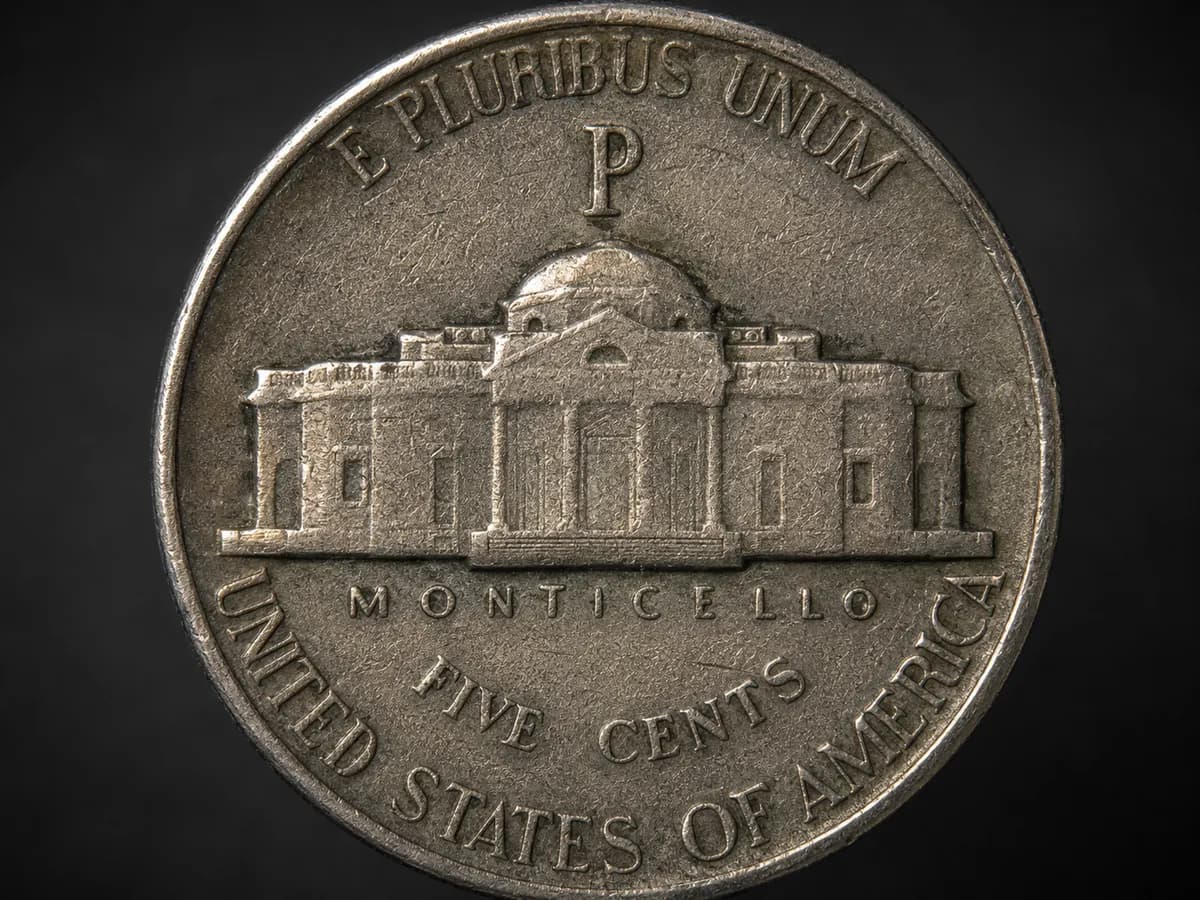
Five-cent nickels normally contain no silver — but during World War II the Mint conserved nickel for the war effort. From mid-1942 through 1945, war nickels were struck in 35% silver, about 0.0563 troy ounces each.
You can spot them by a large mint mark (P, D, or S) above Monticello on the reverse — the only Jefferson nickels with a P for Philadelphia. That oversized mint mark is the tell that a nickel is silver.
What US coins are not silver?
Plenty of coins look silvery but contain none. Pennies are copper or zinc; regular nickels, outside 1942-1945, are copper-nickel; dimes and quarters dated 1965 or later are clad. Eisenhower dollars struck for circulation (1971-1978) are clad too, though San Francisco sold 40% silver collector versions.
Modern small dollars — Susan B. Anthony, Sacagawea, and Presidential dollars — are not silver. See are dollar coins worth anything for how those are valued.
How can I tell if a coin is silver in seconds?
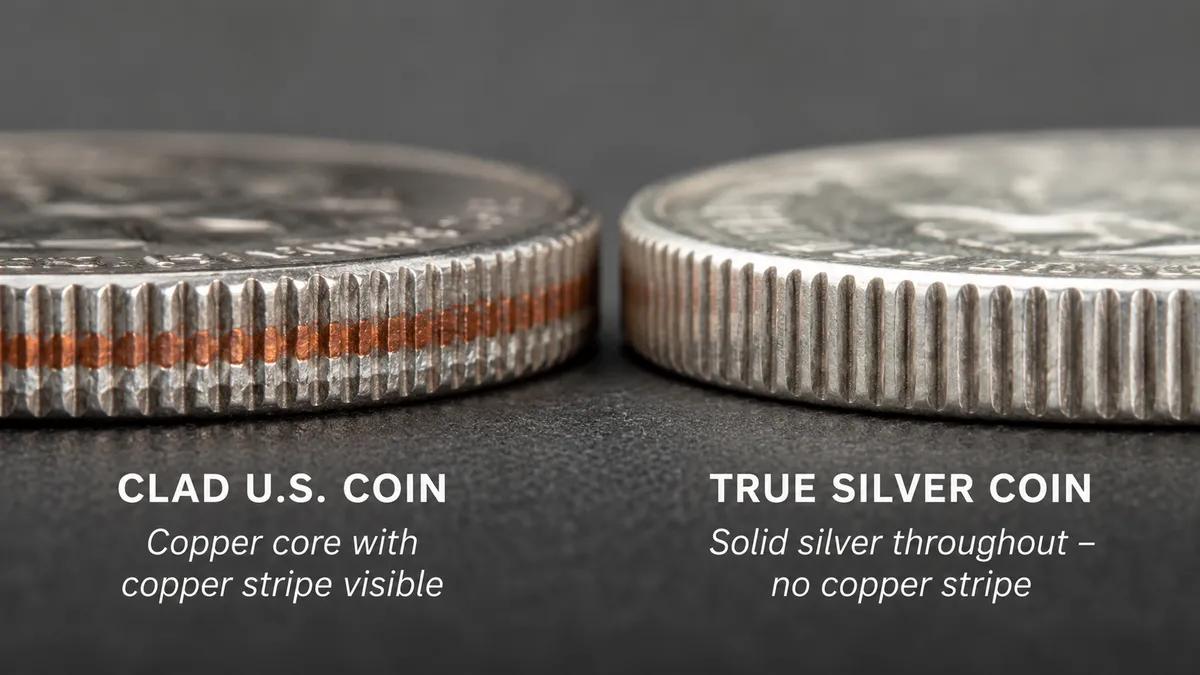
Two fast checks. First, read the date against the rules above. Second, look at the edge: a 90% silver dime, quarter, or half shows a solid silver edge, while a clad coin shows a copper-colored stripe in the middle. Silver coins also have a longer, higher-pitched ring when tapped.
When in doubt, weigh it or ask a coin shop — silver coins weigh slightly more than their clad replacements.
What about modern silver coins like Eagles?
Beyond circulating coinage, the US Mint makes silver for collectors and investors. The American Silver Eagle, struck since 1986, is one troy ounce of 99.9% silver. Annual silver proof sets also contain silver versions of the dime, quarter, and half.
These are bought for their metal or as collectibles, not found in pocket change. Use the silver stack calculator to value a group of them at once.
Frequently asked questions
What year did US coins stop being silver?+
1964 was the last year for 90% silver dimes and quarters; from 1965 they became copper-nickel clad. Kennedy half dollars kept 40% silver through 1970 before going fully clad.
Are any nickels silver?+
Only the war nickels struck from 1942 to 1945, which are 35% silver. You can spot them by the large mint mark above Monticello on the reverse. All other nickels are copper-nickel.
Are Kennedy half dollars silver?+
1964 Kennedy halves are 90% silver, and 1965-1970 halves are 40% silver. Kennedy halves dated 1971 and later struck for circulation are clad and contain no silver.
How do I check if a coin is silver without weighing it?+
Read the date, then look at the edge: silver coins show a solid silver edge, while clad coins show a copper stripe in the middle. Silver coins also ring with a longer, higher tone.