
Silver Rounds vs. Coins vs. Bars: Which Should You Buy?
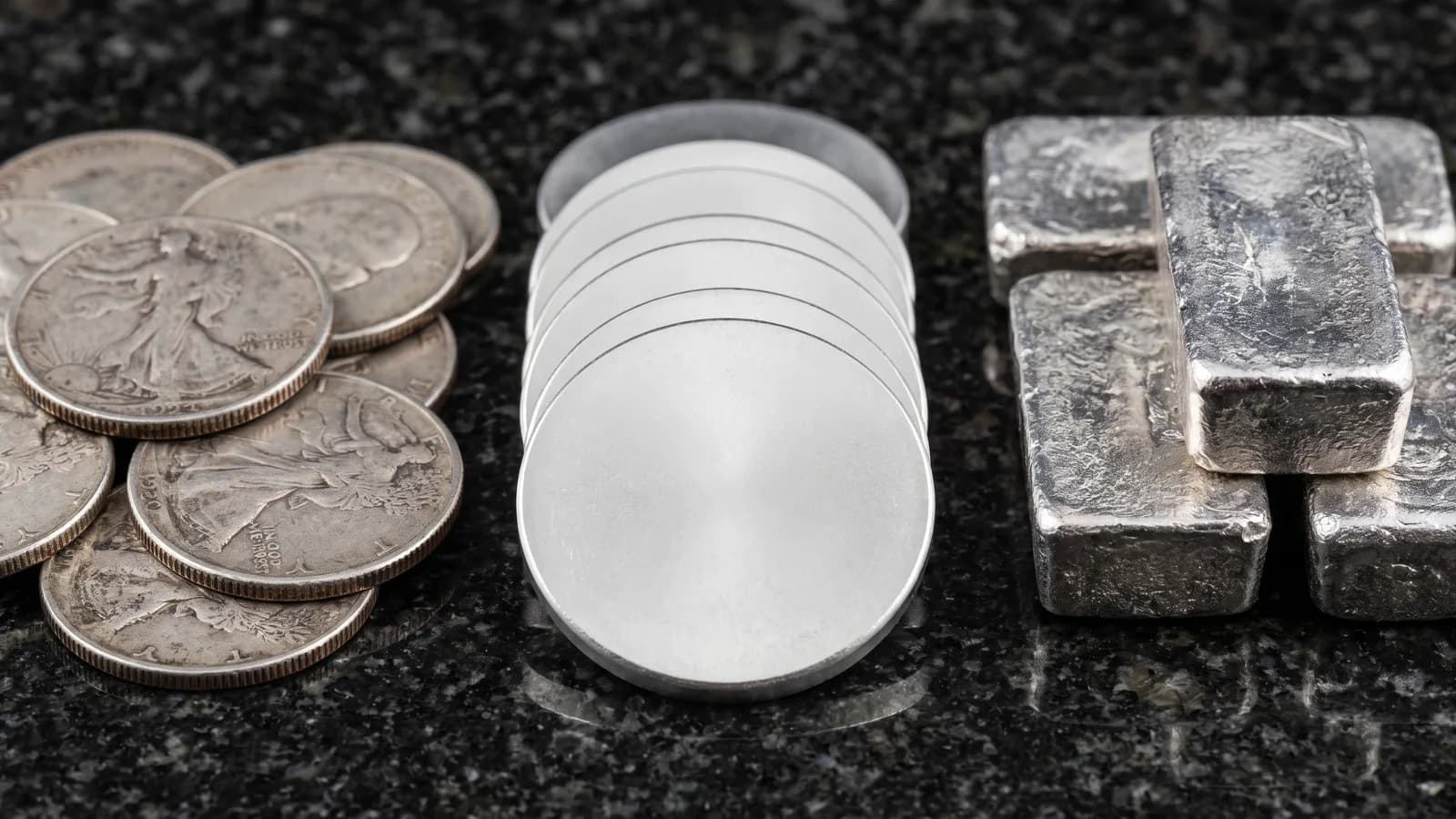
When you decide to buy silver, the first question is: what form? American Silver Eagles, generic rounds, and silver bars all contain the same precious metal, but they differ in premium, liquidity, portability, and recognition. Understanding these trade-offs helps you buy the form that fits your actual goals — whether that is maximum silver per dollar, ease of resale, or collector appeal.
Key takeaways
- Silver coins (American Silver Eagle, Canadian Maple Leaf) carry government guarantees of weight and purity, commanding the highest premiums but offering the best liquidity.
- Silver rounds are privately minted, contain the same .999 fine silver, and carry lower premiums — a better cost-per-ounce for pure silver accumulation.
- Silver bars offer the lowest premiums per ounce, especially at 10 oz and 100 oz sizes, but can be harder to sell in small portions.
- The "right" choice depends on your goal: liquidity and recognition (coins), cost efficiency (rounds or bars), or large-quantity accumulation (bars).
- Never buy silver from unknown private sellers without professional verification — counterfeits exist for all three forms.
Silver Coins: Government-Backed, Maximum Liquidity
Silver coins — American Silver Eagles, Canadian Maple Leafs, Austrian Philharmonics, British Britannias — are struck by sovereign mints and carry the issuing government's guarantee of weight and purity. They are universally recognized: any precious metals dealer worldwide will buy a Silver Eagle without hesitation.
The trade-off is premium. Silver Eagles typically carry $3–$6 per ounce over spot — the highest of any silver form. Part of that premium reflects the design, the government backing, and the coin's legal tender status ($1 face value for a Silver Eagle, meaningless at current prices but legally definitive). If you plan to sell internationally or to the widest possible pool of buyers, coins are worth the premium.
Silver Rounds: Cost-Efficient, Still Liquid
Rounds are privately minted silver discs that look like coins but are not legal tender. They come from dozens of private mints in the U.S. and internationally (Sunshine Minting, Elemetal, APMEX-branded, Northwest Territorial, and many others). Most are .999 fine silver in 1 troy oz, though other sizes exist.
Premiums for generic rounds are $1–$2.50 over spot — significantly lower than Silver Eagles. A knowledgeable buyer will accept them readily. The downside: less name recognition with non-specialist buyers, and some designs are obscure enough that buyers discount them further. Buy rounds from established mints (Sunshine, APMEX, Provident, SilverTowne) rather than unknown brands for maximum resale ease.
Silver Bars: Best Cost-Per-Ounce
Silver bars offer the lowest premiums per ounce, especially at larger sizes (10 oz, 100 oz). A 100 oz silver bar might carry a premium of $0.50–$1 per ounce — compared to $3–$6 for Silver Eagles. For buyers focused purely on accumulating silver by weight, bars are the most efficient vehicle.
The main trade-offs: bars are less divisible (harder to sell 3 oz from a 10 oz bar without cutting or trading the whole bar), heavier to store and ship, and require more authentication scrutiny (tungsten-filled bars are a known fraud risk). Reputable brands — Johnson Matthey, Engelhard (vintage), PAMP Suisse, NTR Metals, Republic Metals — carry better secondary market recognition.
Which Is Best for Resale?
In decreasing order of ease of resale: Silver Eagles (any dealer, any time, no questions), Canadian Maple Leafs and other major government coins (nearly as good), generic 1 oz rounds from recognized mints (most dealers, small discount possible), branded bars (10 oz, 100 oz) from major refiners (dealer market, slightly more scrutiny), obscure rounds and bars (harder to sell, potential discount).
If ease of resale matters — especially if you might need to sell quickly in a pinch — Silver Eagles are worth their premium. If you are accumulating long-term and plan to sell to a bullion dealer when the time comes, rounds and bars from recognized sources are perfectly good alternatives.
Mixing Forms: A Practical Approach
Many silver buyers use a mix: Silver Eagles for a liquid, universally recognized core; rounds for efficient accumulation when premiums are low; and large bars for long-term, warehouse-type storage. There is no rule requiring one form — the optimal mix depends on your budget, storage situation, and likely exit strategy.
Whatever you buy, store it properly (see our how to store coins guide for storage basics that apply to rounds and bars too) and buy only from reputable dealers. Find trusted local bullion dealers and coin shops on TheCoinHQ.
Frequently asked questions
Are silver rounds as valuable as American Silver Eagles?+
By silver content, yes — both contain 1 troy oz of .999 fine silver. Silver Eagles command a higher premium over spot due to government backing and recognition. Generic rounds sell for a lower premium but contain the same metal.
What is a "junk silver" coin and how does it compare?+
Junk silver refers to pre-1965 U.S. 90% silver coins (dimes, quarters, half dollars) bought near melt value. Unlike modern coins and rounds (.999 fine), junk silver is 90% pure and available in small face-value denominations — useful for small transactions but less pure than modern bullion.
Can I sell silver bars to any coin dealer?+
Most coin dealers who handle bullion will buy silver bars from major refiners (PAMP Suisse, Engelhard, Johnson Matthey, etc.). Unknown or obscure bar brands may be declined or purchased at a discount due to authentication uncertainty. Stick to recognized refiner brands.
Are 100 oz silver bars easy to sell?+
Yes, but the market is narrower than for 1 oz products. Large bullion dealers, refiners, and industrial buyers will purchase 100 oz bars. For a private individual, a local coin dealer may pass — go to a dedicated bullion dealer for 100 oz bars.
How do I store silver rounds and bars to prevent tarnishing?+
Store in airtight capsules or coin flips (PVC-free), add anti-tarnish strips to sealed bags, and keep in a cool, dry environment. A fireproof safe is ideal. Avoid rubber bands (sulfur causes toning) and humid basements.