
Mercury Dime Value: Key Dates and Full Bands Explained
Mercury dime value starts with silver — every Mercury dime is 90% silver, so even a common one is worth several times its face value as metal. From there, a few key dates and the prized 'Full Bands' designation can push certain coins into the hundreds or thousands. This guide covers what the series is, the key dates to look for, what Full Bands means, and how condition decides the final number.
Key takeaways
- Mercury dimes (1916–1945) are 90% silver, so even common dates carry a silver-value floor well above face.
- The 1916-D is the key date, with the lowest mintage of the series at 264,000 — worth hundreds even worn and far more in high grade.
- Other scarce issues include the 1921, 1921-D, and the 1942/1 and 1942/1-D overdates.
- 'Full Bands' (FB/FSB) describes fully separated horizontal bands on the reverse fasces and can multiply a coin's value at the same grade.
- Check the date, mint mark, and band detail, and never clean the coin before getting an opinion.
How much is a Mercury dime worth?
Every Mercury dime is worth its silver content at minimum — about 0.072 troy ounces — and more if it's a scarce date, a high grade, or has Full Bands. A common worn Mercury dime trades near its melt value; key dates and pristine coins are worth far more.
So value comes from three layers: the silver floor (every coin), rarity (date and mint mark), and condition including Full Bands. This guide takes them in turn; for the broader method see what your coins are worth.
What is a Mercury dime?
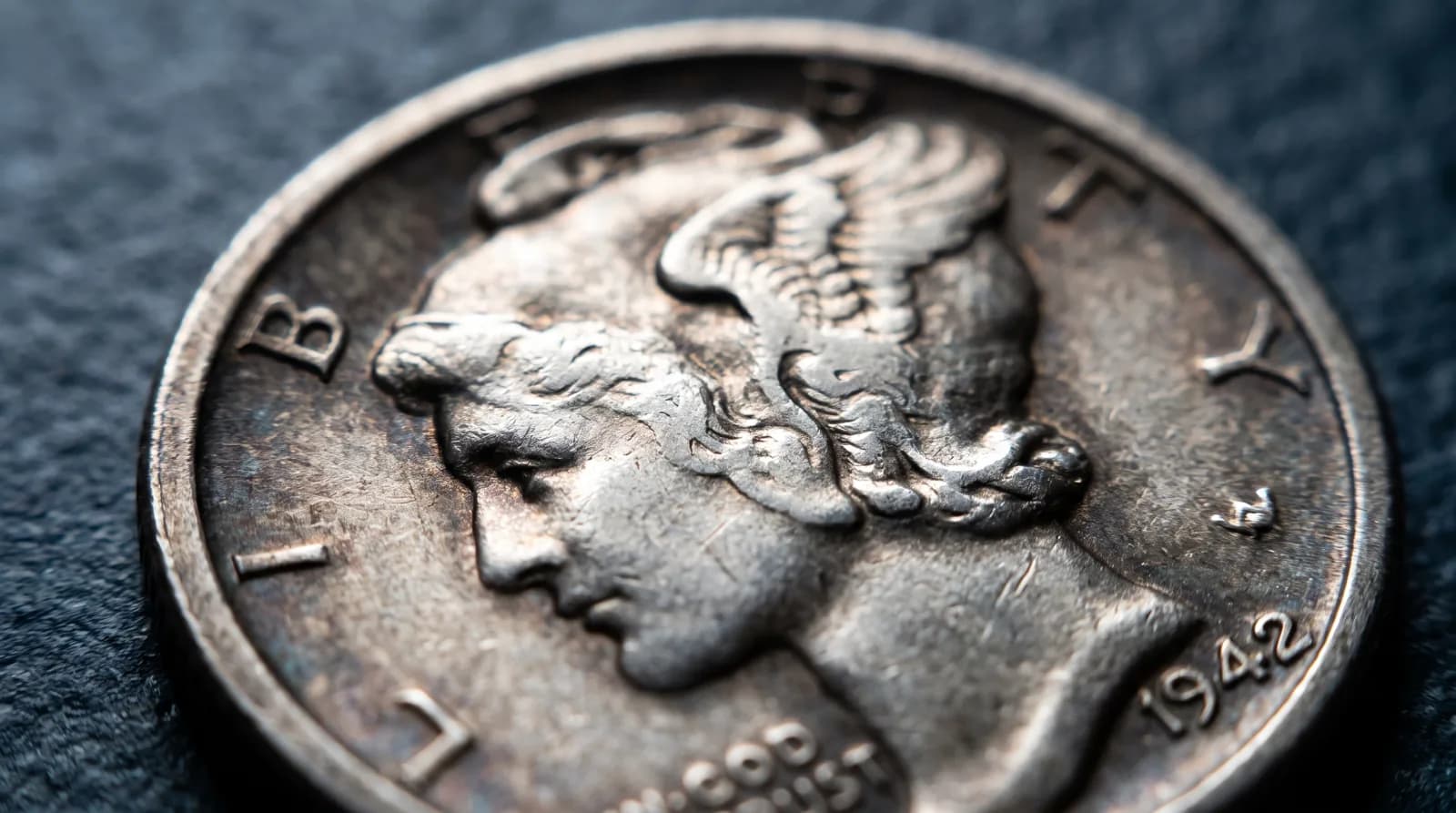
The Mercury dime — properly the 'Winged Liberty Head' dime — is a U.S. ten-cent coin struck from 1916 to 1945, designed by Adolph A. Weinman, who also created the Walking Liberty half dollar. The winged cap led people to mistake Liberty for the Roman god Mercury, and the nickname stuck.
Each coin is 90% silver and 10% copper, the standard for U.S. dimes before 1965 (see which U.S. coins are silver). That silver content gives every Mercury dime a metal-value floor.
What are the Mercury dime key dates?
A handful of dates carry the big premiums, led by the famous 1916-D. The table lists the key and semi-key issues with their verified mintages.
| Date | Mintage / note | Approx. value range |
|---|---|---|
| 1916-D | 264,000 — series key | Hundreds to many thousands |
| 1921 | 1.23 million — semi-key | Tens to thousands |
| 1921-D | 1.08 million — semi-key | Tens to thousands |
| 1942/1 overdate | '2' punched over '1' | Hundreds to thousands |
| 1942/1-D overdate | Overdate, Denver | Hundreds to thousands |
Why is the 1916-D so valuable?
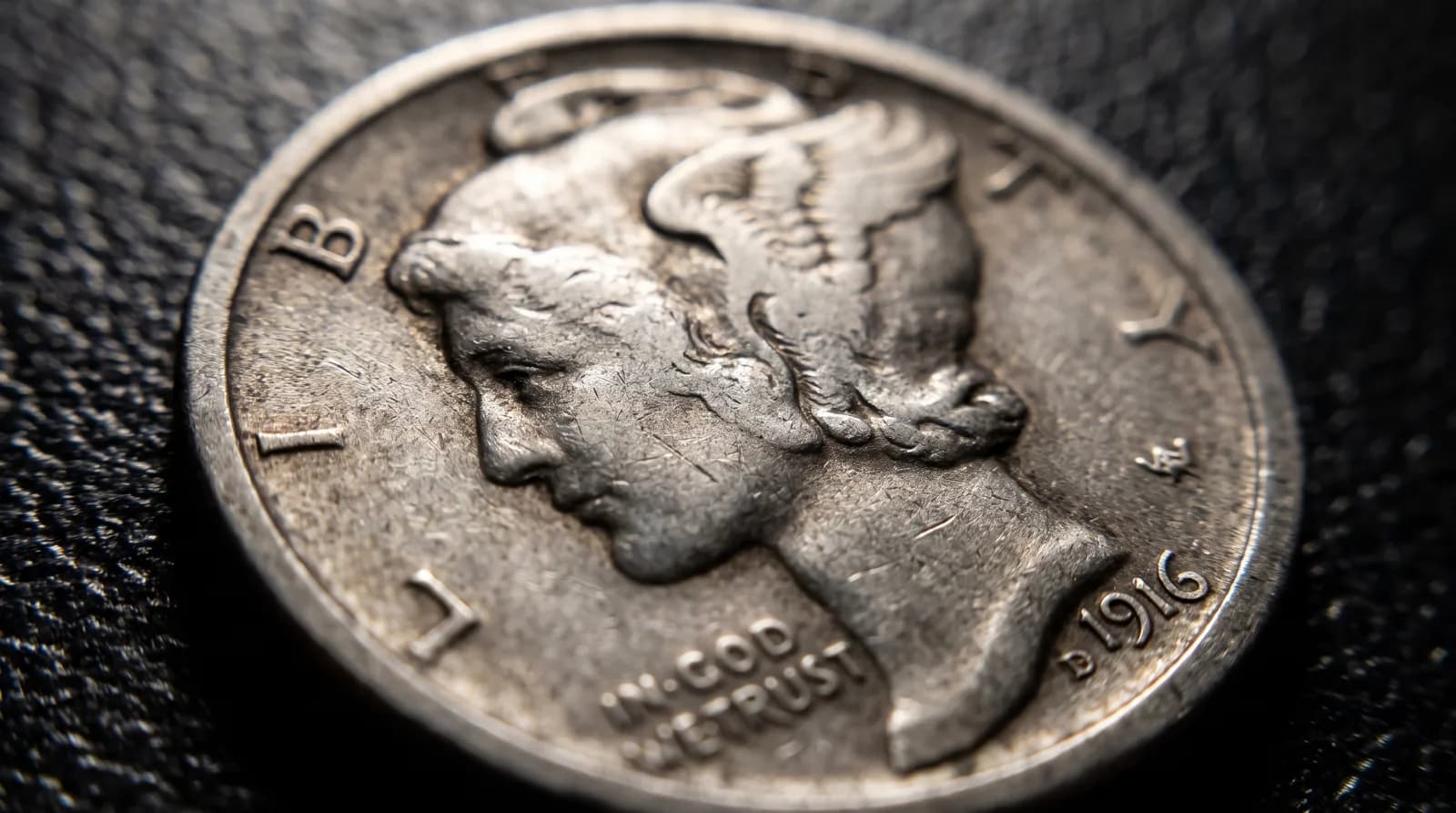
The 1916-D had the lowest mintage of the entire series — just 264,000 coins — because the Denver Mint shifted to striking quarters that year. That scarcity makes it the undisputed key date, worth hundreds of dollars even in worn condition and far more in high grade.
Because it's so valuable, the 1916-D is also frequently faked, often by adding a 'D' mint mark to a Philadelphia 1916 dime. Always have a 1916-D authenticated by PCGS or NGC before paying a premium; see how to spot fake coins.
What does 'Full Bands' mean?
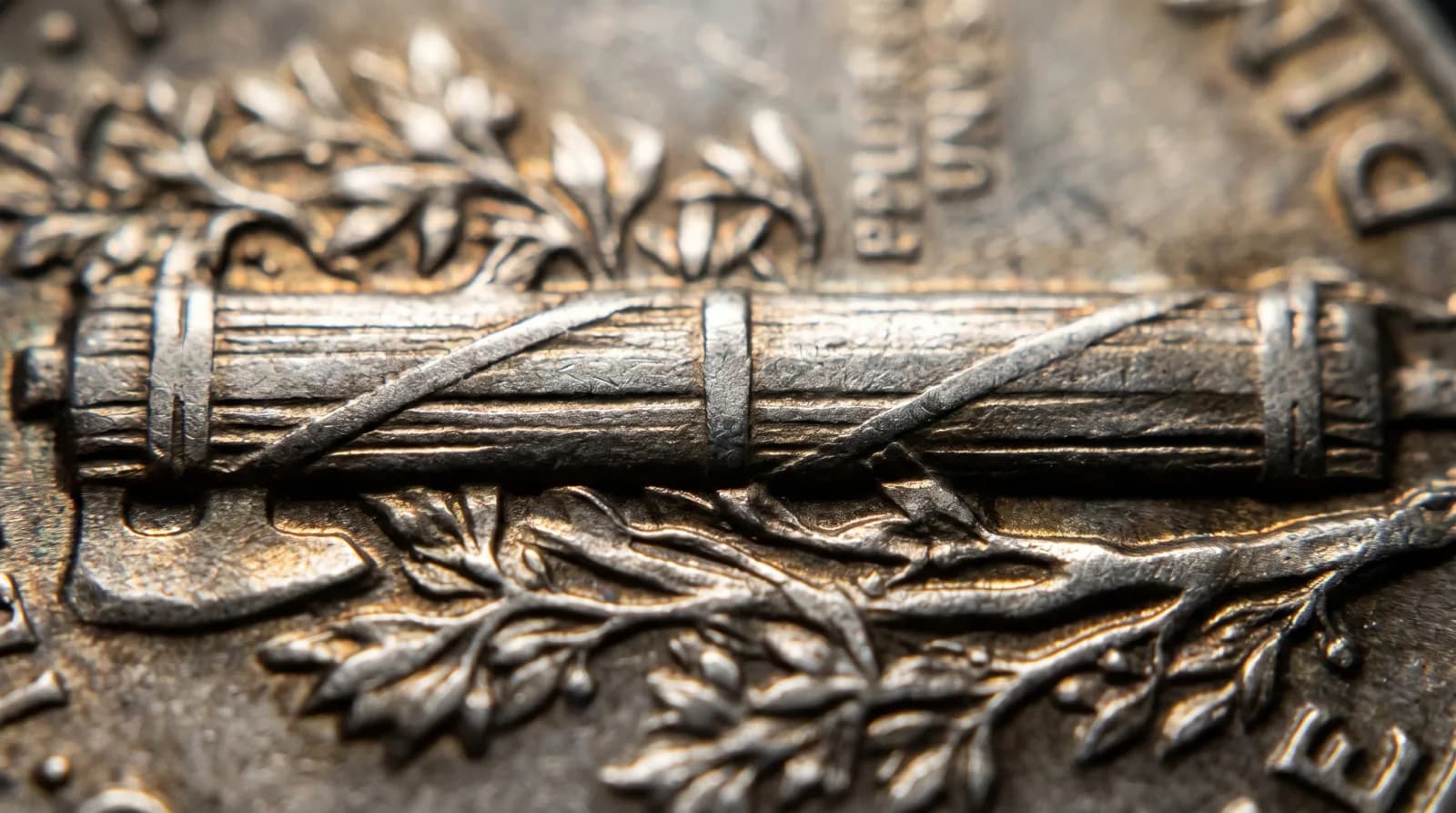
Full Bands (FB), sometimes Full Split Bands, refers to the two horizontal bands across the center of the fasces on the reverse being fully separated, with a clear gap between them. It signals a sharp, complete strike.
On weak strikes or worn coins the bands merge into one. Because fully struck coins are scarcer, the Full Bands designation can multiply a coin's value at the same numerical grade — sometimes several times over, especially on key dates.
How does condition affect value?
Condition is decisive. A worn common Mercury dime is essentially a silver coin; the same date uncirculated, with bright luster and Full Bands, can be worth many times more. Key dates climb steeply with grade.
Grade is the coin's condition on the 70-point scale (see coin grading explained). For valuable examples, certification settles both grade and the Full Bands question that buyers care about.
How do I identify and sell mine?
Check the date and the mint mark — on the reverse, to the left of the fasces — then look at the central bands for separation. Set aside the 1916-D, the 1921 and 1921-D, any overdate, and anything sharp and uncirculated.
Don't clean them, and get more than one offer on anything promising at a coin shop or rare coin dealer. Common dates sell easily for their silver to almost any gold and silver buyer.
Frequently asked questions
How much is a Mercury dime worth?+
At least its silver value — about 0.072 ounces of silver. Common dates trade near melt; the 1916-D key date is worth hundreds even worn, and high grades or Full Bands examples are worth much more.
What is the rarest Mercury dime?+
The 1916-D, with the lowest mintage of the series at 264,000. The 1921, 1921-D, and the 1942/1 overdates are the other notable scarcities.
What does 'Full Bands' mean on a Mercury dime?+
It means the two horizontal bands on the reverse fasces are fully separated, indicating a sharp strike. Full Bands coins are scarcer and can be worth several times more at the same grade.
How can I tell if my 1916-D is genuine?+
Have it authenticated by PCGS or NGC. The 1916-D is frequently faked by adding a 'D' to a 1916 Philadelphia dime, so professional verification is essential before paying a premium.