
How to Build a Coin Collection on a Budget
You can build a genuinely satisfying coin collection on a small budget — the hobby rewards focus and knowledge far more than money. Plenty of respected collections were assembled a few dollars at a time. This guide covers how to choose an affordable focus, where to find cheap coins without getting burned, which series cost the least to start, and how to avoid the mistakes that quietly drain a small budget.
Key takeaways
- A clear, affordable focus — one inexpensive series or a circulated type set — lets a small budget go much further than random buying.
- Pocket change, circulated coins, and bulk lots are the cheapest honest ways to start, and many coins cost little more than face value.
- Buying from established coin shops and coin shows usually beats TV and late-night online offers, which carry steep markups.
- Junk silver gives budget collectors a metal-value floor, so the coins are unlikely to fall below their silver content.
- The fastest way to waste a small budget is cleaning coins, overpaying for common 'rare' coins, and impulse buying — learn first, buy steadily.
Can you build a good coin collection on a budget?
Yes. A focused collection of affordable coins, bought patiently, can be more rewarding than an expensive pile bought carelessly. Knowledge and direction matter more than the size of your wallet.
The key is to spend on a clear goal — completing a set, or assembling one example of each design — rather than buying random coins because they are cheap.
How do you choose an affordable focus?
Pick a single inexpensive series or a circulated type set so your budget has a clear job to do. Filling the dates of one common series gives you a satisfying goal that costs little per coin.
Circulated coins — coins that show honest wear — cost a fraction of mint-state examples, so a circulated date set is the classic budget path. Our coin collecting for beginners guide walks through choosing a focus in more detail.
Where can you find coins cheaply to start?
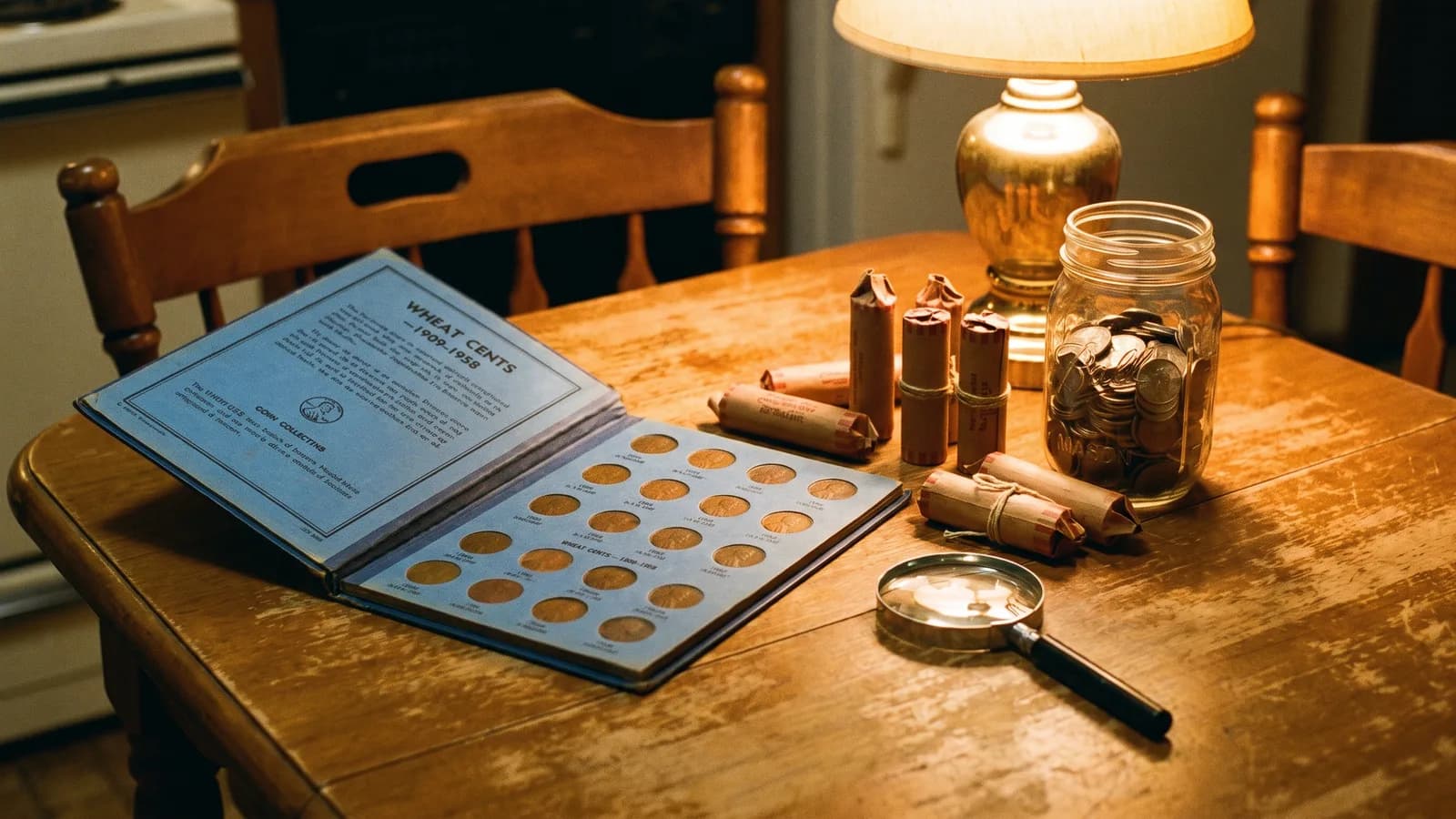
Start with pocket change and inexpensive circulated coins. Searching change, buying a starter album, or picking up a bulk lot of common coins costs almost nothing and teaches you to spot dates and mint marks.
Mint mark — the small letter showing which mint struck a coin — and date together define most sets, and learning to read them is free practice. Many wheat cents, nickels, and circulated dimes sell for a few cents to a dollar.
What are the most affordable series to collect?
Several classic U.S. series are cheap to start because so many were made and survive today. The table below lists popular budget-friendly options and what to watch for.
Beware the key dates within these sets — a few coins, like the 1909-S VDB Lincoln cent, are valuable and priced accordingly. Our wheat penny value and buffalo nickel value guides cover which dates are worth more.
| Series | Why it's budget-friendly | Watch for |
|---|---|---|
| Lincoln wheat cents (1909–1958) | Enormous supply; most cost a few cents | Key dates like 1909-S VDB cost much more |
| Jefferson nickels | Modern, mostly face value to a small premium | Wartime silver nickels carry a metal premium |
| Roosevelt dimes (circulated) | Common dates are very affordable | Pre-1965 dimes are 90% silver |
| Buffalo nickels (circulated) | Classic design, many affordable dates | Dateless coins are cheapest but incomplete |
| State quarters | Found in change — free to start | Great for kids and new collectors |
Where should you buy without overpaying?
Buy from established local coin shops and coin shows, where you can compare prices and ask questions. These sources are usually far better value than television offers or late-night online ads, which often carry large markups.
When you do spend more on a single coin, the buy the best you can afford rule still applies — one solid coin beats several weak ones, even on a tight budget.
How does junk silver fit a budget collection?
Junk silver — common pre-1965 U.S. coins that are 90% silver — gives a budget collector a built-in metal-value floor. Even if a coin has no collector premium, it is unlikely to fall below its silver content.
That makes junk silver a low-risk way to own recognizable silver while you learn, and you can track its melt value with our precious metals value calculator.
What mistakes waste a small budget?
Three habits drain a budget fastest: cleaning coins, which lowers their value; overpaying for common coins pitched as 'rare'; and impulse buying before you have learned the basics.
Slow down and learn first. The old advice — 'buy the book before the coin' — is doubly true on a budget, and free resources from the American Numismatic Association and the U.S. Mint cost nothing.
How do you grow the collection over time?
Add coins steadily and let the collection compound. Finishing one affordable set builds the knowledge and confidence to take on a slightly more ambitious one.
Build a relationship with a local shop you trust. A good dealer will set coins aside for your focus, warn you off bad buys, and help a small budget go further than going it alone.
Frequently asked questions
How much money do I need to start collecting coins?+
Very little. Searching pocket change and buying a starter album costs almost nothing, and many collectible coins sell for a few cents to a dollar. Focus and knowledge matter more than money.
What is the cheapest coin series to collect?+
Circulated Lincoln wheat cents and Jefferson nickels are among the cheapest, with most pieces costing a few cents to a dollar. Watch for the few valuable key dates in each set.
Is junk silver good for budget collectors?+
Yes. Junk silver gives you affordable, recognizable 90% silver coins with a built-in metal-value floor, so the coins are unlikely to drop below their silver content.
Should I buy coins from TV or late-night online ads?+
Be cautious. Those offers often carry large markups over what the coins are actually worth. Established coin shops and shows usually give far better value.