
Collecting Medals and Exonumia: A Complete Guide
Collecting medals is one of the most accessible corners of numismatics, and it sits inside a broader field called exonumia, the collecting of numismatic items other than government coins and paper money. A medal is a metal piece made to commemorate a person, place, event, or achievement, or as a work of art. Unlike a coin, which is government money with a face value, and unlike a token, which stands in for money or is redeemable for something, a medal carries no denomination and was never intended to circulate. This pillar guide explains what exonumia and medals are, the main families of American medals, the makers and catalogs that define the field, how medals are graded and valued, and how to build a focused collection without overpaying.
Key takeaways
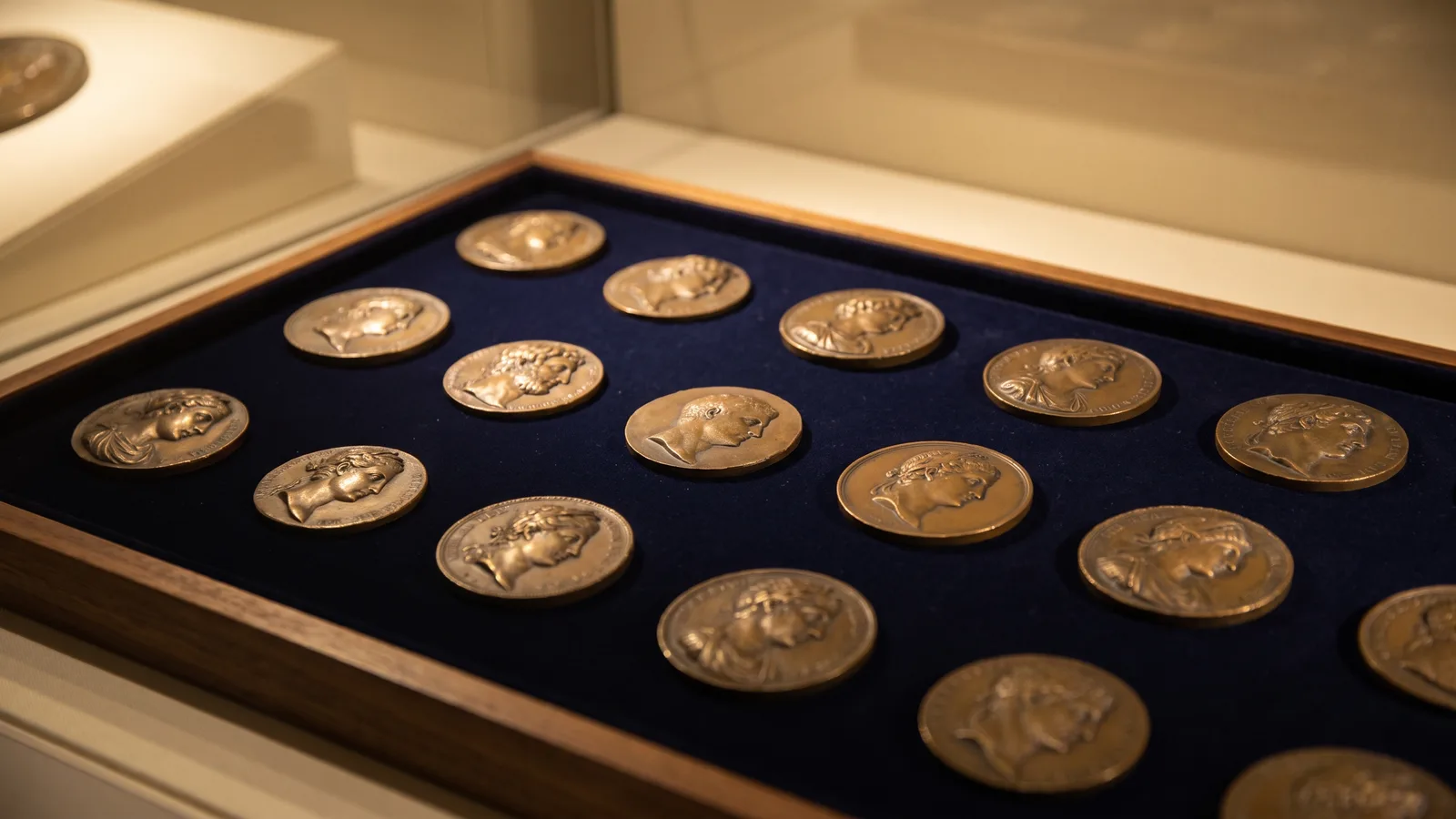
- Exonumia is the collecting field for numismatic items other than government coins and paper money, including tokens, medals, so-called dollars, badges, and encased postage.
- A medal commemorates a person, place, event, or achievement, or serves as a work of art; unlike a coin it carries no face value, and unlike a token it was never meant to pass as money.
- U.S. medals fall into a few broad families: national and U.S. Mint medals, commemorative and exposition medals, art medals, political and campaign medalets, and historical series such as Washingtoniana and Lincolniana.
- Bronze is the most common medal metal; third-party graders use the 70-point scale with color designations for bronze (BN brown, RB red-brown, RD red), and many medals are also collected raw.
- Many medals remain affordable, often in the tens to low hundreds of dollars, while scarce varieties, better metals, and high grades reach much more.
What Is Exonumia?
Exonumia is the collecting field for numismatic items other than government-issued coins and paper money. It includes tokens, medals, so-called dollars, badges, counterstamps, encased postage, and similar pieces.
The word groups together items that look and feel like coins but were made for a different purpose. Some, like transit or trade tokens, stood in for money. Others, like medals, were made to honor people or events, or as art. Because the field is so broad, most collectors specialize, choosing a maker, a theme, a series, or a historical figure to organize around.
Two large sub-fields overlap heavily with medals: tokens and so-called dollars. If your interest runs toward money substitutes rather than commemoratives, the token pillars are a good next stop. See our guide to Civil War tokens and to Hard Times tokens.
What Is a Medal, and How Does It Differ From a Coin or a Token?
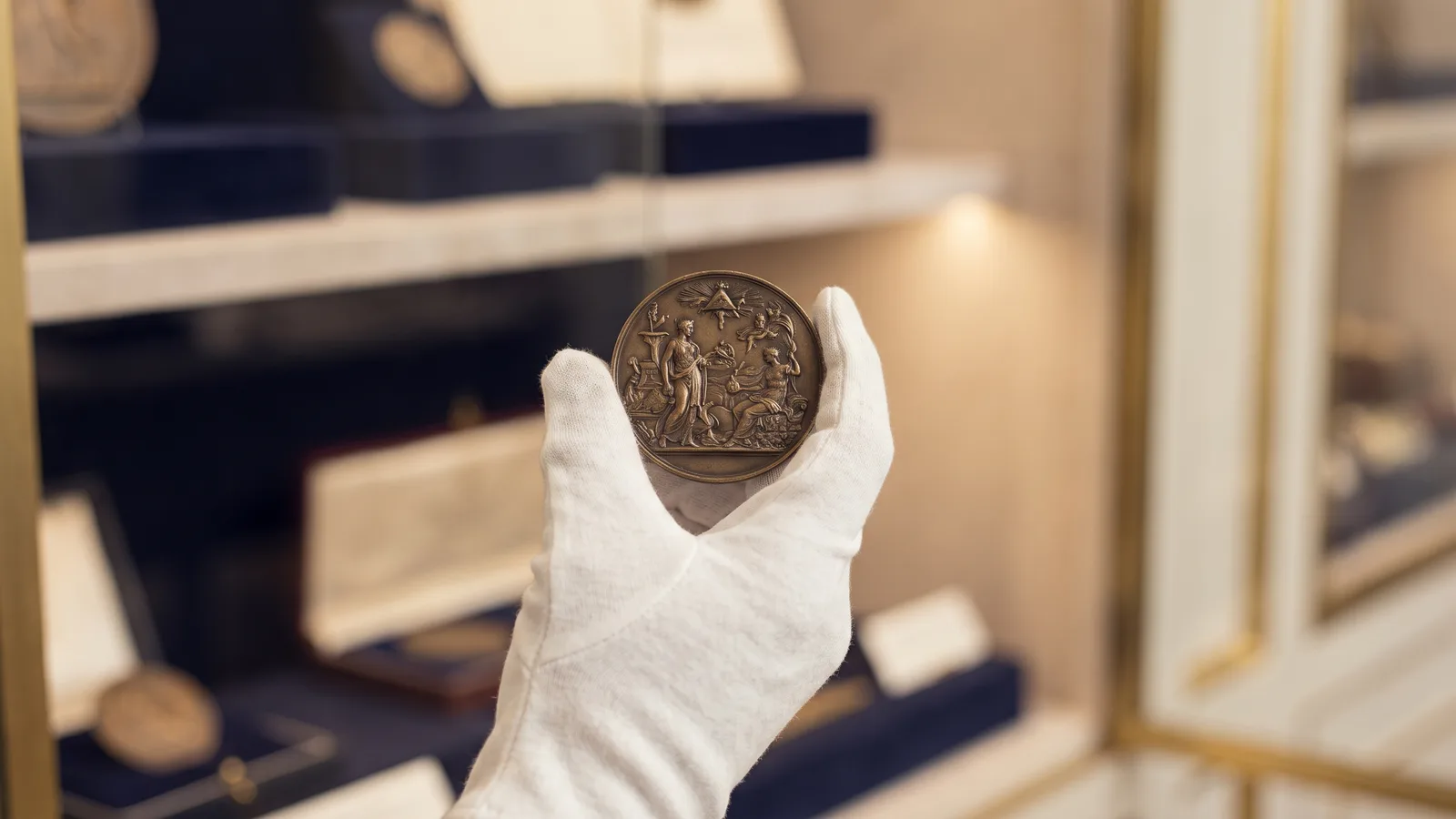
A medal is a metal piece struck or cast to commemorate a person, place, event, or achievement, or to serve as a work of art. The defining difference is simple: a medal has no face value and was never meant to spend.
A coin is government-issued money that carries a denomination and is intended to circulate. A token is a privately issued piece that substitutes for money or is redeemable for goods, services, or a set value, such as a store card or a transit fare. A medal does neither. It is honorary or artistic, which is why medals are collected for design, history, and craftsmanship as much as for metal content.
The line can blur. Some so-called dollars look like silver dollars but are medals, and some campaign medalets are small enough to be mistaken for coins. When in doubt, ask whether the piece was meant to be spent (coin or token) or to commemorate something (medal).
| Feature | Coin | Token | Medal |
|---|---|---|---|
| Issuer | Government | Private (merchant, transit, club) | Government or private |
| Face value | Yes, a denomination | Often a stated or implied value | None |
| Purpose | Circulate as money | Substitute for or redeem money | Commemorate or serve as art |
| Meant to spend | Yes | Yes, within its system | No |
What Are the Main Families of U.S. Medals?
U.S. medals sort into a handful of broad families, and picking one is the usual way collectors start. The main groups are national and U.S. Mint medals, commemorative and exposition medals, art medals, political and campaign medalets, and historical series such as Washingtoniana and Lincolniana.
These families overlap. A single exposition medal can also be a so-called dollar, and a Washington piece can be both a historical series item and a national medal. The sections below walk through each family so you can see where a given piece fits and where your interest might land.
The dedicated tokens and medals directory lists shops and dealers who handle these pieces, which is useful once you know the family you want to pursue.
National and U.S. Mint Medals
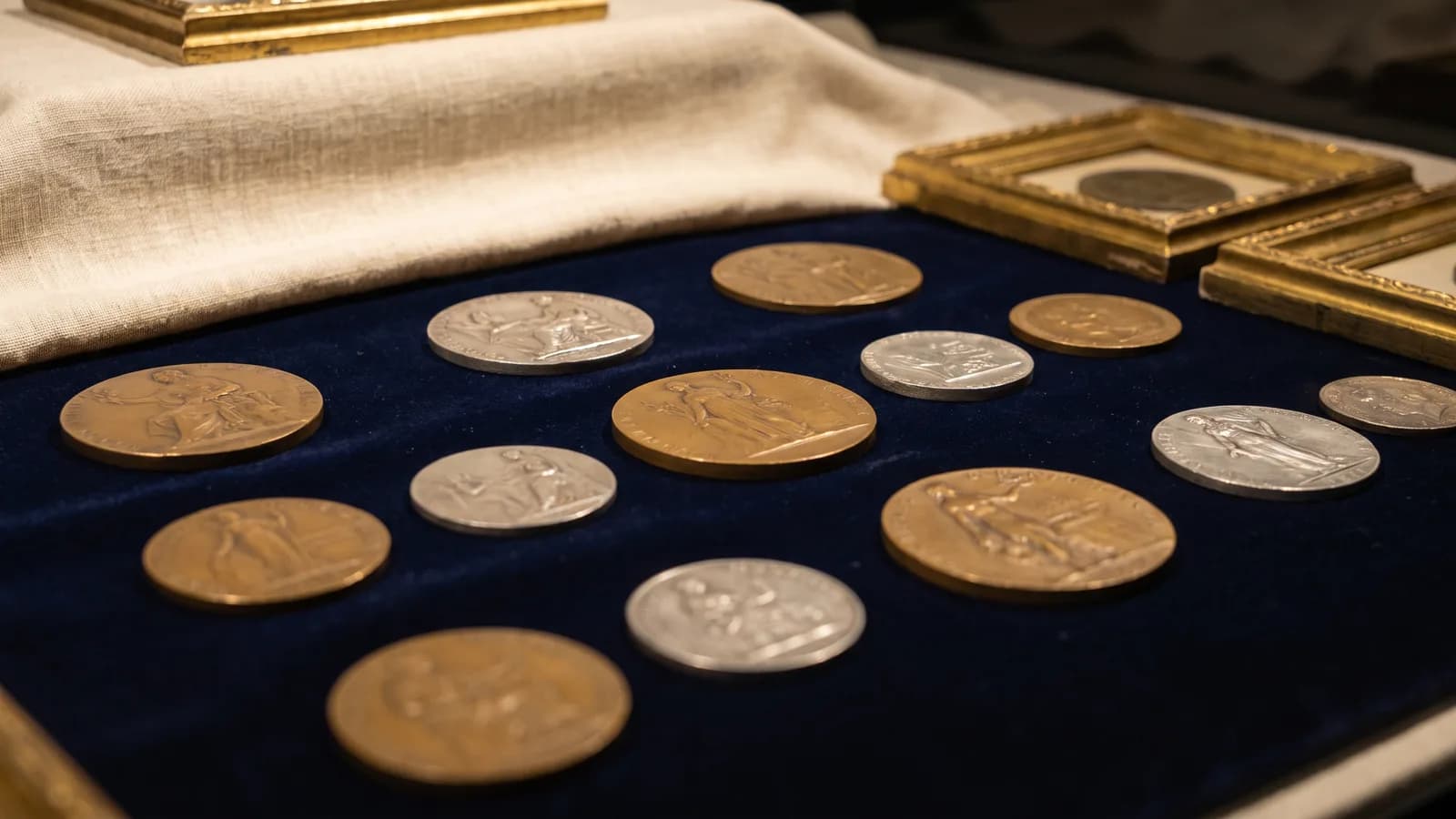
National medals are official medals produced by or for the United States, including presidential medals, military medals, Congressional Gold Medals, and the early Comitia Americana series. Many are struck by the U.S. Mint and are still sold today in bronze.
The Comitia Americana medals were authorized by the Continental Congress and the Confederation Congress to honor Revolutionary War leaders and victories, the best known being the Washington Before Boston medal. Congressional Gold Medals are the highest expression of national appreciation Congress can bestow; the original is presented in gold to the honoree, while bronze copies are sold to the public by the U.S. Mint.
The Medallic Art Company struck many Congressional Gold Medals over the years, one of several ways private makers and the federal government have worked together. You can view current official issues at the U.S. Mint.
Commemorative and Exposition Medals, Including So-Called Dollars
Commemorative and exposition medals mark fairs, anniversaries, and public events. A large and popular subset is the so-called dollar, a dollar-sized medal, roughly 33mm to 45mm, that is not a coin, trade token, or store card.
So-called dollars were issued mainly to commemorate expositions, national and regional events, and famous people. Classic examples come from world's fairs such as the 1893 World's Columbian Exposition and the 1915 Panama-Pacific International Exposition, along with monetary satire pieces known as Bryan money. Many are affordable, and some are genuinely rare.
The standard reference is Hibler and Kappen's So-Called Dollars, which assigns each piece an HK number. For a full treatment, see our so-called dollars guide, and for the reference community visit the So-Called Dollars site.
Art Medals and the Society of Medalists
Art medals are made primarily as sculpture in miniature rather than to commemorate a single event. The most successful American example is the Society of Medalists series.
The Society of Medalists was a subscription series founded in 1929 to 1930 by Clyde Curlee Trees of the Medallic Art Company and George Dupont Pratt. It ran from 1930 to 1995, included about 134 regular issues (generally two per year), and was struck mostly in bronze, with two World War II era issues in silver. Each medal was designed by a leading sculptor and struck in high relief.
Because so many were made and most trade modestly, the series is a friendly entry point into American art medals. Learn more in our Society of Medalists guide and our Medallic Art Company guide. Another underappreciated art series is covered in our Hall of Fame for Great Americans medals guide.
Political and Campaign Medalets
Campaign medalets are small political medals handed out during 19th-century U.S. presidential campaigns, typically showing a candidate portrait with a slogan, and often holed so they could be worn. They are the direct ancestors of the celluloid pinback button, which took over after 1896.
Subjects span Washington, Jackson, Clay, Lincoln, and many others, roughly from the 1820s through the 1890s. Lincoln campaign medalets, distributed during the 1860 and 1864 races, are a popular specialty, with themes like the railsplitter and rail-fence imagery. Many were cut by die-sinkers such as Robert Lovett Jr. and George H. Lovett.
These pieces are cataloged in the DeWitt references, later revised by Edmund B. Sullivan, and collected within the American Political Items Collectors community. See our presidential campaign medals guide and our focused Abraham Lincoln campaign medals guide.
Historical Series: Washingtoniana and Lincolniana
Some collectors organize around a single historical figure, and two of the deepest fields are Washingtoniana and Lincolniana, the medals, tokens, and related pieces honoring George Washington and Abraham Lincoln.
Washingtoniana runs from 18th-century pieces such as the Comitia Americana Washington Before Boston medal and the funeral medals of 1799 to 1800 onward, and it is vast enough to support a lifetime of collecting. Lincolniana centers on campaign medalets and later commemoratives, and it draws heavily on die-sinkers of the Civil War era.
Both fields have modern standard catalogs, discussed in the reference section below. For the Washington field specifically, see our Medallic Washington and Musante guide.
Who Made American Medals?
American medals came from both official mints and private makers, and knowing the maker helps you date, attribute, and value a piece. The largest private name is the Medallic Art Company, alongside notable individual die-sinkers.
The Medallic Art Company, founded in New York in the early 1900s, was the foremost American private maker of art medals for over a century. It struck the Society of Medalists series, the Hall of Fame for Great Americans medals, the Pulitzer Prize medal, Congressional Gold Medals, and countless award and society medals. Its pieces usually carry an edge hallmark such as MEDALLIC ART CO., which is a useful attribution and dating aid.
Individual die-sinkers matter too. John Adams Bolen of Springfield, Massachusetts produced Civil War era store cards, local commemoratives, and openly sold copies of famous early American coins and tokens; his work is cataloged by Neil Musante. The Lovett family, including Robert Lovett Jr. and George H. Lovett, cut many campaign medalets. See our Medallic Art Company guide and our John Adams Bolen guide.
What Metals Are Medals Made From, and How Are They Graded?
Most medals are bronze, the least expensive and most common metal, followed by silver, gilt or gold-plated pieces, white metal, aluminum, and, rarely, gold. Metal affects both scarcity and price, so the same design in silver usually costs more than in bronze.
Third-party graders such as PCGS and NGC grade many medals on the standard 70-point numerical scale, the same framework used for coins. For bronze medals they add color designations: BN for brown, RB for red-brown, and RD for full original red, with red typically commanding a premium because it signals an unhandled surface.
Many medals are also collected raw, meaning ungraded and not encapsulated, which is common for affordable pieces where the cost of grading would exceed the value added. If you are new to grading terms, our coin grading explained guide and coin grading companies guide apply directly to medals.
How Do Catalog and Reference Numbers Work?
Each medal family has a standard catalog, and its numbers are how collectors describe, price, and buy pieces precisely. Learning the right catalog for your family is one of the most useful early steps.
The main references are: HK numbers from Hibler and Kappen for so-called dollars; Baker numbers (W.S. Baker, 1885) and the newer GW numbers from Neil Musante's Medallic Washington (Spink, 2016) for Washingtoniana; JAB numbers from Musante's catalog of John Adams Bolen; and Sullivan-DeWitt numbers for political and campaign medalets. Listings frequently cite more than one system.
Worked example: a Washington medal listed as Musante GW-72a, Baker-167 tells you two things at once. The GW number places it in the modern standard catalog, and the Baker number ties it to the long-used older system, so you can cross-check descriptions, images, and past sale prices across old and new references before you buy.
What Are Medals Worth?
Medal values vary enormously, but the encouraging news is that many pieces remain affordable, often in the tens to low hundreds of dollars, while scarce varieties, better metals, and high grades reach much more. There is no single answer, only ranges tied to a specific catalog number, metal, and grade.
As rough context, common Society of Medalists issues in bronze trade modestly, common campaign medalets in circulated condition can run in the tens of dollars, and many so-called dollars are inexpensive. Scarce Lincoln varieties, better metals such as silver or gold, and high-grade examples can climb into the hundreds or thousands. Always price by exact catalog number and grade rather than by design alone.
For pieces with meaningful silver or gold content, you can check current metal value with our precious metals value calculator. To understand what actually drives numismatic prices, see our how coin prices are determined guide.
| Family | Typical common piece | What raises value |
|---|---|---|
| Society of Medalists (bronze) | Modest | Sought designs, silver WWII issues, high grade |
| So-called dollars | Often affordable | Rarity, popular expositions, better metal |
| Campaign medalets | Tens of dollars | Scarce varieties, better metal, high grade |
| Washingtoniana | Wide range | Early pieces, rarity, condition |
Where Do You Buy and Sell Medals?
You can buy and sell medals through coin shops, specialist dealers, coin shows, and auctions, and the right venue depends on how scarce and valuable the piece is. Common medals move easily through shops and shows; rarities often do best at specialist auction.
A local shop is a good place to start, learn, and sell modest material without shipping. For scarcer pieces, a dealer who specializes in exonumia or a major numismatic auction will usually reach the right buyers and prices. Compare offers and get more than one opinion before selling anything you suspect is scarce.
Use our coin shops directory and rare coin dealers directory to find sellers near you, and see our coin shows guide for how to work a bourse floor. If you inherited a group of medals, our guide to selling an inherited collection walks through the steps.
How Do You Store and Care for Medals?
Store medals so that surfaces are protected from handling, moisture, and abrasive materials, and avoid cleaning them, since cleaning almost always lowers value. Bronze red surfaces and toned silver are especially easy to damage.
Hold medals by the edge, use inert (archival, PVC-free) holders, and keep them in a stable, low-humidity environment away from temperature swings. Larger art medals often need individual capsules or trays because of their size and high relief. Never polish a medal to make it shiny; collectors value original surfaces.
Our how to store coins guide covers holder types and humidity control that apply equally to medals.
How Do You Start a Focused Medal Collection?
Start by choosing one family, maker, or theme, then buy the standard catalog for it before you buy many medals. A narrow focus makes learning faster and spending smarter than trying to collect everything at once.
A practical path: pick a lane such as the Society of Medalists, Lincoln campaign medalets, or so-called dollars; read the standard reference so you know the numbers and rarities; buy a few affordable pieces to train your eye on surfaces and metals; and only then pursue scarcer targets. Verify authenticity on anything valuable, since a few makers' copies and modern reproductions exist in the market.
For background and community, the American Numismatic Association and the Medal Collectors of America are strong starting points, and the Wikipedia entry on exonumia gives a quick overview of the whole field.
Frequently asked questions
What is the difference between a medal and a coin?+
A coin is government money with a face value that is meant to circulate. A medal has no denomination and was never meant to spend; it commemorates a person, place, event, or achievement, or serves as a work of art.
What is exonumia?+
Exonumia is the collecting field for numismatic items other than government coins and paper money, including tokens, medals, so-called dollars, badges, counterstamps, and encased postage.
Are medals a good, affordable way to start collecting?+
Yes. Many medals, such as common Society of Medalists issues and many so-called dollars, trade in the tens to low hundreds of dollars, so it is possible to build a meaningful collection on a modest budget while some rarities cost much more.
Should I clean my medals?+
No. Cleaning almost always lowers value by damaging original surfaces. Hold medals by the edge, store them in inert holders, and leave the surfaces alone.
How do catalog numbers like HK, GW, Baker, JAB, and Sullivan-DeWitt work?+
Each medal family has a standard catalog. HK numbers cover so-called dollars, GW and Baker numbers cover Washingtoniana, JAB numbers cover John Adams Bolen's work, and Sullivan-DeWitt numbers cover political and campaign medalets. Pricing by the exact number, metal, and grade is far more accurate than by design alone.
Are medals graded like coins?+
Many are. Graders such as PCGS and NGC use the 70-point scale, and for bronze they add color designations of BN (brown), RB (red-brown), and RD (red). Many affordable medals are also collected raw.