
Silver Coin Melt Value: How to Calculate It
A silver coin's melt value is how much its silver is worth right now: the coin's silver content multiplied by the live spot price. For US coins, almost all of that value comes from pieces dated 1964 or earlier. This guide shows the silver content of each coin, two ways to add it up, and why melt value is only the starting point.
Key takeaways
- Melt value is a coin's silver content multiplied by the live spot price of silver — a price floor, not a ceiling.
- Any US dime, quarter, half dollar, or dollar dated 1964 or earlier is 90% silver; that is where most melt value sits.
- A $1 face value of circulated 90% silver holds about 0.715 troy ounces of silver, so roughly $1.40 in face value equals one ounce.
- Scarce dates and high grades are worth far more than melt — check rarity before you sell any coin for its metal.
What is a coin's melt value?
Melt value is what a coin's metal would be worth if it were melted down — its silver content times the current spot price, the live market price of an ounce of silver. It sets a price floor: a common silver coin is never worth less than its metal, and dealers price scrap and common coins straight off it.
It is a floor, not a ceiling. A rare date or a high-grade coin can be worth many times its melt for collector reasons, which is why you should never sell a coin for metal until you know it is common. See what your coins are worth for how that collector value is set.
Which US coins contain silver?
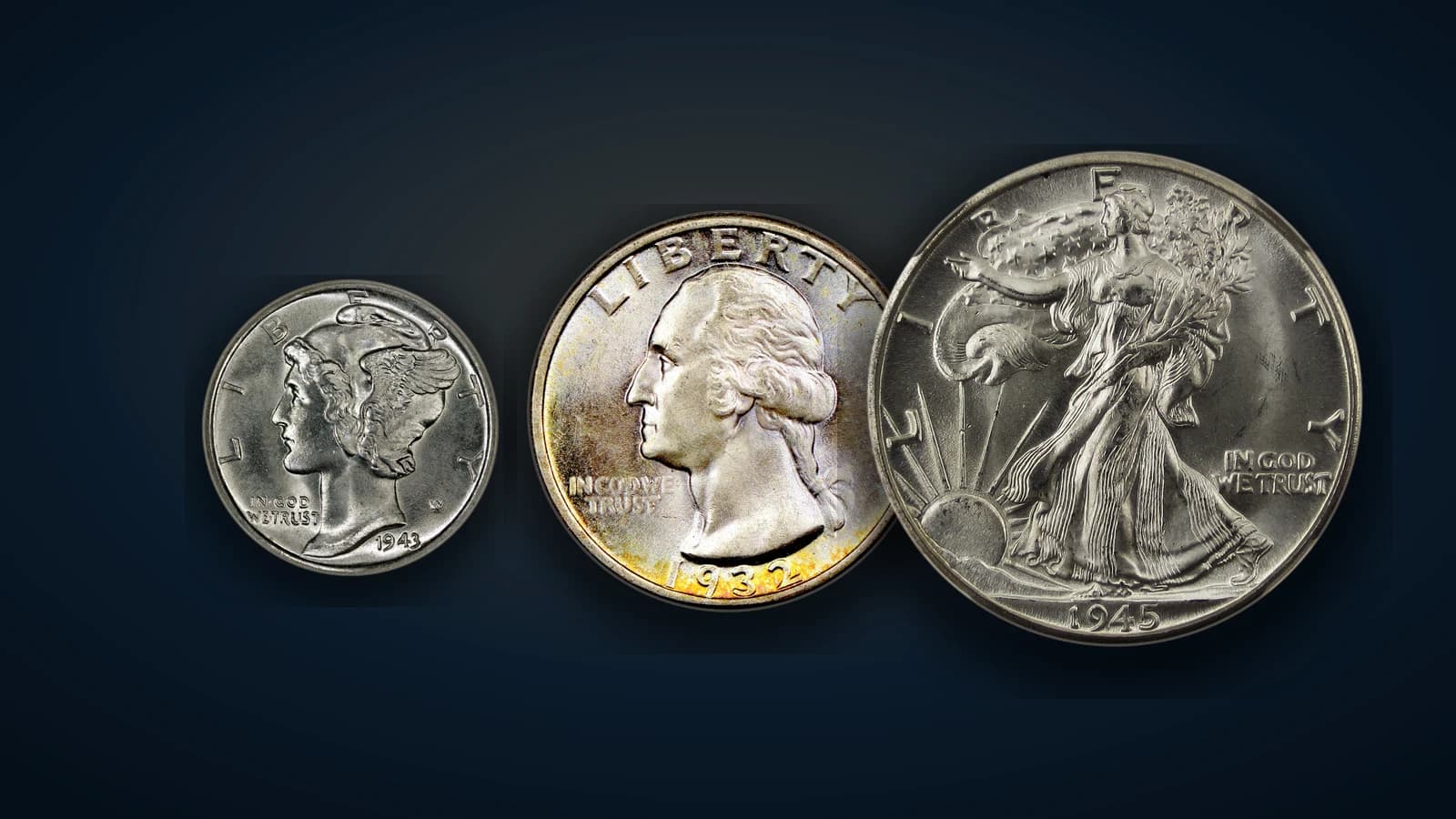
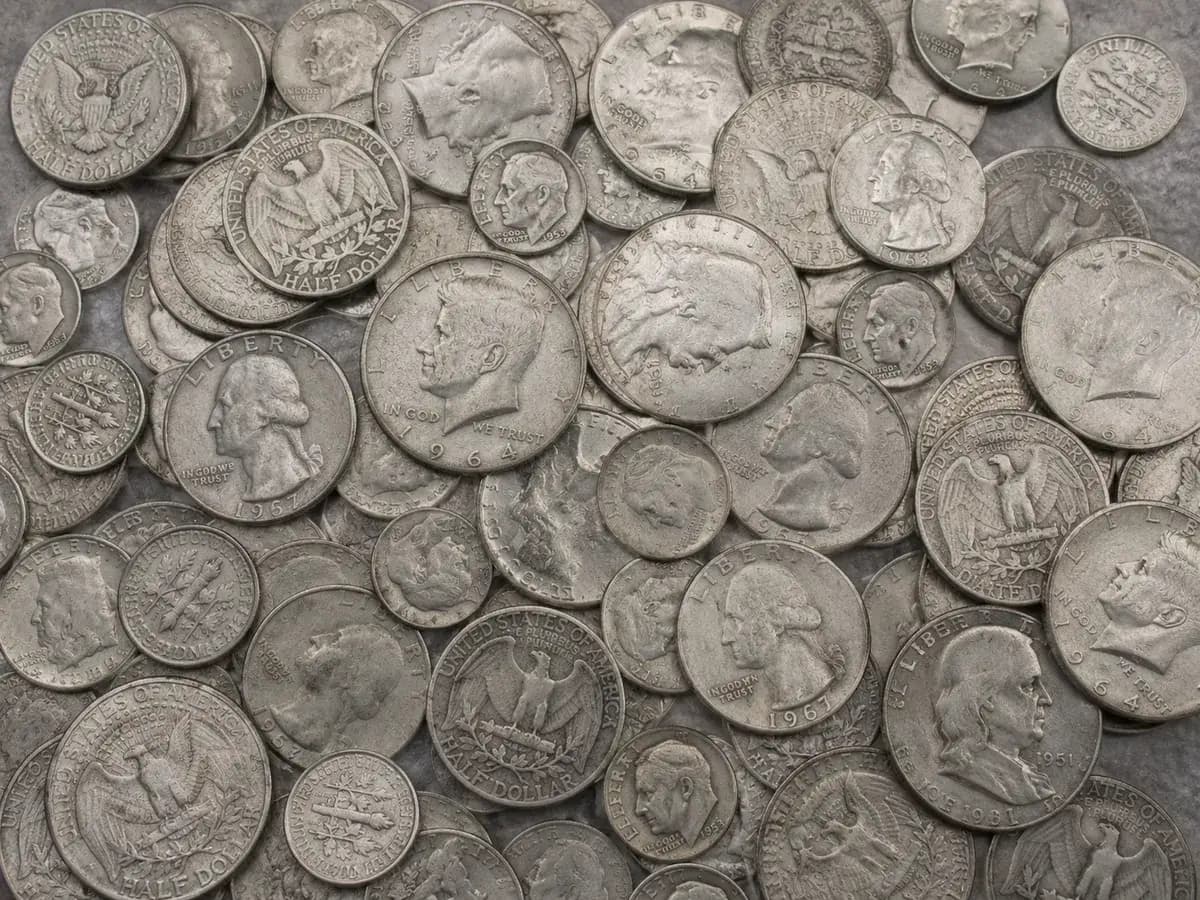
The big one: every US dime, quarter, half dollar, and silver dollar dated 1964 or earlier is 90% silver. After 1964 the Mint switched dimes and quarters to copper-nickel, so they contain no silver. A few other issues carry silver too, summarized below.
| Coin | Years / type | Silver (troy oz) |
|---|---|---|
| Dime | 1964 and earlier (90%) | 0.0723 |
| Quarter | 1964 and earlier (90%) | 0.1808 |
| Half dollar | 1964 and earlier (90%) | 0.3617 |
| Half dollar | 1965-1970 (40%) | 0.1479 |
| Morgan / Peace dollar | 1878-1935 (90%) | 0.7734 |
| Jefferson war nickel | 1942-1945 (35%) | 0.0563 |
| American Silver Eagle | 1986-present (99.9%) | 1.0000 |
How do I calculate melt value?
Multiply the coin's silver content by the live spot price. For example, if silver were $30 an ounce, a 90% silver quarter (0.1808 oz) would have a melt value of 0.1808 x $30 = about $5.42, and a Morgan dollar (0.7734 oz) would be 0.7734 x $30 = about $23.20.
Because spot moves all day, use a live tool rather than a fixed number: the precious metals value calculator prices any coin against current spot, and the silver stack calculator totals a whole group at once.
The shortcut: calculate by face value
For a mixed pile of 90% coins you do not need to weigh each one. Circulated 90% silver coins hold about 0.715 troy ounces of silver per $1 of face value, so roughly $1.40 in face value equals one ounce. Add up the face value, multiply by 0.715, then multiply by spot.
That means about 14 dimes, 6 quarters, or 3 half dollars make up an ounce of silver. The constitutional silver calculator does this math from a bag's face value.
Why melt value is only a floor
Melt is the minimum, not the answer. Key dates, mint marks, and condition can push a coin far above its silver — a worn common Morgan trades near melt, while a scarce date or a high grade can be worth many times more. Cleaning or melting such a coin destroys that premium for good.
Before selling anything for metal, confirm it is common. A quick read of what your coins are worth or a look from a numismatic appraiser protects you from selling a collectible at scrap price.
What will a dealer actually pay versus melt?
Dealers buy common silver a little under melt and sell a little over — that spread is how they operate, so an offer just below melt on common coins is normal, not a lowball. The tighter and more transparent the spread, the better.
Compare at least two offers and confirm the price tracks current spot. Find buyers among local coin shops, bullion dealers, and gold and silver buyers, and read coin shop vs. bullion dealer to pick the right one.
Frequently asked questions
How much silver is in a 90% silver quarter?+
A 90% silver quarter, dated 1964 or earlier, contains about 0.1808 troy ounces of silver. A dime holds about 0.0723 ounces and a half dollar about 0.3617 ounces.
What face value of silver coins equals one ounce?+
About $1.40 in face value of circulated 90% silver coins equals roughly one troy ounce of silver — around 14 dimes, 6 quarters, or 3 half dollars.
Are Morgan and Peace dollars just junk silver?+
They are 90% silver, about 0.7734 ounces each, but most carry a collector premium above melt, so they are usually valued as numismatic coins rather than junk silver. Check the date and grade before selling for metal.
Should I sell my silver coins for melt value?+
Only if they are common. Melt is a fair floor for worn, common-date coins, but key dates and high grades are worth more, so confirm a coin is common before selling it for its metal.