
What Is Coin Toning? Natural Patina vs. Artificial Color
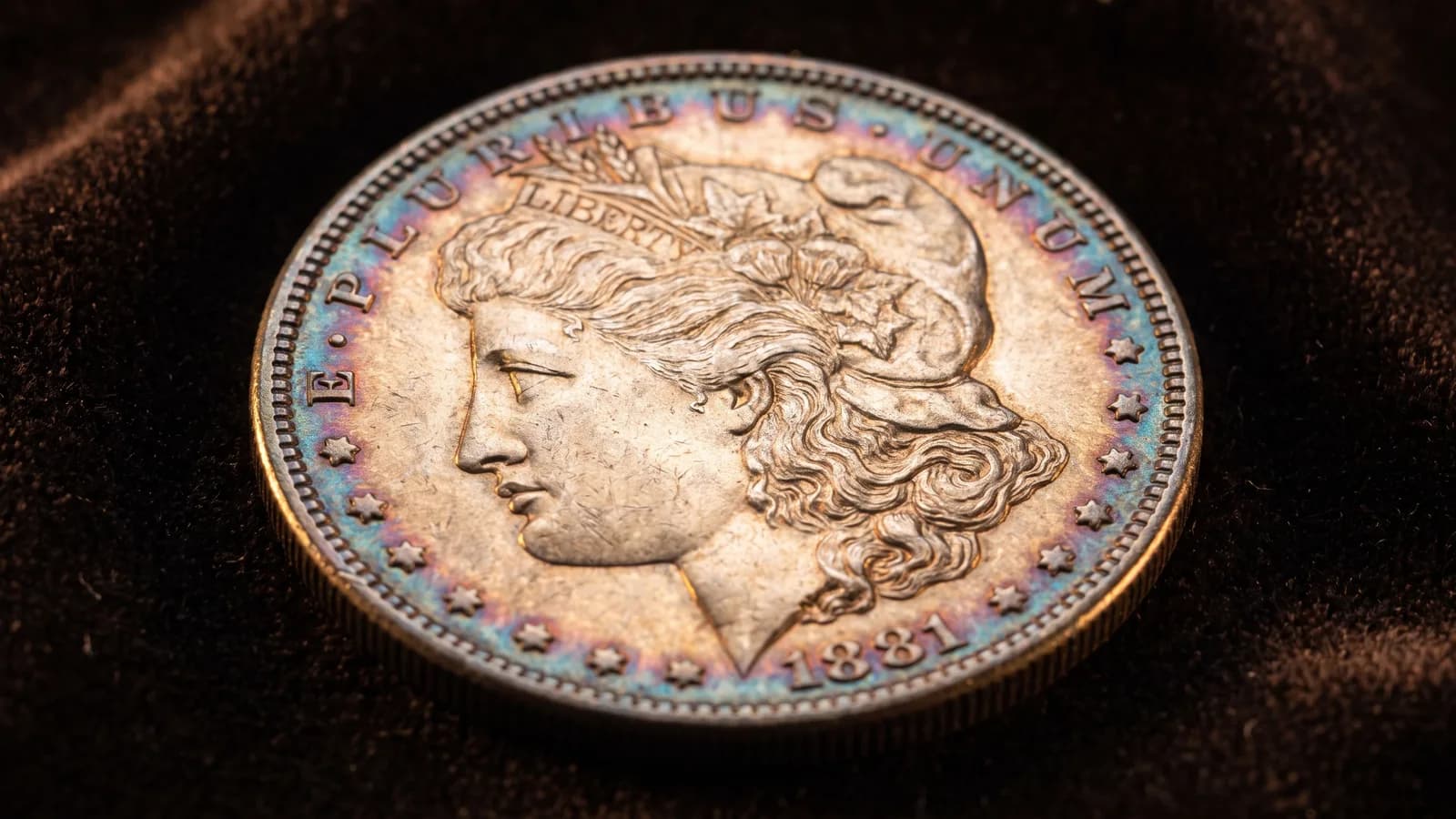
Coin toning is the chemical reaction between a coin's metal surface and environmental compounds — primarily sulfur and oxygen — that produces a range of colors from pale gold to deep purple and blue. It develops naturally over decades in coin albums, cloth bags, or original Mint packaging. Toning is one of the most hotly debated topics in numismatics: the right kind can add significant value, while the wrong kind — or artificial toning designed to mimic natural patina — can mislead buyers and damage value.
Key takeaways
- Toning is discoloration caused by chemical reactions between a coin's metal surface and sulfur, oxygen, or other compounds in the environment.
- Natural toning develops over decades in original storage; artificial toning is induced chemically or physically to make coins look old.
- Attractive, original toning — especially rainbow toning on Morgan dollars — can significantly increase a coin's value.
- Ugly, blotchy, or uneven toning ("carbon spots") typically reduces value, even if it is natural.
- PCGS and NGC can often identify artificially toned coins and will note it on the label, reducing the coin's market value.
Why Do Coins Tone?
Silver, copper, and even gold react chemically with their environment over time. Silver is particularly reactive with sulfur compounds — present in paper, rubber, wooden trays, and atmospheric pollution — which produce silver sulfide on the coin's surface. Depending on the thickness of the sulfide layer, the reflected light changes, producing colors from pale yellow through gold, orange, red, blue, green, and eventually dark brown or black.
The specific colors and patterns of natural toning depend on the coin's storage environment, the surface chemistry of the specific die variety, and the passage of time. Coins stored in cloth bags develop different toning than those in paper envelopes or cardboard albums.
What Is Unattractive Toning and When Does It Hurt Value?
Not all toning adds value. Carbon spots (dark, irregular blotches, especially on Morgan and Peace dollars) are considered damage and reduce grade and value. Heavy, uniform dark toning that obscures detail is unattractive. Blotchy, uneven toning without visual appeal is similarly a negative.
PCGS and NGC both assess eye appeal as part of grading, and a coin with ugly toning may receive a lower grade or a "details" notation than its technical preservation would otherwise suggest. "Original skin" is the collector term for acceptable original surfaces that show normal aging without damage.
How to Identify Artificial Toning
Artificial toning is induced deliberately — typically to hide cleaning, fill in surface damage, or make a coin appear more valuable. Common methods include heat (warming a coin produces yellow-to-blue colors), exposure to sulfur compounds (liver of sulfur, sulfur-containing rubber bands), and chemical baths.
Red flags for artificial toning include: colors that look too vivid or perfectly gradated from the rim; uniform toning that covers the entire coin evenly without any variation; toning in specific spots only (suggesting targeted application); and colors inconsistent with the coin's die variety or known storage history. Experienced collectors develop an eye for it, and PCGS and NGC certifiers have seen thousands of artificially toned coins.
Should You Remove Toning?
Never attempt to remove toning from a coin you care about. Dipping, polishing, or cleaning removes the surface layer that contains both toning and original luster — and the resulting coin shows as "cleaned" to any experienced eye. A cleaned coin is worth substantially less than an original, toned, or even ugly-toned coin of the same grade.
If you have a coin with beautiful natural toning, preserve it as-is. If you have a coin with ugly carbon spots or heavy dark toning, a professional coin conservator (not a home cleaning attempt) is the only reasonable intervention — and even then, results are unpredictable. See our guide on coin storage for tips on preventing future toning problems.
Frequently asked questions
Is rainbow toning on a Morgan dollar always original?+
Not always — artificial rainbow toning exists. Original toning tends to have a natural flow from the rim inward, color gradations that follow the metal's surface chemistry, and no color on areas protected by original tissue or bag contact. PCGS and NGC can usually identify artificial toning.
Do carbon spots reduce a coin's grade?+
Yes. Significant carbon spots can reduce a coin's assigned grade or cause it to receive a "Details" designation. Even minor carbon spots are noted in grading and reduce eye appeal, which impacts the price a coin brings.
Can I clean toning off my coin?+
You can — but you almost certainly should not. Any cleaning that removes toning also removes original luster and leaves the coin permanently "impaired" in numismatic terms. A cleaned coin sells for 30–70% less than an original one.
What storage materials cause coins to tone?+
PVC plastic (in some older coin flips) releases acids that cause green PVC damage. Sulfur-containing paper, rubber bands, and wooden boxes cause silver toning over time. Archive-safe, PVC-free mylar flips and inert hard plastic holders (PCGS/NGC slabs) prevent unwanted toning.
Is toning on copper coins different from toning on silver?+
Yes. Copper tones more dramatically and quickly than silver. Original copper coins tone from bright red (Mint Red) through red-brown to brown over time. All-original brown surfaces on a 19th-century copper cent are normal and desirable; artificially "retouched" red surfaces are not.