
Junk Silver: How to Buy and Sell Pre-1965 90% Silver Coins
Junk silver is one of the most popular and affordable ways to own physical silver — and despite the name, there's nothing junky about it. The term simply means common circulated U.S. silver coins worth their metal content rather than any collector premium. This guide explains exactly which coins count, how much silver they hold, how they're priced, and how to buy and sell them without overpaying.
Key takeaways
- Junk silver is common-date U.S. silver coins valued for their metal, not rarity — mainly dimes, quarters, and half dollars dated 1964 or earlier (90% silver).
- There's nothing 'junk' about it: the term just means no collector premium, only silver content.
- A $1 face value of circulated 90% silver holds about 0.715 troy ounces of silver, so roughly $1.40 in face value equals one ounce.
- Junk silver usually carries a low premium over spot, making it one of the cheapest ways to own physical silver.
- Buy and sell by face value against the live spot price, and compare a couple of dealers to confirm a fair premium.
What is junk silver?
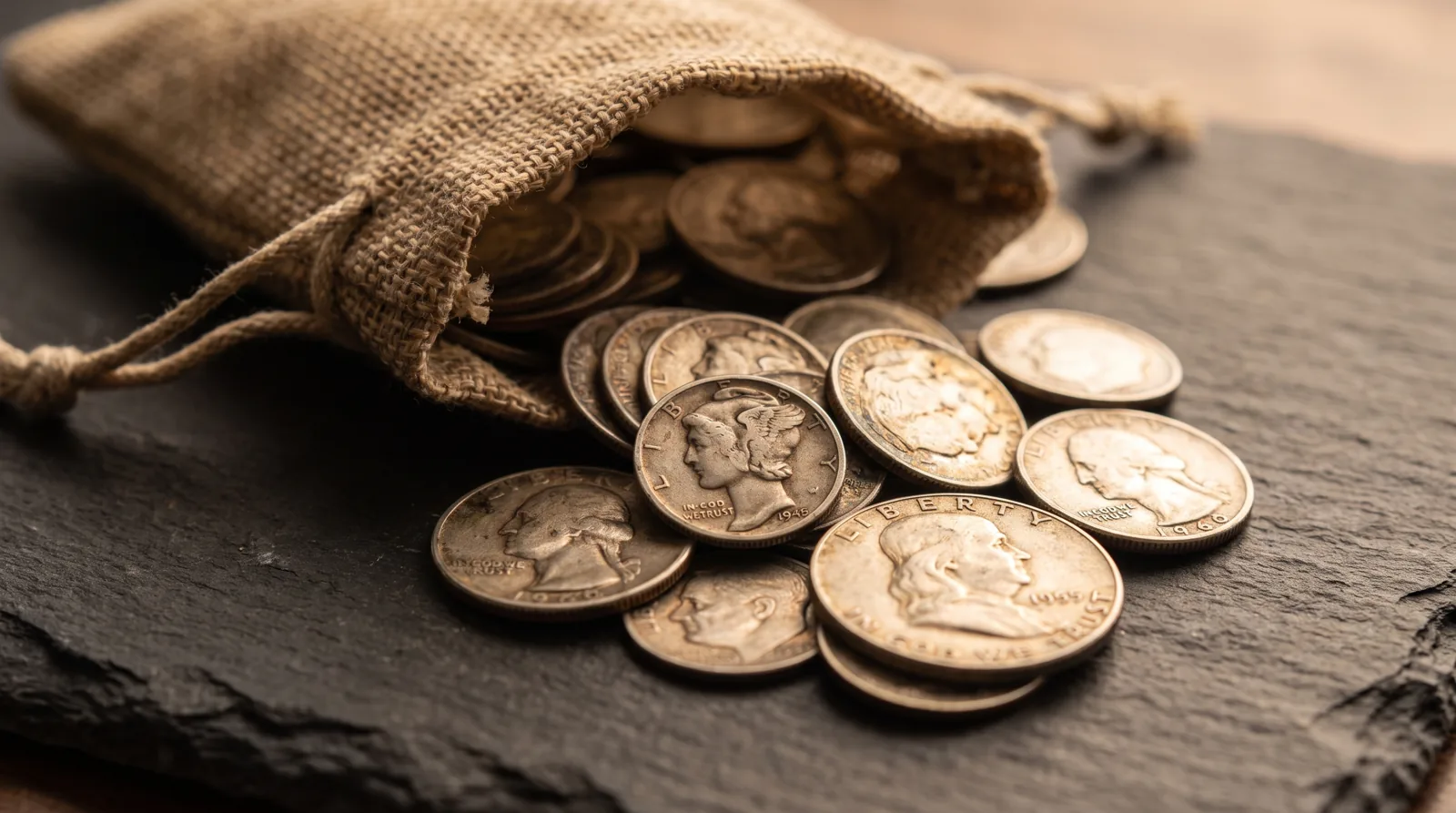
Junk silver is common-date U.S. silver coinage valued only for its silver content, not for rarity or condition. 'Junk' refers to the lack of a numismatic premium — these are worn, ordinary coins — not to the silver itself, which is real and valuable.
Because it trades close to its melt value, junk silver is a low-cost, highly recognized way to own physical silver, popular with both stackers and people who want small, divisible amounts of metal.
Which coins count as junk silver?
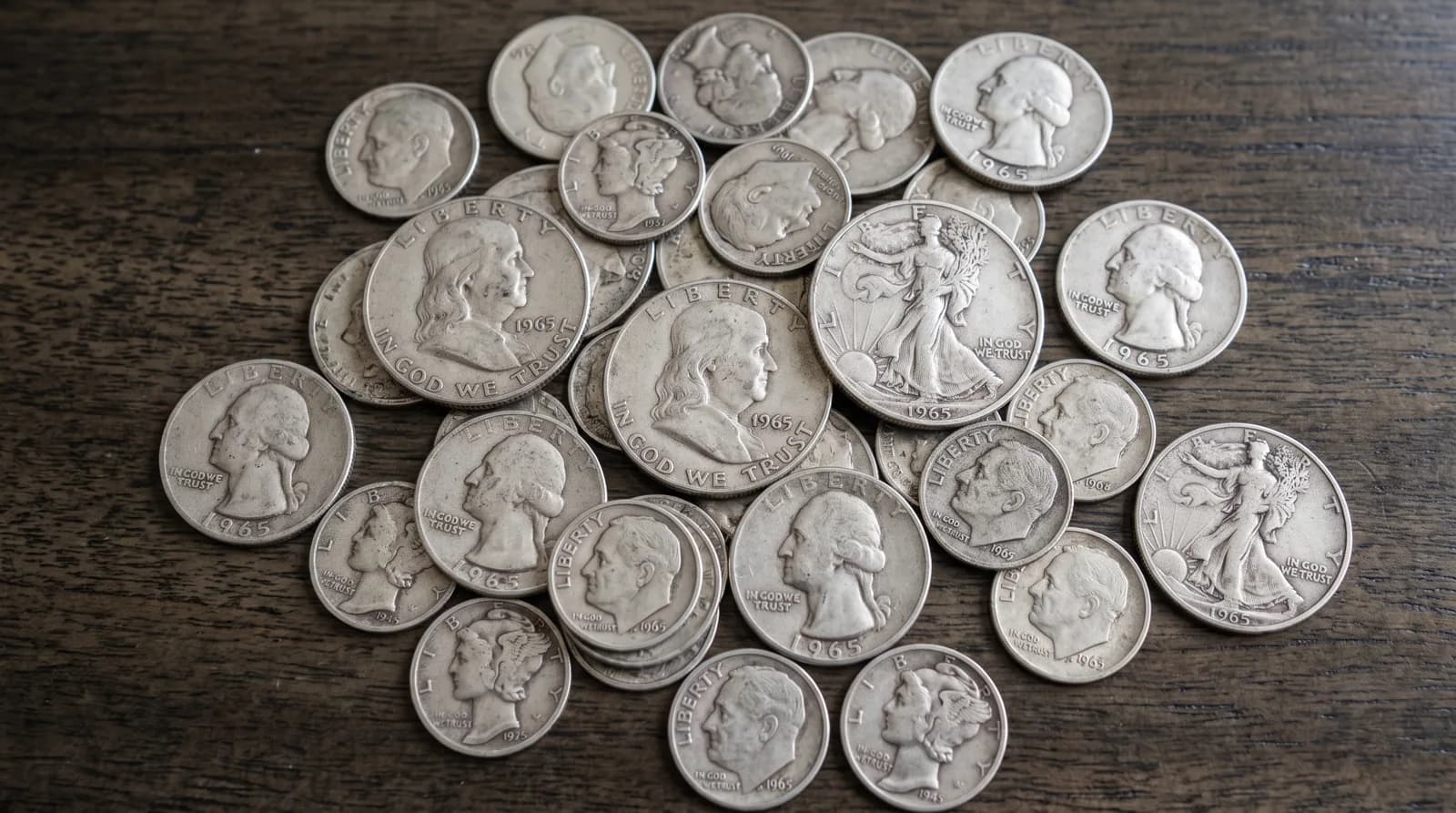
The core of junk silver is any U.S. dime, quarter, or half dollar dated 1964 or earlier, which is 90% silver. A few other issues count too, as shown below. For the full breakdown, see which U.S. coins are silver.
| Coin | Years | Silver |
|---|---|---|
| Dime, quarter, half dollar | 1964 and earlier | 90% |
| Kennedy half dollar | 1965–1970 | 40% |
| Jefferson 'war' nickel | 1942–1945 | 35% |
| Morgan & Peace dollars | 1878–1935 | 90% |
How much silver is in junk silver?
Circulated 90% silver coins hold about 0.715 troy ounces of silver per $1 of face value, so roughly $1.40 in face value equals one ounce. That means about 14 dimes, 6 quarters, or 3 half dollars make up an ounce.
Junk silver is often sold in '$1,000 face value' bags (about 715 ounces) or smaller increments. You can estimate any amount with the constitutional silver calculator, which works straight from face value.
How is junk silver priced?
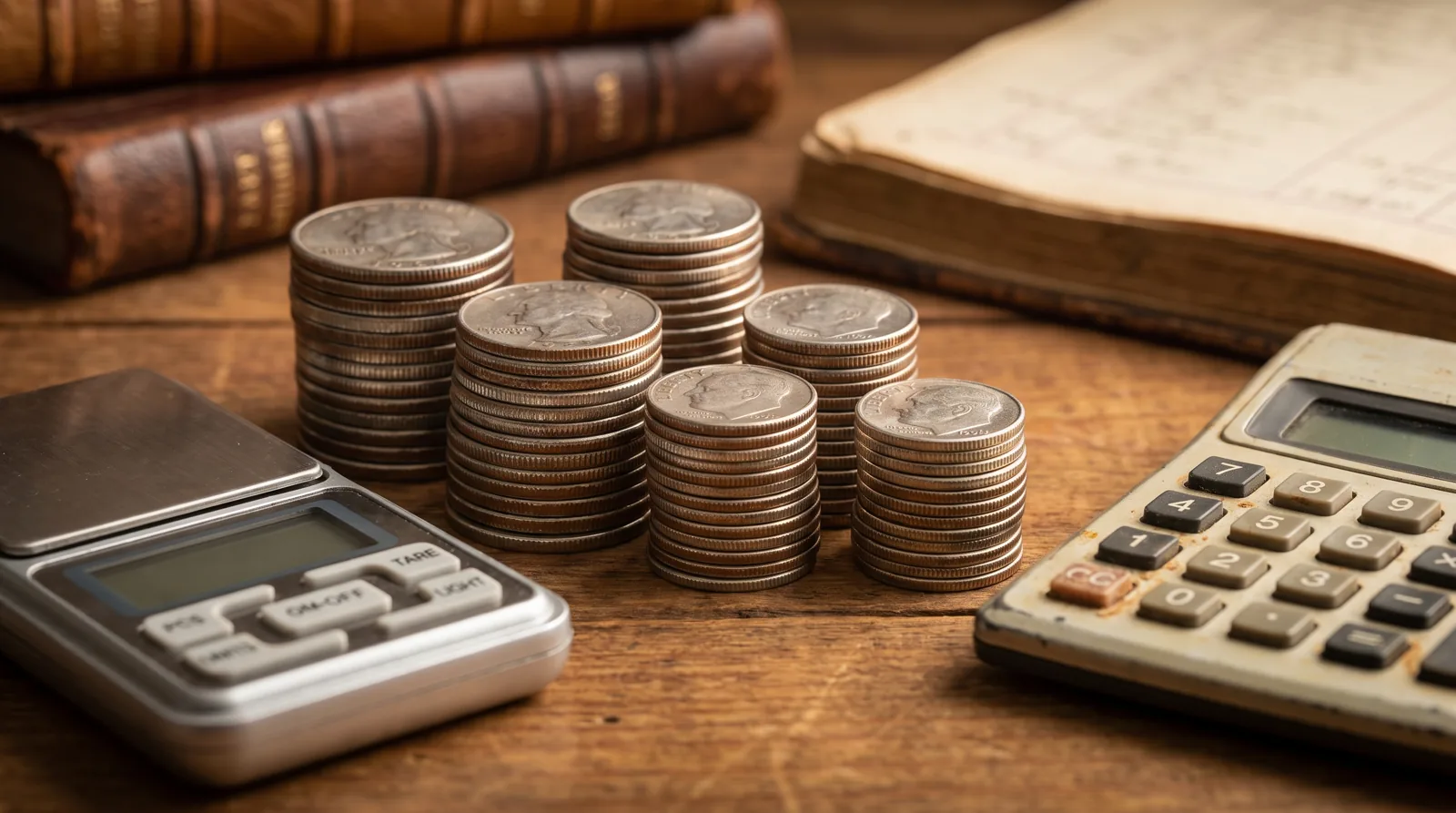
Junk silver is priced off its silver content plus a small premium. Add up the face value, multiply by 0.715 to get ounces, then multiply by the live spot price — the current market price of silver, benchmarked by bodies like the LBMA.
For example, at $30 an ounce, $10 in face value holds about 7.15 ounces, worth roughly $214 in silver before any premium. The premium over that melt figure is usually small, which is junk silver's main appeal.
How do I buy junk silver?
Buy from a reputable bullion dealer or coin shop, and compare the all-in price to the live melt value so you can see the premium clearly. Junk silver typically carries one of the lowest premiums of any silver product.
Decide whether you want larger bags for efficiency or smaller amounts for divisibility, and favor recognizable U.S. 90% coins, which are easy to verify and resell.
How do I sell junk silver?
Selling is straightforward — almost any coin shop or gold and silver buyer buys junk silver near melt. Confirm the offer tracks the current spot price, and get a couple of quotes to be sure the premium (or discount) is fair.
Sort your coins by denomination and keep them in their original condition; don't clean them. For larger holdings, our questions to ask before buying gold or silver checklist applies to selling too.
Junk silver or bullion coins — which should I buy?
Both are good ways to own silver. Junk silver offers low premiums and small, divisible units, which is handy if you ever want to sell a little at a time. Government bullion coins like American Silver Eagles cost more but are instantly recognized worldwide.
Many stackers hold a mix. If pure metal at the lowest cost is the goal, junk silver and generic rounds usually win on premium; see coin shop vs. bullion dealer for where to buy each.
Frequently asked questions
Why is it called junk silver if it's valuable?+
The 'junk' refers to the absence of a collector premium — the coins are common and worn — not to the silver, which is real and worth its melt value. It's simply silver valued as metal.
How much silver is in a $1 face value of junk silver?+
About 0.715 troy ounces for circulated 90% silver coins. Roughly $1.40 in face value equals one ounce, so 14 dimes, 6 quarters, or 3 half dollars make about an ounce.
Is junk silver a good way to invest in silver?+
It's one of the lowest-premium ways to own physical silver, plus it's divisible and easy to recognize. Like all silver, its value tracks the spot price, so buy on a reasonable premium.
Where can I sell junk silver?+
Most coin shops and gold-and-silver buyers purchase junk silver near melt. Confirm the offer tracks current spot and compare a couple of quotes before selling.