Indian Head Penny Value: Key Dates and What Yours Is Worth
Indian Head penny value spans from a few dollars to several thousand, driven by date, mint mark, and condition. Struck from 1859 to 1909, these classic small cents are popular with collectors, and a few key dates — above all the 1877 — are genuinely scarce. This guide explains what the series is, which dates are valuable, the composition change that affects color, and how to tell a common cent from a real find.
Key takeaways
- Indian Head cents (1859–1909) range from a few dollars for common dates to thousands for key dates in high grade.
- The 1877 is the famous key date; the 1909-S has the lowest mintage of the series at 309,000, and the 1908-S is the first San Francisco cent.
- Early Indian cents (1859–1864) are copper-nickel and lighter colored; from 1864 to 1909 they are 95% copper bronze.
- Condition drives value: a worn common date is worth a few dollars, while a sharp or uncirculated example is worth far more.
- Check the date and any S mint mark, never clean the coin, and get an opinion on key dates before selling.
Are Indian Head pennies worth anything?
Common-date Indian Head cents in worn condition are worth a few dollars, but key dates and high-grade examples are worth hundreds or thousands. Date, mint mark, and condition decide which you have.
So they're collectible and always worth checking, but most aren't rarities. This guide shows what to look for; our what your coins are worth guide covers the broader method.
What is an Indian Head penny?
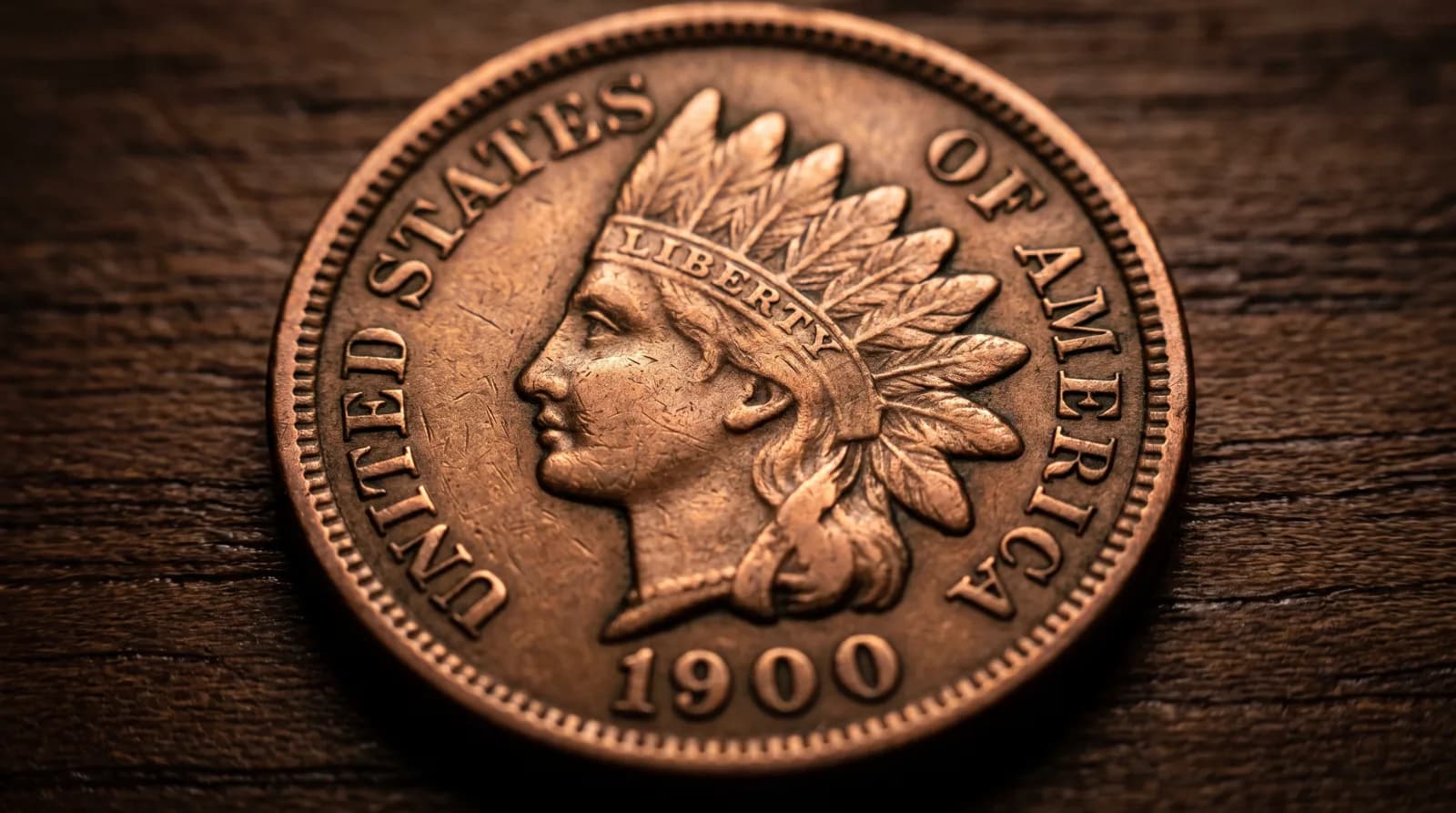
The Indian Head cent is a U.S. one-cent coin struck from 1859 to 1909, designed by Chief Engraver James B. Longacre. The obverse shows Liberty wearing a Native American headdress — not an actual Native American, despite the name.
It was replaced by the Lincoln cent in 1909. The U.S. Mint has the history; if you also have early-1900s Lincoln cents, see our wheat penny value guide.
What are the Indian Head penny key dates?
A few dates carry most of the value, led by the 1877. The table lists the key and semi-key issues with verified mintages or notes.
| Date | Why it's scarce | Approx. value range |
|---|---|---|
| 1877 | Series key, low mintage | Hundreds to thousands |
| 1909-S | 309,000 — lowest mintage | Mid-hundreds and up |
| 1908-S | 1.115 million — first S-mint cent | Low hundreds and up |
| 1872 | Scarce early date | Low hundreds and up |
| 1859 (one-year type) | First year, no shield reverse | Tens and up |
What is the 1877 key date?
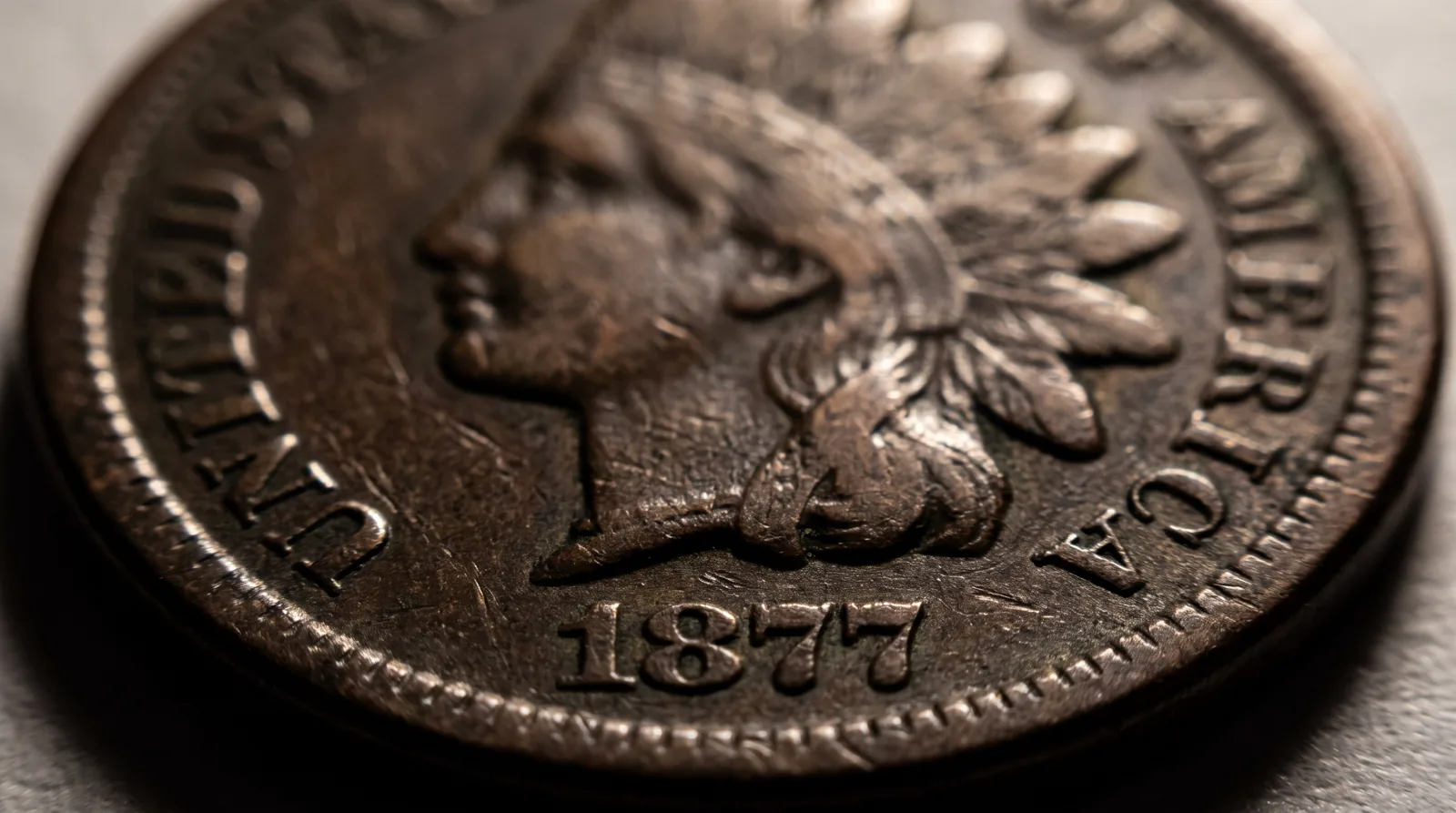
The 1877 Indian Head cent is the most famous and sought-after date in the series, struck in small numbers during a period of weak demand for cents. Even a well-worn 1877 is worth several hundred dollars, and mint-state examples command thousands.
Because of its value, the 1877 is often faked — frequently by altering the date on a more common year. Always have a 1877 authenticated; see how to spot fake coins.
Why does the composition matter?
The Indian Head cent changed metal partway through its run, which affects color and feel. From 1859 to 1864 it was a copper-nickel alloy — thicker and lighter in color. From 1864 to 1909 it was 95% copper bronze, darker and slightly lighter in weight.
Neither version has meaningful melt value (the copper is worth only a fraction of a cent, and melting cents is illegal), so value is entirely numismatic — about the date, grade, and demand.
How does condition affect value?
Condition can multiply value sharply, especially for better dates. A worn common date is worth a few dollars; the same date with sharp detail, and especially an uncirculated coin with original red color, is worth far more.
Grade is the coin's condition on the 70-point scale (see coin grading explained). Valuable Indian cents are often certified by PCGS to confirm grade, color, and authenticity.
How do I identify and sell mine?
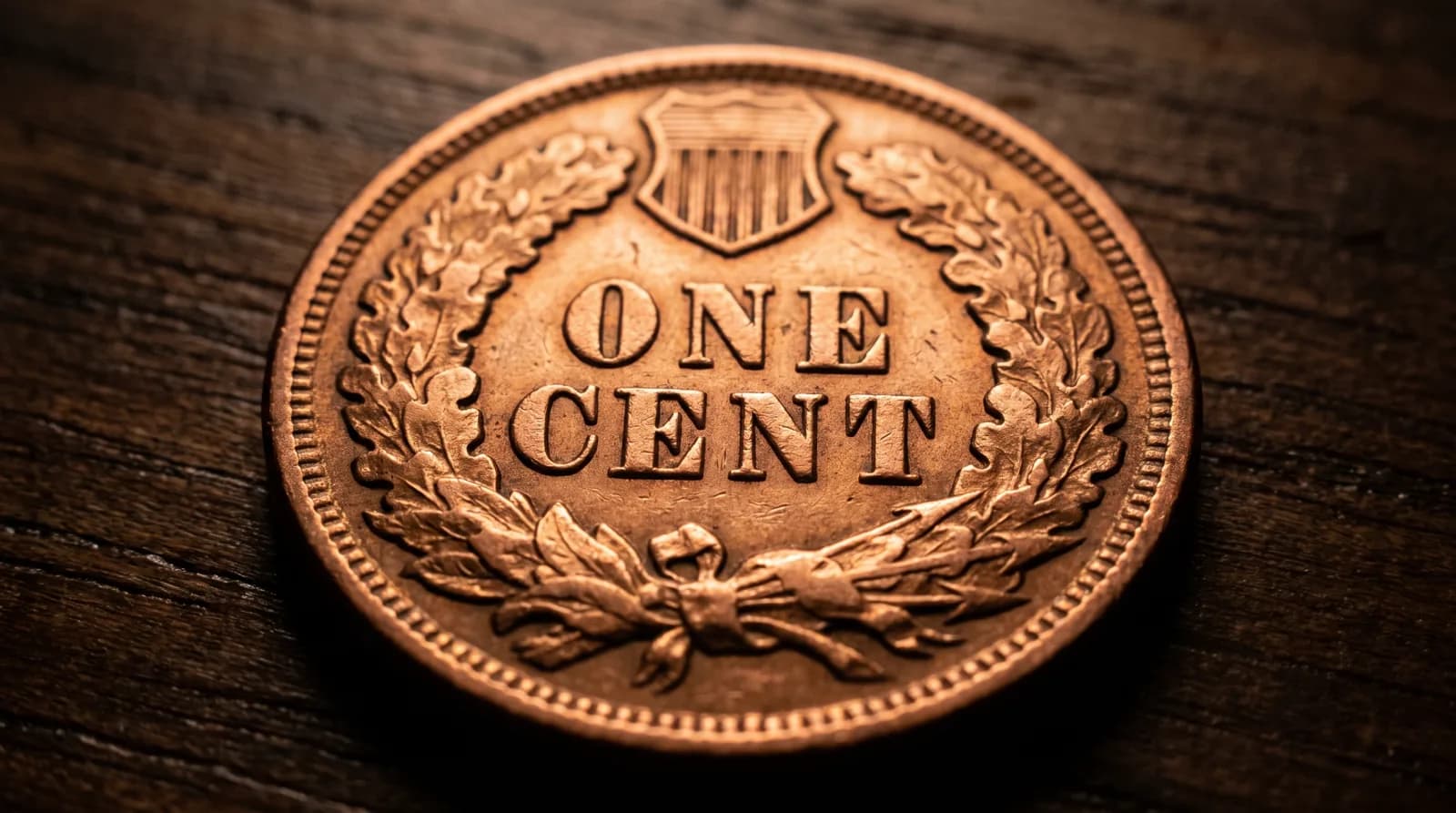
Read the date first, then check for an 'S' mint mark below the wreath on the reverse (only 1908 and 1909 have S-mint Indian cents). Compare against the key-date list and set aside anything scarce or sharp.
Don't clean them, and get more than one offer on key dates at a coin shop or rare coin dealer. For a larger group, see selling a coin collection.
Frequently asked questions
How much is an Indian Head penny worth?+
Common worn dates are worth a few dollars. Key dates like the 1877 are worth hundreds to thousands, and the 1909-S and 1908-S carry strong premiums, especially in high grade.
What is the rarest Indian Head penny?+
The 1877 is the famous key date. The 1909-S has the lowest mintage at 309,000, and the 1908-S is the first San Francisco cent — all are scarce and valuable.
Where is the mint mark on an Indian Head penny?+
On the reverse, below the wreath. Only 1908 and 1909 cents have an 'S' (San Francisco) mint mark; all other dates were struck at Philadelphia with no mark.
Are Indian Head pennies made of copper?+
From 1864 to 1909 they're 95% copper bronze. The earliest 1859–1864 cents are a lighter copper-nickel alloy. Neither has meaningful melt value, so worth is numismatic.