
Sacagawea Dollar Value: Why It's Probably Worth Exactly $1
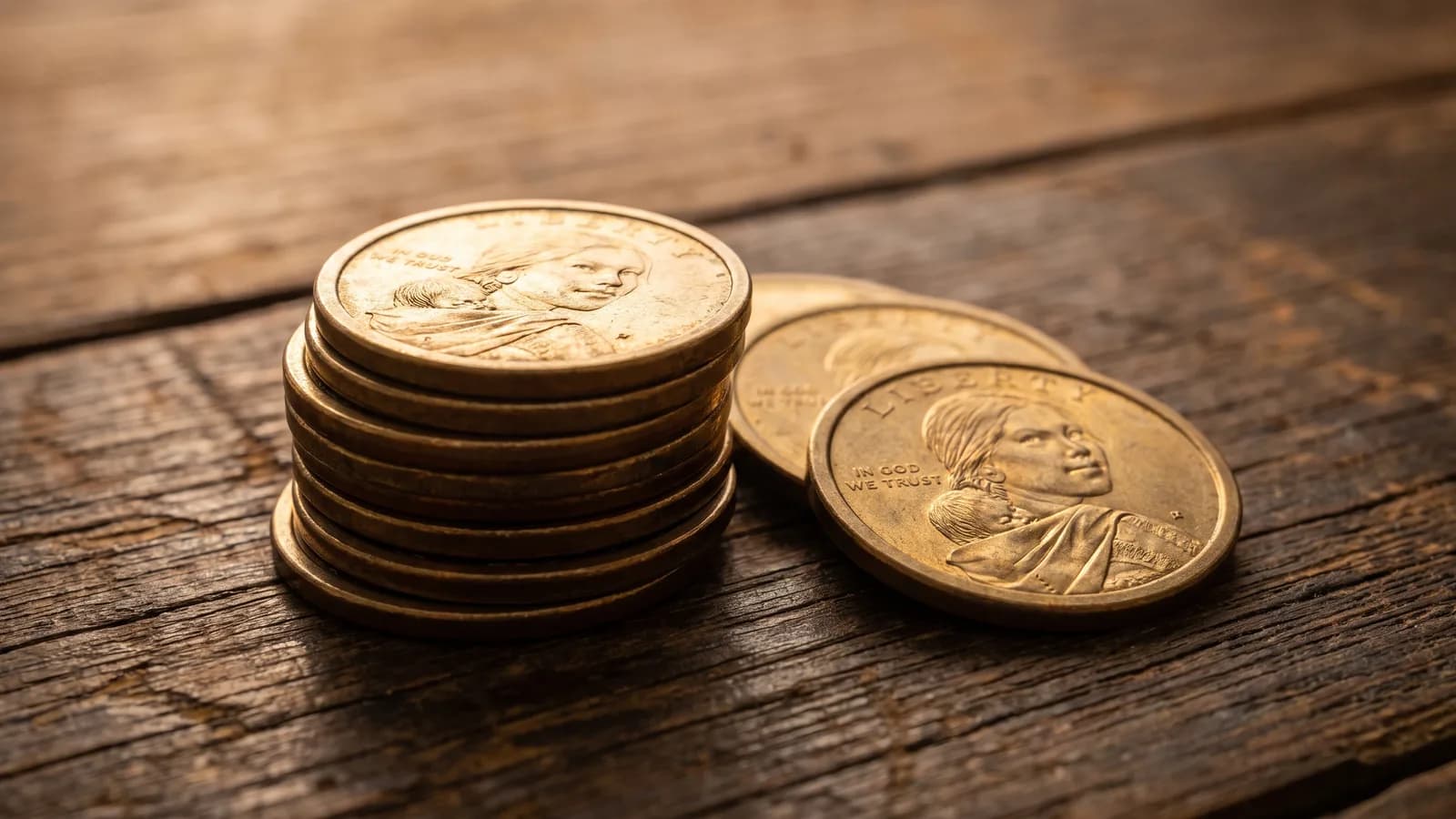
Almost every Sacagawea dollar is worth exactly one dollar — and despite the color, none of the circulating coins contain any gold. The 'golden dollar' is a manganese-brass coin, not a precious-metal one, and billions were made, so the everyday coin in your drawer is worth face value. That said, a small number of genuine rarities and errors are worth real money. This guide explains what a Sacagawea dollar is actually made of, why most are common, and the few exceptions worth looking for.
Key takeaways
- Sacagawea 'golden' dollars are made of manganese brass, not gold, and almost all are worth exactly their $1 face value.
- The golden color comes from a copper-manganese-brass outer layer over a copper core — there is no gold in a circulating Sacagawea dollar.
- A few genuine rarities are worth thousands, including the 2000 'Cheerios' dollar and the 2000-P Sacagawea/Washington quarter mule error.
- The 2000-W 22-karat gold Sacagawea coins are real gold but were never released to the public.
- Native American dollar coins (2009 onward) continue the same series with rotating reverse designs.
How much is a Sacagawea dollar worth?
For nearly all of them, one dollar. Sacagawea dollars were produced in enormous numbers and never circulated widely, so the typical coin is worth its face value, not a premium.
The exceptions are a handful of rare varieties and errors covered below. Unless your coin is one of those specific issues, treat it as a $1 coin.
Are Sacagawea dollars gold?
No. The golden color is a coating, not the metal. Sacagawea dollars have a pure copper core wrapped in a manganese-brass outer layer (copper, zinc, manganese, and nickel), which gives the gold-like appearance without any actual gold.
So a 'gold Sacagawea dollar' found in change is brass-colored clad metal worth one dollar — the same as the day it left the mint.
Why are so many Sacagawea dollars worth only face value?
Because the Mint struck them by the billions and the public never adopted dollar coins for everyday use. Huge mintages plus low circulation left most coins common and uncirculated, which keeps everyday values at face.
This is the same dynamic behind other modern dollar coins; our are dollar coins worth anything guide covers the broader picture.
What is the 2000 'Cheerios' dollar?
In 2000, General Mills placed Sacagawea dollars in boxes of Cheerios as a promotion. Some of those coins were struck with a reverse showing enhanced detail in the eagle's tail feathers, different from the regular reverse — and these 'Cheerios dollars' are rare and valuable, with genuine examples selling for thousands.
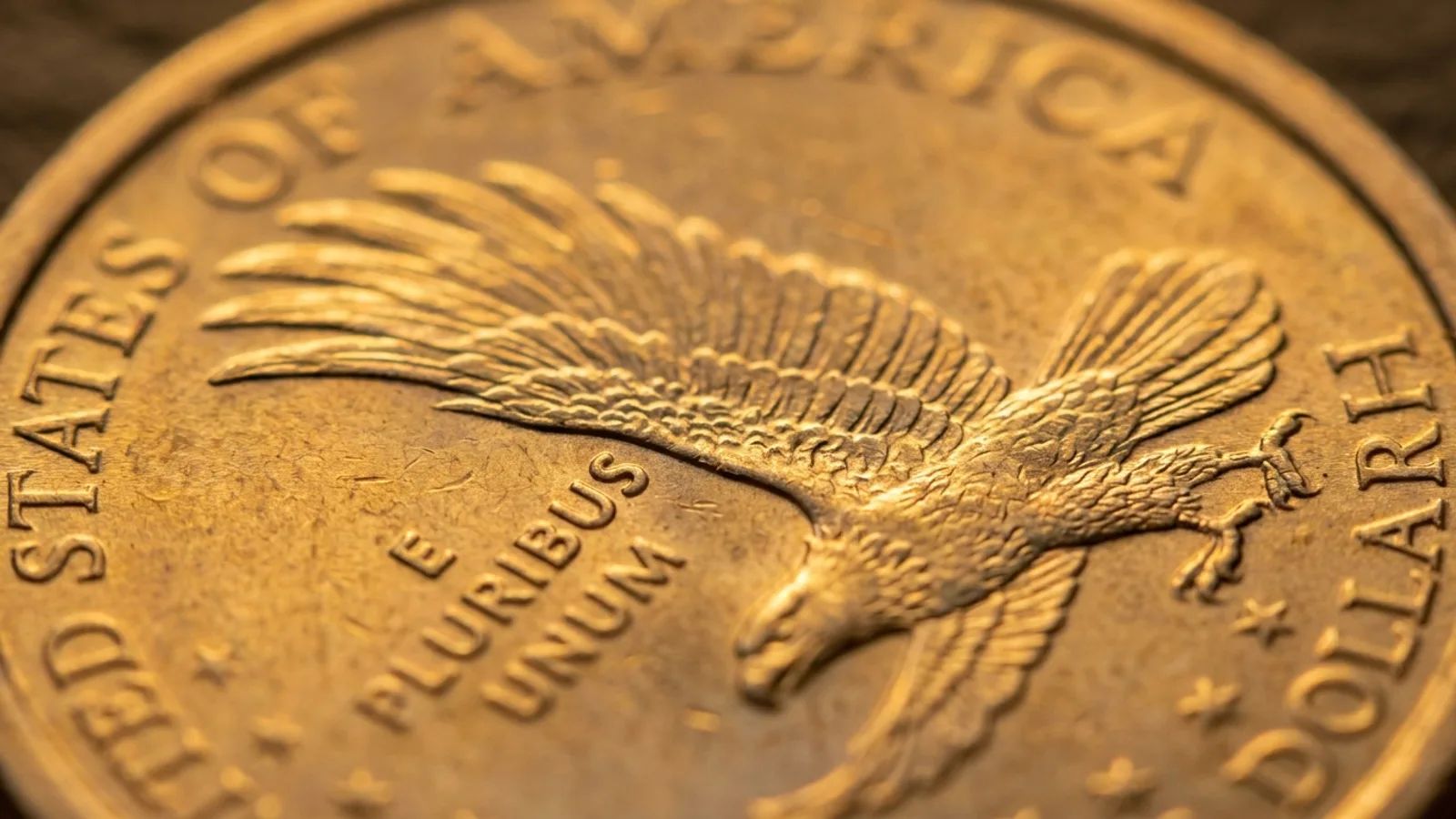
Because the difference is in the tail-feather detail, attribution takes a careful look or an expert eye. Have a suspected Cheerios dollar authenticated before assuming a big value.
What is the Sacagawea mule error?
The most valuable Sacagawea-related coin is a mule error: a small number of 2000-P coins were struck with a Washington quarter obverse paired with the Sacagawea dollar reverse. These 'mule' errors are among the most famous modern U.S. errors and have sold for tens of thousands of dollars.
A mule is a coin struck from two dies that were never meant to be paired. Like all dramatic errors, it should be authenticated — see our coin errors explained guide.
| Coin | Why it matters |
|---|---|
| Ordinary dates | Worth $1 face value |
| 2000 Cheerios dollar | Enhanced tail feathers; rare and valuable |
| 2000-P mule (quarter obverse) | Famous error; very valuable |
| 2000-P 'Wounded Eagle' | Die gouge variety; modest premium |
| 2000-W 22k gold | Real gold; government-held, not circulating |
What about the gold Sacagawea and other varieties?
The Mint did strike 39 Sacagawea dollars in 22-karat gold in 2000, and some were even flown aboard a Space Shuttle mission — but these are government-held and were never released to the public, so they are not coins you will find in change.
A collectible die variety, the 2000-P 'Wounded Eagle' (or 'Speared Eagle'), shows a raised line through the eagle and carries a modest premium. Most other varieties are minor.
What about Native American dollars (2009 onward)?
Starting in 2009, the Sacagawea dollar became the Native American $1 Coin series, keeping the same Sacagawea obverse but adding a new reverse design each year. They share the same manganese-brass composition and are generally worth face value.
Some have edge-lettering varieties and errors of interest to specialists, but the everyday coins are $1 coins like the earlier issues.
How do you check and sell a Sacagawea dollar?
If you think you have a Cheerios dollar, a mule, or another rarity, do not clean it and have it authenticated by PCGS or NGC; see which grading companies to trust.
Verified rarities sell through a rare coin dealer or auction house. Ordinary Sacagawea dollars can be spent or sold to a coin shop, but expect face value.
Frequently asked questions
Are Sacagawea dollars made of gold?+
No. They have a copper core with a manganese-brass outer layer that looks gold but contains no gold. A circulating Sacagawea dollar is worth its $1 face value.
How much is a Sacagawea dollar worth?+
Almost all are worth exactly one dollar. Only specific rarities — like the 2000 Cheerios dollar and the 2000-P mule error — are worth more, and those are scarce.
What is the rare Sacagawea dollar to look for?+
The 2000 'Cheerios' dollar (with enhanced eagle tail feathers) and the 2000-P Sacagawea/Washington quarter mule error are the valuable ones, both worth having authenticated.
Is the gold Sacagawea dollar real?+
The Mint struck 39 genuine 22-karat gold Sacagawea dollars in 2000, but they were never released to the public and are government-held. Gold-colored coins in change are brass, not gold.