
Counterstamped Coins: Merchant Marks and Their Value
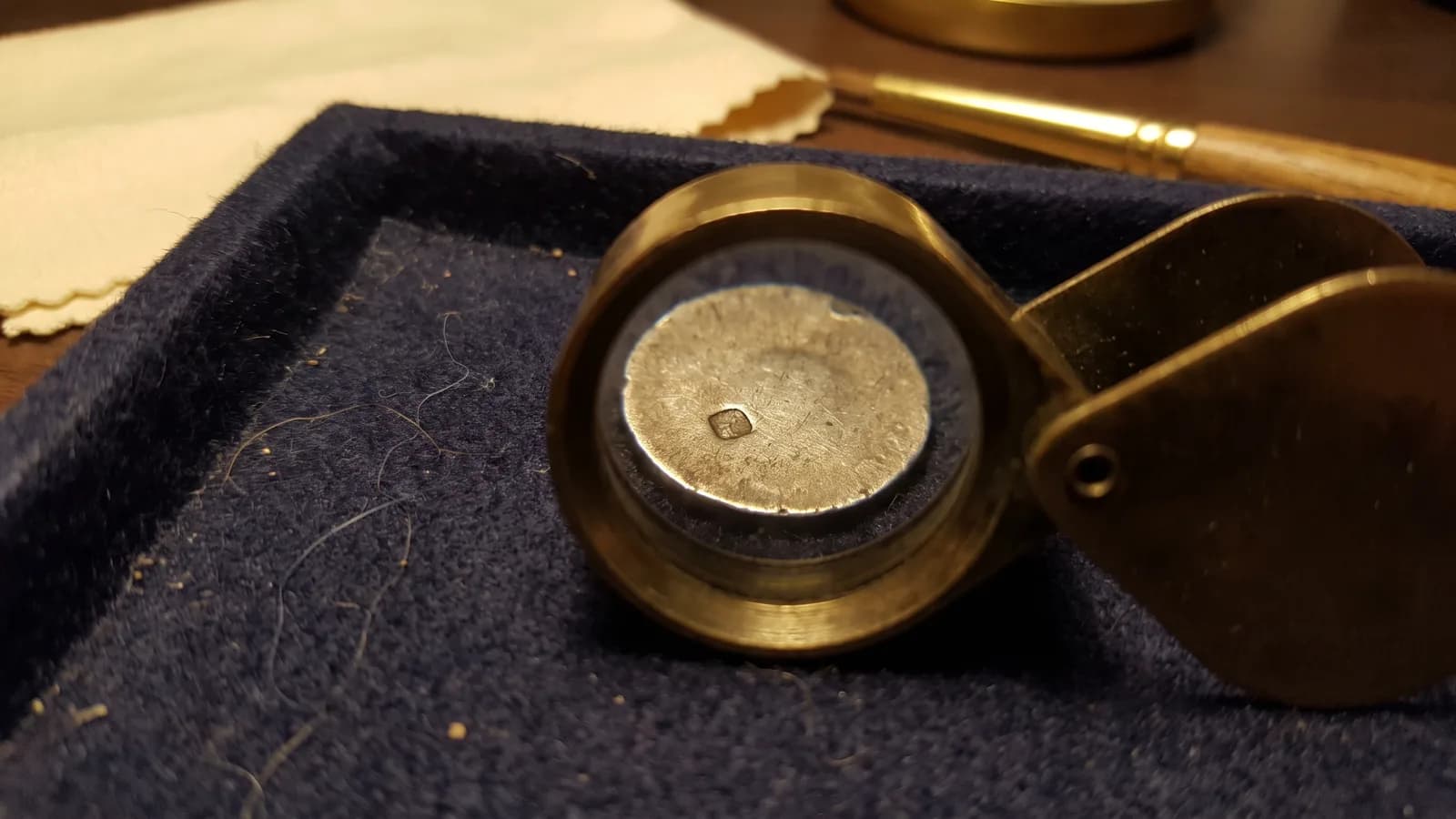
A counterstamped coin, also called a countermarked coin, is a genuine host coin into which someone later punched a mark, most often a merchant's name or initials for advertising, a maker's or assayer's hallmark, or a short slogan. These marks were most common in the 19th century, when a coin passing from hand to hand worked as a tiny mobile advertisement. Counterstamped coins are collected as exonumia, the field of numismatic items beyond regular government coins and paper money. Ordinary merchant stamps are modest in value, while famous historical marks can bring hundreds to thousands of dollars.
Key takeaways
- A counterstamped (countermarked) coin is a genuine host coin into which someone punched a mark, most often a merchant name or initials, a maker's or assayer's hallmark, or a slogan.
- The marks were most common in the 19th century, when a circulating coin doubled as a small, mobile advertisement.
- The standard reference is Gregory Brunk's catalog of American and Canadian merchant and privately countermarked coins, which lists roughly 13,500 marks.
- Ordinary merchant stamps are modest in value, while historically important stampers such as early gold-rush assayers, patent-medicine makers, or political marks can reach the hundreds to thousands.
- The core collecting skill is telling an intentional counterstamp from graffiti or post-mint damage, which references and certification help resolve.
What Is a Counterstamped Coin?
A counterstamped coin is a real, already-struck coin that someone punched with a separate mark after it left the mint. The underlying coin is called the host, and the added mark is the counterstamp or countermark.
The stamp was applied with a hand punch or a small press, so it usually sits crisp and deliberate on top of the coin's original design. Common marks include a business name, a set of initials, a maker's hallmark, an assayer's touchmark, or a brief phrase. Because the host kept circulating, the mark traveled with it, which is why merchants used coins this way in the first place.
Counterstamping sits alongside other altered-coin traditions in exonumia. For the wider family of tokens and marked pieces, start with our pillar guide to collectible tokens.
Merchant Marks and Advertising on Coins
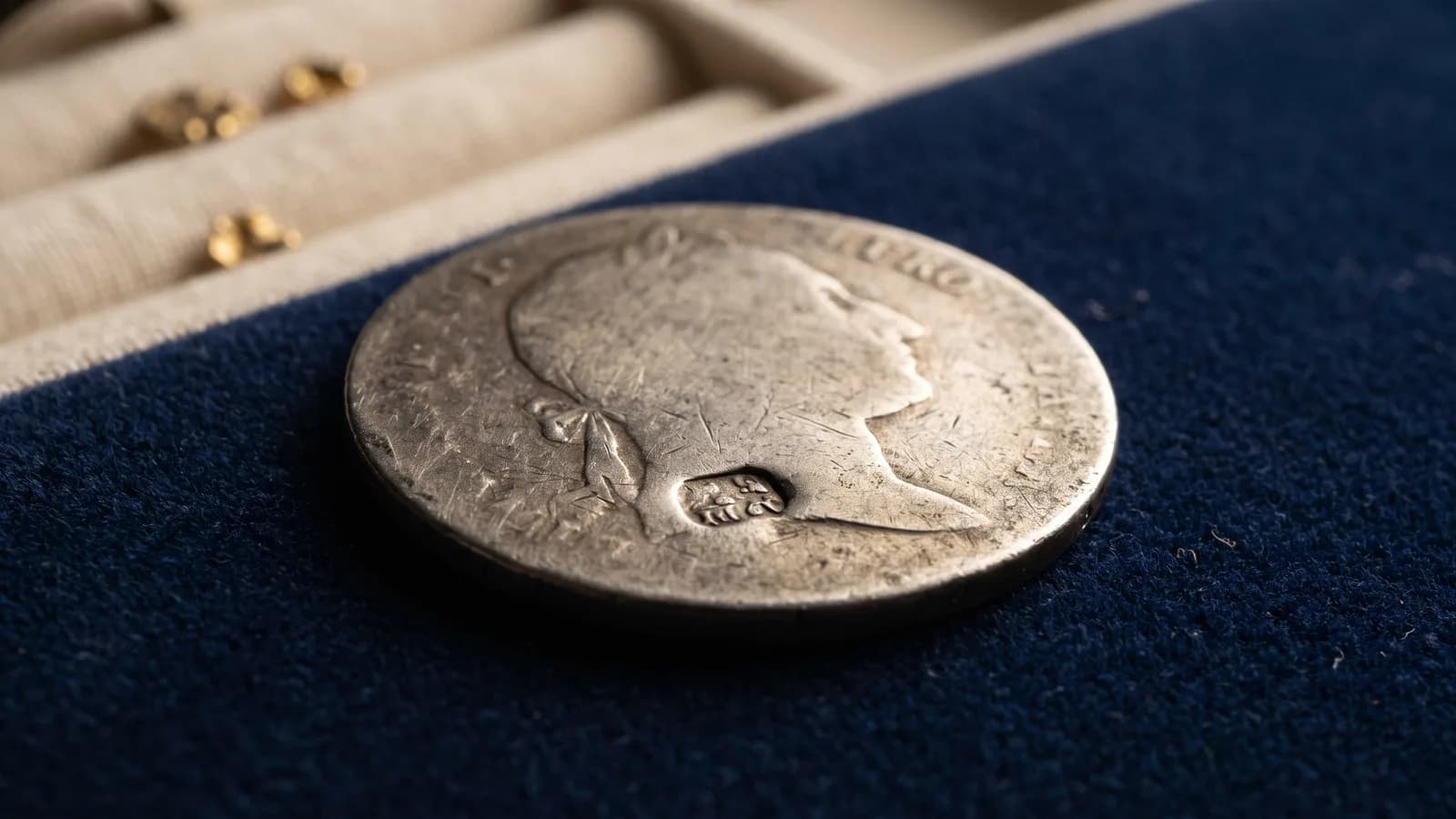
Most surviving counterstamps are merchant advertising from the 1800s, when punching a name onto a circulating coin was a cheap way to keep a business in front of the public. Each marked coin became a small billboard that spent itself from pocket to pocket.
Merchants, druggists, jewelers, and tradespeople stamped their names, addresses, or trades onto coins that were already in daily use. Some marks promoted a specific product, others simply carried a shop name. The practice overlapped with the rise of privately issued tokens, so a merchant might both hand out tokens and stamp loose coins.
The era matters for identification. A 19th-century mark on a period host coin is consistent with genuine merchant advertising, while a modern-looking stamp on an old coin deserves a closer, more skeptical look.
Types of Counterstamps
Counterstamps fall into a few broad families, and the family often signals how collectible a piece is. Merchant advertising marks are the most common; maker hallmarks, assayer marks, and political or slogan stamps are generally scarcer and more sought after.
The table below groups the main types with a hedged note on desirability. Treat the ranges as general tendencies, not fixed prices, because condition, the host coin, and the specific stamper all move value.
| Type | What the mark is | Typical desirability |
|---|---|---|
| Merchant | A business name, address, or trade for advertising | Most common; ordinary examples are modest |
| Maker hallmark | A silversmith's or manufacturer's stamp | Scarcer; prized when tied to a known maker |
| Assayer | An assayer's or refiner's touchmark, often on precious-metal pieces | Often scarce; early frontier or gold-rush marks command premiums |
| Political or slogan | A candidate, cause, or short message | Collector favorites; strong marks bring high premiums |
Counterstamp or Damage? How to Tell
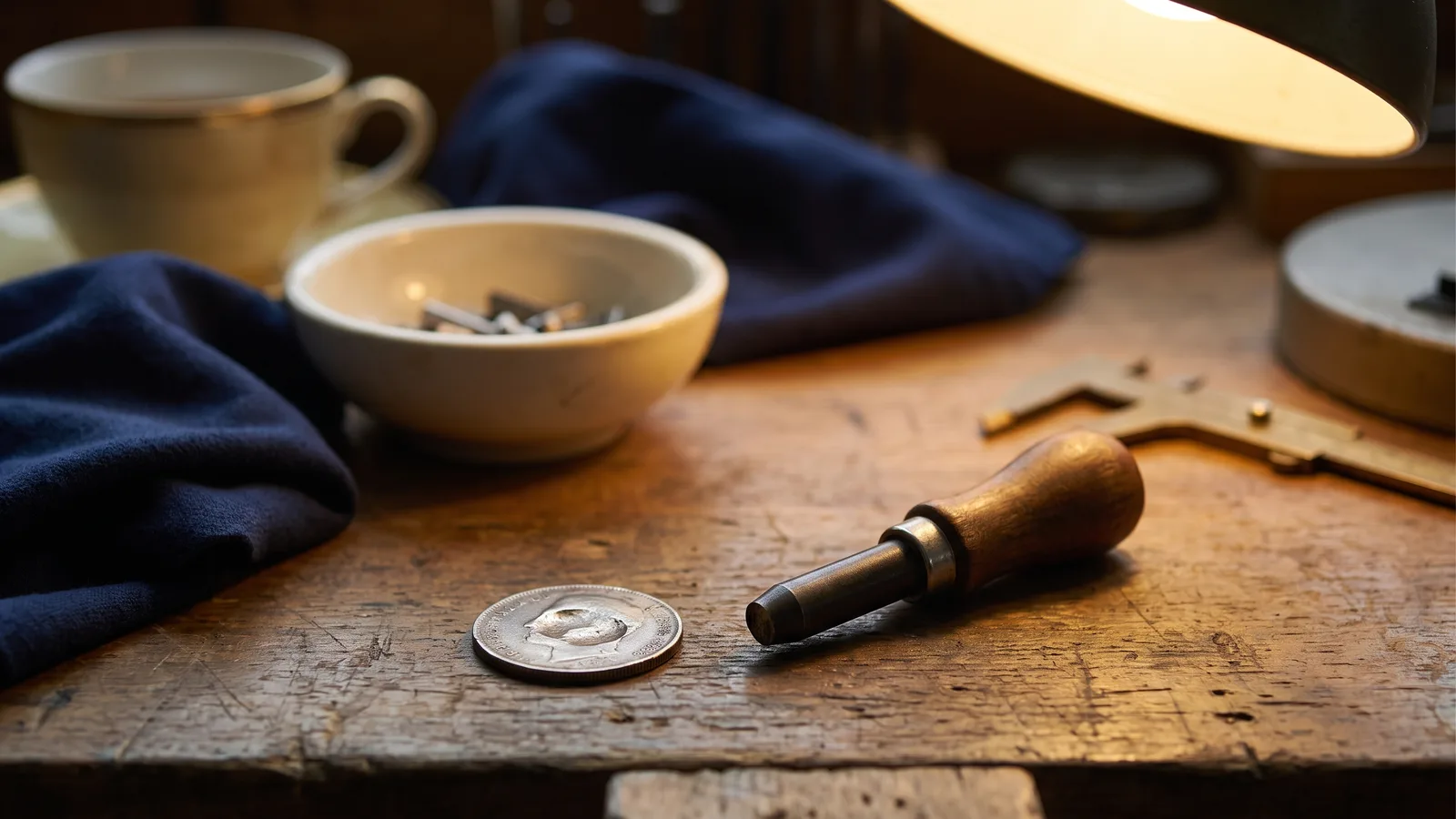
The central skill in this field is separating an intentional counterstamp from graffiti or ordinary post-mint damage. A true counterstamp is a deliberate, repeatable mark; random scratches, test punches, and dents are not.
Look for a clean, well-formed impression with consistent letters or a coherent device, punched from a single tool. Genuine merchant marks tend to match known examples in the reference literature, so a mark you can attribute to a cataloged stamper is far stronger than a lone set of scratched initials. Hand-scratched names, isolated gouges, and holes are usually damage or personal graffiti rather than collectible counterstamps.
This is the opposite situation from a love token, where an engraver deliberately smoothed and hand-engraved a coin as folk art. Both alter a coin, but a counterstamp is punched advertising while a love token is engraved keepsake work. When authenticity is in doubt, the same caution used for spotting fake coins applies here.
What Drives Counterstamp Value
Value depends far more on who applied the stamp and why than on the host coin alone. Ordinary merchant marks are modest, while historically important stampers can reach the hundreds to thousands of dollars.
The marks that draw the strongest interest tend to come from early gold-rush assayers, well-known patent-medicine makers, and political counterstamps tied to a candidate or cause. One frequently cited patent-medicine example is the Houck's Panacea mark, promoting a Baltimore cure-all from the 1830s, which collectors seek out on early host coins. Beyond the stamper, value rises with a bold, fully legible strike, a desirable or scarce host coin, and a clear, documented attribution.
Because ranges are wide and stamp-specific, avoid fixed expectations. A common merchant mark may bring only a modest sum, while a famous or well-attributed stamp can climb into the hundreds or thousands. A dealer who handles exonumia can give a grounded read; our directory of rare coin dealers is a place to start.
How Counterstamps Relate to Trade Tokens
Counterstamped coins and trade tokens are two solutions to the same 19th-century problem: how a small business could advertise and extend credit using metal that circulated. One stamped an existing coin; the other issued a purpose-made piece.
A trade token is a privately made token, usually brass or aluminum, that a business gave or sold to customers and redeemed only at that business, often reading GOOD FOR 5 CENTS IN TRADE. A counterstamp instead borrowed a government coin already in circulation and added the merchant's message. Collectors often pursue both because they document the same shops, towns, and trades from slightly different angles.
Both belong to exonumia, which also covers medals, so-called dollars, and encased pieces. You can browse dealers and material in the medals and tokens directory.
Why Certification Helps, and How to Research a Stamp
Certification and reference research both help because the hardest question with a counterstamp is whether the mark is a genuine, attributable stamp rather than damage. A third-party grader can authenticate and encapsulate notable pieces, and the reference literature lets you match a mark to a known stamper.
The standard reference is Gregory Brunk's catalog of American and Canadian merchant and privately countermarked coins, which lists roughly 13,500 marks. Collectors cite pieces by their Brunk listing, so an attributed mark carries far more confidence and value than an unidentified one. To research a stamp, record the exact letters, symbols, and layout, identify the host coin and its date, then compare against the catalog and reputable auction records. Do not treat a rough guess as a Brunk attribution; confirm it before relying on it.
For background, see the Wikipedia entry on countermarks, the reference resources at the Newman Numismatic Portal, and grading and authentication information from PCGS.
Frequently asked questions
What is the difference between a counterstamp and a countermark?+
The terms are used interchangeably for a mark punched into a genuine coin after it was struck. Both describe the same practice of adding a merchant name, hallmark, or slogan to an existing coin.
Does a counterstamp increase or decrease a coin's value?+
It depends on the mark. An ordinary merchant stamp usually adds little and can lower value if it damages a nice coin, while a famous or well-attributed stamp can make the piece worth far more than the host coin alone.
How can I tell a real counterstamp from graffiti?+
A genuine counterstamp is a clean, deliberate, repeatable impression made with a punch or press, and it can often be matched to a cataloged stamper. Hand-scratched initials, isolated gouges, and holes are usually damage rather than collectible marks.
What reference do collectors use for counterstamped coins?+
The standard reference is Gregory Brunk's catalog of American and Canadian merchant and privately countermarked coins, which lists roughly 13,500 marks. Pieces are commonly cited by their Brunk listing.
Where can I get a counterstamped coin evaluated?+
A dealer or appraiser who handles exonumia can help authenticate and value a piece, and third-party grading can certify notable examples. Our directory of rare coin dealers is a good starting point.