
Wooden Nickels: History and Value
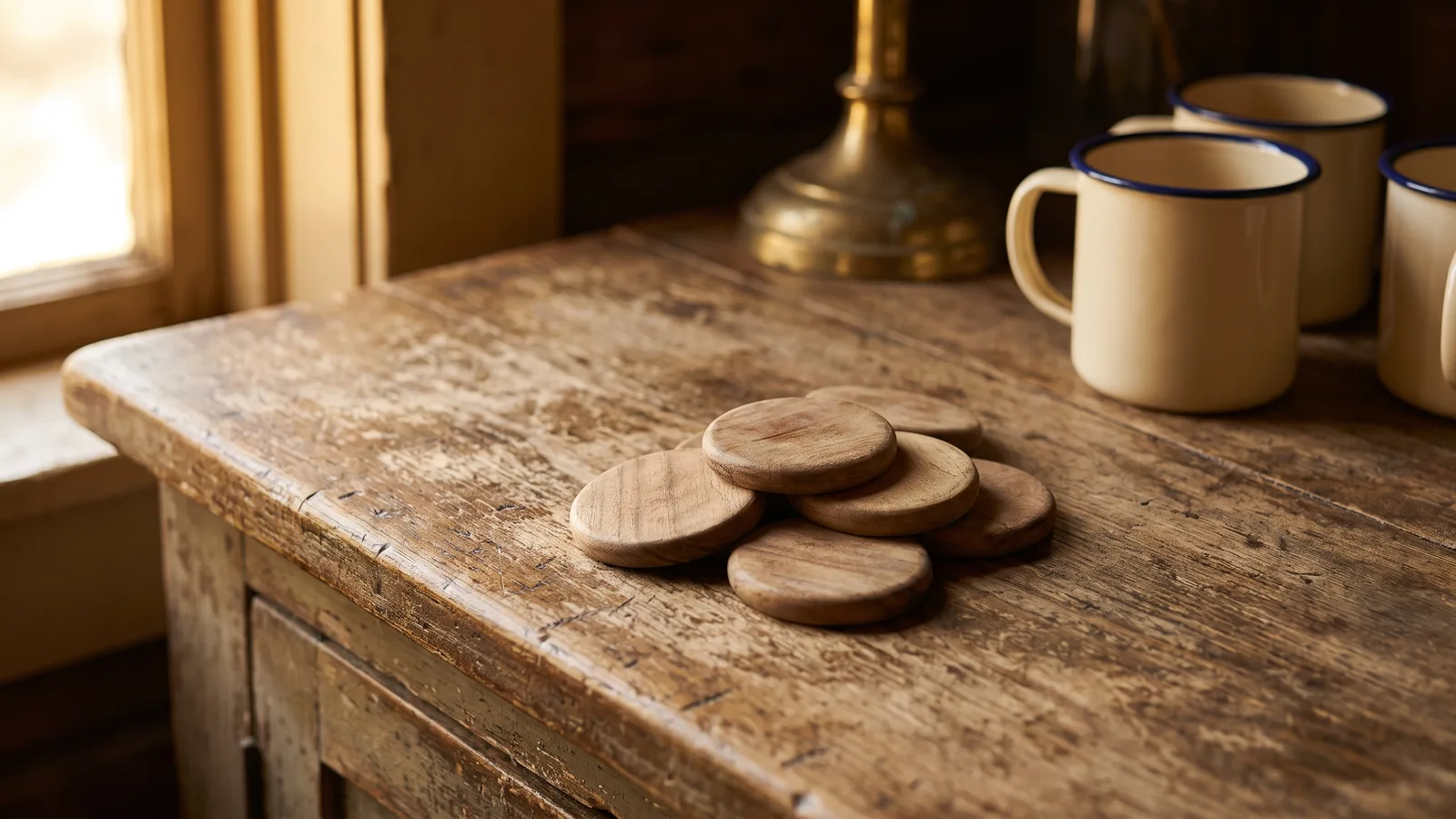
Wooden nickels are flat wooden token coins that come from two very different eras. The first is Depression-era emergency scrip, most famously the wooden money Tenino, Washington issued in 1931 after its local bank failed. The second is the modern promotional wooden nickel a business hands out, often stamped good for a small discount. Value tracks that split: modern promo pieces are worth a few cents to about a dollar, while genuine Depression-era town scrip commonly runs about $50-$150 or more depending on the town and rarity.
Key takeaways
- A wooden nickel is a flat wooden token coin, made either as Depression-era emergency scrip or as a modern promotional giveaway.
- Tenino, Washington issued wooden money in 1931 after the Citizens Bank of Tenino failed, in 25-cent and 50-cent denominations, followed by Blaine, Washington and Pismo Beach, California.
- The 1933 Chicago World's Fair issued souvenir wooden nickels, spreading the format nationwide.
- Modern promotional wooden nickels commonly sell for a few cents to a dollar, while genuine Depression-era town scrip in nice condition commonly runs about $50-$150 or more.
What Is a Wooden Nickel?
A wooden nickel is a flat, coin-shaped token made of wood rather than metal. It is a piece of exonumia, the collecting field that covers numismatic items other than government coins and paper money.
Despite the name, most wooden nickels were never worth five cents in the ordinary sense. Some early ones stood in for real money during a local emergency, while most later ones are advertising or souvenir pieces. For the broader family of merchant and souvenir tokens, see the pillar overview of collectible tokens.
Depression-Era Wooden Money: Tenino and Beyond
The first well-known wooden nickels were emergency scrip issued when banks failed during the Great Depression. In 1931, after the Citizens Bank of Tenino failed, the town of Tenino, Washington issued wooden money in 25-cent and 50-cent denominations so local commerce could keep running.
The idea spread. Blaine, Washington and Pismo Beach, California soon issued their own wooden money, and other towns experimented with wooden currency during the same period. This was a local response to a cash shortage, the same economic pressure that produced other emergency money and, decades earlier, the merchant scrip covered in our guide to Hard Times tokens.
Genuine town scrip from this era is what most serious collectors mean when they talk about valuable wooden nickels. Surviving pieces tie directly to a documented bank failure and a specific community, which is why they carry a real premium over ordinary souvenirs.
The 1933 Chicago World's Fair and the Souvenir Era
The 1933 Chicago World's Fair, held to mark the city's centennial, issued souvenir wooden nickels that helped turn the format into a national novelty. From that point, the wooden nickel shifted from emergency money toward keepsake and advertising piece.
That transition is why the format survives today. Once fairs and expositions showed that a cheap wooden token made a memorable souvenir, businesses adopted the same idea for promotions.
Modern Promotional Wooden Nickels
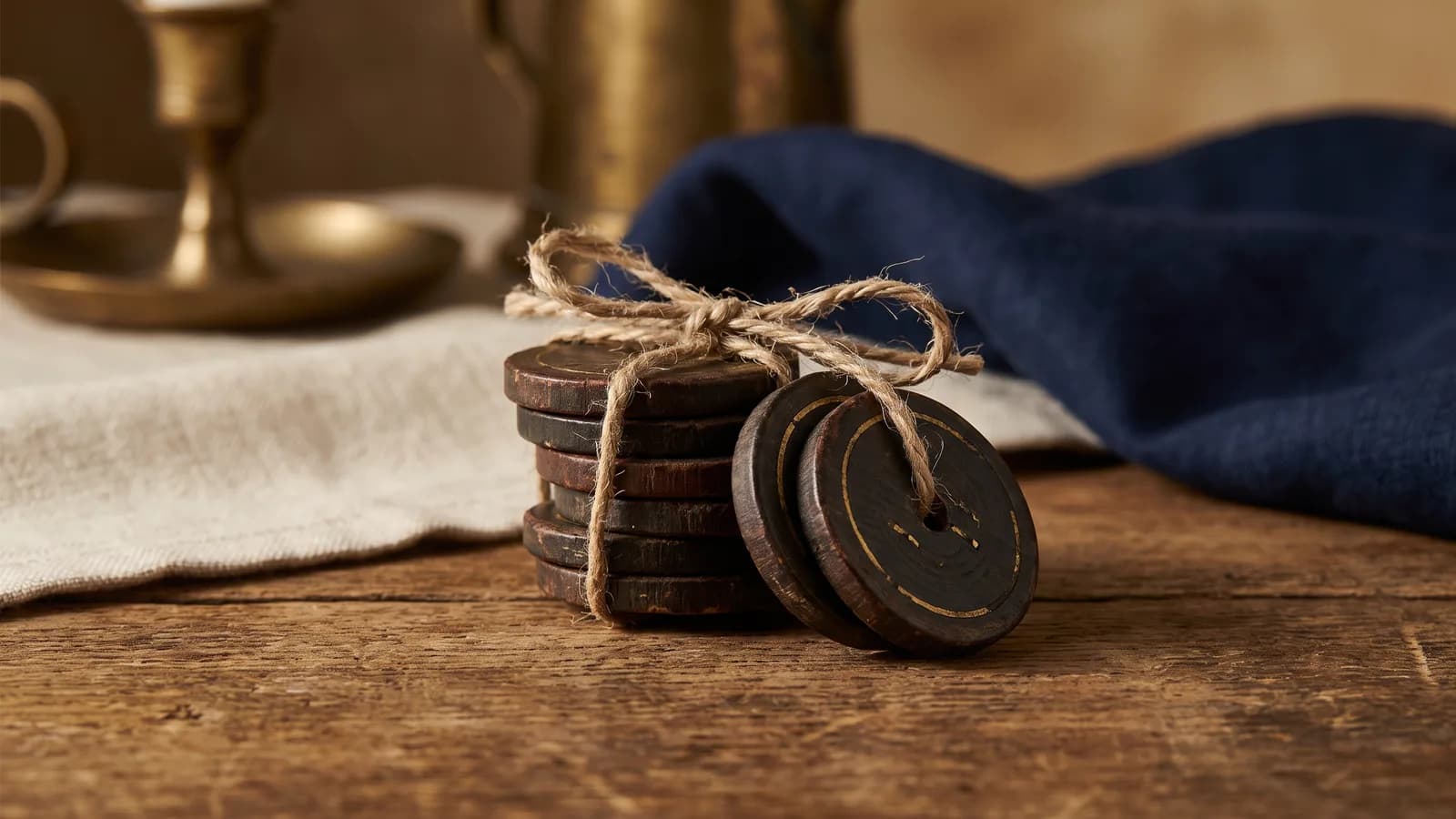
Modern promotional wooden nickels are advertising giveaways. A business prints its name on one side and a message on the other, often reading good for a stated discount or a free item, keeping alive the good-for tradition also seen in trade tokens.
These pieces are produced in large numbers and are inexpensive to make, so most have little collector value on their own. They are collected mainly by theme, by home state, or by the business that issued them rather than for rarity.
Why the Idiom Don't Take Any Wooden Nickels
The phrase don't take any wooden nickels is a folksy American warning to be careful and avoid being cheated. It treats the wooden nickel as the classic example of worthless fake money.
The saying predates most surviving tokens and reflects a general caution rather than any single scam. Its staying power is part of why wooden nickels remain a recognizable collectible even for people who have never owned one.
What Drives the Value of a Wooden Nickel?
Value depends almost entirely on whether a piece is genuine Depression-era town scrip or a mass-produced promotional token. Authentic emergency scrip tied to a documented bank failure is scarce and historically significant; modern promos are common.
Within each group, condition, the specific town, and demand from local collectors move the price. The comparison below shows how the two eras typically differ. Values are approximate and hedged, since wooden tokens are thinly traded and prices vary by piece.
| Type | Era | Purpose | Typical value |
|---|---|---|---|
| Depression-era town scrip | 1931-1930s | Emergency money after bank failures | Commonly $50-$150 or more |
| World's Fair souvenir | 1933 onward | Exposition keepsake | A few dollars to tens of dollars |
| Modern promotional | Mid-1900s to today | Advertising giveaway (good for a discount) | A few cents to about a dollar |
How to Tell Old Scrip From a Modern Souvenir
Old emergency scrip usually names a specific town and a denomination such as 25 cents or 50 cents, and often references the local bank or a date around 1931 to 1933. The wood tends to show genuine age, wear, and toning consistent with decades of handling.
Modern promotional pieces almost always carry a business name, a phone number or web address, or a good-for discount offer, and the printing looks crisp and uniform. When a piece could plausibly be old and valuable, a numismatic appraiser can help confirm it; browse the numismatic appraisers directory for local help.
How to Collect and Where to Buy or Sell
Most collectors focus on a theme, such as their home state, a favorite town, or emergency Depression scrip, which keeps a collection focused and affordable. Beginners often start with cheap promotional pieces before pursuing genuine 1930s scrip.
Wooden nickels turn up at coin shops, token and medal specialists, estate sales, and online marketplaces. To find dealers who handle tokens, use the medals and tokens directory or search local collectibles shops. When selling, get more than one opinion on any piece you believe is genuine town scrip. For background reading, see Wikipedia's overview of the wooden nickel and the collector resources at the American Numismatic Association. The Smithsonian's National Museum of American History documents Depression-era emergency money in its numismatic collections.
Frequently asked questions
Are wooden nickels worth anything?+
It depends on the type. Modern promotional wooden nickels commonly sell for a few cents to about a dollar. Genuine Depression-era town scrip in nice condition commonly runs about $50-$150 or more depending on the town and rarity.
Why did Tenino, Washington make wooden money?+
In 1931, after the Citizens Bank of Tenino failed, the town issued wooden money in 25-cent and 50-cent denominations so residents and businesses had a local medium of exchange during the cash shortage.
Did the 1933 Chicago World's Fair issue wooden nickels?+
Yes. The 1933 Chicago World's Fair issued souvenir wooden nickels, which helped popularize the format nationwide and pushed it toward keepsake and advertising use.
What does don't take any wooden nickels mean?+
It is an old American saying that means be careful and do not let yourself be cheated. The wooden nickel stands in as the classic example of worthless fake money.
How can I tell if a wooden nickel is old or modern?+
Old emergency scrip usually names a town and a denomination and shows genuine age. Modern promotional pieces carry a business name, contact details, or a good-for discount offer and look crisply printed. An appraiser can confirm a piece you believe is genuine.