
Walking Liberty Half Dollar Value: Key Dates and Worth
A Walking Liberty half dollar is worth at least its silver content — about 0.3617 troy ounces — and the early dates and high grades are worth far more. Struck from 1916 to 1947, this 90% silver coin is widely considered one of the most beautiful U.S. designs, which is why it was revived for the American Silver Eagle. This guide covers the silver value, the scarce key dates, the popular short set, and how grade shapes what your coin is worth.
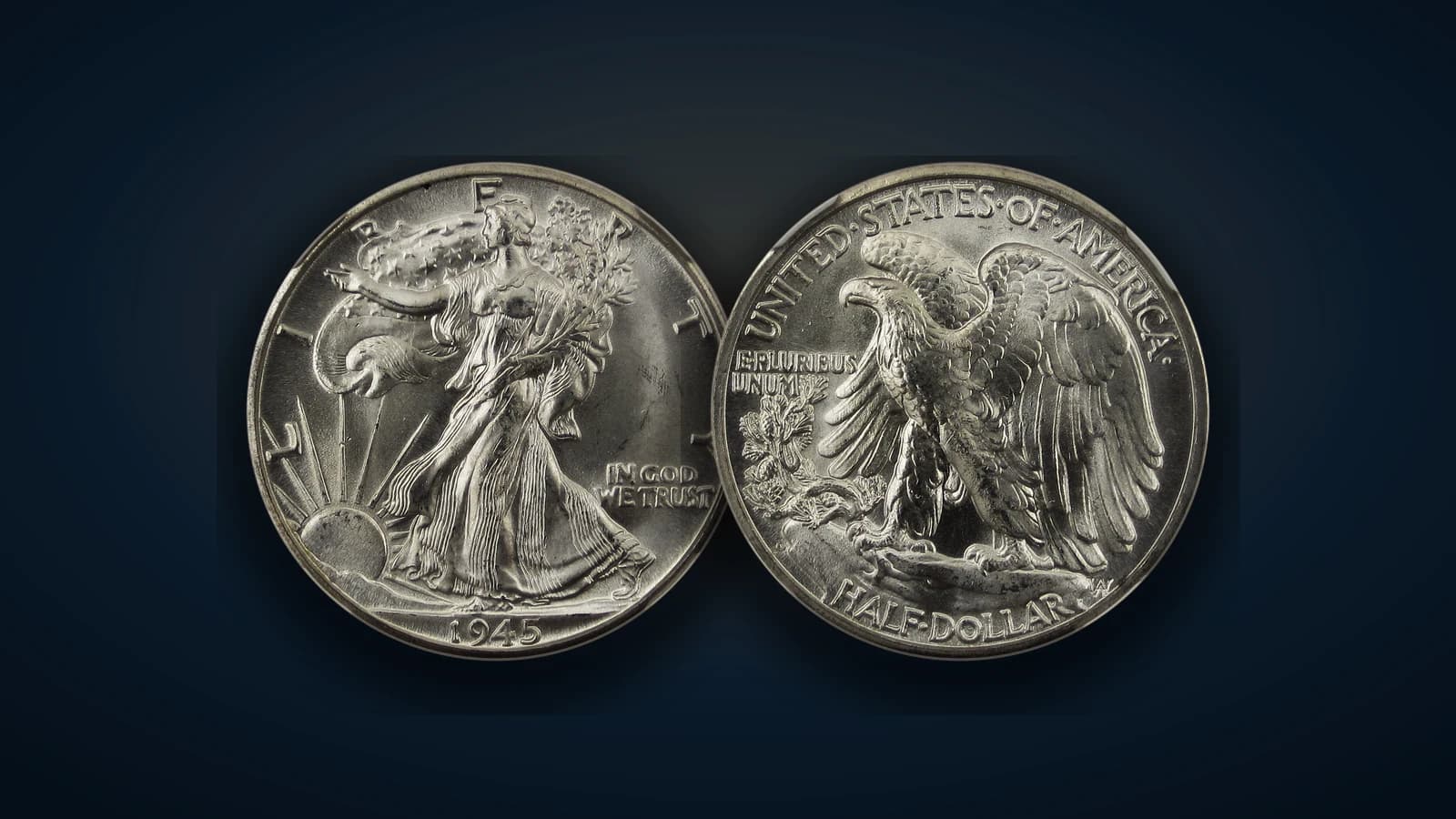
Key takeaways
- Walking Liberty half dollars (1916–1947) are 90% silver and contain about 0.3617 troy ounces of silver each.
- Early dates (1916–1921) are the scarce keys, with the 1921-D especially valuable; later dates are more affordable.
- The 1941–1947 'short set' is popular, affordable, and a common entry point for new collectors.
- Common-date coins trade near silver value when worn, with collector premiums rising steeply in high grades.
- The design was reused on the modern American Silver Eagle, which keeps demand for the series strong.
How much is a Walking Liberty half dollar worth?
A common-date Walking Liberty half in circulated condition is worth close to its silver value, which sets a floor. Scarce early dates and high-grade coins carry collector premiums well above melt.
So worth comes down to three things: the silver content sets the minimum, and the date and grade decide how far above it a coin trades.
How much silver is in a Walking Liberty half?
Each coin is 90% silver and contains about 0.3617 troy ounces of pure silver — the same as other 90% silver half dollars. That metal value underpins every coin in the series.
At a silver price of, say, $30 per ounce, the melt value is roughly 0.3617 x $30 = about $10.85. Use the precious metals value calculator for a current number, and see silver coin melt value for the math.
Which are the key dates?
The scarce keys are concentrated in the early years, 1916 through 1921. The 1921-D is the standout — low mintage and valuable across grades — followed by the 1916, 1916-S, 1921, and 1921-S. The 1938-D is a later semi-key.
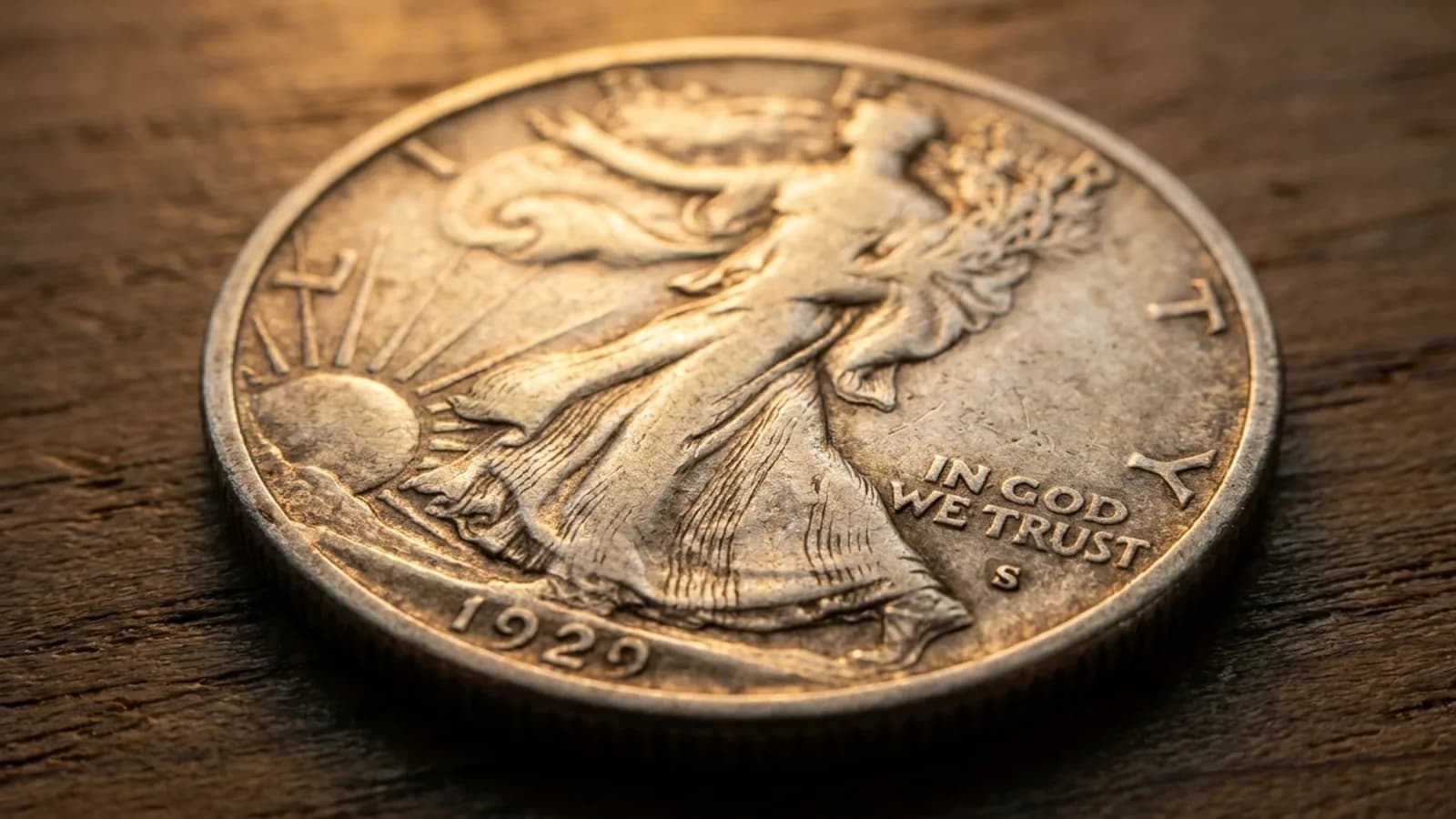
On the earliest coins, the mint mark appears on the obverse below the motto; from mid-1917 it moved to the reverse. Identifying it correctly is essential to valuing these dates.
| Date | Why it matters |
|---|---|
| 1921-D | Key date; valuable in all grades |
| 1916, 1916-S | Scarce first-year issues |
| 1921, 1921-S | Low-mintage early keys |
| 1938-D | Later semi-key date |
| 1941–1947 dates | Common, affordable 'short set' |
What is the 1941–1947 'short set'?
The 'short set' is the run of common, affordable dates from 1941 to 1947. Because these coins are plentiful and inexpensive, completing the short set is a popular and budget-friendly goal — a good fit for collecting on a budget.
Most short-set coins in circulated grades trade near silver value, so you get an attractive classic design without paying steep key-date premiums.
How much does grade affect the value?
A great deal. A common date worn flat is worth little over its silver, while the same date in high mint state can be worth many times more — and key dates climb fastest of all. This is condition rarity in action.
For valuable dates and high grades, a trusted grade protects you. See coin grading explained and our guide to which grading companies to trust.
Why does the Silver Eagle connection matter?
The Walking Liberty obverse was revived in 1986 for the American Silver Eagle, the U.S. Mint's flagship silver bullion coin. That ongoing exposure keeps the original design popular with both collectors and bullion buyers.
It also means the design is familiar to newcomers, which supports steady demand for the classic 1916–1947 coins.
Where should you sell Walking Liberty halves?
For common dates and short-set coins, an established coin shop or gold and silver buyer pays based on silver; ask how the offer compares to melt. For key dates and high grades, a rare coin dealer may pay a collector premium.
Always compare offers on better coins, and never clean them — cleaning permanently lowers the value of a collectible coin.
Frequently asked questions
How much silver is in a Walking Liberty half dollar?+
About 0.3617 troy ounces of pure silver, since the coin is 90% silver. Its melt value is that figure times the current silver price.
What is the key date Walking Liberty half dollar?+
The 1921-D is the standout key, valuable in all grades. Other early scarcities include the 1916, 1916-S, 1921, and 1921-S, with the 1938-D a later semi-key.
What is the Walking Liberty short set?+
The short set is the common, affordable run of dates from 1941 to 1947. It is a popular, budget-friendly way to own the classic design without key-date prices.
Is the Walking Liberty design still used today?+
Yes. The obverse was revived in 1986 for the American Silver Eagle bullion coin, which keeps the design in front of collectors and bullion buyers.