
Franklin Half Dollar Value: Key Dates and Full Bell Lines
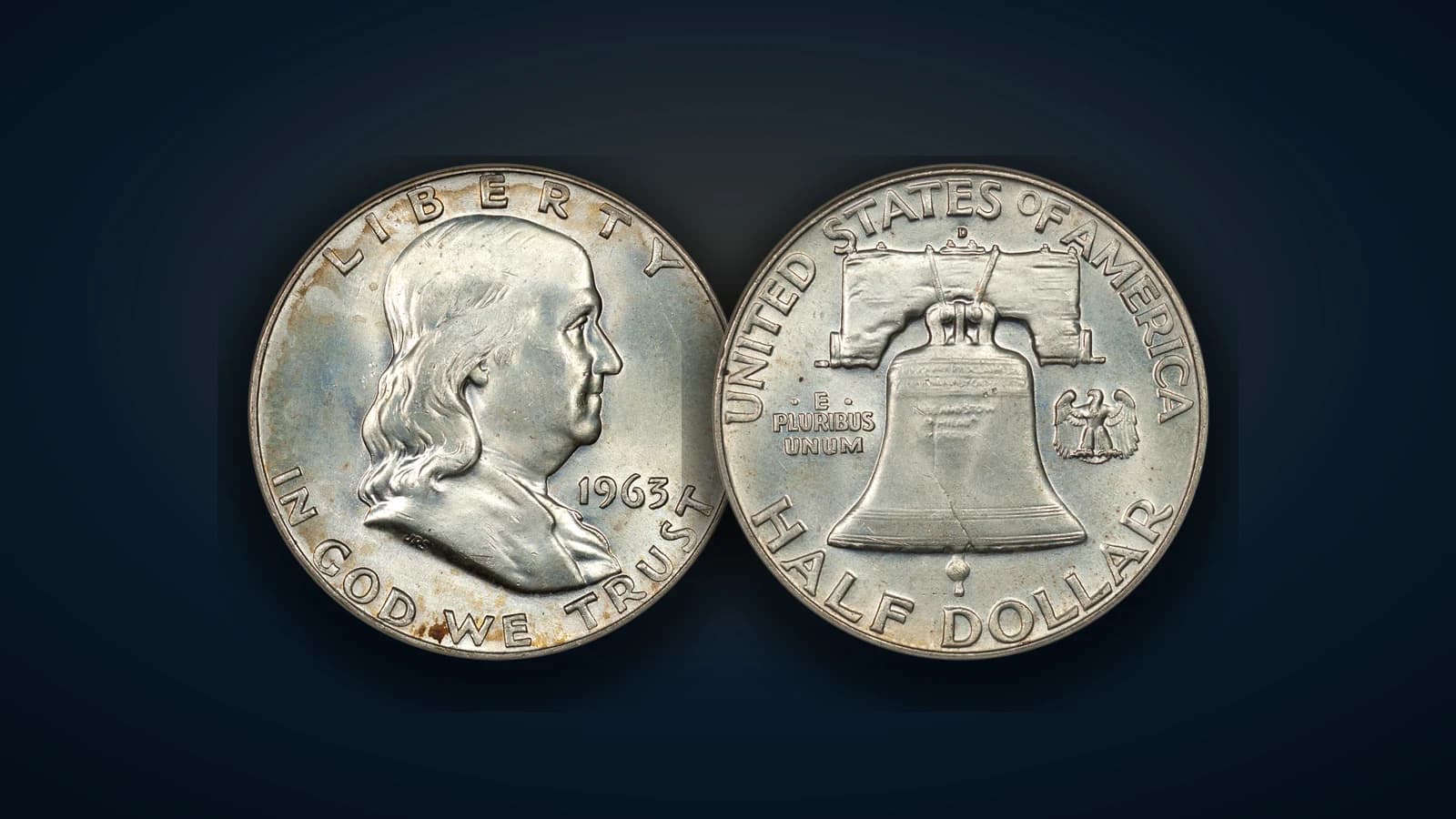
Every Franklin half dollar is worth at least its silver content — about 0.3617 troy ounces — and the key date and sharply struck coins are worth more. Struck from 1948 to 1963, the Franklin half features Benjamin Franklin and the Liberty Bell, and it was replaced by the Kennedy half in 1964. This guide covers the silver value, the 1949-S key date, what 'Full Bell Lines' means, and how grade shapes what your coin is worth.
Key takeaways
- Franklin half dollars (1948–1963) are 90% silver and contain about 0.3617 troy ounces of silver each.
- Most circulated Franklins trade near their silver value, with premiums for high grades and key dates.
- The 1949-S is the key date, and Full Bell Lines coins command a premium in mint state.
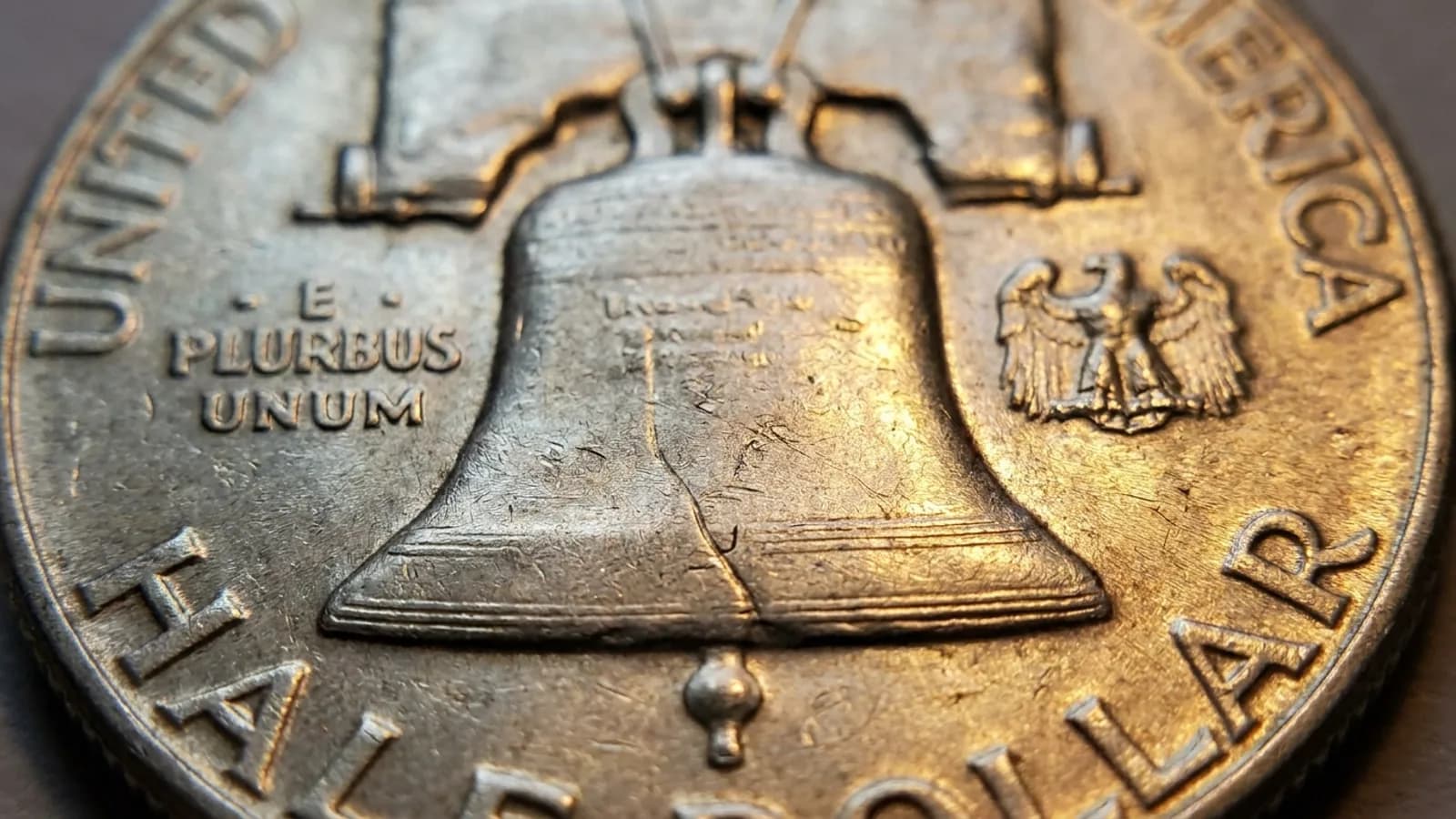
- 'Full Bell Lines' (FBL) means the lines on the Liberty Bell are complete and sharp — a mark of a strong strike.
- Franklins were replaced by the Kennedy half dollar in 1964.
How much is a Franklin half dollar worth?
A common-date Franklin in circulated condition is worth close to its silver value, which sets a floor. Premiums apply to the key date, high grades, and well-struck 'Full Bell Lines' coins.
So the silver content sets the minimum, and the date, grade, and strike decide how far above that a coin trades.
How much silver is in a Franklin half?
Each Franklin half is 90% silver and contains about 0.3617 troy ounces of pure silver — the same as other 90% silver halves. That metal value underpins every coin in the series.
At a silver price of, say, $30 per ounce, the melt value is roughly 0.3617 x $30 = about $10.85. Use the precious metals value calculator for a current figure.
What are the key dates?
The 1949-S is the series key, and the 1948, 1949-D, and 1953-S are semi-keys worth more than common dates. The 1955 issue includes the popular 'Bugs Bunny' die variety, where a die clash gives Franklin buck teeth.
The mint mark — a small letter (D for Denver, S for San Francisco, none for Philadelphia) above the Liberty Bell on the reverse — identifies these dates.
| Date | Why it matters |
|---|---|
| 1949-S | Series key date |
| 1948, 1949-D | Early semi-key dates |
| 1953-S | Scarce, especially with Full Bell Lines |
| 1955 'Bugs Bunny' | Popular die variety |
| Common dates | Trade near silver value when circulated |
What are Full Bell Lines?
'Full Bell Lines' (FBL) describes a Franklin half on which the parallel lines across the bottom of the Liberty Bell are complete and unbroken — a sign of a strong, full strike. Grading services note FBL on qualifying mint-state coins.
FBL coins command a premium over the same grade without full lines, because a sharp strike is scarcer. Look closely at the bell's lower lines when assessing an uncirculated Franklin.
How much does grade affect value?
A great deal in mint state. A common date worn is worth little over its silver, while a sharp uncirculated coin — especially with Full Bell Lines — can bring a real premium. This is condition rarity at work.
For better coins, a trusted grade matters; see coin grading explained and which grading companies to trust.
How does the Franklin compare to other halves?
The Franklin sits between two classics: it followed the Walking Liberty half and was replaced by the Kennedy half. All three share the same 90% silver content and 0.3617-ounce weight.
For the bigger silver picture, see what U.S. coins are silver.
Where should you sell a Franklin half?
For common dates, an established coin shop or gold and silver buyer pays based on silver; ask how the offer compares to melt. For the 1949-S, FBL coins, and high grades, a rare coin dealer may pay a collector premium.
Compare offers on better coins, and never clean them — cleaning lowers the value of any collectible coin.
Frequently asked questions
How much silver is in a Franklin half dollar?+
About 0.3617 troy ounces of pure silver, since the coin is 90% silver. Its melt value is that figure times the current silver price.
What is the key date Franklin half dollar?+
The 1949-S is the series key. The 1948, 1949-D, and 1953-S are semi-keys worth more than common dates, especially in high grade.
What does Full Bell Lines mean?+
It means the lines across the bottom of the Liberty Bell are complete and sharp, indicating a strong strike. Full Bell Lines coins carry a premium over the same grade without them.
Why did the Franklin half dollar end in 1963?+
It was replaced by the Kennedy half dollar in 1964, struck to honor President Kennedy after his assassination.