
Presidential Campaign Medals and Medalets: A Collector's Guide
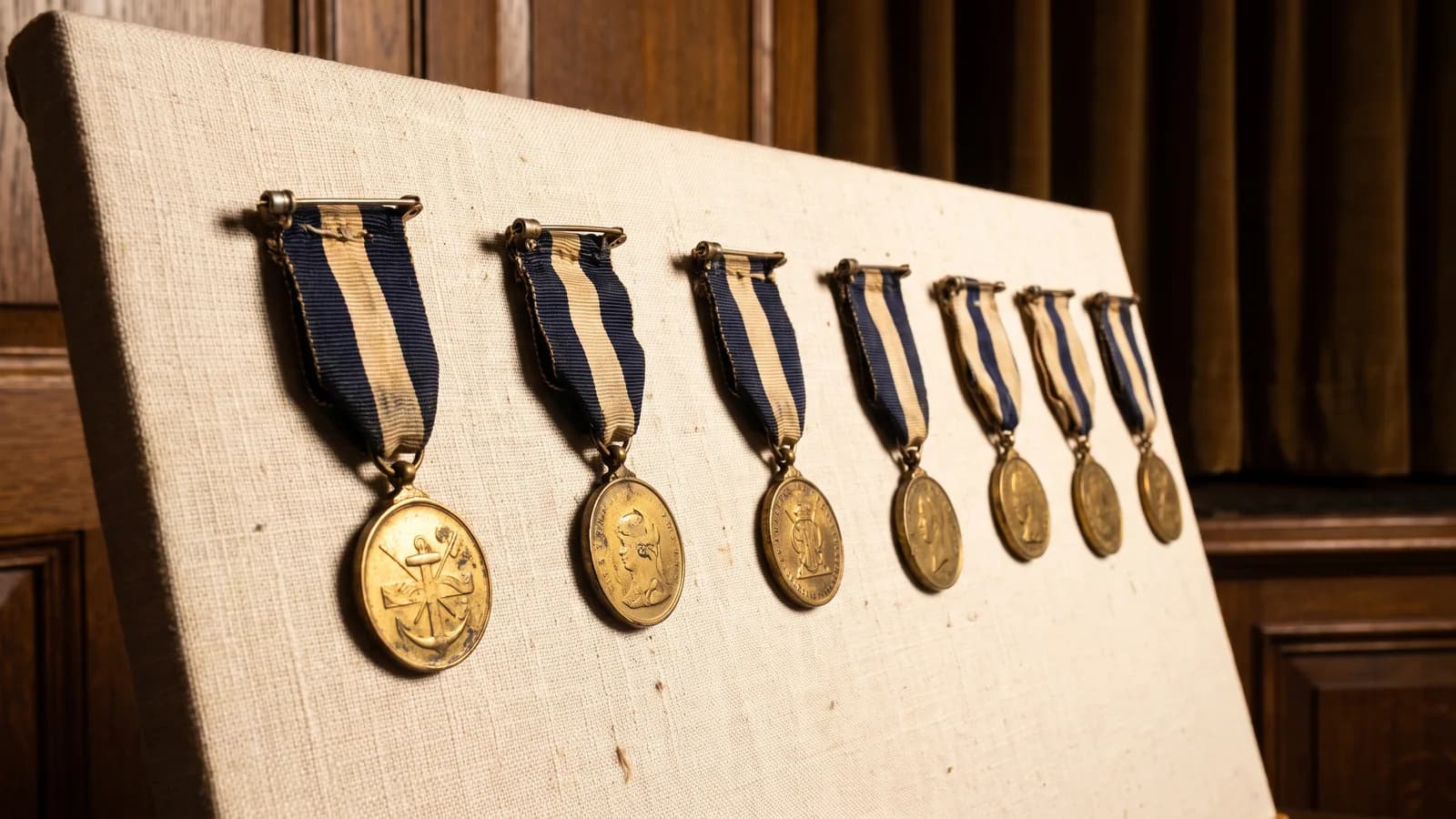
Presidential campaign medals, more precisely called campaign medalets, are small political medals that were handed out during 19th-century U.S. presidential campaigns. A typical medalet shows a candidate's portrait on one side with a slogan or patriotic device, and many were holed so a supporter could wear them on a ribbon. Made roughly from the 1820s through the 1890s, they are the direct ancestors of the celluloid pinback button, which took over after 1896. Common circulated pieces commonly sell for tens of dollars, while rarities can bring much more.
Key takeaways
- Campaign medalets are small political medals handed out during 19th-century U.S. presidential campaigns, typically a candidate portrait paired with a slogan, and often holed so they could be worn.
- They were made roughly from the 1820s through the 1890s, with subjects spanning Washington, Jackson, Clay, Lincoln, and many others.
- The celluloid pinback button took over political advertising after 1896, ending the medalet era.
- Pieces are cataloged in the DeWitt reference as revised by Edmund B. Sullivan (cited Sullivan-DeWitt) and collected within the American Political Items Collectors (APIC).
- Common circulated medalets often trade for tens of dollars, while scarce varieties, better metals, or high grade can reach much higher.
What Are Presidential Campaign Medalets?
Campaign medalets are small political medals produced to promote a candidate during a presidential campaign. A medal is a metal piece struck to commemorate a person or event; unlike a coin it carries no denomination and was never meant to circulate as money.
These pieces are usually small, in the same rough size range as contemporary coins, and often carry a hole at the top so a voter could hang them from a ribbon or a buttonhole. That wearable quality is central to how they were used: they were badges of allegiance worn during rallies, parades, and torchlight processions.
Most medalets pair a candidate portrait with a campaign slogan, a running-mate name, patriotic imagery such as an eagle or shield, or a reference to the candidate's biography. For the full context on medals as a collecting field, see the pillar guide on collecting medals.
The Era: From Jackson to the 1890s
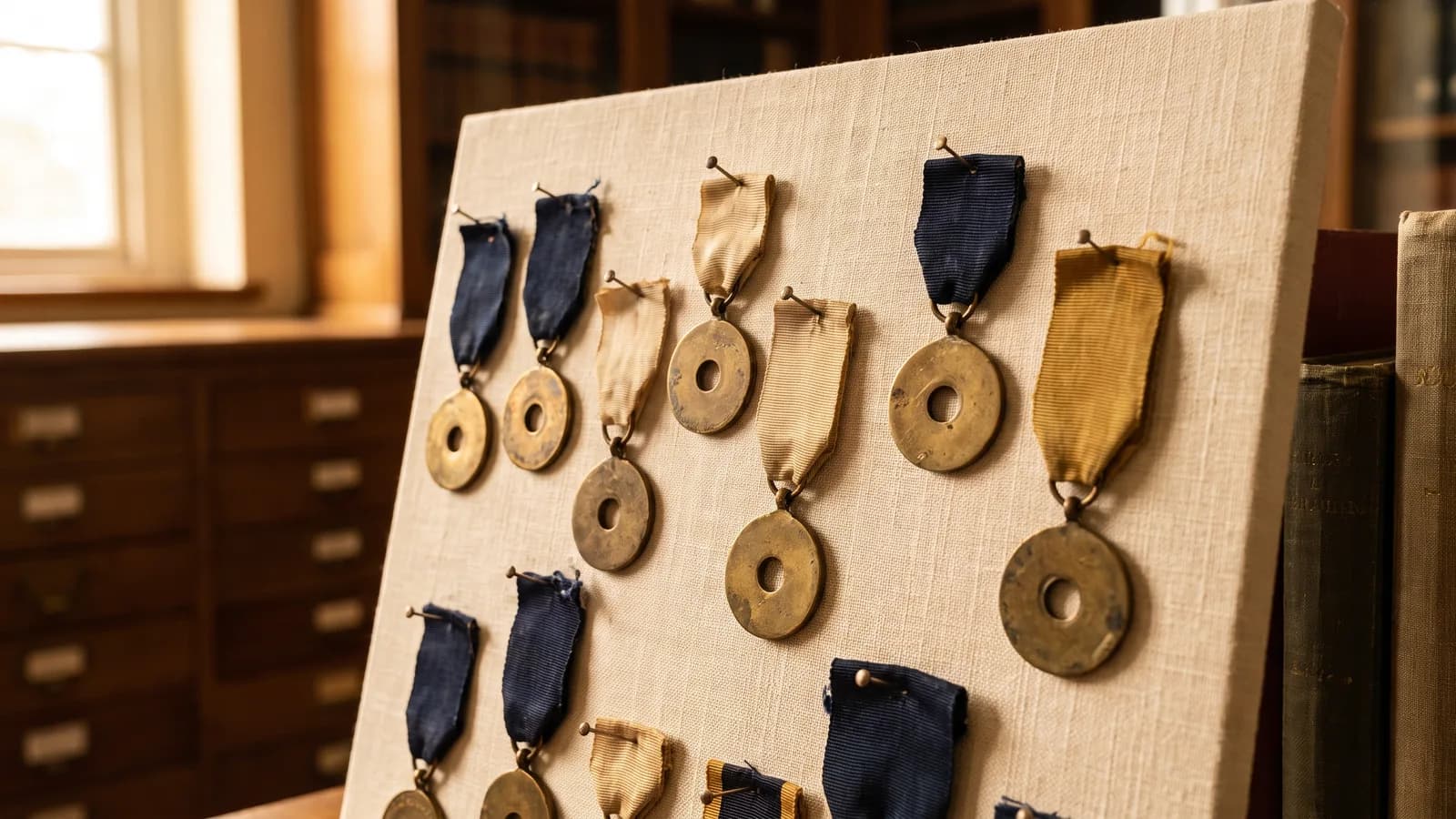
Campaign medalets flourished across most of the 19th century, roughly from the 1820s through the 1890s. Andrew Jackson's campaigns are often cited among the early high points of American political medals, and the practice continued through the century's later contests.
Subjects span a long roster of candidates and presidents, including George Washington (whose image was used symbolically well after his death), Andrew Jackson, Henry Clay, Abraham Lincoln, and many others. Some pieces celebrate a single candidate; others pair the presidential and vice-presidential names on a joint ticket. National collections such as the Smithsonian's National Museum of American History preserve political campaign material of this kind.
The Jackson era also overlapped with the Hard Times tokens of the 1830s, which carried pointed political satire on money and banking. For that adjacent field, see the guide to Hard Times tokens.
How They Were Made and Worn
Medalets were struck by die-sinkers, the engravers who cut the steel dies used to press images into metal. Many die-sinkers also produced store cards, tokens, and other exonumia, so the same workshops often served both commercial and political customers.
Common metals include brass, copper, and white metal (a soft tin-based alloy), with scarcer pieces in silver or other metals. The choice of metal, along with size and design, affects both the original cost and today's collector value.
Because they were meant to be displayed, a large share of surviving medalets are holed for suspension, and many show wear from being worn and handled. Some circulated widely enough to end up worn nearly smooth, which is a normal part of the field rather than a defect unique to one piece.
The Shift to Pinback Buttons After 1896
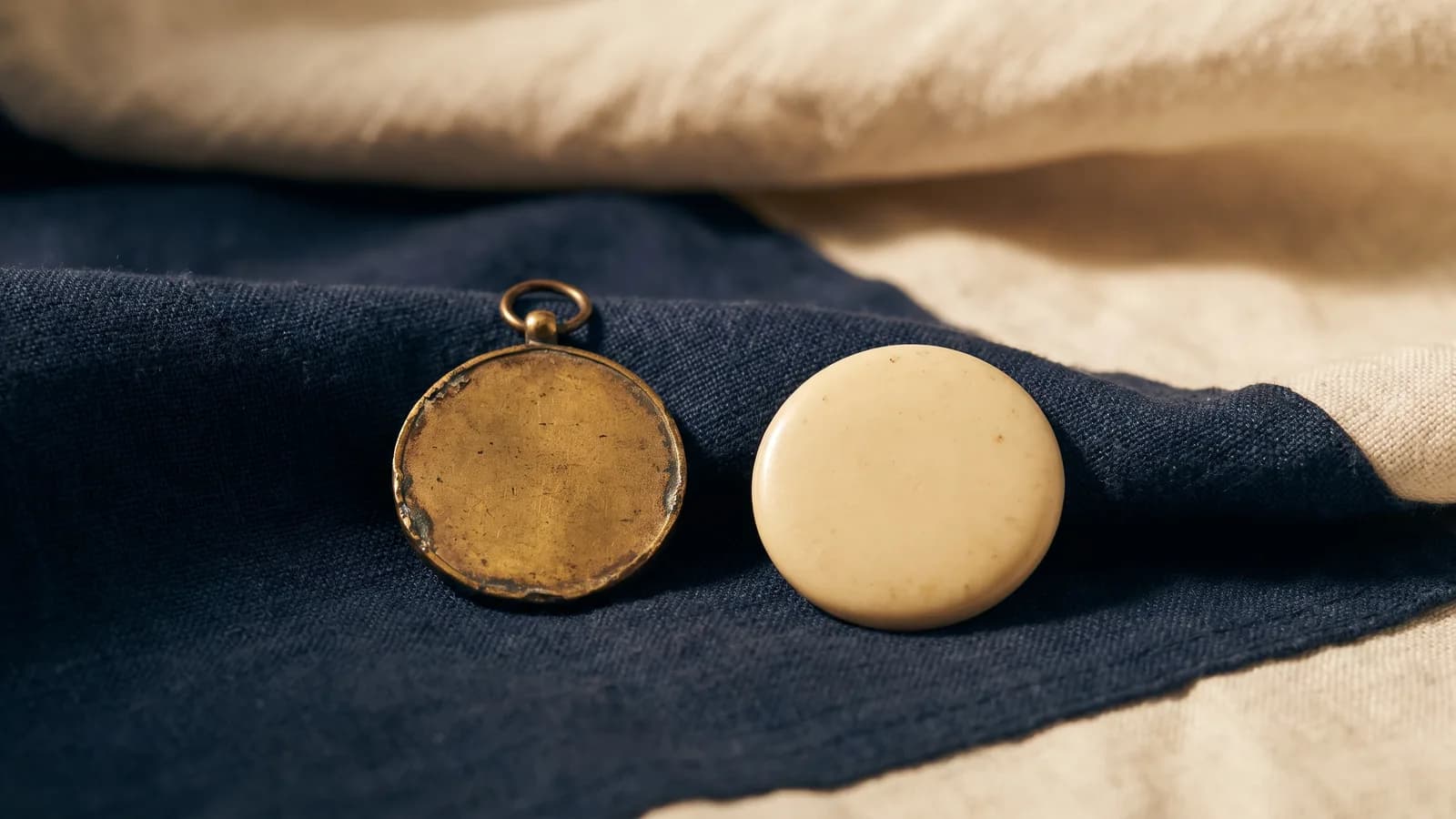
The campaign medalet faded quickly after 1896, when the celluloid pinback button arrived. The pinback button uses a printed paper design sealed under a thin celluloid layer over a metal disc, with a pin on the back.
Pinbacks were cheaper to produce in quantity, could carry full-color photographic portraits, and pinned on cleanly without a ribbon or a hole. Those advantages made the pinback button the dominant campaign item of the 20th century and pushed struck metal medalets to the margins.
This is why collectors often treat 1896 as a rough dividing line: campaign items before it are largely metal medalets, while items after it are largely buttons. Both are collected under the same political-memorabilia umbrella.
How Medalets Relate to Civil War Tokens and Store Cards
Campaign medalets, Civil War tokens, and store cards are related fields made by many of the same 19th-century die-sinkers, but they served different purposes. A campaign medalet promotes a candidate and carries no monetary role.
Civil War tokens were privately made cent-sized pieces issued during the coin shortage of the early 1860s, many meant to pass as small change or to advertise a merchant. Store cards are the advertising subset that name a specific business, and campaign medalets differ from both by carrying no monetary role at all.
Lincoln sits at the intersection of these worlds, since his 1860 and 1864 campaigns produced a rich series of medalets. That series has its own detailed treatment in the guide to Abraham Lincoln campaign medals.
Cataloging and the Collector Community
The standard reference for U.S. political campaign medals is the work begun by DeWitt and later revised and expanded by Edmund B. Sullivan; catalog entries are commonly cited as Sullivan-DeWitt numbers. Using these numbers lets buyers and sellers describe a specific variety precisely.
Collectors of campaign items organize through the American Political Items Collectors (APIC), a national club focused on political memorabilia. Washington-related medalets also overlap with the broader Washingtoniana field cataloged by Neil Musante, covered in the guide to Medallic Washington.
To buy, sell, or get pieces attributed, you can search TheCoinHQ's tokens and medals directory for shops and specialists that handle exonumia.
Condition, Value, and How to Start Collecting
Value depends heavily on the candidate, the rarity of the variety, the metal, and condition, including whether a piece is holed. As a general guide, common circulated medalets often trade for tens of dollars, while scarce varieties, better metals, or high grade can reach into the hundreds or more.
A hole reduces value relative to an unholed example of the same piece, but because so many medalets were meant to be worn, holed pieces are the norm for many types and remain very collectible. Original surfaces matter too, so avoid cleaning, which can permanently lower a medalet's value. Some medalets are certified by third-party graders such as PCGS, though many are collected raw.
A practical way to begin is to collect by candidate or by era: pick a figure such as Jackson, Clay, or Lincoln, or a decade you find interesting, and build from common pieces upward. When you are ready to buy in person or have a piece appraised, TheCoinHQ's directory of collectibles shops can help you find dealers near you.
| Factor | Direction | Note |
|---|---|---|
| Metal | Silver and scarcer metals usually command more | Brass, copper, and white metal are the most common |
| Holed vs. unholed | Unholed usually worth more, all else equal | Holed is normal for worn-badge types and still collectible |
| Rarity of variety | Scarce Sullivan-DeWitt varieties bring premiums | Attribution to a specific number helps set expectations |
| Condition | Sharper, original surfaces bring more | Cleaning typically reduces value |
Frequently asked questions
What is the difference between a campaign medal and a campaign medalet?+
The terms overlap. Medalet simply emphasizes the small size of most 19th-century campaign pieces, which were roughly coin-sized so they could be carried or worn. Larger presentation medals exist, but the small wearable pieces are what most collectors mean by campaign medalets.
Why are so many campaign medalets holed?+
Many were meant to be worn during rallies and parades, so they were pierced at the top for a ribbon or buttonhole. A hole lowers value compared with an identical unholed piece, but for many types holed examples are the norm and remain very collectible.
How do I identify a specific campaign medalet?+
Match the candidate, date, slogan, size, and metal to the DeWitt reference as revised by Edmund B. Sullivan, then cite the Sullivan-DeWitt number. A dealer who specializes in political items or exonumia can confirm an attribution.
Are campaign medalets valuable?+
Common circulated pieces commonly sell for tens of dollars. Scarce varieties, better metals, and high grade can bring hundreds or more. Candidate popularity and eye appeal also affect price, so values should be treated as ranges rather than fixed figures.
When did campaign medals stop being made?+
Struck metal medalets faded quickly after 1896, when cheaper celluloid pinback buttons with printed, often photographic designs took over. Metal items still appear occasionally, but the button became the standard campaign item of the 20th century.
Where can I buy or sell campaign medalets?+
Dealers who handle exonumia and political memorabilia, plus specialist auctions, are the usual venues. You can search TheCoinHQ's tokens and medals directory and collectibles shops listings to find shops that deal in these pieces.