
How to Grade Civil War Tokens: Color, Wear, and Problems
Grading Civil War tokens starts with the standard 70-point Sheldon scale used for U.S. coins, but two factors specific to these pieces often matter more: color and surface quality. Because most Civil War tokens are copper, a color designation of BN (brown), RB (red-brown), or RD (red) rides alongside the numeric grade, and RD examples bring large premiums. Just as important, copper is fragile, so corrosion, porosity, and old cleaning can hurt a token more than plain wear. This guide walks through how these tokens are graded and what separates a strong example from a problem coin.
Key takeaways
- Grading Civil War tokens uses the same 70-point Sheldon scale as U.S. coins, but because most are copper the color designation (BN, RB, or RD) often matters more than the numeric grade.
- RD (full red) copper commands large premiums over RB (red-brown) and BN (brown), sometimes several times the price for the same grade and variety.
- Surface problems such as corrosion, porosity, verdigris, cleaning, and environmental damage hurt copper tokens more than honest wear and can make a piece ungradeable.
- PCGS and NGC both certify Civil War tokens with a Fuld attribution; paying the fee makes sense for scarce varieties, high grades, or when authenticity is in doubt.
How Are Civil War Tokens Graded?
Civil War tokens are graded on the 70-point Sheldon scale, the same system used for regular U.S. coins, running from Poor (P-1) up to a perfect Mint State 70 (MS-70). A Civil War token is a privately minted cent-sized token, mostly copper, that circulated in the North during the war as a substitute for the federal cent.
In practice, a grade has two parts. The number describes how much detail survives (an About Uncirculated token, AU-50 to AU-58, shows only slight wear on the high points, while an Extremely Fine piece, EF-40 to EF-45, shows light but clear wear). For copper tokens, a color letter is added to any Mint State grade. Our coin grading explained guide covers the full scale if you are new to it.
The takeaway: learn the number, but never stop there. On copper, color and surfaces frequently decide the price.
Why Copper Color (BN, RB, RD) Matters Most
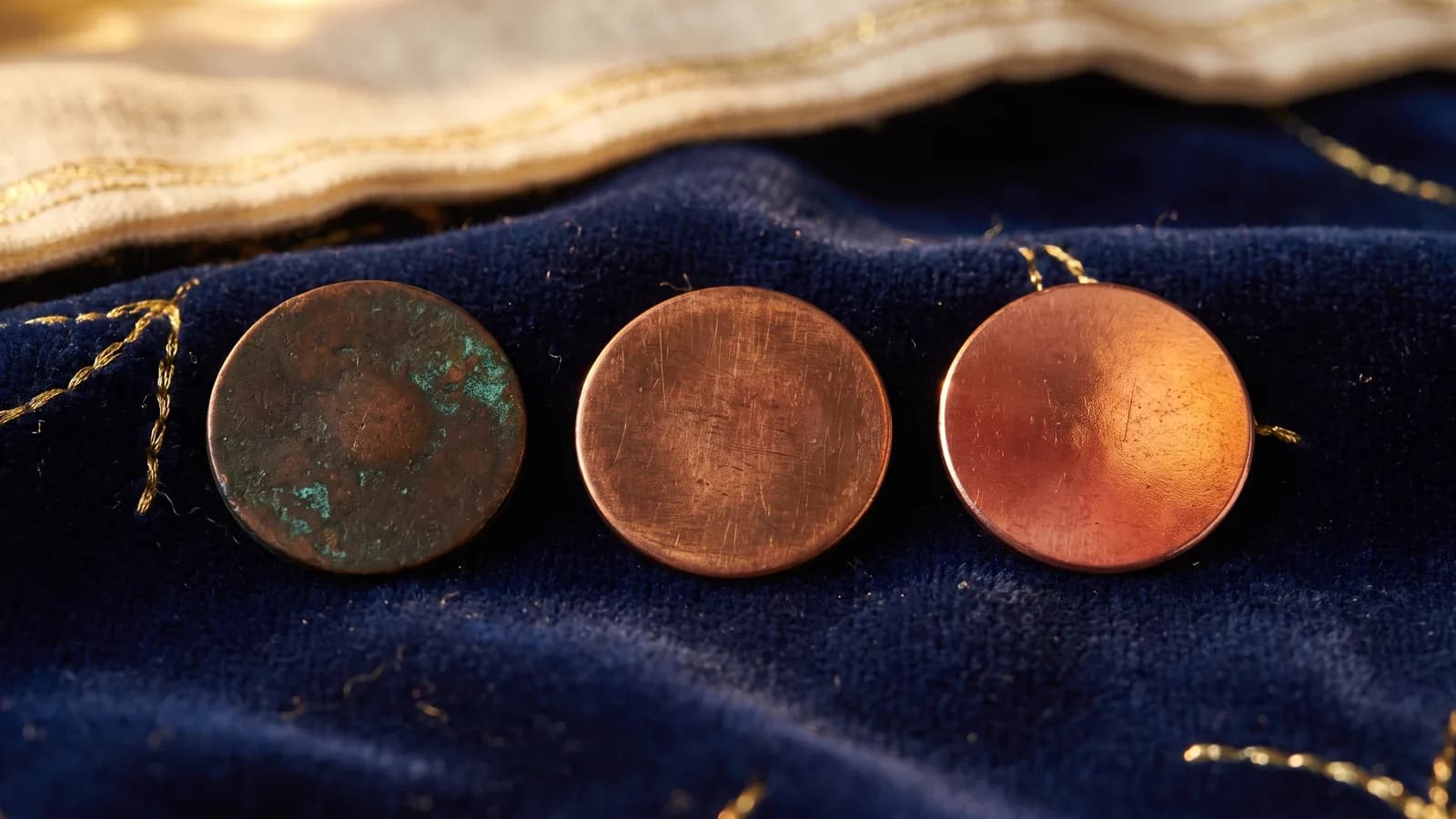
For copper tokens, the color designation is often the single biggest driver of value at the same numeric grade. Fresh copper is bright red when struck, then oxidizes toward brown over decades, so the amount of original red still showing tells collectors how well the piece was preserved.
The three designations are BN (brown), RB (red-brown), and RD (red). Graders assign RD only when roughly 95 percent or more of the original mint red remains, RB for a mix, and BN for a token that has largely turned brown. RD is scarce on wartime copper and commands large premiums, sometimes several times the price of a BN example of the same variety and grade.
This color story is really about toning, the surface change copper undergoes over time. Our guide to coin toning explains why attractive, original color adds value while artificial recoloring does not.
| Designation | What it means | Value impact |
|---|---|---|
| BN (brown) | Little to none of the original mint red remains; surfaces have toned brown | Baseline for Mint State copper; most affordable of the three |
| RB (red-brown) | A blend of original red and toned brown across the surfaces | A step up from BN; typically a moderate premium |
| RD (red) | Roughly 95 percent or more of the original mint red is preserved | Large premium, often several times a BN example of the same grade |
How to Judge Wear on Token Designs
Wear on a Civil War token shows first on the highest points of the design, so those are the spots to inspect. On a patriotic token that means the raised details of an eagle, a flag, a Liberty or Indian head, or lettering; on a store card it means the merchant name and any central device.
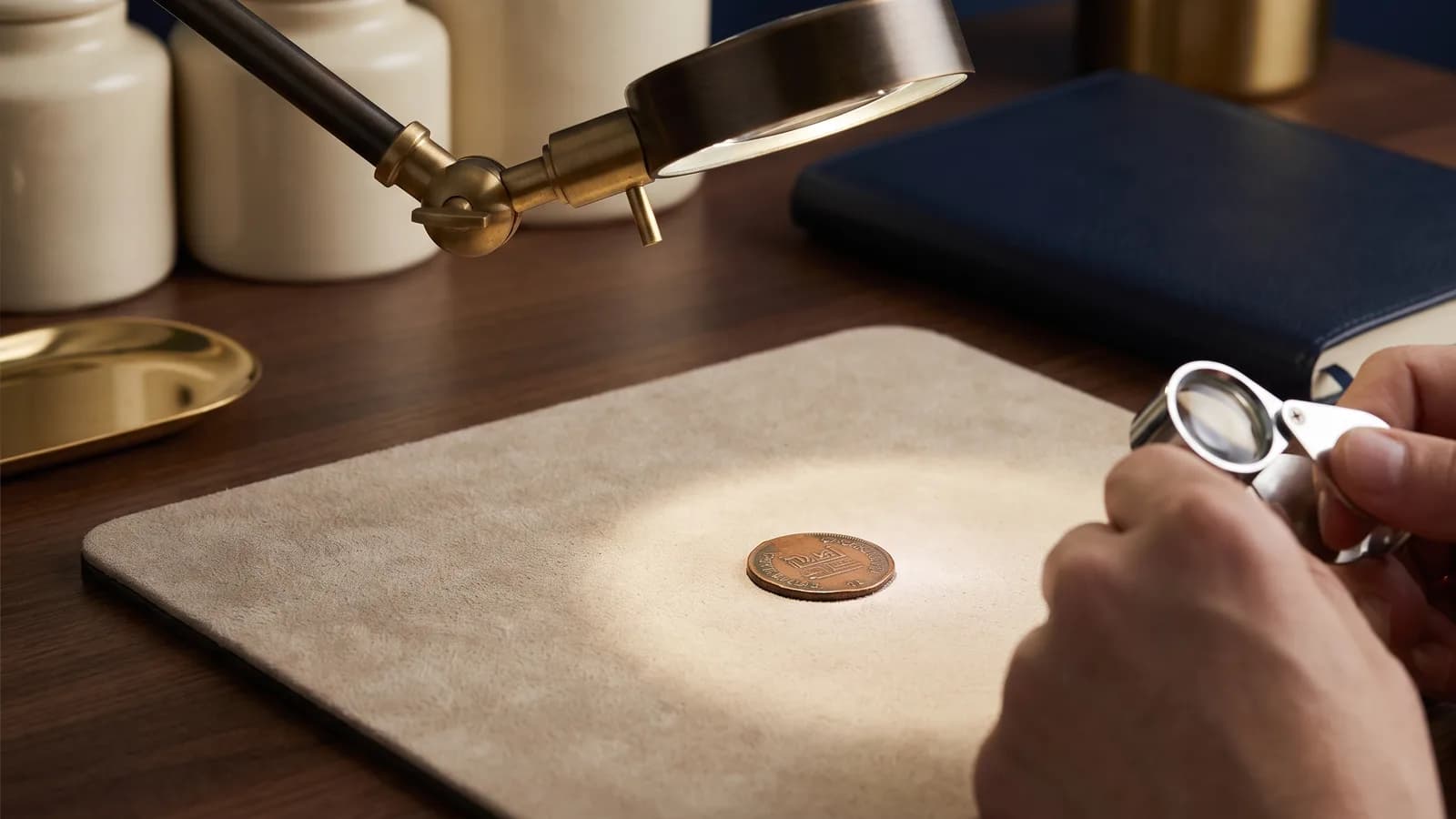
Tilt the token under a single light source and look for flatness or loss of fine detail on those high points. A token that keeps sharp feathers, crisp lettering, and full hair or headdress detail is closer to Mint State, while smoothed high points and blurred letters push it into circulated grades. Rub is honest and expected on a piece that spent 1863 in commerce.
One caution: do not confuse a weak strike with wear. A softly struck token can look worn in the centers even though it never circulated, which is why strike and wear are judged separately.
The Outsized Role of Surface Problems
On copper, surface problems often hurt value more than honest wear, and severe ones can make a token ungradeable. Copper reacts easily with moisture and chemicals, so damage that a silver coin might shrug off can ruin a token.
The common problems are corrosion (metal loss from chemical reaction), porosity (a rough, pitted surface from long exposure to the ground or moisture), verdigris (green or blue-green copper-salt crust), and environmental damage (spots, stains, and haze). Old cleaning is its own category: harsh wiping leaves hairline scratches and an unnatural brightness that graders detect and penalize.
The practical rule for buyers is blunt. A clean, original brown token with light wear is usually worth more than a higher-detail piece that has been cleaned, corroded, or coated in verdigris. When a graded holder notes Environmental Damage or Cleaned, expect a meaningful discount.
Planchet Flaws and Strike Quality
Planchet flaws and strike quality affect the grade but are separate from wear and damage. A planchet is the blank disc a token is struck on, and because these were privately made, planchet quality varied widely.
Look for laminations (thin flakes or splits where the metal separated), planchet cracks, and clips (curved missing sections from the blanking process). Some flaws are common enough that collectors accept them, while a large lamination through a merchant name lowers desirability. Strike quality refers to how fully the design transferred: a strong strike shows full central detail, while a weak strike leaves soft centers.
For most common tokens, a normal planchet and an average-to-strong strike are all you need. On scarcer varieties, a bold strike and a clean planchet add a premium.
Should You Submit to PCGS or NGC?
Submit a token to PCGS or NGC when the grading and attribution fee is small relative to the token's value or when authenticity is genuinely in doubt. Both are respected third-party grading services that seal the token in a tamper-evident holder with a numeric grade, a color designation, and usually a Fuld attribution (the standard cataloging system for these tokens).
The math is simple. For a common patriotic token worth $15 to $40, a grading fee often exceeds the coin's value, so raw usually makes sense. For a scarce variety, a high-grade RD example, an off-metal strike, or a piece where a single Fuld-number difference changes the value sharply, certification protects both grade and identity and typically pays for itself. You can compare services in our coin grading companies guide, and both PCGS and NGC publish current fee tiers.
If you are not sure a piece is worth the fee, a numismatic appraiser can give an opinion before you spend on grading.
Raw vs Certified: What to Buy
Buy certified when the premium is small and the risk of a problem coin is real; buy raw when you can grade competently and the savings are worth the effort. Raw means an uncertified, ungraded token; certified means one sealed and graded by a service like PCGS or NGC.
Certified tokens cost more but remove guesswork on authenticity, grade, color, and problems, which matters most for expensive pieces. Raw tokens are where value hunters find bargains, but you carry the risk of cleaning, corrosion, or a wrong attribution. A worked example: two AU brown store cards of the same variety might list at $60 raw and $110 certified. If you can confirm the raw piece is problem-free, the raw route wins; if you cannot, the holder is cheap insurance.
Whichever way you buy, examine tokens in person where possible. Coin shops that stock tokens and medals are listed in our tokens and medals directory, and you can start with the pillar Civil War tokens guide for the full picture. The Civil War Token Society is the specialty club and publisher of the standard Fuld references.
Frequently asked questions
What scale is used to grade Civil War tokens?+
The 70-point Sheldon scale, the same system used for U.S. coins, running from Poor (P-1) to Mint State 70. Because most tokens are copper, a color designation of BN, RB, or RD is added to Mint State grades.
What do BN, RB, and RD mean?+
They describe how much original mint red remains on a copper token. BN is brown, RB is red-brown, and RD is red (roughly 95 percent or more original color). RD commands the largest premium.
Why do surface problems matter so much on copper tokens?+
Copper reacts easily with moisture and chemicals, so corrosion, porosity, verdigris, and old cleaning can lower value more than honest wear and can even make a token ungradeable.
Is it worth paying to certify a Civil War token?+
It depends on value. For common tokens worth $15 to $40 the fee often exceeds the coin, so raw makes sense. For scarce varieties, high grades, or authenticity questions, certification by PCGS or NGC usually pays for itself.
How can I tell wear from a weak strike?+
Wear smooths and dulls the highest points and often leaves faint hairlines or a slightly different surface texture, while a weak strike leaves soft detail on an otherwise fresh, lustrous surface. Grade strike and wear separately.