
Encased Coins: The 'Keep Me and Never Go Broke' Lucky Penny
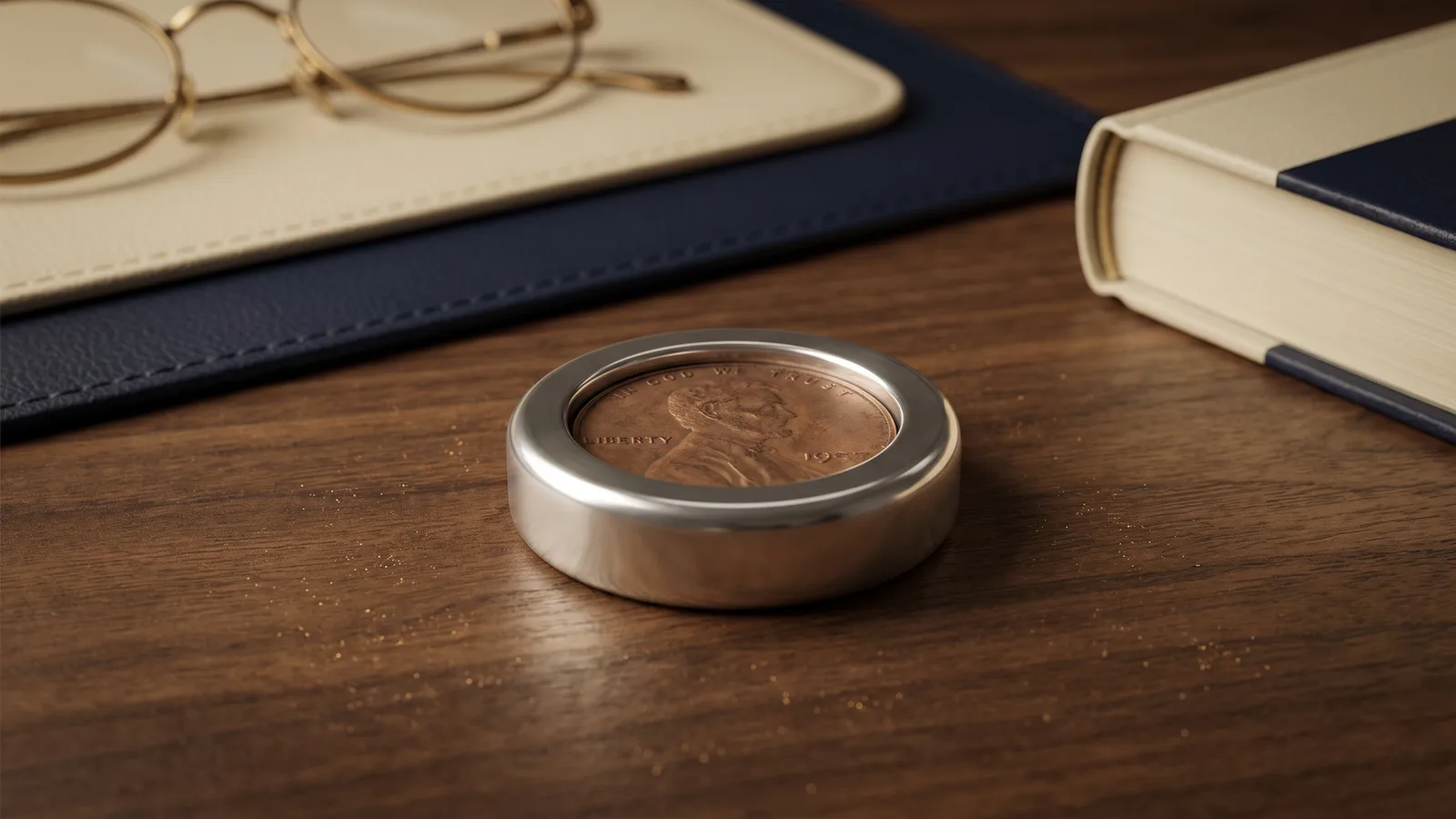
Encased coins are real coins, usually a cent, mounted inside a metal ring (most often aluminum) and given away by a business as an advertising good-luck charm. The ring typically reads 'KEEP ME AND NEVER GO BROKE' or 'GOOD LUCK' alongside the company name and town. Made from the early 1900s to the present, most common encased cents change hands for about $3-$15, with older, scarcer, or exposition-linked pieces bringing more. They are a friendly, affordable corner of exonumia, the collecting of numismatic items other than government coins and paper money.
Key takeaways
- An encased coin is a real coin, usually a cent, mounted inside a metal ring (most often aluminum) as an advertising good-luck piece, typically reading 'KEEP ME AND NEVER GO BROKE' or 'GOOD LUCK' with a business name.
- Encased coins are not the same as Civil War encased postage, which is a postage stamp sealed behind a mica window in a brass frame.
- Common encased cents commonly run about $3-$15, while older pieces, scarcer advertisers, higher denominations, and exposition ties bring more.
- Value depends on the age of the piece, the scarcity of the advertiser, the denomination of the encased coin, event or exposition ties, and the condition of both the ring and the coin inside.
What Is an Encased Coin?
An encased coin is a genuine coin, almost always a one-cent piece, pressed into a surrounding metal ring so the coin shows through a center opening. The ring, usually aluminum, is stamped with a business name, its town, and a slogan such as 'KEEP ME AND NEVER GO BROKE' or 'GOOD LUCK.' The idea was simple: the recipient kept the lucky penny, and the advertiser's name stayed in a pocket or on a desk.
Because the cent inside is a real, untouched coin, encased pieces are a form of advertising exonumia rather than an altered coin. That distinction matters when you compare them to families like elongated coins, where the host coin is deliberately stretched and re-engraved. Encased coins belong to the same broad advertising tradition covered in our collectible tokens pillar guide. For background on the wider field, the American Numismatic Association is a good starting point, and Wikipedia's encased cent entry covers the format and its slogans.
When Were Encased Coins Made?
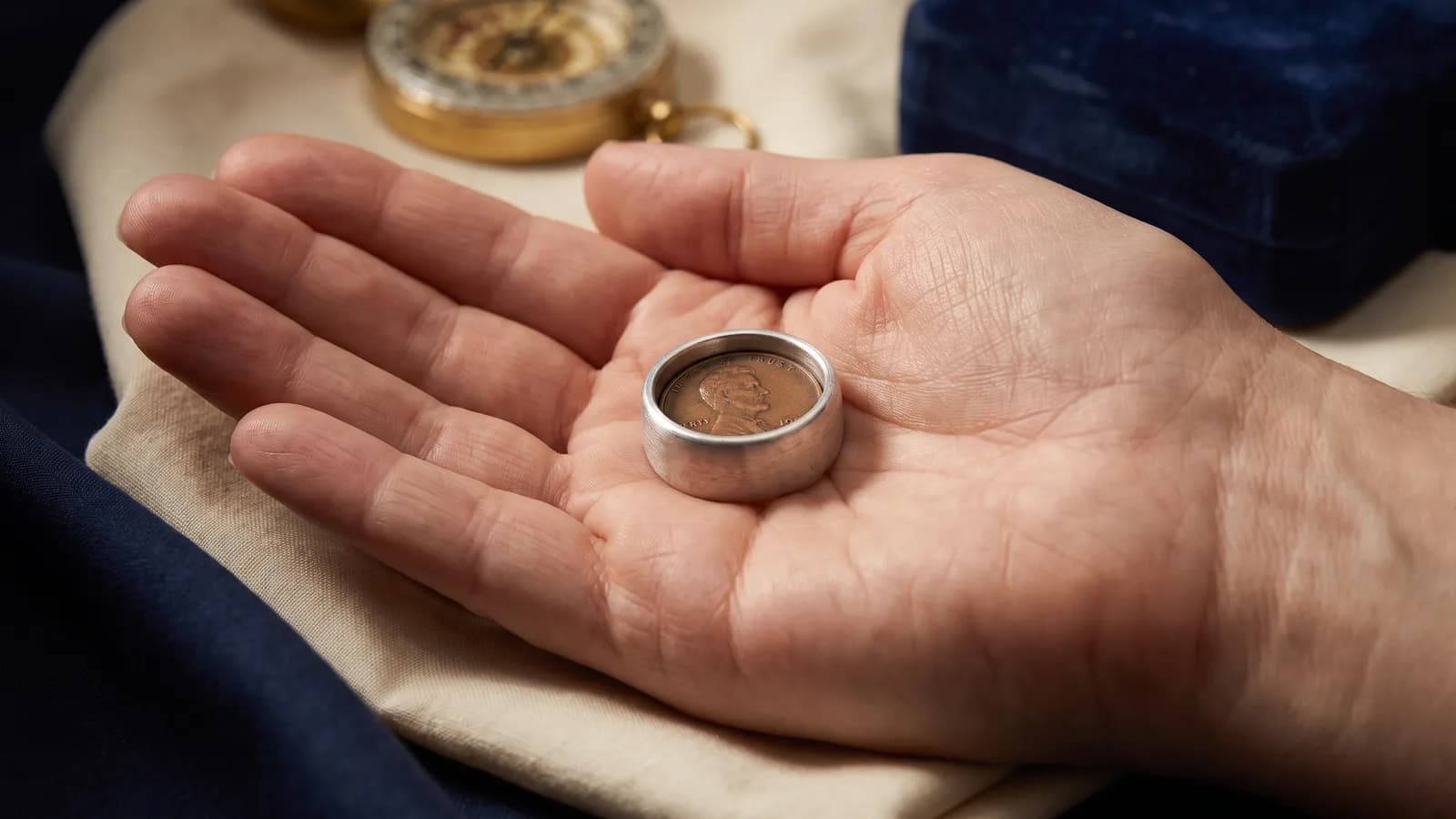
Encased coins have been produced from the early 1900s right through to the present day. Early pieces cluster around the first decades of the 20th century, when small businesses, banks, and merchants used them as cheap, memorable giveaways.
World's fairs and expositions were natural venues for them, and pieces tied to a specific event or fair are often more sought after than a routine local advertiser. Modern encased cents are still made today for anniversaries, promotions, and novelty gifts, which means the family spans well over a century of continuous production.
Encased Coins vs. Encased Postage
Encased coins and Civil War encased postage are two different things that are easy to confuse. An encased coin holds a real metal coin inside a ring. Encased postage holds a paper postage stamp behind a clear mica window in a small brass frame, and it dates to the coin shortage of the Civil War era, when framed stamps briefly circulated as small change.
If you want the full story on that separate family, see our encased postage stamps guide. The table below summarizes the key differences.
| Feature | Encased coin | Encased postage |
|---|---|---|
| What is inside | A real coin, usually a cent | A paper postage stamp |
| Frame and window | Metal ring, most often aluminum | Brass frame with a mica window |
| Main era | Early 1900s to present | Civil War era (1860s) |
| Purpose | Advertising good-luck piece | Emergency small change |
| Typical value | Commonly $3-$15 | Generally much higher, often hundreds |
What Drives the Value of an Encased Coin?
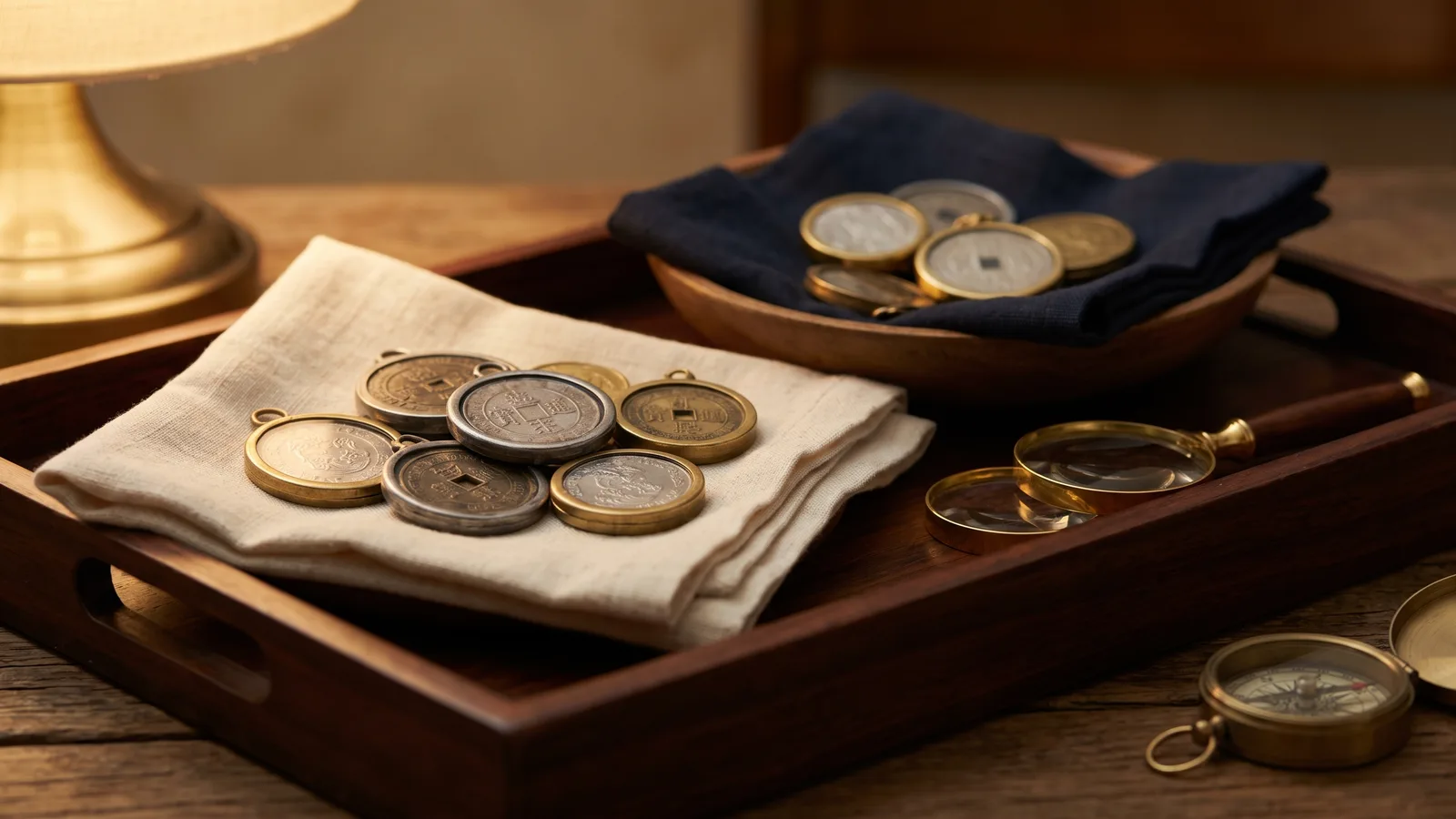
Value on an encased coin comes from the ring and its story more than from the common cent inside. A handful of factors tend to move the price, and they stack: an old piece from a scarce advertiser in clean condition is worth far more than a modern, generic giveaway.
Older pieces generally outrank newer ones. Scarcer or short-lived advertisers, especially from small towns, are harder to find than national brands. A higher denomination than a cent (an encased nickel or dime, for example) is less common and usually more desirable. Ties to a specific exposition or event add interest. Finally, condition of both the ring and the encased coin matters: bright, undamaged aluminum with a problem-free coin beats a bent, corroded, or heavily worn example.
| Factor | Lower value | Higher value |
|---|---|---|
| Age | Modern promotional piece | Early 1900s issue |
| Advertiser | Common national brand | Scarce small-town business |
| Denomination | One-cent host | Nickel, dime, or higher |
| Event tie | No special occasion | Exposition or event issue |
| Condition | Bent, corroded ring | Bright ring, clean coin |
What Are Encased Coins Worth?
Common encased cents commonly sell for about $3-$15 each. These are the routine local advertisers and modern novelty pieces that turn up most often in junk boxes and inherited groups.
From there, prices climb with age, scarcity, denomination, and event ties. An early piece from an obscure small-town merchant, an encased higher denomination, or a documented exposition issue can bring well beyond the common range. Because condition and the specific advertiser matter so much, treat any single price as a starting point rather than a fixed figure, and compare recent sales of the same advertiser when you can. If you are weighing a group, a local numismatic appraiser or coin shop can give you a read in person.
How to Collect Encased Coins
Most collectors pick a theme and build around it, which keeps an affordable hobby focused. There is no single 'complete' set, so the theme is up to you.
Popular approaches include collecting by advertiser or industry (banks, dairies, hardware stores), by state or town, or by the date of the encased coin. Some collectors chase exposition and event pieces, and others look specifically for higher denominations or unusual slogans. Encased coins pair naturally with related advertising families like trade tokens and wooden nickels, so many collections mix them. You can find dealers and shops that carry exonumia through the medals and tokens directory.
Care and Storage
Handle encased coins by the edge and store them where the aluminum ring will not scratch or corrode. Aluminum is soft and dents easily, so avoid loose piles where pieces rub together.
Individual 2x2 holders or coin flips work well, kept in a cool, dry place away from humidity that can spot the metal. As with any collectible coin, do not clean the ring or the encased cent: cleaning can leave hairlines and strip original surfaces, which usually lowers value rather than raising it. See our guide on why you should never clean coins for the details.
Frequently asked questions
What does 'Keep Me and Never Go Broke' mean on an encased coin?+
It is a good-luck advertising slogan. The business gave you a lucky penny sealed in a ring, encouraging you to keep it (and remember the advertiser). 'GOOD LUCK' is another common variant.
Are encased coins the same as encased postage?+
No. An encased coin holds a real coin inside a metal ring. Encased postage holds a paper stamp behind a mica window in a brass frame and dates to the Civil War era. See our encased postage stamps guide for that family.
Is the cent inside worth removing?+
Generally no. The common cent inside is usually worth only face or a few cents, and breaking the ring destroys the collectible piece. The value is in the intact encased advertising item.
How much are common encased cents worth?+
Common encased cents commonly run about $3-$15. Older pieces, scarcer advertisers, higher denominations, and exposition-linked examples can bring more.
Where can I sell or appraise encased coins?+
A local coin shop, an estate coin buyer, or a numismatic appraiser can review a group in person. Because value hinges on the specific advertiser and condition, an in-person look usually beats a rough online estimate.