
1943 Steel Penny Value: Common Cents and the Rare Copper Error
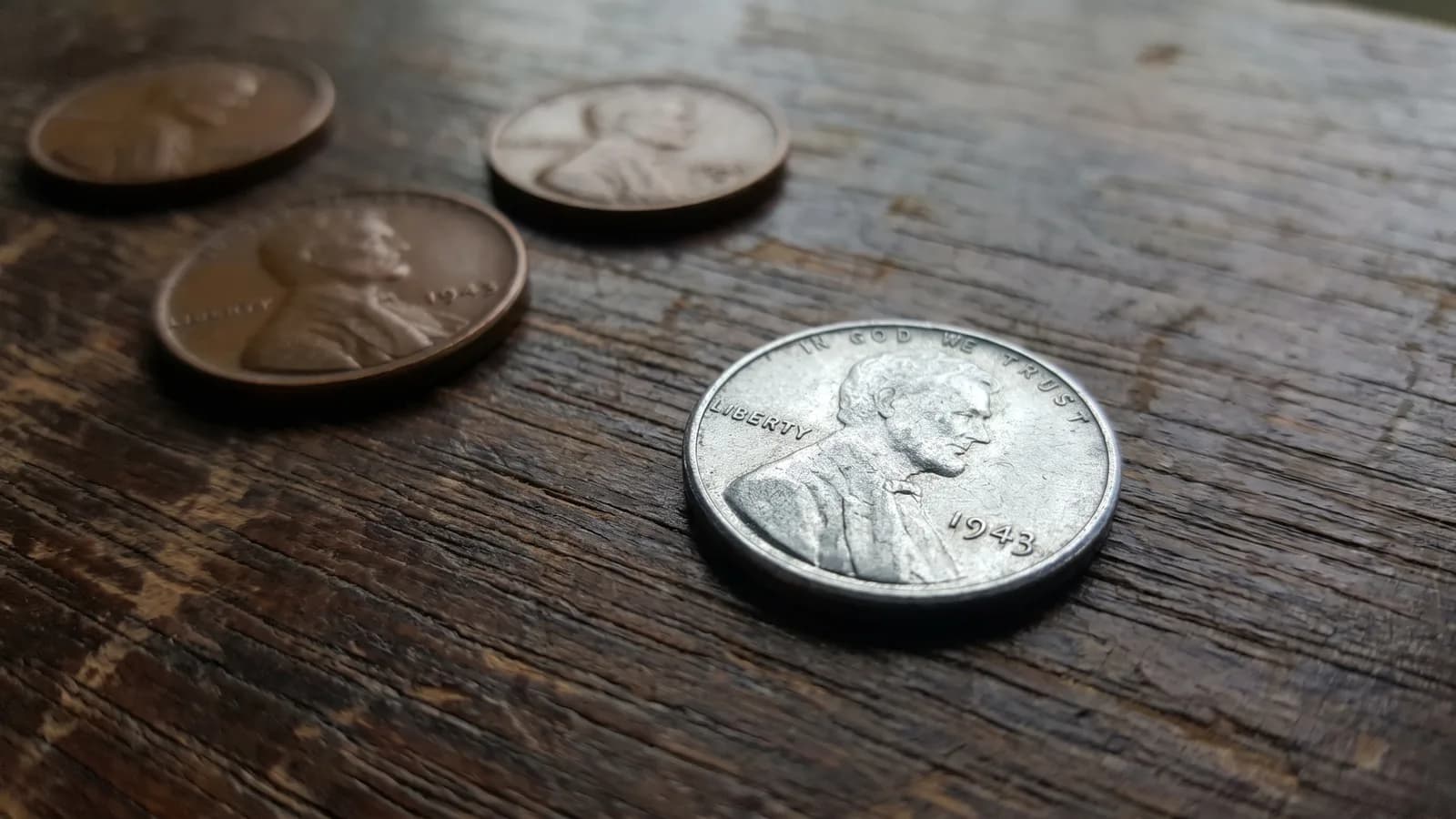
Almost every 1943 penny is a common steel cent worth only a few cents — but the rare 1943 copper cent is one of the most valuable error coins in American numismatics. In 1943 the U.S. Mint struck pennies in zinc-coated steel to save copper for the war effort, and a tiny number were accidentally made on leftover copper blanks. This guide explains what a normal 1943 steel cent is worth, how to spot the rare copper version, and how to avoid the many fakes.
Key takeaways
- Most 1943 steel pennies are common and worth only a few cents to about a dollar, more if uncirculated.
- 1943 cents were struck in zinc-coated steel to conserve copper for World War II.
- The rare and valuable coin is the 1943 copper (bronze) cent error, which has sold for six figures at auction.
- A magnet test separates them: steel cents stick to a magnet; genuine 1943 copper cents do not.
- Altered and replated coins are common, so have any '1943 copper' cent professionally authenticated.
How much is a 1943 steel penny worth?
A typical 1943 steel cent is worth only a few cents to around a dollar in circulated condition, and a few dollars in high uncirculated grade. They were made by the hundreds of millions, so most are common.
The valuable coin is the rare 1943 copper cent, an error struck on a leftover bronze blank. Those are major rarities — not the ordinary steel cents nearly everyone finds.
Why were 1943 pennies made of steel?
During World War II, copper was needed for ammunition and equipment, so in 1943 the Mint struck the Lincoln cent in steel coated with zinc instead of the usual bronze. The result was a silvery-gray penny that looked unlike any other.
The experiment lasted only that year; the Mint returned to a copper-based alloy in 1944. Our wheat penny value guide covers the broader Lincoln wheat cent series these belong to.
What is a normal 1943 steel cent worth?
Common 1943 steel cents are worth a few cents to about a dollar circulated, with bright, uncirculated examples worth a few dollars more. Pristine, fully original 'mint state' coins bring the most among the common type.
Because they were heavily handled and the steel rusts, problem-free original coins are scarcer than worn or corroded ones — but this is still an affordable, common coin.
What makes the 1943 copper penny so valuable?
A small number of 1943 cents were struck on copper (bronze) blanks left over from 1942. Genuine examples are among the most famous U.S. error coins and have sold for six figures at auction.
Because the payoff is so large, these are also the most faked coins in the series. A real one is rare; assume any '1943 copper' cent is altered until an expert confirms otherwise.
How do you test a 1943 penny with a magnet?
Use a magnet. A normal 1943 steel cent is magnetic and sticks firmly; a genuine 1943 copper cent is not magnetic and will not stick. This simple test rules out the most common fake.
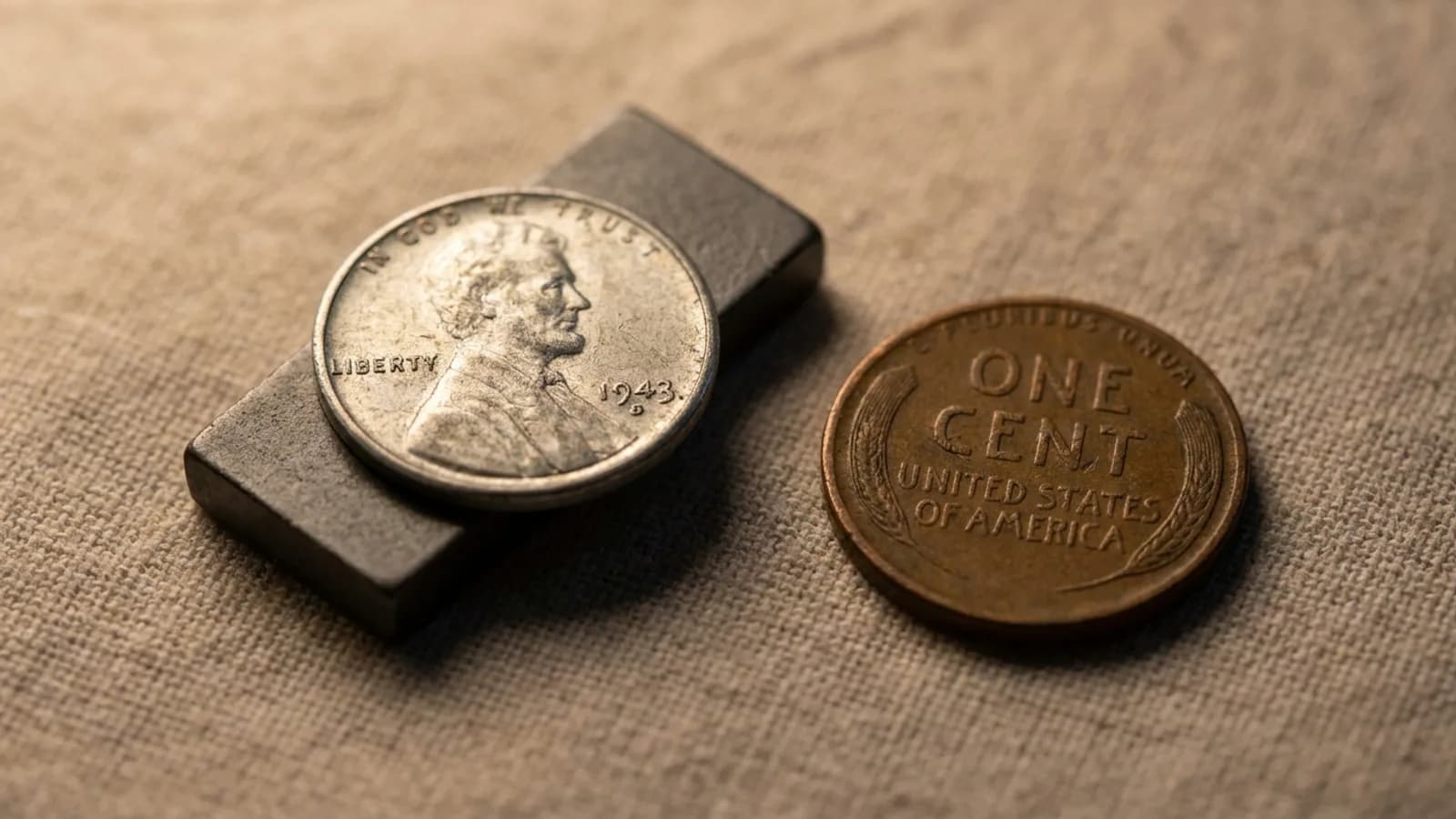
Two common fakes pass or fail this test in telling ways: a copper-plated steel cent still sticks to a magnet, and an altered 1948 cent (with the 8 reshaped into a 3) is copper but the date looks wrong under magnification. Genuine copper cents also weigh slightly more than steel ones.
What about the 1944 steel cent?
The opposite error exists too: a few 1944 cents were mistakenly struck on leftover steel blanks. Like the 1943 copper cent, the genuine 1944 steel cent is a rare and valuable error — and one a magnet helps identify, since it is magnetic while normal 1944 cents are not.
Both errors are heavily counterfeited, so authentication is essential before assuming you have one.
How do you authenticate and sell one?
If a 1943 cent is non-magnetic, do not clean it — take it to a reputable dealer and have it authenticated by PCGS or NGC. Our guides on spotting fake coins and which grading companies to trust explain why this step protects you.
For common steel cents, an established coin shop can buy them outright; for a verified copper rarity, work with a rare coin dealer or auction house, guided by the American Numismatic Association.
Frequently asked questions
How much is a 1943 steel penny worth?+
A common 1943 steel cent is worth only a few cents to about a dollar circulated, and a few dollars in high uncirculated grade. They were made in huge numbers.
How do I know if my 1943 penny is the rare copper one?+
Test it with a magnet. A steel cent sticks; a genuine copper 1943 cent does not. A non-magnetic 1943 cent should be authenticated by PCGS or NGC, since most are fakes.
Why are 1943 pennies made of steel?+
Copper was needed for the World War II effort, so in 1943 the Mint struck Lincoln cents in zinc-coated steel. It returned to a copper alloy in 1944.
How much is a real 1943 copper penny worth?+
Genuine 1943 copper cents are major rarities that have sold for six figures at auction. Values depend on grade and authentication, and fakes are common.
Is a 1944 steel penny valuable?+
Yes. A genuine 1944 steel cent is a rare error, like the 1943 copper cent in reverse. It is magnetic, unlike normal 1944 coins, and must be authenticated.