
How to Sell an Inherited Coin Collection
Selling an inherited coin collection is manageable if you slow down and take it in order: protect the coins, find out what you have, get it appraised, then sell to a reputable buyer. Many heirs know little about coins and feel pressure to sell quickly, which is exactly when mistakes and lowball offers happen. This guide walks through the whole process — from the first thing not to do (clean them) through inventory, appraisal, taxes, choosing a buyer, and splitting proceeds among heirs — so you can sell with confidence and get a fair price.
Key takeaways
- Don't clean inherited coins and don't rush — cleaning destroys value, and haste leads to lowball offers.
- Make an inventory first, then get a professional appraisal so you know what the collection is worth before any buyer does.
- Inherited coins usually receive a stepped-up cost basis to their value at the date of death, which affects capital gains tax when you sell.
- Get multiple offers from reputable buyers — estate coin buyers, dealers, and auction houses — and compare them against the appraised value.
- Watch for buyers who pressure heirs, refuse itemized offers, or lowball; a neutral appraisal is your best protection.
How do you sell an inherited coin collection?
Work in order: do not clean the coins, make an inventory, get a professional appraisal, then get offers from several reputable buyers and compare them to the appraised value. Selling well is mostly about not rushing.
The biggest losses come from haste — cleaning coins, accepting the first offer, or selling to whoever knocks first. A little patience routinely adds significant value.
Why shouldn't you clean the coins?
Never clean inherited coins. Cleaning leaves microscopic scratches and strips the original surface, and it can cut a collectible coin's value sharply — sometimes by more than half. The toning and patina on old coins are desirable to collectors, not dirt to remove.
If coins look dull or dirty, leave them exactly as they are. A buyer would far rather see an original, untouched coin than a shiny, cleaned one.
How do you inventory the collection?
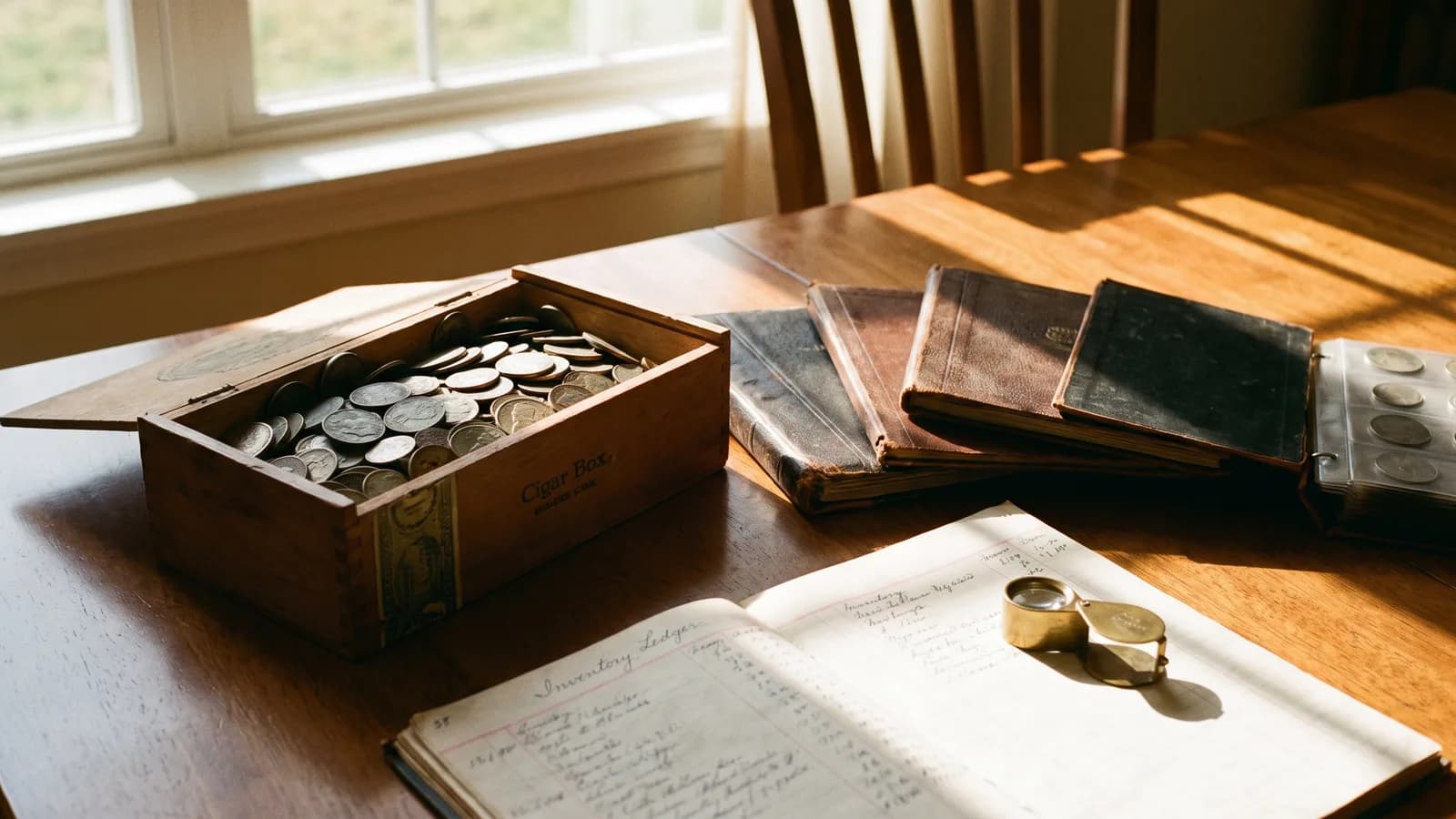
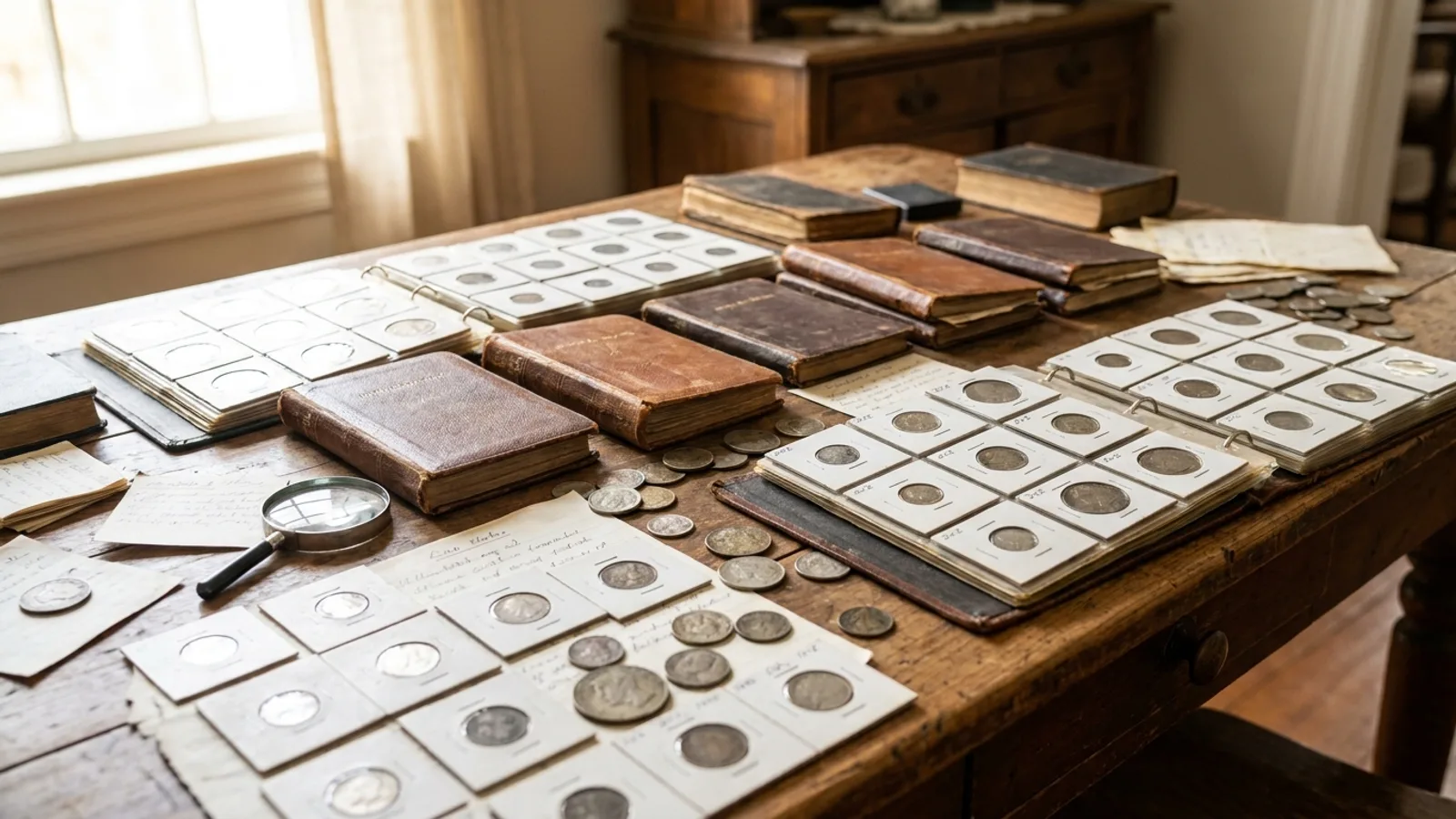
Start by organizing and listing what is there without handling coins more than necessary; hold them by the edges. Group coins by type — folders and albums, loose coins, graded coins in plastic 'slabs,' silver dollars, bullion, and any paper money or related items.
Note dates, mint marks, and any holders or paperwork, and photograph anything that looks significant. A clear inventory speeds up appraisal, helps you compare offers fairly, and matters if the collection is part of a formal estate.
Do you need an appraisal before selling?
For anything beyond a small box of common coins, yes. An independent appraisal tells you what the collection is worth before a buyer does, which is the single best protection against a lowball offer. Our how coin appraisals work guide explains the types and what they cost.
Be clear about which value you need: a fair market value appraisal for selling, or a value as of the date of death for the estate and taxes — these can differ. Use an independent numismatic appraiser, ideally one who is not also trying to buy the collection.
How do you figure out what you actually have?
Sort the collection into three buckets: face-value coins (modern circulating coins worth what they say), bullion and silver coins (valued on metal content), and numismatic coins (valued by date, mint mark, grade, and rarity).
Most inherited hoards are a mix, with a few better coins carrying most of the value. Our guides on what your coins are worth and junk silver help you tell metal value from collector value, and a coin grading companies overview explains why slabbed coins are easier to value.
What are the tax implications of inherited coins?
Inherited coins generally receive a stepped-up cost basis — their basis resets to fair market value at the date of death, rather than what the original owner paid. That usually reduces the capital gains tax you owe when you sell.
Coins are treated as collectibles, and long-term gains on collectibles can be taxed at a higher maximum rate than stocks. The rules have real money at stake, so confirm specifics with a tax professional and the IRS; this guide is general information, not tax advice.
Where should you sell an inherited collection?
You have several good options, each with trade-offs. The table compares the main routes. For most heirs, getting written offers from two or three reputable buyers and comparing them to the appraisal is the surest path to a fair price.
| Route | Best for | Trade-offs |
|---|---|---|
| Local coin shop / dealer | Convenience, quick payment | Offers vary; get more than one |
| Estate coin buyer | Whole-estate purchases | Confirm reputation and itemized offer |
| Auction house | Rare, high-value coins | Fees and time before payment |
| Coin show | Comparing many buyers at once | Requires transporting the coins |
How do you avoid being taken advantage of?
Heirs — especially those who did not collect — are sometimes targeted with pressure tactics and lowball offers. Protect yourself: get an independent appraisal first, insist on an itemized offer rather than one lump sum, and never let anyone rush you into selling on the spot.
Red flags include a buyer who discourages a second opinion, will not break down what they are paying for the better coins, or pressures a grieving family to 'decide today.' Walk away from any of those.
How do you split a collection among multiple heirs?
When several heirs share a collection, get one neutral appraisal first so everyone works from the same numbers. From there, heirs can sell the collection and split the proceeds, or divide the coins themselves by agreed value.
A shared, independent appraisal prevents disputes and stops any single buyer from playing heirs against each other. Keep the process transparent and documented.
Should you sell everything or keep some?
You do not have to sell all of it at once. Some heirs keep coins with sentimental or family meaning, or hold bullion as an investment, and sell only the numismatic pieces. There is no rush created by the coins themselves.
If you are unsure, sell the clearly common and bullion items first and take more time with the better coins, which reward patience and careful selling.
How do you find a trustworthy buyer or appraiser?
Use established, reputable professionals. Browse estate coin buyers, numismatic appraisers, and local coin shops in the directory, and look for membership in bodies like the American Numismatic Association and the Professional Numismatists Guild.
Our how to choose a local coin shop and what to know before selling a coin collection guides cover what to look for and the questions to ask before you hand anything over.
A step-by-step summary
In short: do not clean the coins; inventory and photograph them; get an independent appraisal (and a date-of-death value for the estate); learn metal value versus collector value; confirm the tax basis with a professional; get itemized offers from two or three reputable buyers; and compare them to the appraisal before you sell.
Follow that order and you will sell an inherited collection calmly, fairly, and for what it is actually worth.
Frequently asked questions
Should I clean inherited coins before selling them?+
No. Cleaning scratches the surface and removes original patina, often cutting a collectible coin's value significantly. Leave the coins exactly as you found them.
Do I need an appraisal to sell an inherited coin collection?+
For anything beyond a small box of common coins, yes. An independent appraisal tells you what the collection is worth before a buyer does and protects you from lowball offers.
How are inherited coins taxed when I sell them?+
Inherited coins usually get a stepped-up cost basis to their value at the date of death, and coins are taxed as collectibles. Confirm the specifics with a tax professional and the IRS.
Where is the best place to sell an inherited coin collection?+
It depends on the coins. Local dealers and estate coin buyers are convenient, auction houses suit rare coins, and coin shows let you compare many buyers. Get several offers and compare them to your appraisal.
How do I avoid getting cheated when selling inherited coins?+
Get an independent appraisal first, insist on an itemized offer, get more than one bid, and never let a buyer pressure you to sell immediately. Those steps are your best protection.