
Wheat Penny Value: Key Dates Worth Money
Wheat penny value is mostly modest — the vast majority of Lincoln wheat cents from 1909 to 1958 are worth a few cents to a few dollars. But a small group of key dates and varieties are worth hundreds or even thousands, and they hide in ordinary-looking rolls. This guide shows what wheat pennies are, which dates are valuable, how to read the mint mark that makes the difference, and how to tell whether yours is common or a rarity.
Key takeaways
- Lincoln wheat pennies were struck from 1909 to 1958; most common dates in worn condition are worth only a few cents to a few dollars.
- The famous key dates are the 1909-S VDB, 1914-D, and 1931-S, plus the 1922 'Plain' (no mint mark) and the 1955 Doubled Die — these can be worth hundreds or more.
- The mint mark (a small S or D under the date) is what separates a common penny from a key date; no letter means Philadelphia.
- 1943 cents were struck in zinc-coated steel for the war; a genuine 1943 copper cent is a major rarity worth a great deal.
- Condition matters enormously, and cleaning a wheat penny lowers its value — leave it as you found it.
Are wheat pennies worth anything?
Most wheat pennies are worth only a few cents above face, but a handful of key dates are worth hundreds to thousands of dollars. Which one you have comes down to the date, the mint mark, and the condition.
So the answer is: don't assume a wheat penny is valuable, but don't spend one before checking it either. This guide shows exactly what to look for, and our broader what your coins are worth guide covers the same logic across all coins.
What is a wheat penny?
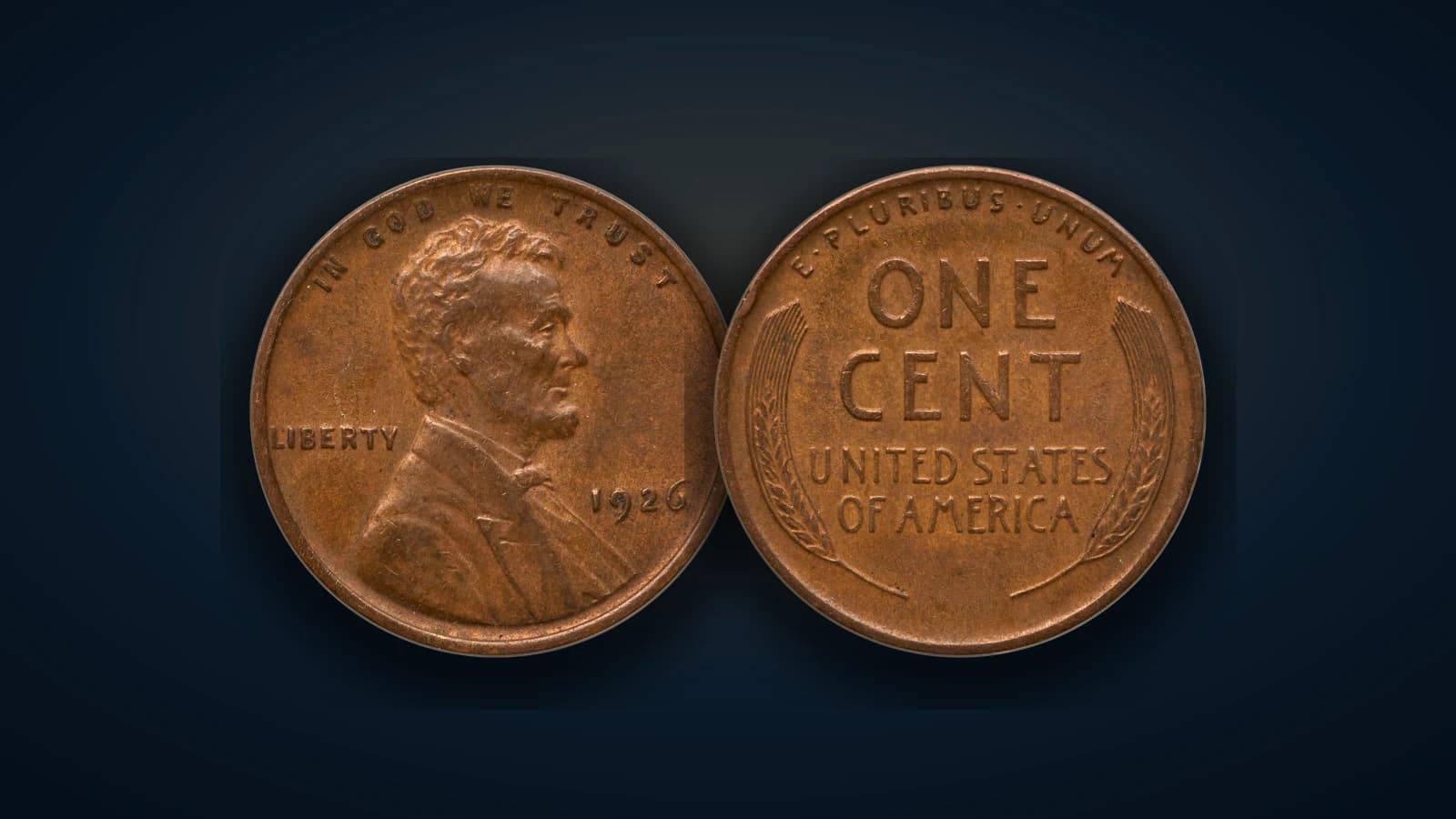
A wheat penny is a Lincoln cent struck from 1909 through 1958, named for the two wheat stalks on the reverse. In 1959 the reverse changed to the Lincoln Memorial, ending the series.
They were made of bronze — 95% copper — for most of the run, with one wartime exception in 1943. Designer Victor David Brenner's initials, VDB, appear on the series and feature in its most famous key date. The U.S. Mint has the full history of the Lincoln cent.
What are the wheat penny key dates?
A few dates and varieties account for almost all the real value in the series. The 'big three' are the 1909-S VDB, the 1914-D, and the 1931-S, all with low mintages, joined by the 1922 'Plain' and the 1955 Doubled Die. The table lists them with the verified mintages that make them scarce.
| Date / variety | Mintage or cause | Worn-grade value |
|---|---|---|
| 1909-S VDB | 484,000 struck — the series key | Hundreds and up |
| 1914-D | 1.19 million struck | Hundreds even worn |
| 1931-S | 866,000 struck | Tens to low hundreds |
| 1922 'Plain' | Filled die left no mint mark | Hundreds and up |
| 1955 Doubled Die | Doubling visible in the date and lettering | Hundreds and up |
| 1943 copper | Error struck on a bronze planchet | Major rarity, very high |
What's the story with the 1943 steel cent?
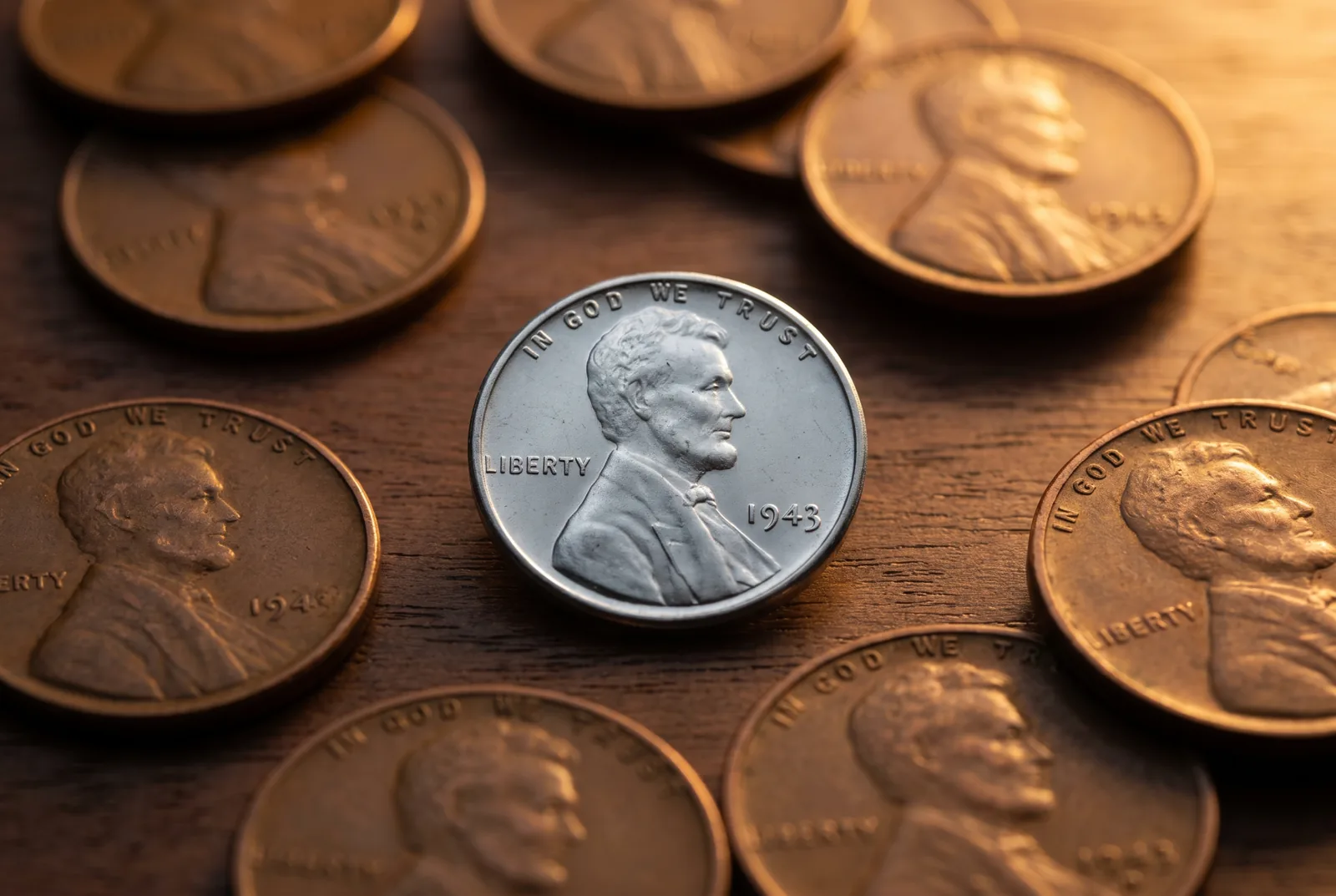
In 1943 the Mint struck cents in zinc-coated steel to save copper for the war effort, so a 1943 penny is normally steel, looks silvery, and sticks to a magnet. Worn 1943 steel cents are common and worth only a little.
The rarity is the opposite: a few 1943 cents were mistakenly struck on leftover bronze planchets, and a genuine 1943 copper cent is one of the most valuable error coins in U.S. history. Test a 1943 cent with a magnet — a real copper one will not stick — but have any non-magnetic example authenticated, because fakes are common. Our how to spot fake coins guide covers the checks.
What is a common wheat penny worth?
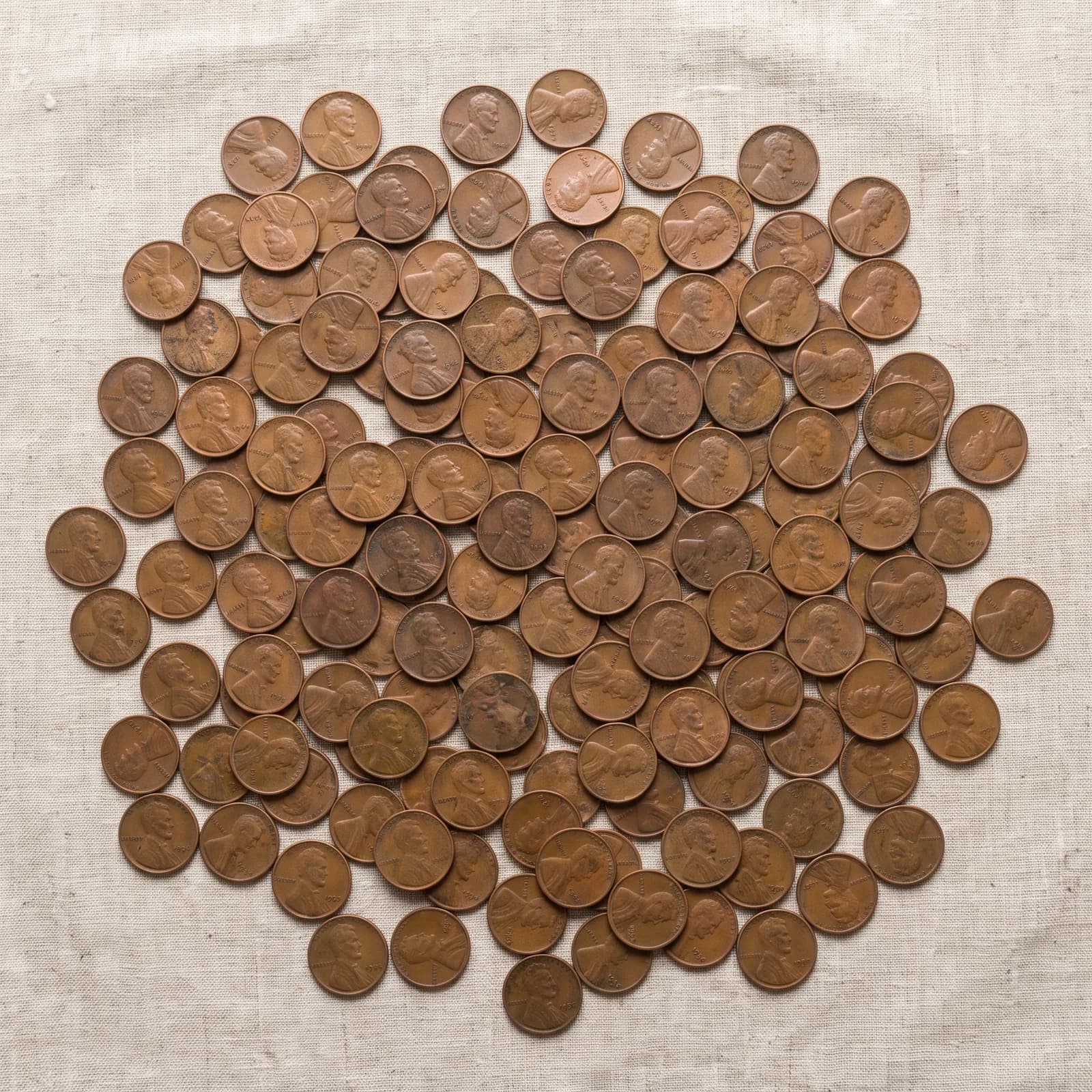
Most wheat pennies — common dates from the 1940s and 1950s in circulated condition — are worth only a few cents each, and are usually sold by the roll or bag rather than individually. Earlier common dates in better condition can bring a bit more.
There's also a small copper-value floor: a wheat cent contains about 3.1 grams of 95% copper, so its metal is worth a few cents, though melting U.S. cents is illegal. For circulated common dates, treat them as a few-cents coin unless the date, mint mark, or grade says otherwise.
How does condition change the value?
Condition can multiply a wheat penny's value, especially for better dates. A coin's grade measures its condition on the 70-point scale, and an uncirculated wheat cent with full original color (graded 'red,' or RD) can be worth many times a worn brown example of the same date.
For common dates, condition rarely turns a few-cent coin into a treasure. For key dates and semi-key dates, it makes an enormous difference, which is why valuable wheat pennies are often sent to PCGS for certification. See coin grading explained for how the scale works.
How do I tell if my wheat penny is valuable?
Check three things in order: the date, the mint mark, and the condition. The mint mark is a small letter under the date — S for San Francisco, D for Denver, and no letter for Philadelphia — and on key dates it is the whole story, since a 1909-S VDB is a rarity while a 1909 VDB without the S is common.
Read the date and mint mark with a magnifier, compare against the key-date list above, and set aside anything that matches or looks unusually sharp and uncirculated. Don't clean them — cleaning lowers value — and get a second opinion on anything promising at a local coin shop.
Where can I sell wheat pennies?
Common wheat pennies sell easily by the roll or pound to almost any coin shop, though the per-coin value is small. For key dates and high-grade pieces, a rare coin dealer who prices on rarity will pay far more than a bulk buyer.
Get more than one offer on anything you think is a key date, and read how to choose a local coin shop before you go. For a larger inherited group, our selling a coin collection guide walks through the process.
Frequently asked questions
How much is a wheat penny worth?+
Most common-date wheat pennies in worn condition are worth a few cents to a few dollars. Key dates like the 1909-S VDB, 1914-D, and 1931-S are worth hundreds or more, and top rarities like a genuine 1943 copper cent are worth a great deal.
Which wheat pennies are the most valuable?+
The 1909-S VDB, 1914-D, and 1931-S key dates, the 1922 'Plain' (no mint mark), and the 1955 Doubled Die. The 1943 copper cent — an error struck on a bronze planchet — is among the most valuable U.S. coins.
Is my 1943 steel penny rare?+
No — 1943 steel cents are common and worth only a little in worn condition. The rare coin is a 1943 struck on copper by mistake; a real copper 1943 cent won't stick to a magnet and should be professionally authenticated.
Where is the mint mark on a wheat penny?+
Below the date on the obverse. An S means San Francisco, a D means Denver, and no letter means Philadelphia. On key dates the mint mark is what separates a common coin from a valuable one.
Should I clean my old wheat pennies?+
No. Cleaning leaves fine scratches and removes original surface, which lowers value — especially on better dates. Leave them as you found them and let a dealer assess anything promising.