
Gold vs. Silver: Which Should You Buy?
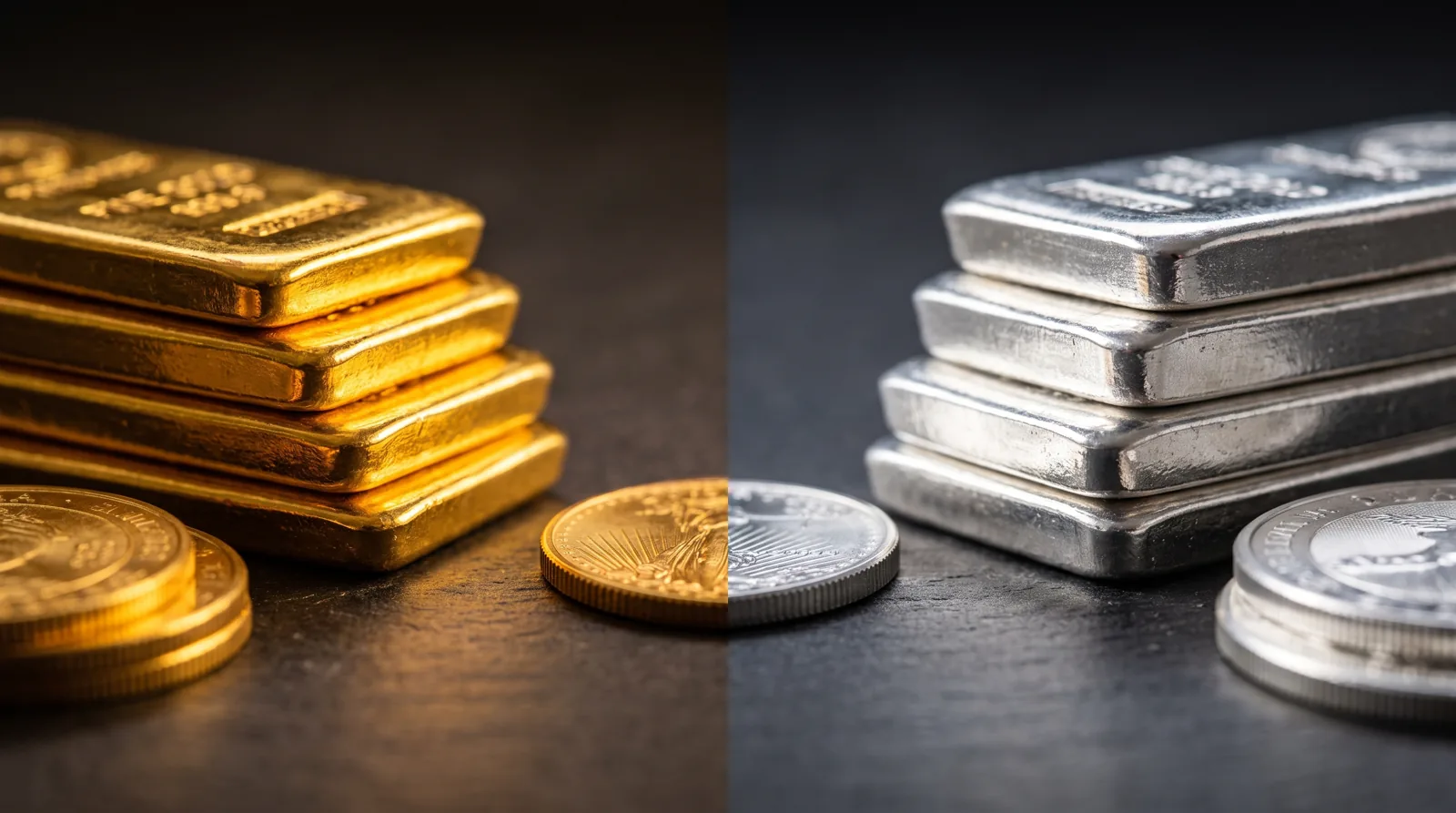
Gold or silver? It's the first question most new precious-metals buyers ask, and the honest answer is that they serve different roles. Gold is compact and steady; silver is affordable and divisible but more volatile. This guide compares them on price, volatility, premiums, and storage, explains the gold-silver ratio, and helps you decide which fits your budget and goals — or whether to own both.
Key takeaways
- Gold packs more value into less space and is steadier; silver is cheaper per ounce, more volatile, and has heavy industrial demand.
- Both trade off a live spot price plus a premium; silver usually carries a higher premium percentage and costs more to store per dollar of value.
- The gold-silver ratio (how many ounces of silver equal one ounce of gold) is one gauge some buyers use to decide which looks relatively cheaper.
- Silver suits smaller budgets and divisibility; gold suits compact, long-term storage of value. Many buyers hold both.
- Whichever you choose, buy recognized products at a fair premium from a reputable dealer.
Should I buy gold or silver?
It depends on your budget and goal. Gold stores a lot of value in a small, steady package; silver is cheaper per ounce, more volatile, and easier to buy and sell in small amounts. Neither is simply 'better' — they suit different needs.
If you're new to buying physical metal, start with our questions to ask before buying gold or silver checklist, then use this guide to choose between the two.
How do gold and silver differ?
The practical differences come down to value density, volatility, premiums, and storage. The table sums them up.
| Factor | Gold | Silver |
|---|---|---|
| Price per ounce | High | Low |
| Value density | Very high (compact) | Low (bulky per dollar) |
| Volatility | Lower | Higher |
| Premium over spot | Lower % | Higher % |
| Storage cost per $ value | Low | High |
| Industrial demand | Modest | Significant |
What's the case for silver?
Silver's low price per ounce makes it accessible — you can start small and buy steadily — and its divisibility means you can sell a little at a time. It also has heavy industrial demand (electronics, solar), which adds a demand driver gold lacks.
The trade-offs: silver is more volatile, carries a higher premium percentage, and takes far more space and cost to store the same dollar value. Junk silver and generic rounds are the lowest-premium ways in.
What's the case for gold?
Gold concentrates a lot of value into a small, easily stored form, and it tends to be steadier than silver. For storing significant value compactly — and for lower premiums as a percentage — gold is hard to beat.
The trade-off is the high per-ounce price, though fractional coins help smaller budgets. Our how to buy gold guide covers formats, premiums, and what to buy first.
What is the gold-silver ratio?
The gold-silver ratio is how many ounces of silver it takes to buy one ounce of gold — divide the gold price by the silver price. Some buyers watch it as a rough gauge of which metal looks relatively cheap: a high ratio is sometimes read as silver being inexpensive relative to gold.
It's a guide, not a crystal ball — the ratio moves over time and doesn't predict prices. Treat it as one input among several, not a signal to act on by itself.
How much do premiums and storage differ?
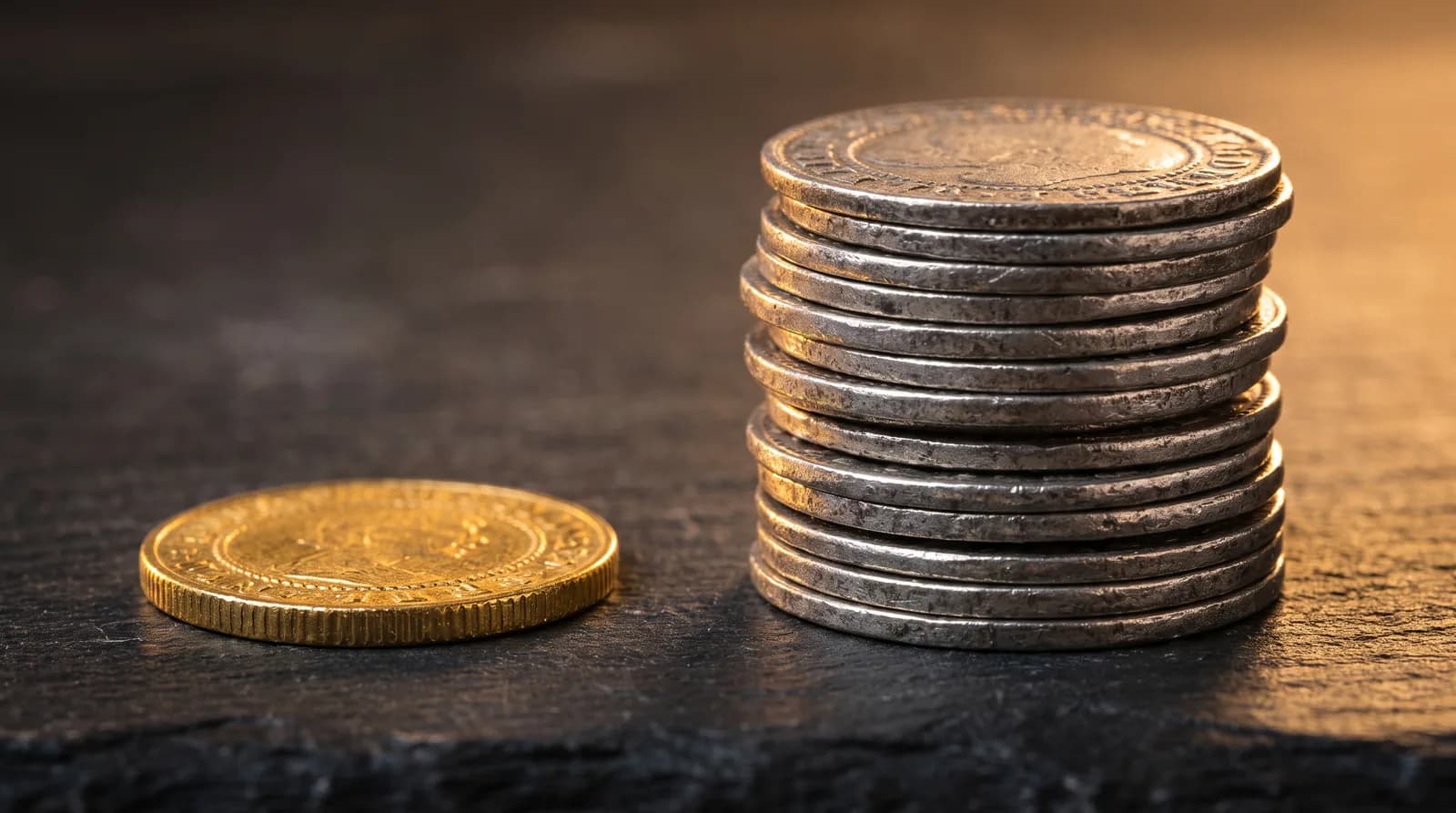
Silver generally carries a higher premium as a percentage of its value, and because it's bulky, storing a given dollar amount of silver costs more than the same value in gold. Over a large position, those differences add up.
Compare the all-in price to the live spot value with the precious metals value calculator, and factor storage into your decision before you buy.
So which should I buy?
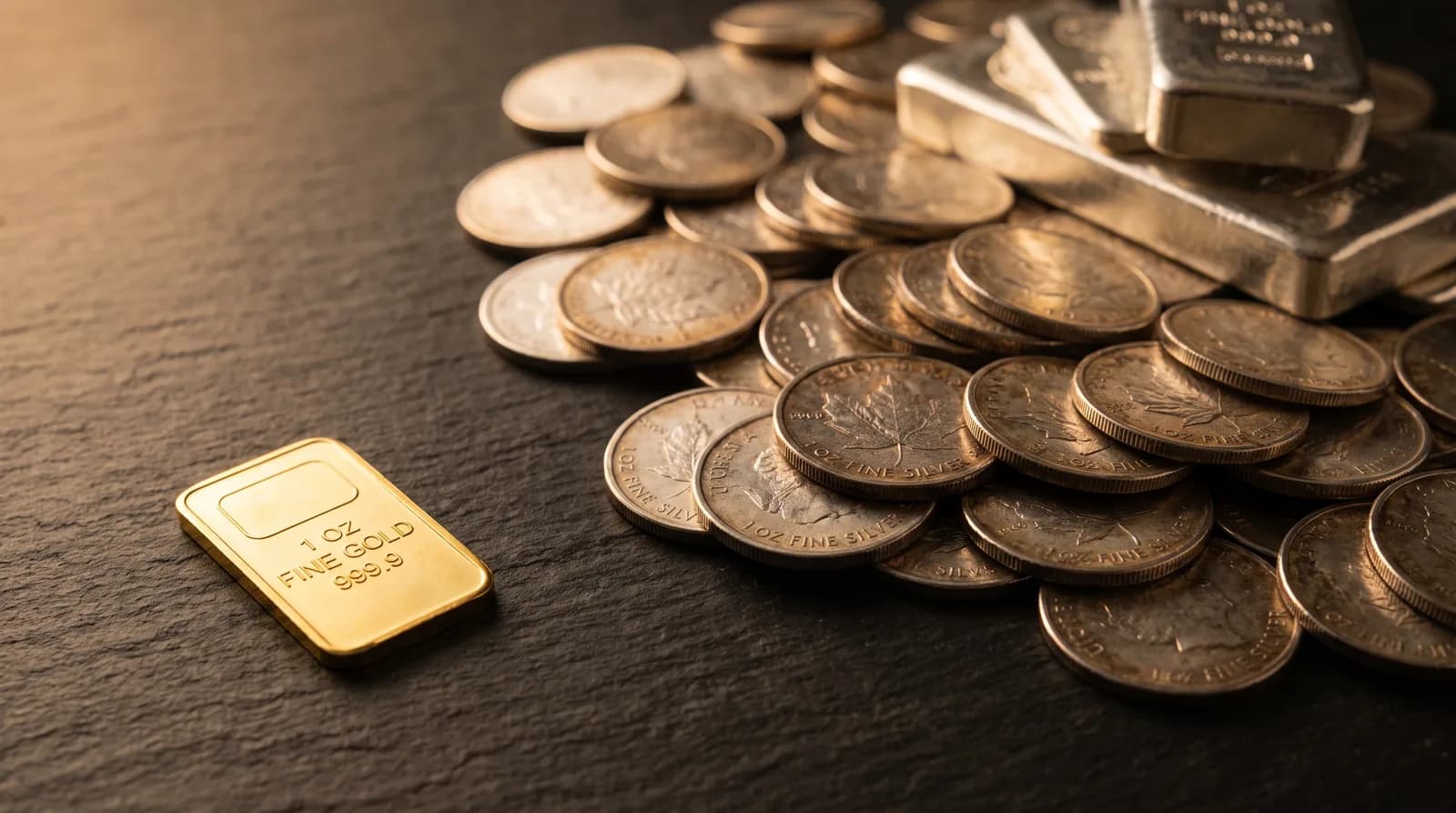
For a smaller budget, divisibility, and a lower entry point, silver makes sense. For compact, long-term storage of value with lower volatility and premiums, gold does. Many buyers simply hold both, weighting toward whichever fits their goals.
Whichever you choose, buy recognized products at a fair premium from a reputable bullion dealer or gold and silver buyer, and track your position's value with the Stack Tracker.
Frequently asked questions
Is gold or silver a better investment?+
Neither is universally better — they suit different goals. Gold is compact and steadier; silver is cheaper, more divisible, and more volatile with industrial demand. Many buyers hold both.
Why is silver's premium higher than gold's?+
As a percentage of a low per-ounce price, the fixed costs of minting and distribution loom larger, so silver typically carries a higher premium over spot than gold.
What is the gold-silver ratio?+
The number of ounces of silver that equal one ounce of gold (gold price divided by silver price). Some buyers use it as a rough gauge of relative value, but it doesn't predict prices.
Is silver harder to store than gold?+
Yes, per dollar of value. Silver is far bulkier than gold for the same value, so storing a given amount costs more and takes more space. Factor that in before buying large amounts.