Common Patriotic Civil War Token Designs and Slogans
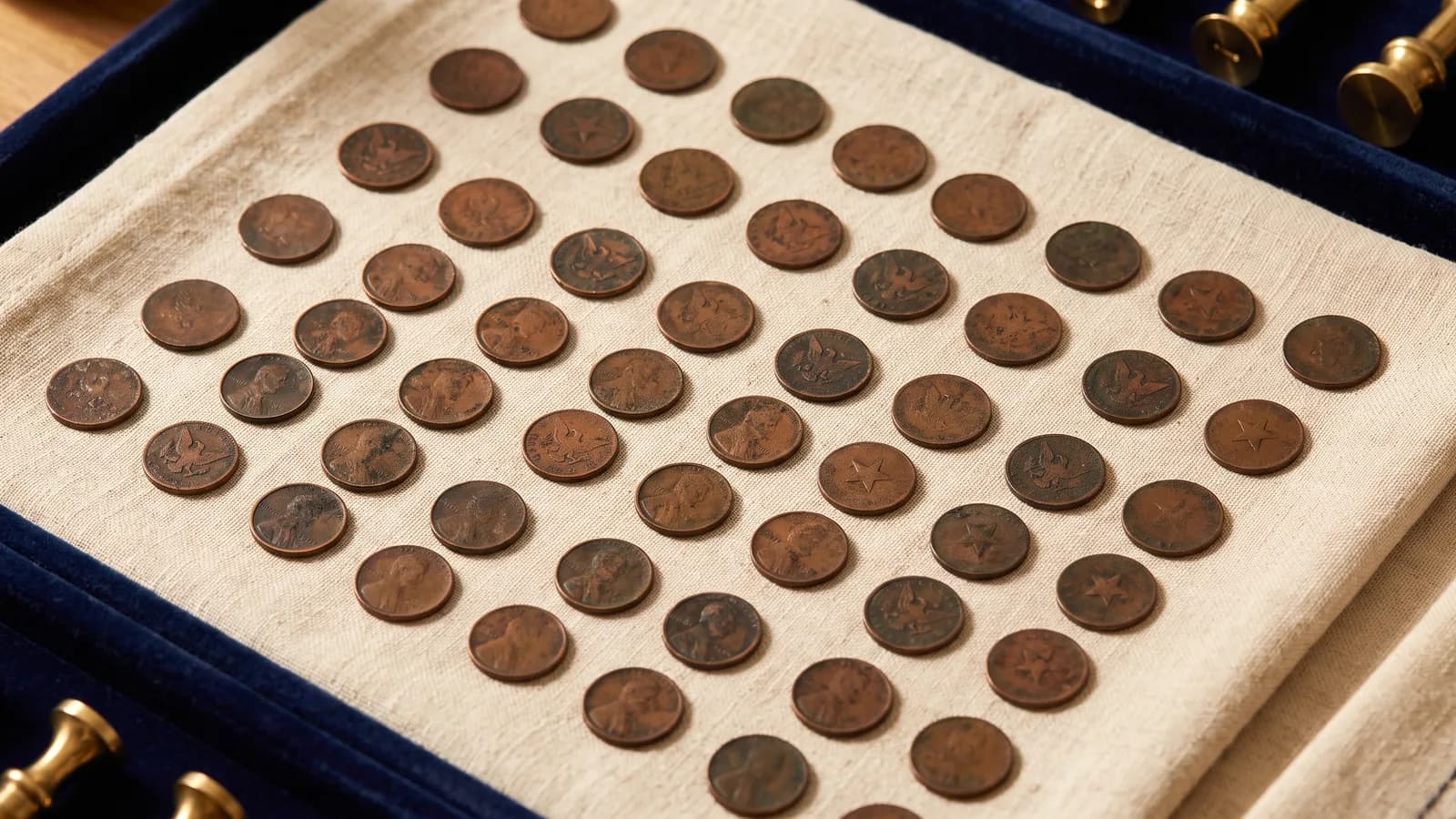
Patriotic Civil War token designs repeat a short list of themes: the American flag, the eagle, the Indian head, George Washington, military and naval scenes, and a group of Union slogans such as 'The Union Must and Shall Be Preserved.' A patriotic Civil War token is a privately minted cent-sized piece struck roughly from 1861 to 1864 that carries a patriotic design or slogan and no merchant name. Once you learn the handful of recurring design families below, you can read almost any example you find. For the full backstory on why these tokens exist, see the [complete Civil War tokens guide](/guides/civil-war-tokens-guide).
Key takeaways
- A patriotic Civil War token is a privately minted cent-sized piece (about 1861 to 1864) that carries a patriotic design or slogan and no merchant name.
- The recurring design families are the American flag, the eagle, the Indian head, George Washington, military and naval scenes, and Union slogans.
- The same die designs repeat across thousands of die pairings because die-sinkers mixed and matched popular obverses and reverses.
- Flag, eagle, Indian head, and 'Not One Cent' types are the most common (R-1 to R-3); the USS Monitor and many named portrait dies are scarcer.
- The phrase 'NOT ONE CENT' was chosen to sidestep laws against imitating federal coin, since the word 'NOT' gave legal cover.
What Counts as a Patriotic Design
A patriotic token carries a national slogan or emblem and, unlike a store card, names no private business. That single rule separates the two most common token types.
During the war, small change vanished as people hoarded gold, then silver, then even the copper-nickel Indian Head cent. Private die-sinkers filled the gap with cent-sized copper tokens, and many buyers preferred a patriotic message to a plain advertisement. The result is a large family of tokens (roughly 19mm, mostly copper) that read as miniature political statements. For the merchant-advertising cousins, see the overview of patriotic Civil War tokens and how they compare to store cards.
The takeaway: if there is no shop name, you are almost certainly holding a patriotic type.
The American Flag and the Dix Token
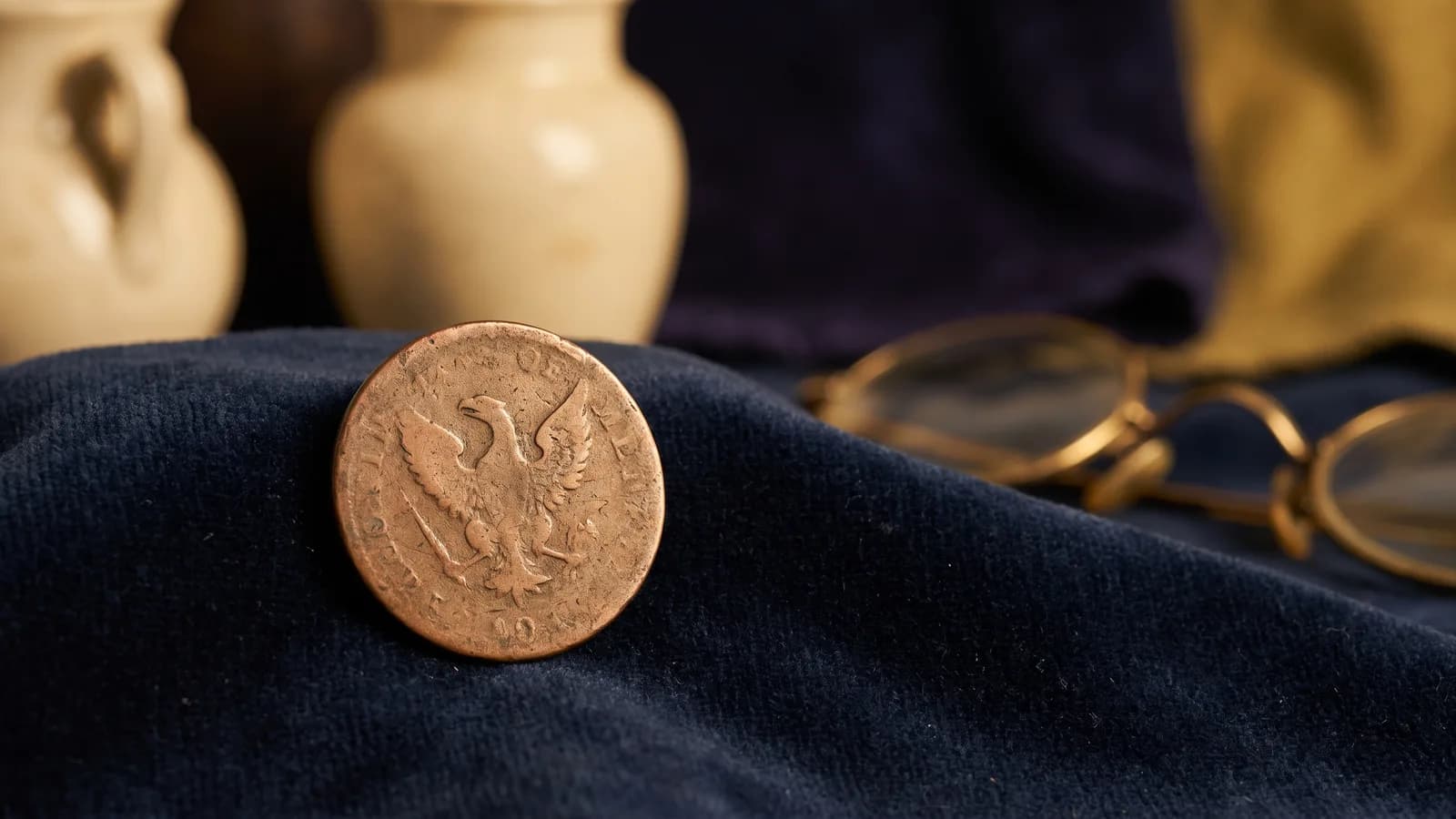
The waving American flag is one of the most common obverse designs, usually paired with the legend 'THE FLAG OF OUR UNION.' It is the single most recognizable patriotic theme.
The flag is also central to the famous Dix token. John Adams Dix, appointed U.S. Secretary of the Treasury in early 1861, wired Treasury agents in New Orleans on January 29, 1861 with the order, 'If any one attempts to haul down the American flag, shoot him on the spot.' The line became a Northern rallying cry. On tokens it appears as a flag obverse reading 'THE FLAG OF OUR UNION' and a reverse reading 'IF ANY ONE ATTEMPTS TO TEAR IT DOWN SHOOT HIM ON THE SPOT / DIX.' A well-known blundered die misspells the last word as 'SPOOT,' which collectors seek out.
Most Dix tokens are common in copper and trade for roughly $10 to $40 circulated, more choice Uncirculated. The full story lives in the Dix shoot him on the spot token guide.
The Eagle
The eagle, often shown with spread wings or perched on a shield, is another workhorse patriotic design that appears on countless die pairings.
Die-sinkers borrowed the eagle straight from federal coinage and national iconography, so it reads as instantly official without imitating any specific coin. You will see it combined with shields, stars, laurel wreaths, and slogan reverses. Because so many die-sinkers cut their own eagle, the exact feathers, stance, and surrounding stars vary from one shop to the next, which is part of how specialists attribute pieces.
Eagle types are generally common. Value tracks condition and color more than the design itself.
The Indian Head and 'Not One Cent'
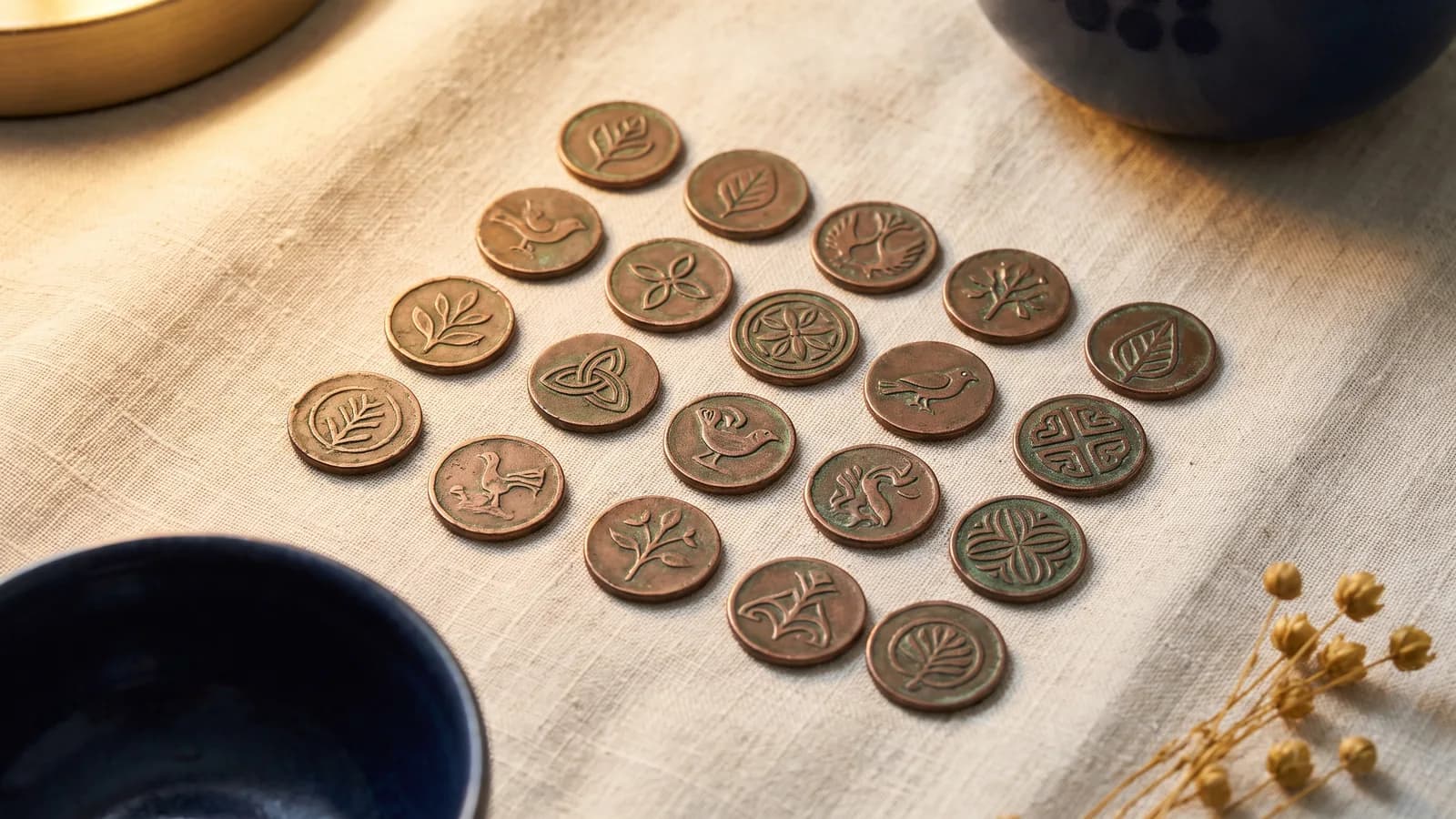
The Indian head obverse, echoing the federal Indian Head cent, is extremely common and is frequently paired with a reverse reading 'NOT ONE CENT.'
That pairing is not decorative. Many tokens deliberately resembled the cent so the public would accept them, but federal law discouraged imitating official coin. Adding the word 'NOT' to a wreath-and-legend reverse that otherwise looked like a cent gave the issuer legal cover. The design says, in effect, this looks like money but is not claiming to be a United States cent. If you want the numismatic background on the federal coin it imitates, see the Indian Head penny value guide.
Indian head and 'Not One Cent' types are among the most common patriotic tokens you will encounter.
George Washington and Portrait Dies
George Washington is the most common portrait on patriotic tokens, used as a founding symbol of national unity rather than a wartime figure.
His bust appears in profile, sometimes with legends invoking the founders or the Union. Beyond Washington, a smaller group of tokens carries portraits of contemporary figures and political themes, including generals and the 1864 presidential candidates. These portrait and political dies range from fairly available to genuinely scarce, depending on the individual pictured and how many were struck. Named-figure and campaign dies are collected as a specialty and can carry premiums over generic patriotic types.
As a rule, Washington portraits are common, while many named contemporary portraits are scarcer.
Union Slogans
A large share of patriotic tokens carry a text-only reverse built around a pro-Union slogan. The most common lines are variations on preserving the Union.
The recurring legends include 'THE UNION MUST AND SHALL BE PRESERVED,' 'UNION FOR EVER,' and 'THE FEDERAL UNION IT MUST BE PRESERVED.' These slogan reverses were cheap to cut and universally acceptable in the North, so they were paired with flags, eagles, and portraits across many issues. A minority of tokens instead carry peace or anti-war sentiments favored by Northern Peace Democrats; those are covered in the Copperhead Civil War tokens guide. The great majority of surviving pieces are firmly pro-Union.
If your token is mostly lettering with a Union rallying cry, it belongs to this common slogan family.
Why the Same Designs Repeat, and What Is Common
Patriotic designs repeat across thousands of catalog varieties because die-sinkers mixed and matched a modest set of popular obverses and reverses. Cutting a new die was the expense; reusing a proven flag or eagle was free.
The standard reference, published by the Civil War Token Society, catalogs patriotic tokens by obverse die number and reverse die number plus a metal letter, so one popular flag die can appear paired with dozens of different reverses. That is why a single design looks familiar even though the exact variety in your hand may be uncommon. Rarity is rated on a scale from R-1 (more than 5,000 known) to R-10 (unique), and a one-number attribution difference can move an ordinary token into scarce territory. Because most examples are copper, third-party graders like NGC also assign color grades of brown, red-brown, or red, and full red pieces command the largest premiums. The Wikipedia overview of Civil War tokens is a useful starting map before you dig into the die tables.
The table below summarizes the design families most collectors see and how common each tends to be. To find a dealer who handles these tokens, browse the tokens and medals directory.
| Design or legend family | Short description | Common or scarce |
|---|---|---|
| Flag / 'THE FLAG OF OUR UNION' | Waving U.S. flag obverse, often the anchor of a patriotic pairing | Common |
| Dix / 'shoot him on the spot' | Flag obverse with the Dix quotation reverse; 'SPOOT' die is sought | Common (blunder scarcer) |
| Eagle | Spread or perched eagle, often with shield and stars | Common |
| Indian head + 'NOT ONE CENT' | Indian head obverse with a denial-of-value reverse | Common |
| George Washington | Founding-era portrait bust used as a unity symbol | Common |
| Cannon / crossed cannons / drum | Artillery and camp imagery from the war | Common |
| USS Monitor / ironclad | Warship or ironclad naval scene | Scarcer |
| Union slogans | Text reverses such as 'UNION FOR EVER' or 'MUST AND SHALL BE PRESERVED' | Common |
| Portrait / political dies | Named generals or 1864 candidates and campaign themes | Varies, often scarcer |
Frequently asked questions
What is the most common patriotic Civil War token design?+
Flag, eagle, and Indian head designs are the most common, along with 'NOT ONE CENT' reverses and Union slogans such as 'The Union Must and Shall Be Preserved.' These types are usually rated R-1 to R-3 and trade in the roughly $15 to $40 range in circulated grades.
Why do so many tokens say 'NOT ONE CENT'?+
Many tokens deliberately resembled the federal cent so the public would accept them at a penny. Federal law discouraged imitating official coin, so issuers added the word 'NOT' to give legal cover. The phrase is often paired with an Indian head obverse.
What is the Dix token?+
It is a patriotic token quoting Treasury Secretary John Adams Dix, who in January 1861 ordered agents to shoot anyone who tried to haul down the American flag. Tokens pair a flag obverse reading 'THE FLAG OF OUR UNION' with a reverse carrying the shoot-him-on-the-spot line and the name DIX.
Are any patriotic designs rare?+
Yes. While flags, eagles, and Indian heads are common, naval scenes like the USS Monitor and many named portrait or political dies are scarcer. Rarity is rated R-1 to R-10, and a specific die pairing can be far rarer than the design looks, so accurate attribution matters.
How do I identify the exact variety of my token?+
Patriotic tokens are cataloged by obverse die, reverse die, and metal using the Fuld system published by the Civil War Token Society. Match your obverse and reverse designs to the reference die tables, or ask a dealer or grading service, since one die difference can change the value substantially.