
How to Store and Protect Your Coins
How you store coins directly affects what they're worth. A coin's condition is its value, and poor handling or the wrong holder can quietly ruin a coin over months or years. The good news: protecting a collection is simple and inexpensive once you know the basics. This guide covers handling, the right and wrong holders, environment, and when a certified slab makes sense.
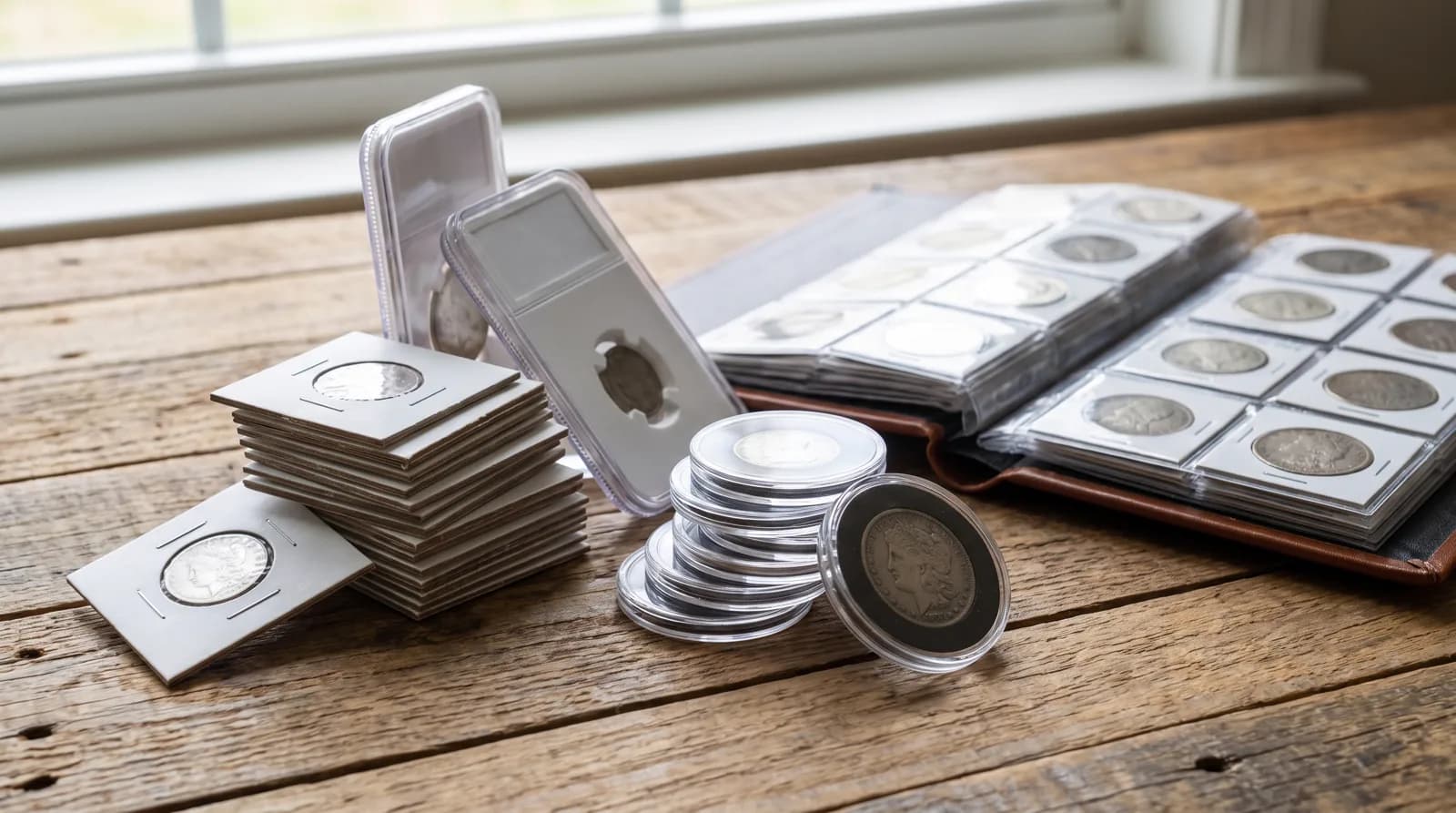
Key takeaways
- Handle coins by the edges only, over a soft surface, and never clean them — cleaning permanently lowers value.
- Use coin-safe, inert holders; avoid soft PVC flips, which can leave a green residue that damages coins over time.
- Store coins somewhere cool, dry, and stable; humidity and temperature swings cause spots and toning.
- Certified 'slabs' from PCGS or NGC both protect a coin and guarantee its grade, ideal for valuable pieces.
- Good storage is cheap insurance — proper holders and conditions preserve both the coin and its value.
How should I store my coins?
Store coins in inert, coin-safe holders, handled only by the edges, somewhere cool and dry. Those three things — safe holders, careful handling, and a stable environment — preserve both condition and value.
The single most important rule is the simplest: never clean a coin. Everything else is about keeping coins away from the things that damage them. For how condition translates to value, see coin grading explained.
How do I handle coins safely?
Hold coins by the edges, never touching the faces, and work over a soft towel or pad so a dropped coin isn't dented. The oils and acids on fingertips can etch a permanent fingerprint into a coin's surface.
For valuable or uncirculated coins, clean cotton gloves add protection. Avoid talking directly over coins, since tiny droplets can cause spots over time.
What holders should I use — and avoid?
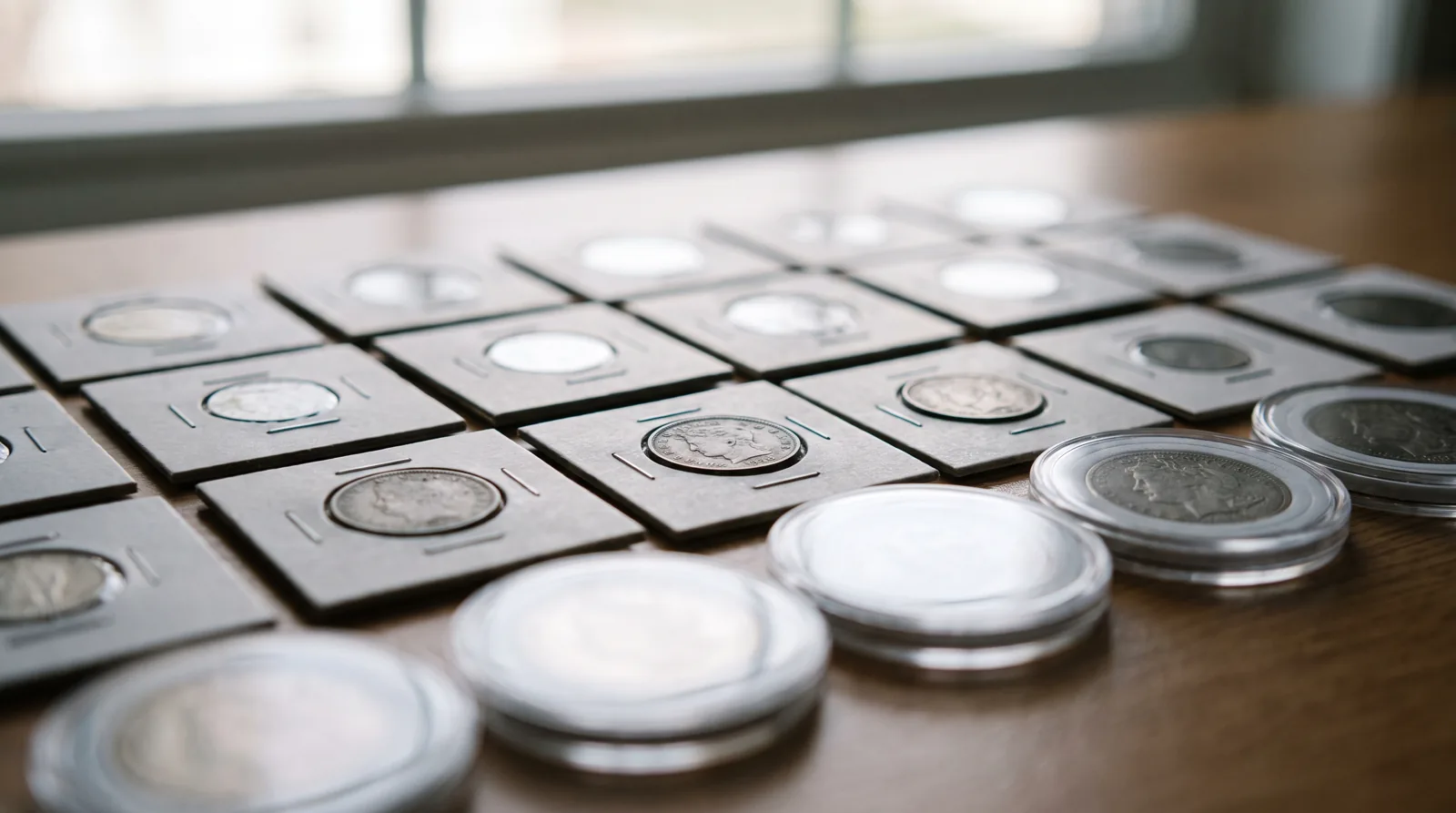
Use holders made of inert, coin-safe materials. The common safe and unsafe options are below. The big one to avoid is soft PVC flips: the PVC can break down and leave a green, sticky residue that permanently damages a coin.
| Use (coin-safe) | Avoid |
|---|---|
| Cardboard '2x2' holders with Mylar | Soft PVC flips (green residue risk) |
| Inert Mylar flips | Loose change jars for good coins |
| Air-tight capsules ('air-tites') | Adhesive tape or glue on coins |
| Acid-free albums and tubes | Paper envelopes with sulfur content |
| PCGS/NGC slabs | Bare contact between coins |
What environment is best for coins?
Cool, dry, and stable. Humidity is the enemy — it causes spotting and unwanted toning — so keep coins away from basements, attics, and bathrooms. A consistent room temperature is better than swings.
Silica gel packs in a storage box help control moisture, and a home safe adds security and a stable environment. Keep coins out of direct sunlight and away from household chemicals.
What about toning — is it bad?
Toning is the natural color a coin develops as its surface reacts with the environment over time. It isn't dirt, and it isn't automatically bad — attractive original toning is often prized, while cleaning it off destroys value.
The goal of storage is to slow harmful, uneven toning and corrosion, not to prevent all change. When in doubt, leave a coin alone; never try to 'improve' a coin's look yourself.
Should I get valuable coins slabbed?
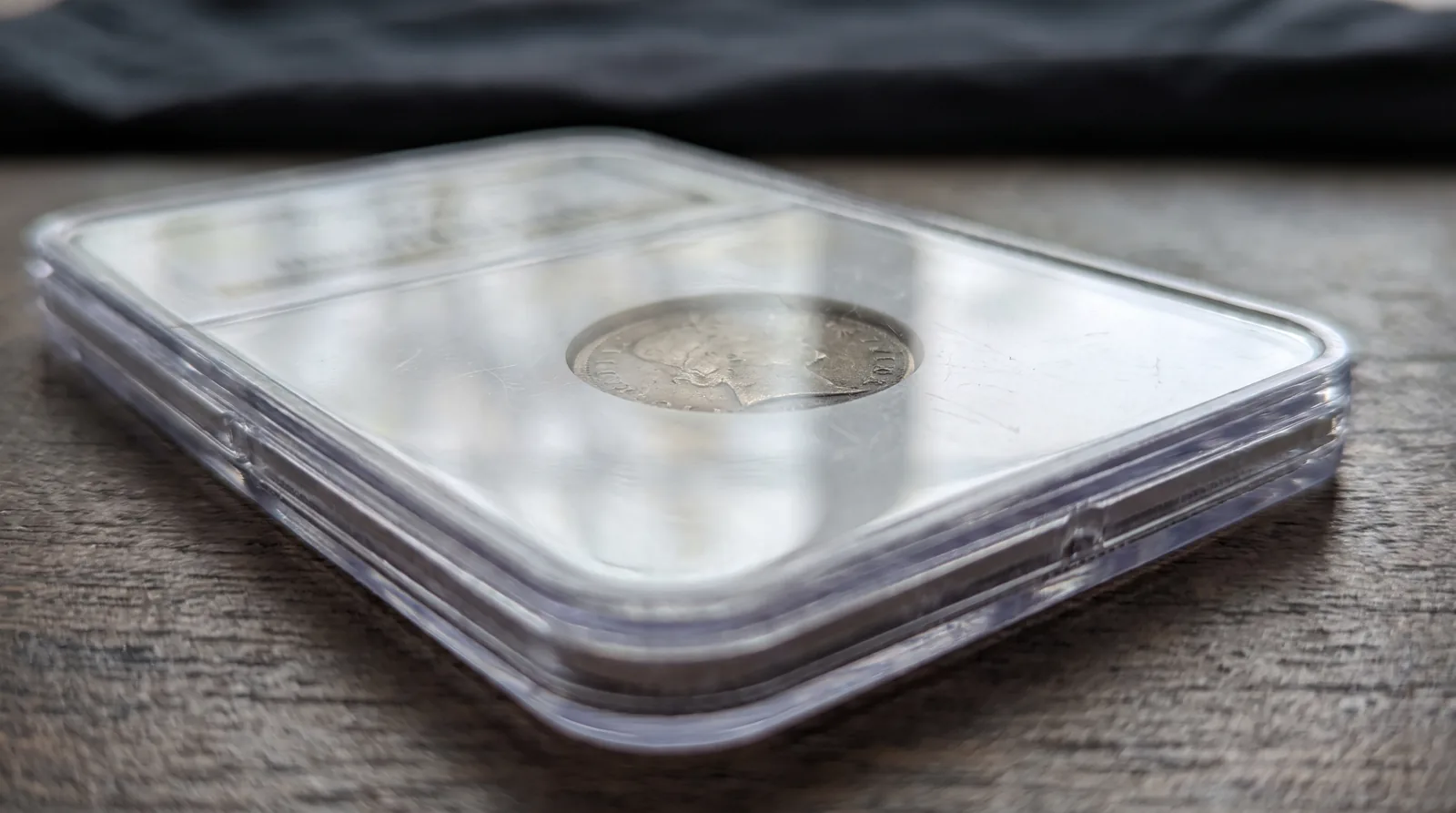
For genuinely valuable coins, a certified holder ('slab') from PCGS or NGC is ideal: it seals the coin in an inert, tamper-evident case and guarantees the grade, protecting both the coin and its market value.
Slabbing isn't worth the fee for common, low-value coins — see coin grading explained for when it pays off. For everyday coins, good flips, capsules, and albums are plenty.
How do I store coins for insurance or an estate?
Keep an inventory — dates, mint marks, grades, and rough values — alongside the collection, and store valuable pieces securely. Good records make insurance and eventual sale or inheritance far smoother.
For a documented value, a numismatic appraiser can prepare a written appraisal; see how coin appraisals work.
Frequently asked questions
What is the best way to store coins?+
In inert, coin-safe holders (cardboard 2x2s, Mylar flips, air-tight capsules, or slabs), handled by the edges, in a cool, dry, stable place. Never clean coins and avoid soft PVC flips.
Why are PVC flips bad for coins?+
Soft PVC can break down over time and leave a green, sticky residue that chemically damages a coin's surface. Use Mylar or other inert, coin-safe holders instead.
Is coin toning bad?+
Not necessarily. Toning is natural surface color that develops over time; attractive original toning is often valued. Don't try to remove it — cleaning destroys value. Good storage slows harmful toning.
Should I clean dirty coins before storing them?+
No. Cleaning leaves fine scratches and removes original surface, lowering value. Store coins as they are and let a professional handle anything that seems to need attention.