Lincoln Cent Key Dates: From the 1909-S VDB to the 1955 Doubled Die
Most Lincoln cents are worth a few cents, but a small number of key dates and errors are worth hundreds or thousands of dollars. The Lincoln cent has been minted since 1909, and collectors prize a short list of low-mintage dates and dramatic errors above the rest. This guide covers the famous key dates — led by the 1909-S VDB — and the major doubled die errors, plus how to avoid the many fakes.
Key takeaways
- Most Lincoln cents are worth a few cents, but a short list of key dates and errors is worth real money.
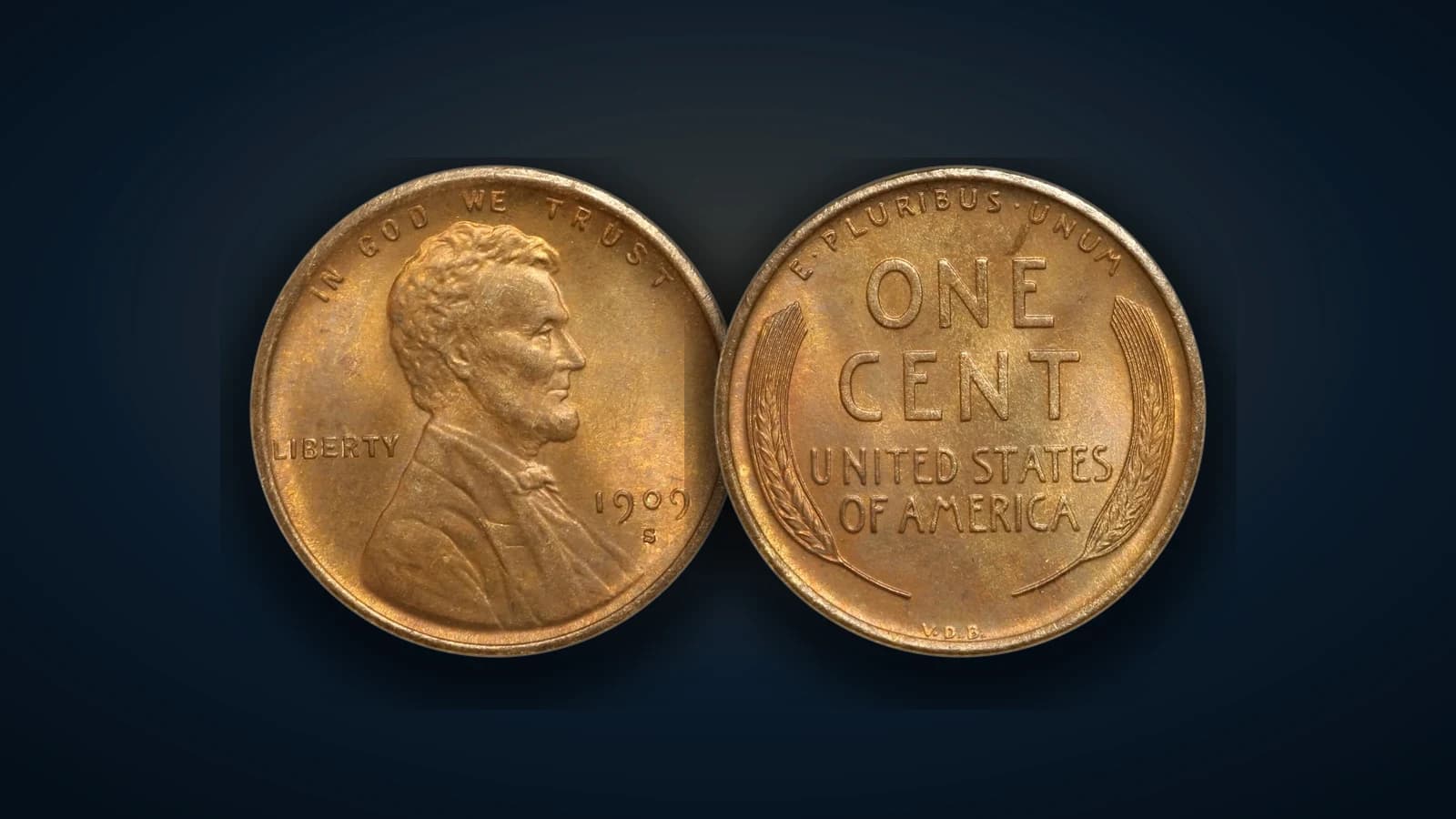
- The 1909-S VDB is the most famous key date, valuable because of its low mintage and the designer's initials.
- Other major keys include the 1909-S, 1914-D, 1922 'No D,' and 1931-S.
- The 1955 doubled die obverse is the most famous Lincoln cent error, with strong, easily seen doubling.
- Because key dates and errors are heavily faked, valuable cents should be authenticated by PCGS or NGC.
What are the key date Lincoln cents?
The key dates are a handful of low-mintage Lincoln cents, mostly early 'wheat' cents, that are scarce in any condition and valuable as a result. The most famous is the 1909-S VDB, followed by the 1909-S, 1914-D, 1922 'No D,' and 1931-S.
Separately, a few dramatic error coins — especially the 1955 doubled die — are worth strong premiums. Our wheat penny value guide covers the broader series; this guide focuses on the specific dates and errors worth the most.
What is the 1909-S VDB?
The 1909-S VDB is the most famous Lincoln cent key date. In the first year of the coin, the designer Victor David Brenner's initials 'VDB' appeared on the reverse, and only a small number were struck at San Francisco (the 'S' mint mark) before the initials were removed.
That low mintage makes the 1909-S VDB valuable in every grade. It is also one of the most counterfeited U.S. coins, often faked by adding an 'S' or 'VDB' to a common cent, so authentication is essential.
What are the other early key dates?
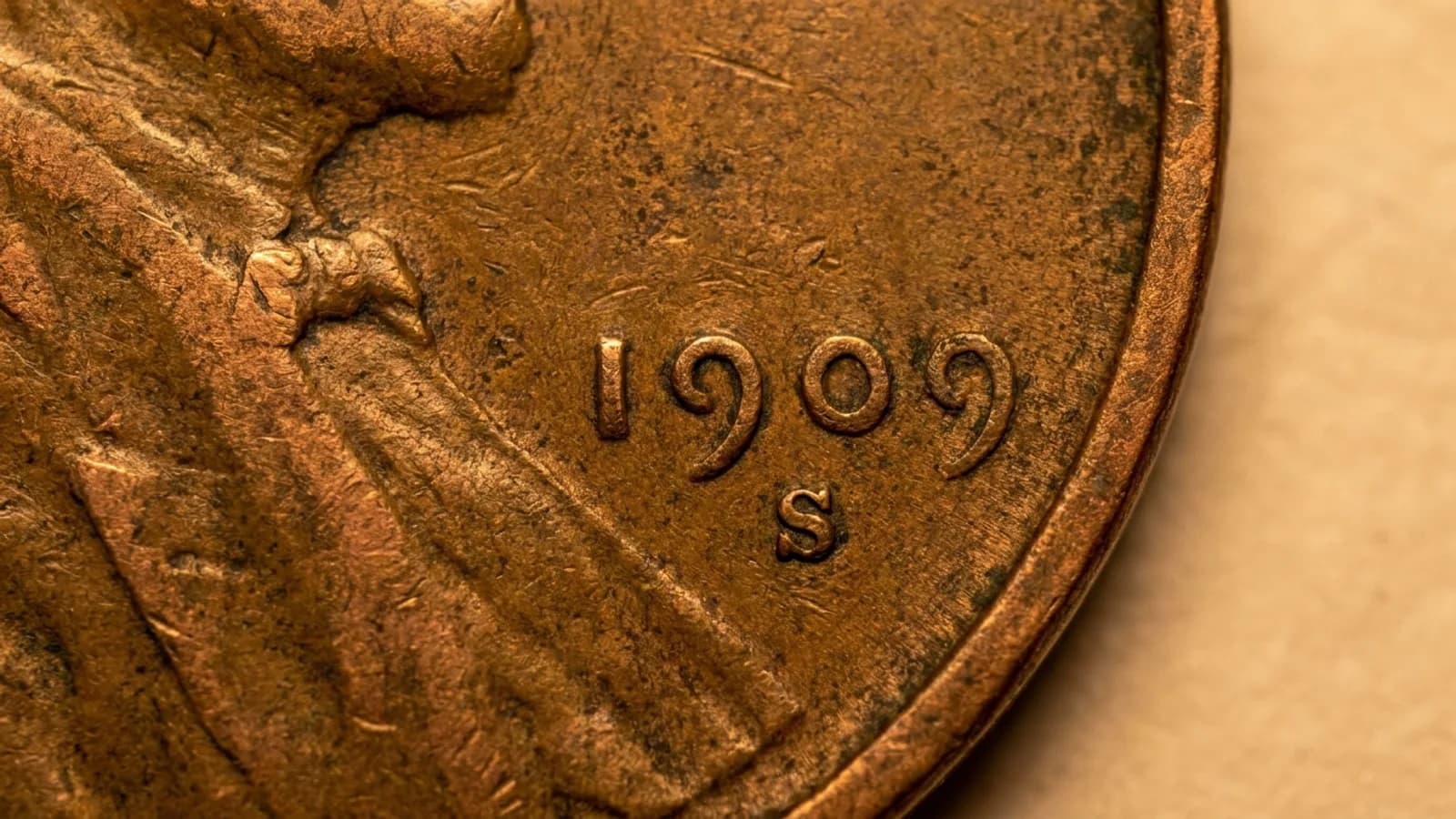
Beyond the 1909-S VDB, the major early keys are the 1909-S (without VDB), the 1914-D, the 1922 'No D', and the 1931-S. Each is scarce and worth a strong premium even in well-worn condition.
The 1922 'No D' is unusual: in 1922 only the Denver mint struck cents, and worn or filled dies produced some coins with no visible mint mark, creating a recognized and valuable variety. The mint mark and date are central to all these coins — see what is a mint mark.
| Date | Why it matters |
|---|---|
| 1909-S VDB | Famous low-mintage key with designer's initials |
| 1909-S | Scarce first-year San Francisco issue |
| 1914-D | Major Denver key date |
| 1922 'No D' | Denver-only year; missing mint mark variety |
| 1931-S | Low-mintage Depression-era key |
What is the 1955 doubled die cent?
The 1955 doubled die obverse is the most famous Lincoln cent error. A misaligned die impression left strong, clearly visible doubling in the date and the lettering 'LIBERTY' and 'IN GOD WE TRUST' — doubling you can see without magnification.
Genuine 1955 doubled die cents are valuable and in demand. Because the doubling is so dramatic and well known, this is also a frequently faked coin, so a trusted grade matters.
Which other doubled die cents are valuable?
Later Lincoln cents have their own prized doubled dies, including the 1969-S, 1972, and 1995 doubled die obverses. The 1969-S in particular is rare and valuable, and like the 1955 it shows true doubling, not the common, value-less 'machine doubling.'
Our coin errors explained guide covers how to tell a real doubled die from machine doubling and ordinary damage.
What about the 1943 copper and 1944 steel cents?
The wartime error cents — the rare 1943 copper cent and the 1944 steel cent — are among the most valuable Lincoln cents of all, and both are covered in detail in our 1943 steel penny guide.
A magnet quickly separates the common from the rare on those: steel sticks, copper does not. As always, genuine examples must be authenticated.
How do you avoid fakes and sell key-date cents?
Key-date and error cents are heavily counterfeited, often by adding or altering a mint mark or date. Do not clean a coin you think is valuable, and have it authenticated by PCGS or NGC; our how to spot fake coins and coin grading companies guides explain why.
Sell verified key dates and errors through a rare coin dealer or a trusted coin shop, and lean on resources like the American Numismatic Association while you learn.
Frequently asked questions
What is the most valuable Lincoln cent?+
Among regular issues, the 1909-S VDB is the famous key date. The rare 1943 copper cent error is worth far more, but it is a major rarity, not a coin most people will find.
What is the 1909-S VDB penny worth?+
It is valuable in every grade because of its low mintage, with prices rising sharply in higher grades. Because it is heavily faked, have any 1909-S VDB authenticated before buying or selling.
How do I know if I have a 1955 doubled die cent?+
A genuine 1955 doubled die shows strong, clearly visible doubling in the date and lettering without magnification. Flat, shelf-like doubling is machine doubling, which is common and adds no value.
Why is the 1922 'No D' penny special?+
In 1922 only the Denver mint struck cents, and worn or filled dies produced some with no visible mint mark. The 'No D' is a recognized, valuable variety, while a normal 1922-D is common.