
Trade Tokens and 'Good For' Tokens: A Collector's Guide
Trade tokens, also called merchant tokens or 'good for' tokens, are privately issued tokens a business gave or sold to customers to be redeemed only at that same business. Most read something like 'GOOD FOR 5 CENTS IN TRADE' or 'GOOD FOR ONE DRINK,' and they were common from roughly the 1870s into the 1930s. Common examples trade for about $2-$20, but a token you can pin to a small town and a named merchant, or a saloon or territorial piece, can reach the tens to hundreds of dollars or more. This guide explains who issued them, how to research an unknown one, and what actually drives value.
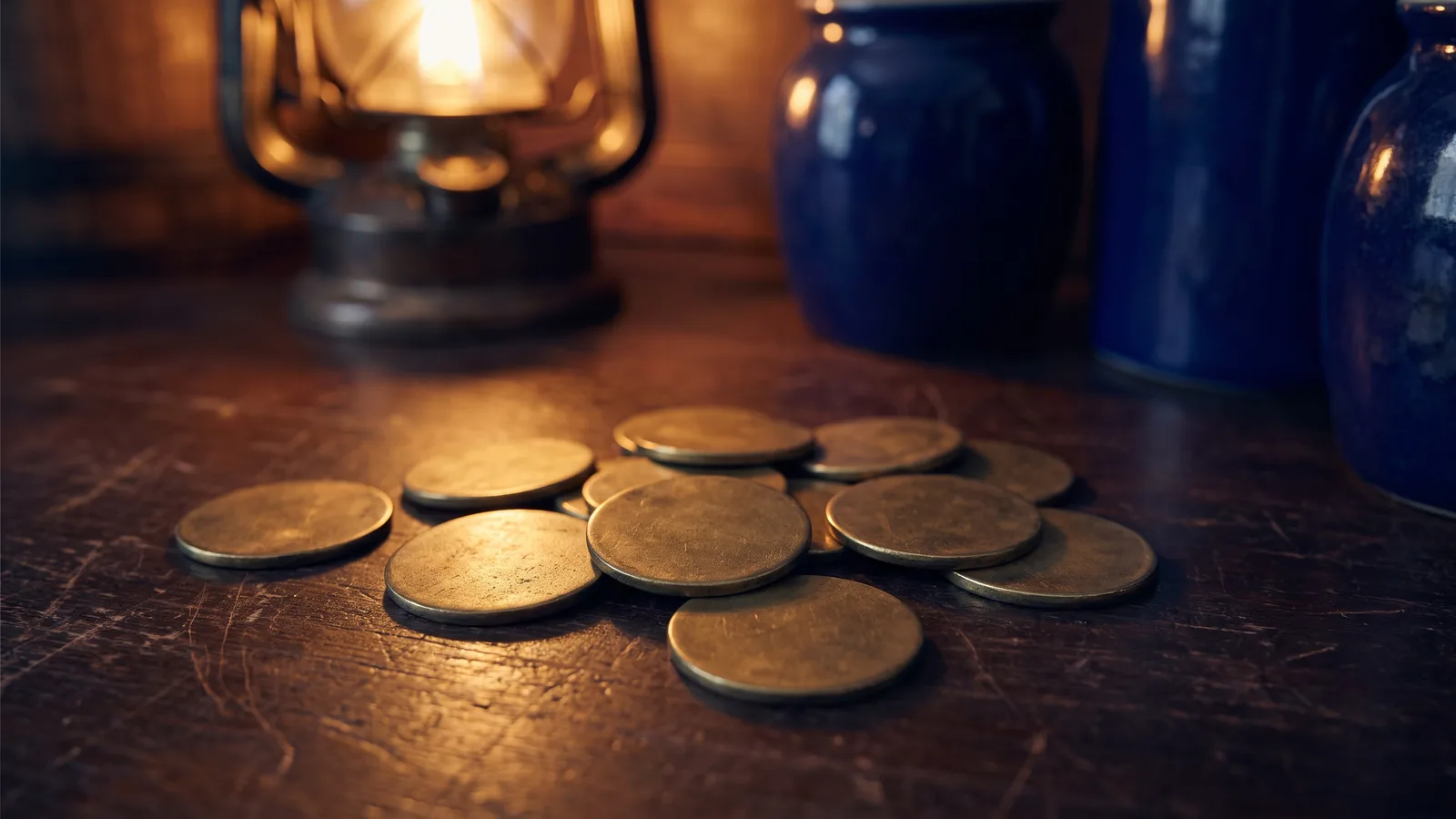
Key takeaways
- Trade tokens are privately issued merchant tokens redeemable only at the business that made them, typically reading 'GOOD FOR 5 CENTS IN TRADE' or 'GOOD FOR ONE DRINK.'
- They were common from roughly the 1870s into the 1930s, issued by saloons, general stores, company stores, dairies, and pool halls, usually in brass or aluminum.
- A 'maverick' is a token with no town or state, so it cannot be attributed to a place, and mavericks are generally worth less than fully identified pieces.
- Common trade tokens run about $2-$20, while scarce, well-attributed, saloon, or territorial pieces can reach the tens to hundreds of dollars or more.
- Attribution is the core skill: state token books, Russell Rulau's catalogs, and TokenCatalog.com help match an unknown token to a real merchant.
What Is a Trade Token?
A trade token is a privately issued token that a business handed out or sold, redeemable only at that business for a set value in goods, drinks, or services. It was never government money. It was store credit you could hold in your hand.
The wording tells the story. A token might read 'GOOD FOR 5 CENTS IN TRADE,' 'GOOD FOR ONE LOAF,' 'GOOD FOR ONE DRINK,' or 'GOOD FOR ONE FARE.' The value could be a cash amount or a specific item. Most were struck in brass or aluminum, with some in nickel, copper, or other alloys, and they came round, scalloped, or with a center hole.
Trade tokens are one branch of exonumia, the collecting of numismatic items other than official coins and paper money. They are affordable, deeply local, and turn up constantly in junk boxes and inherited collections, which is a large part of their appeal. Wikipedia's overview of the trade token is a useful starting point for the broader history.
Who Issued Trade Tokens, and When?
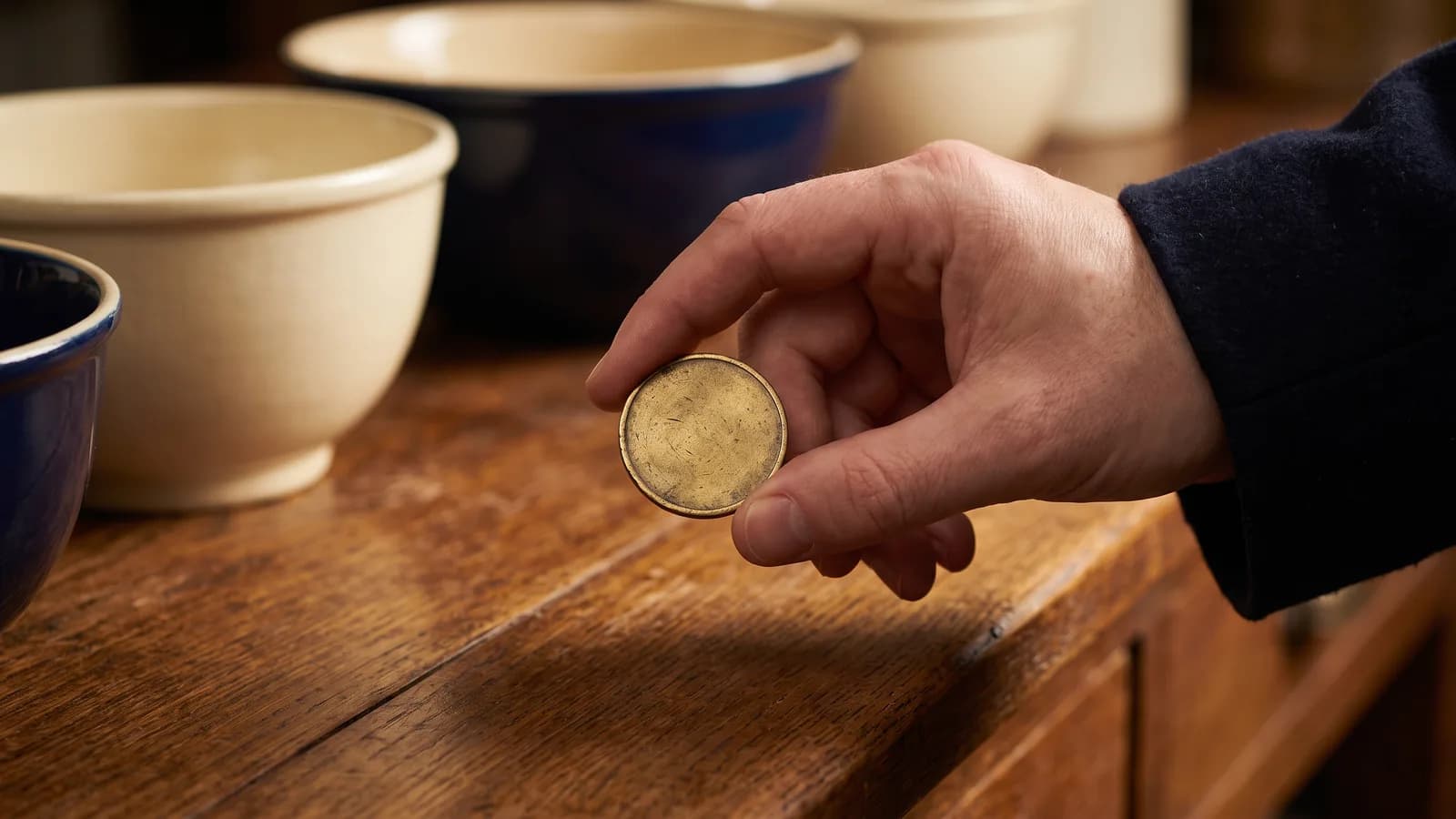
Trade tokens were issued by small local businesses, most heavily from about the 1870s into the 1930s. Saloons, general stores, company stores, dairies, pool halls, cigar shops, and bakeries all used them.
The reasons were practical. A saloon could sell a token that a customer redeemed later, which kept small change in the till. A company store in a mining or lumber town could pay workers partly in tokens spendable only at that store. A dairy could sell milk tokens by the dozen. The token bound the customer to the merchant, which is exactly why the wording almost always limits redemption to one place.
Because they were made in small batches for one business at a time, most trade tokens are genuinely local artifacts. A single brass disc can be the only surviving trace of a store that operated for a few years in a town that no longer exists.
What Is a Maverick Token?
A 'maverick' is a trade token that shows no town or state, and sometimes no merchant name either, so it cannot be attributed to a place. The term borrows from unbranded cattle. Mavericks are generally worth less than fully identified tokens because collectors cannot tie them to a specific history.
The gap between a maverick and an attributed token is the single biggest swing in this hobby. A token reading only 'J. SMITH / GOOD FOR 5 CENTS IN TRADE' is a maverick until someone proves which J. Smith and which town. Add 'TOMBSTONE, ARIZ.' and the same piece becomes a documented saloon or store token with a real place behind it.
Much of the fun, and much of the value, comes from turning a maverick into an attributed token through research.
| Factor | Maverick (no place) | Attributed (named town and merchant) |
|---|---|---|
| What it shows | Merchant or initials only, or generic | Merchant plus town and state |
| Research status | Cannot be tied to a location | Documented to a real business |
| Collector demand | Lower, harder to place | Higher, fits state and town sets |
| Typical value | Often about $1-$8 | Commonly $5-$50, scarce pieces far higher |
What Drives a Trade Token's Value?
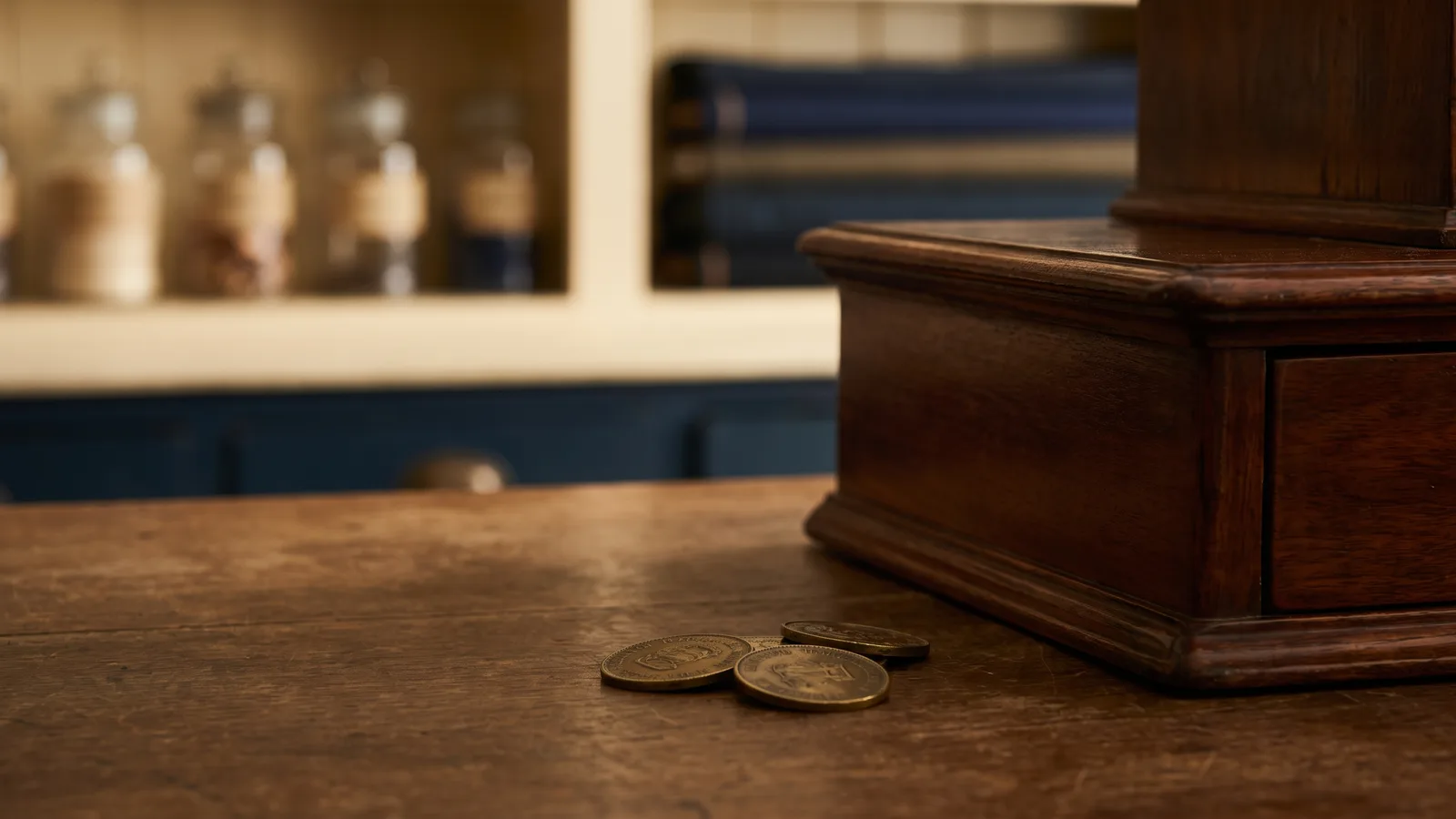
Value rises with attribution, rarity, and subject. A token you can tie to a named town and merchant is worth more than a maverick, and beyond that the details of the place and the business matter.
The factors that push prices up include a small or short-lived town, territorial-era pieces (made before an area became a state), saloon tokens, and 'good for' advertising pocket mirrors, which are collected alongside tokens. Condition, metal, and unusual shapes play a supporting role. Demand is also driven by state and town collectors chasing a checklist, so a common design from a hot collecting state can outsell a scarcer piece from a quiet one.
As a worked example, picture two brass tokens both reading 'GOOD FOR 5 CENTS IN TRADE.' One is a maverick with just a set of initials and might sell for a few dollars. The other names a saloon in a tiny territorial mining camp that operated for three years. That second token can bring tens to low hundreds of dollars, not because the metal is worth more, but because the history is documented and scarce.
| Type | Typical hedged range | Why |
|---|---|---|
| Common attributed token | $2-$20 | Named town, but plentiful |
| Maverick, generic | $1-$8 | Cannot be placed |
| Small or short-lived town | $20-$100+ | Few were made or survive |
| Saloon or territorial piece | Tens to hundreds+ | High demand, scarce |
How Do I Research and Attribute an Unknown Token?
Start by reading everything on both sides: any name, town, state, denomination, and what the token is 'good for.' Then work from general references down to state-specific ones. Attribution is a search problem, and most tokens can be narrowed down with patience.
The core references are state-by-state trade-token books (many states have a dedicated catalog compiled by local collectors), Russell Rulau's United States token catalogs, and the online database at TokenCatalog.com, which lets you search by legend and location. For a maverick, the goal is to match a merchant name to a real business in a real town using these catalogs plus historical directories and newspapers.
If a piece looks important or you plan to sell it, a second opinion helps. A numismatic appraiser or an exonumia specialist at a local coin shop can confirm an attribution and flag reproductions. The American Numismatic Association and the Newman Numismatic Portal also host reference material that can support your research.
Metal-Detector Finds and Cleaning Caution
Many trade tokens are dug by metal detectorists, which is why attribution research is such a large part of the hobby. A ground find often arrives caked in dirt and corrosion, and the instinct to scrub it clean is the wrong one.
Aggressive cleaning can strip the surface, blur the legend, and cut the value of any token, the same principle behind the standing advice to never clean coins. If you must remove loose soil, use gentle rinsing and let a specialist advise before you do anything abrasive. A readable but naturally toned token beats a shiny scrubbed one every time.
Trade tokens sit alongside other merchant-marked collectibles a detector might turn up, including counterstamped coins, where a merchant punched a mark into a real coin rather than striking a separate token.
How Do Trade Tokens Relate to Other Token Families?
Trade tokens are part of a wide family of 'good for' and merchant pieces, and knowing the neighbors helps you sort a mixed box. Several look similar at a glance but belong to different collecting areas.
Fare pieces marked 'GOOD FOR ONE FARE' are usually transportation tokens, used on streetcars, buses, and ferries and cataloged separately from merchant tokens. Civil War era store cards, covered in the guide to Hard Times tokens and store cards, are an earlier wave of privately issued merchant pieces that predate the classic 'good for' era. All of them fall under the broader collectible tokens umbrella.
Sorting by legend is the fastest first step. 'IN TRADE' or a specific item points to a merchant token, 'ONE FARE' points to transportation, and a mark punched into an existing coin points to a counterstamp.
Where to Buy and Sell Trade Tokens
Trade tokens sell through coin shops, exonumia dealers, coin shows, online marketplaces, and specialist auctions. Because value hinges on attribution and local demand, where you sell can matter as much as what you have.
For common pieces, online listings and general dealers are convenient. For a well-attributed, scarce, or territorial token, a dealer who knows exonumia or a collector for that specific state will usually pay more, since they understand the piece and have buyers waiting. You can find shops that handle tokens and medals through the medals and tokens directory, and locate nearby buyers through the coin shops directory.
Before selling anything you suspect is scarce, check recent sales of the same or similar tokens and get a second opinion on the attribution. A confirmed town and merchant is what turns a dollar token into a meaningful one.
Frequently asked questions
What does 'good for' mean on a token?+
It states what the token can be redeemed for at the issuing business, such as 'GOOD FOR 5 CENTS IN TRADE,' 'GOOD FOR ONE DRINK,' or 'GOOD FOR ONE LOAF.' The token was only valid at that one business.
What is a maverick trade token?+
A maverick is a token that shows no town or state, and sometimes no merchant name, so it cannot be attributed to a place. Mavericks are generally worth less than fully identified tokens because they lack a documented history.
How much are trade tokens worth?+
Common trade tokens run about $2-$20. Scarce, well-attributed pieces, along with saloon and territorial tokens and those from small or short-lived towns, can reach the tens to hundreds of dollars or more depending on rarity and demand.
How do I find out what my trade token is?+
Read every word on both sides, then work from Russell Rulau's US token catalogs and TokenCatalog.com down to your state's dedicated trade-token book. A numismatic appraiser or exonumia specialist can confirm a tough attribution.
Should I clean a dirty trade token I found?+
No. Aggressive cleaning strips the surface and blurs the legend, which lowers value. Rinse off loose soil gently at most and ask a specialist before doing anything abrasive. A naturally toned, readable token is worth more than a scrubbed one.
Are trade tokens the same as transportation tokens?+
No. Trade tokens are merchant pieces redeemable for goods or services at one business. Transportation tokens are fare pieces used on streetcars, buses, and ferries, and they are cataloged separately, though both are collected as exonumia.