
Are My Old Coins Worth Anything? Why Most Are Worth Face Value
Here's the honest answer most people don't hear: the large majority of old coins are worth face value, or their metal value if they contain silver or gold. Genuine rarities exist and can be worth a fortune, but they are the exception. Understanding why most coins are common — and how to spot the few that aren't — saves you from both false hope and the mistake of selling a sleeper too cheap. This guide shows you how to tell the difference.
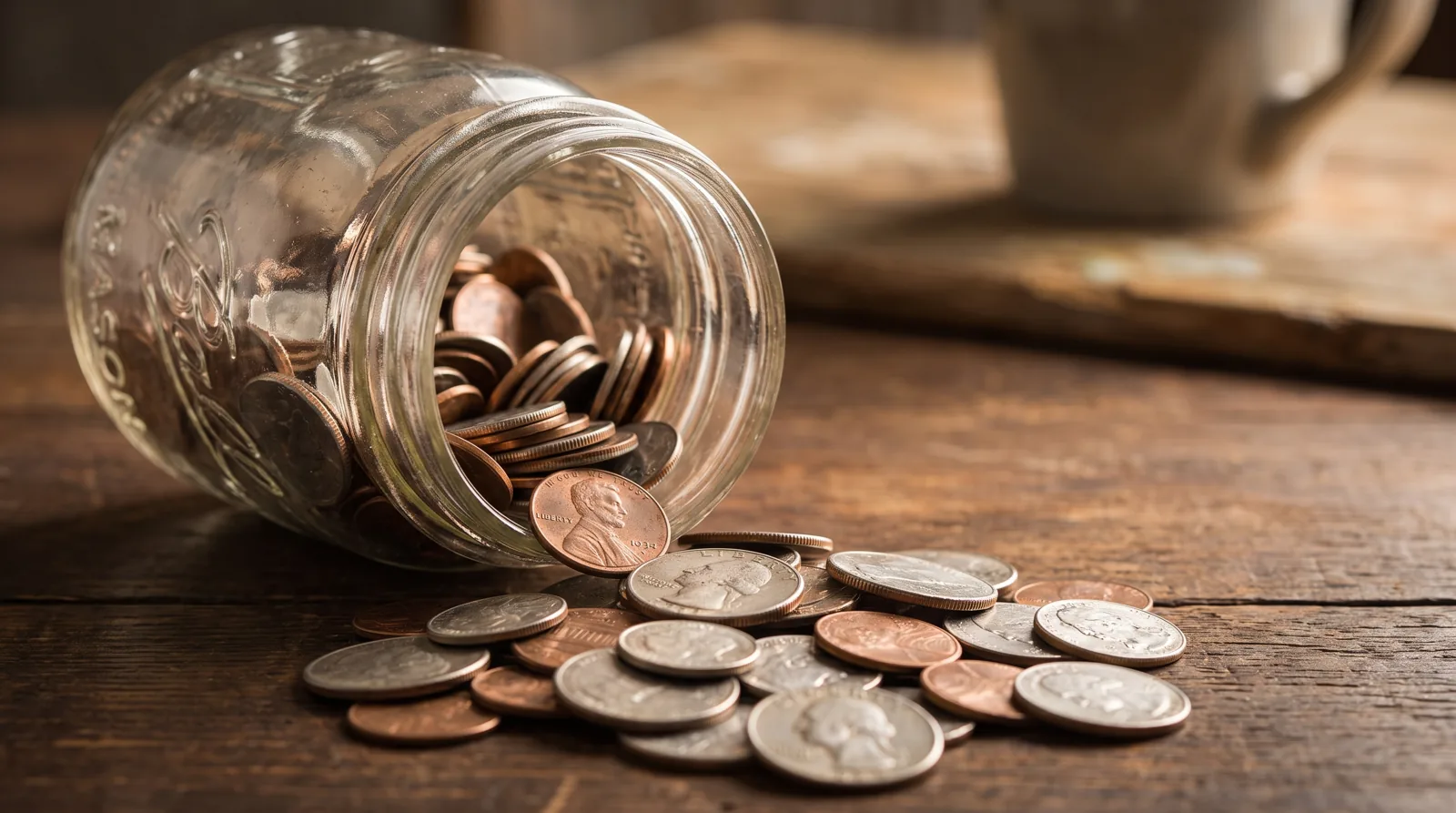
Key takeaways
- Most old coins are worth face value or, if they contain silver or gold, their metal (melt) value — true rarities are the exception, not the rule.
- Coins were struck in huge numbers, so age alone does not make a coin valuable; rarity, grade, metal, and demand do.
- The coins most likely to be worth more are pre-1965 silver, gold coins, scarce key dates, mint errors, and high-grade uncirculated pieces.
- Inherited 'collections' are often common coins bought at retail, so resale value can be far below what was originally paid — that's the market, not a dishonest dealer.
- Never clean coins, sort them into rough groups, and get a second opinion on anything that looks scarce before selling.
Are my old coins worth anything?
Usually only a little above face value, unless a coin is silver or gold, a scarce date, a mint error, or in high grade. Age by itself does not create value — a worn, common coin from 1950 is generally worth exactly its face value.
That isn't bad news, just realistic. Knowing it protects you from overpaying a 'rare coin' pitch and from underselling the occasional real find. For the full method behind valuing any coin, see what your coins are worth.
Why are most coins common?
The U.S. Mint strikes coins in staggering numbers — often hundreds of millions or billions of a single date. With that many made and many still around, most circulated coins have no scarcity and therefore no premium.
Collectors prize coins that are hard to find in nice condition, not merely old. A 120-year-old coin that millions of people saved is common; a 50-year-old coin that almost no one kept in pristine shape can be scarce. Mintage and survival, not age, drive rarity.
What actually makes a coin valuable?
Four things, in combination: metal content, rarity (a scarce date or mint mark), mint errors, and grade (condition). A coin needs at least one of these to be worth more than face, and the most valuable coins have several.
Grade — a coin's condition on the 70-point scale — often matters as much as the date; see coin grading explained. Without rarity, metal, an error, or high grade, a coin is worth face value no matter how old it looks.
Which coins are most likely to be worth more?
A short list accounts for most of the real value people find. The table separates the coins worth checking from the ones almost always worth face.
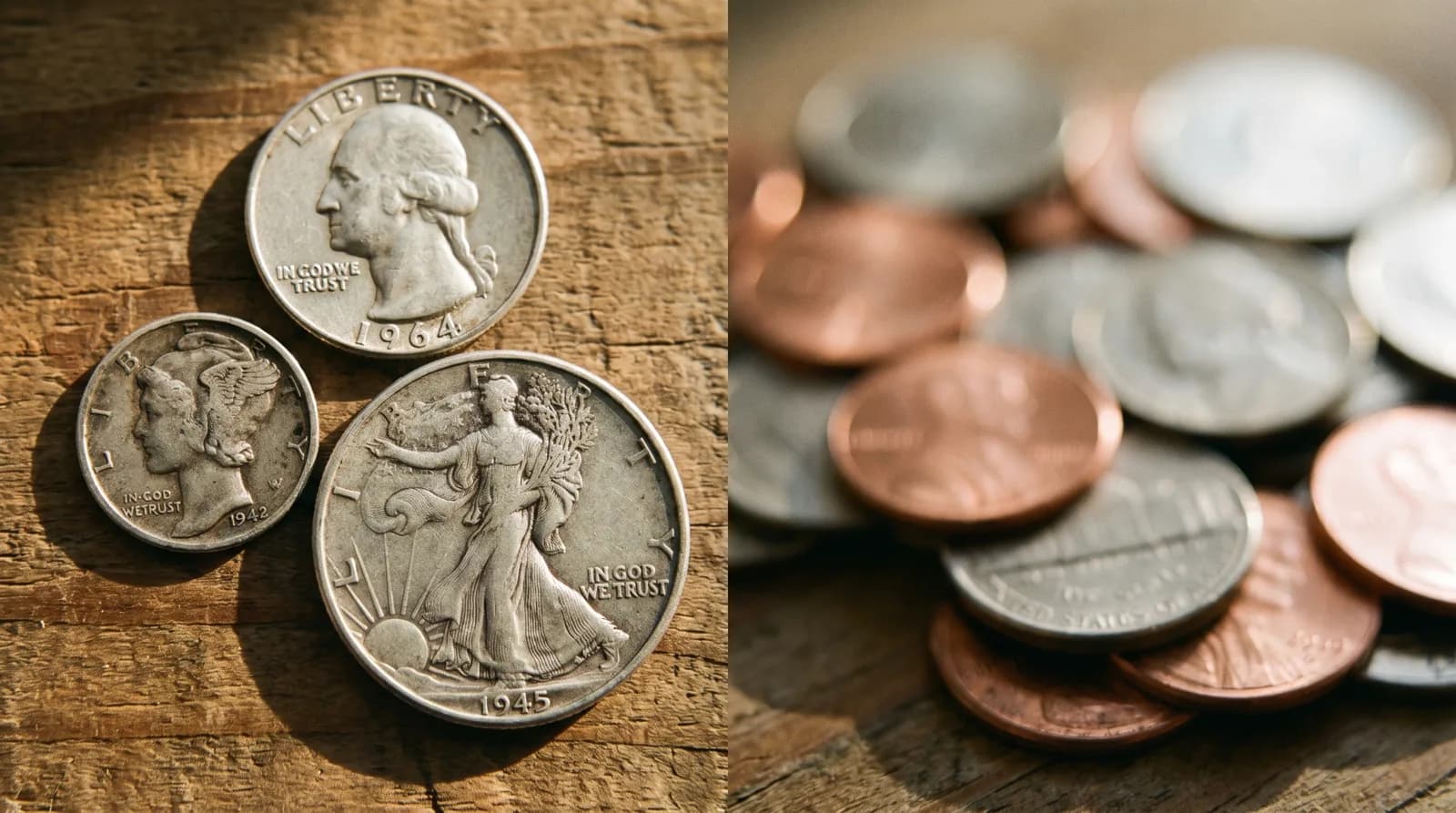
| Usually just face value | Worth checking carefully |
|---|---|
| Worn modern coins (post-1965) | Pre-1965 silver dimes, quarters, halves |
| Common circulated cents and nickels | Gold coins of any era |
| Most coins from change | Known key dates and low mintages |
| Cleaned or damaged coins | Mint errors and die varieties |
| Bulk 'collector' sets bought at retail | Uncirculated, high-grade examples |
How do I quickly triage a box of old coins?
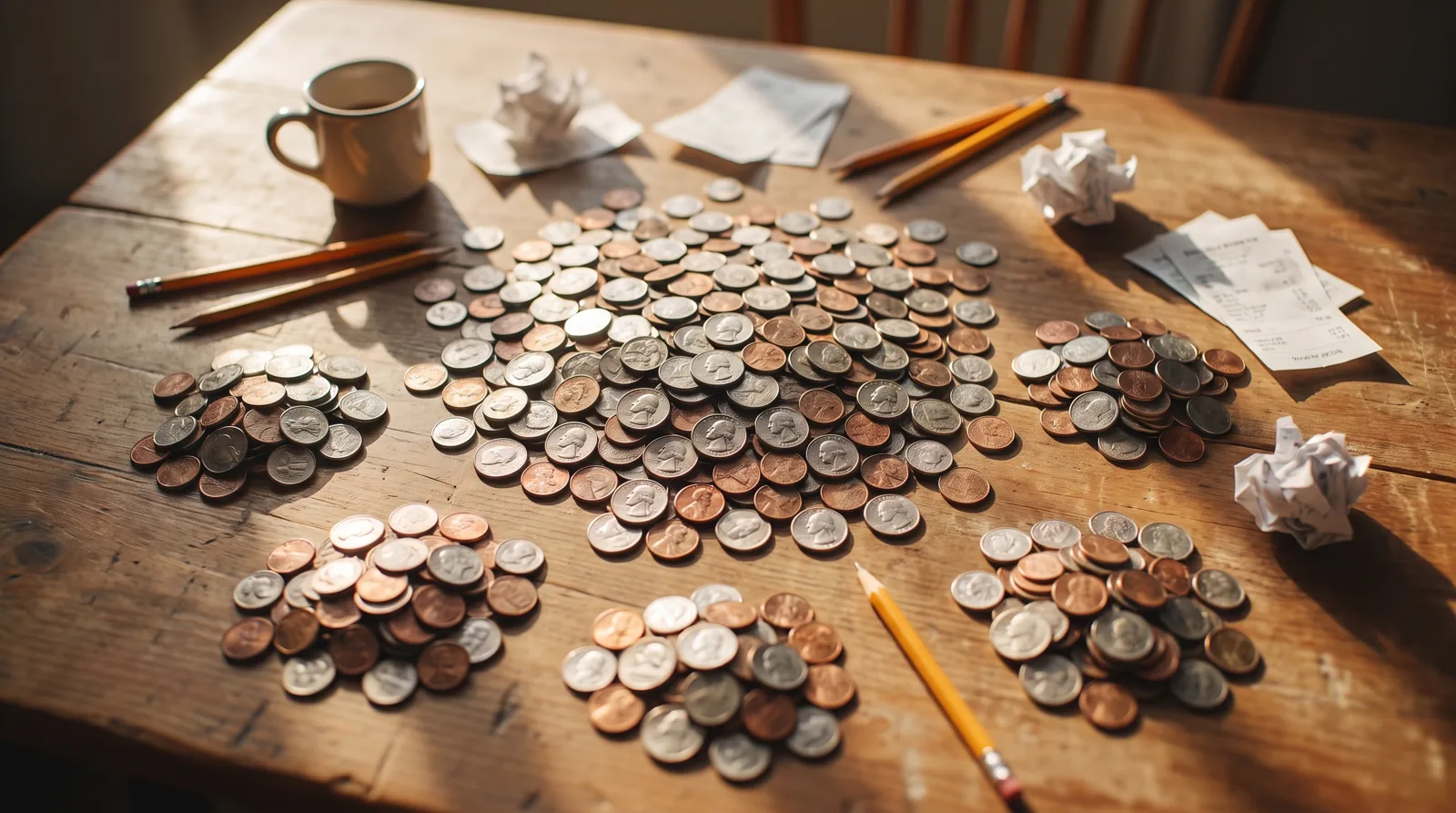
Sort into three piles. First, silver and gold — any U.S. dime, quarter, half, or dollar dated 1964 or earlier is 90% silver and worth its melt value at minimum. Second, possible key dates or errors — anything unusual, very old, or uncirculated. Third, everything else, which is almost certainly face value.
This takes the overwhelm out of a big accumulation: most coins land in pile three, and you focus your attention on the small first two piles that actually matter.
Why do inherited collections often disappoint?
Many inherited 'collections' are common coins someone bought at retail or from TV and magazine offers, often at prices well above their resale value. So when heirs sell, the offers can be far below what was originally spent.
That gap is the normal difference between retail and wholesale, not a dishonest dealer — buyers resell at a margin. Knowing this up front prevents the shock and the assumption that you're being cheated. Our guide on selling a coin collection covers getting a fair price.
How do I find out what I really have?
Don't clean anything, sort your coins into the three piles, and take the silver, gold, and anything unusual to a local coin shop or a numismatic appraiser for an opinion. Get more than one quote on anything that might be significant.
The American Numismatic Association is a good neutral resource for understanding values and finding reputable dealers. An informed seller with realistic expectations gets treated fairly and rarely leaves money on the table.
Frequently asked questions
Are old coins automatically valuable because they're old?+
No. Age alone doesn't create value — many old coins were struck in huge numbers and are common. Value comes from rarity, metal content, mint errors, or high grade, not age by itself.
How do I know if a coin is worth more than face value?+
Check whether it's pre-1965 silver or gold, a known scarce date or mint mark, a mint error, or in uncirculated condition. If none of those apply, it's almost certainly worth face value.
Why are the offers for my coins so low?+
Dealers buy at wholesale and resell at retail, so offers sit below 'book' prices. If the coins are also common, the offer reflects that. Getting two or three quotes confirms a fair range.
Should I clean my old coins to make them worth more?+
No. Cleaning leaves fine scratches and removes original surface, which lowers value — sometimes sharply. Leave coins as you found them and let a professional assess them.