
Standing Liberty Quarter Value: Key Dates and Types
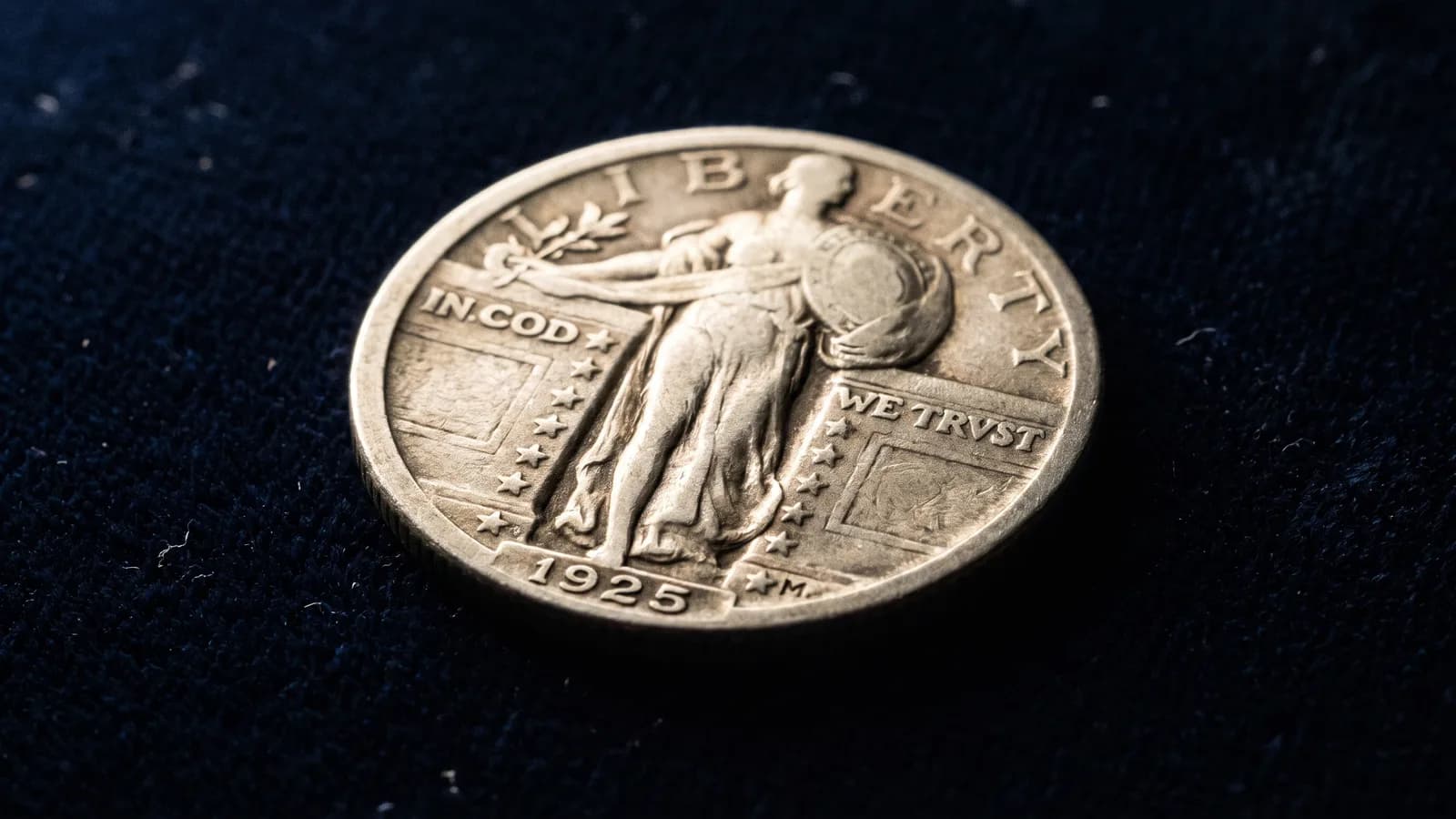
A Standing Liberty quarter is worth at least its silver content — about 0.1808 troy ounces — and the key dates and high grades are worth far more. Struck from 1916 to 1930, this short-lived design is prized for its beauty and includes one of the great U.S. key dates, the 1916. This guide covers the silver value, the Type 1 and Type 2 designs, the key dates, the common problem of worn-off dates, and how grade shapes value.
Key takeaways
- Standing Liberty quarters (1916–1930) are 90% silver and contain about 0.1808 troy ounces of silver each.
- The 1916 is the major key date, and the 1918/7-S overdate is a famous, valuable variety.
- Type 1 (1916–early 1917) shows an exposed bust; Type 2 (1917–1930) adds chain mail to the design.
- Many coins are 'dateless' because the date wore off the high point, and these are worth the least.
- Common dates trade near silver value when worn, with steep premiums in high grade and with Full Head detail.
How much is a Standing Liberty quarter worth?
A common-date Standing Liberty quarter with a readable date, in circulated condition, is worth a modest premium over its silver value. Key dates, high grades, and sharply struck coins are worth much more, while dateless coins are worth the least.
So the silver content sets a floor, and the date, type, and grade decide the rest.
How much silver is in a Standing Liberty quarter?
Each coin is 90% silver and contains about 0.1808 troy ounces of pure silver — the same as a silver Washington quarter. That metal value underpins every coin in the series.
At a silver price of, say, $30 per ounce, the melt value is roughly 0.1808 x $30 = about $5.42. Use the precious metals value calculator for a current figure.
What is the difference between Type 1 and Type 2?
Type 1 (1916 and early 1917) shows Liberty with an exposed bust. Type 2 (mid-1917 through 1930) revised the design, adding a coat of chain mail and rearranging the reverse stars. Both are collected, and the type affects which dates are scarce.
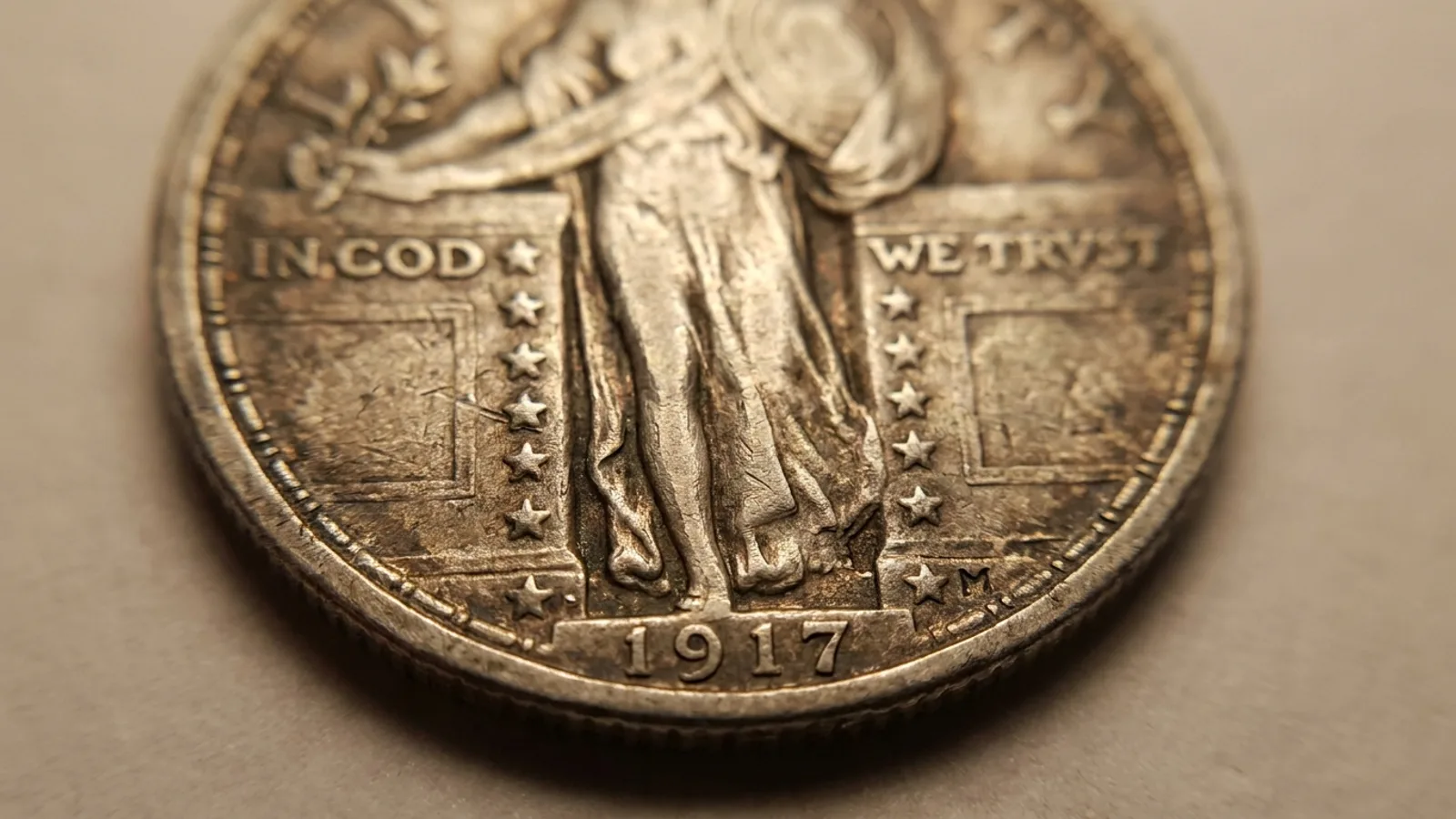
On well-struck Type 2 coins, collectors prize a 'Full Head' — complete detail in Liberty's head — which commands a premium in mint state.
What are the key dates?
The 1916 is the major key, with a tiny mintage that makes it the most valuable date in the series in almost any grade. The 1918/7-S overdate — where a 1918 die was punched over a 1917 — is a famous and valuable variety.
Other scarcer dates include the 1919-D, 1919-S, 1921, 1923-S, and 1927-S. Because the 1916 and 1918/7-S are heavily faked, authentication is essential before paying a key-date price.
| Date | Why it matters |
|---|---|
| 1916 | Major key; very low mintage |
| 1918/7-S | Famous overdate variety |
| 1921, 1923-S, 1927-S | Scarcer semi-key dates |
| Dateless coins | Date worn off; worth the least |
| Common dates | Trade near silver value when worn |
Why are so many Standing Liberty quarters dateless?
The date sat on a high point of the design and wore away quickly in circulation, so many surviving coins are 'dateless.' Without a readable date, a coin cannot be attributed to a year or mint mark and is worth little more than its silver — sometimes less, as a damaged coin.
In 1925 the Mint recessed the date to protect it, so later coins kept their dates better. If your coin has no date, value it as a worn silver quarter, not a collectible.
How much does grade affect value?
Significantly. A common date worn is worth a small premium over silver, while the same date in high mint state — especially with a Full Head — can be worth many times more. Key dates climb fastest of all.
For valuable dates and high grades, a trusted grade protects you; see coin grading explained and which grading companies to trust.
Where should you sell Standing Liberty quarters?
For common and dateless coins, an established coin shop or gold and silver buyer pays based on silver; ask how the offer compares to melt. For the 1916, the 1918/7-S, and high grades, a rare coin dealer may pay a strong premium.
Compare offers on better coins, get key dates authenticated, and never clean them. For the related silver quarter series, see Washington quarter value.
Frequently asked questions
How much silver is in a Standing Liberty quarter?+
About 0.1808 troy ounces of pure silver, since the coin is 90% silver. Its melt value is that figure times the current silver price.
What is the key date Standing Liberty quarter?+
The 1916 is the major key, with a very low mintage that makes it valuable in nearly any grade. The 1918/7-S overdate is a famous, valuable variety.
Why don't my Standing Liberty quarters have dates?+
The date sat on a high point and wore off in circulation. Dateless coins cannot be attributed to a year and are worth little more than their silver content.
What is a Full Head Standing Liberty quarter?+
A Full Head coin shows complete detail in Liberty's head, indicating a strong strike. It commands a premium over the same grade without full head detail.