
Three-Cent Piece Value: Two Different Coins, One Denomination
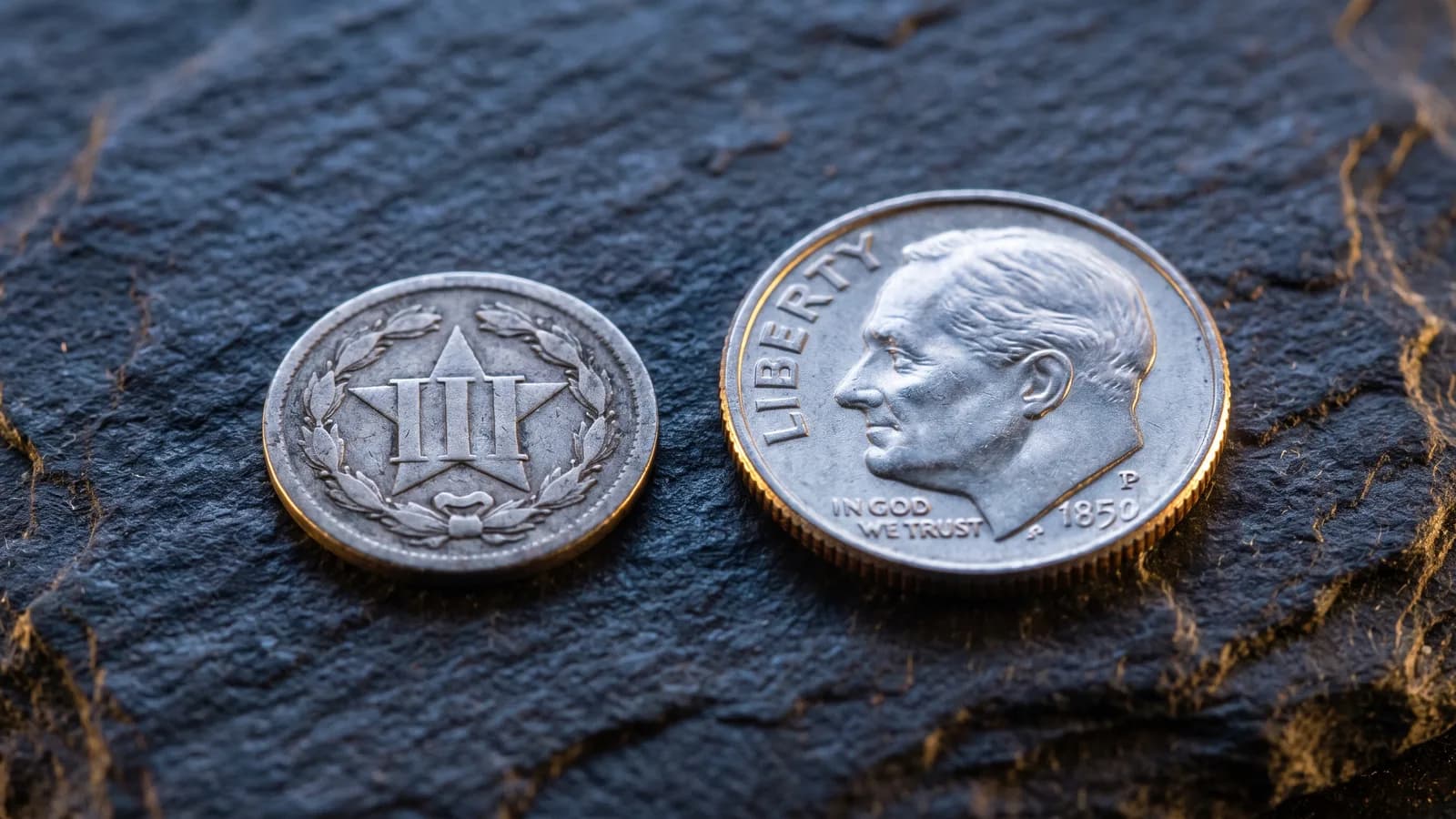
The three-cent piece exists as two entirely different coins: the silver trime (1851–1873) and the copper-nickel three-cent nickel (1865–1889). Both were responses to specific monetary problems of their era, and both are affordable collectibles today — most circulated examples sell for $20 to $80 depending on type, date, and condition.
Key takeaways
- The U.S. issued two three-cent pieces: the silver trime (1851–1873) and the copper-nickel nickel three-cent piece (1865–1889).
- The silver trime is the smallest silver coin ever issued by the U.S. Mint, weighing just 0.8 grams.
- Most circulated examples of either type sell for $20–$80 depending on date and condition.
- The 1877 and 1878 nickel three-cent pieces were proof-only — no business strikes exist for those years.
- The 1873-CC trime is among the rarest of all U.S. 19th-century silver coins, with only a handful confirmed.
Why Did the U.S. Mint Issue a Three-Cent Coin?
The silver three-cent piece appeared in 1851 primarily to buy 3-cent postage stamps, which were the standard U.S. letter rate at the time. Its tiny size and low silver content kept production cost minimal while giving consumers a coin matched to a common everyday transaction.
The copper-nickel three-cent piece debuted in 1865 as a tool to absorb fractional paper currency that had flooded circulation during the Civil War. Once normal coinage was restored, both three-cent coins became obsolete, and both series were discontinued in 1889.
Silver Three-Cent Piece (Trime): Types and Values
The trime runs across three design types. Type 1 (1851–1853): 75% silver, a six-pointed star on the obverse, no outline on the star. Common-date circulated examples bring $30–$75. Type 2 (1854–1858): 90% silver, three lines outlining the star — the scarcest type; expect to pay 50–100% more than Type 1 for comparable examples. Type 3 (1859–1873): 90% silver, two outlines on the star; circulated dates in Very Fine condition generally sell for $40–$100.
Melt value of a trime is negligible — under $1 at any realistic silver price, since the coin weighs less than a gram. These are collected for rarity and historical appeal, not metal content. Use our precious metals calculator to verify current melt if you wish.
Silver Trime Key Dates Worth Knowing
Most late-series trimes (1863–1872) were struck in quantities under 100,000 — some well under — making them genuinely scarce in any grade above Fine. The 1873-CC is the trime's great rarity: only a handful are confirmed, and a certified example brings six figures at auction.
Proof trimes exist for most years and are collected separately from business strikes. Any late-date trime in unusually sharp condition should be checked for proof status. Authentication by PCGS or NGC is worthwhile for any trime you plan to buy or sell for more than $150.
Nickel Three-Cent Piece: What Is It Worth?
The copper-nickel three-cent nickel (1865–1889) is generally more affordable than the silver trime. Common circulated dates in Good-to-Fine condition run $15–$40. Nice Very Fine examples sell for $35–$75. Mint State pieces of common dates range from $125 to $400 depending on date and eye appeal. The coin contains no silver or gold, so value is entirely numismatic.
The nickel three-cent piece is a compact series — 25 dates — with a clear collecting path. Most dates are available for under $100 in circulated grades, though the two proof-only years and a handful of scarce early dates add challenge.
Nickel Three-Cent Piece Key Dates
The 1877 and 1878 nickel three-cent pieces were issued as proofs only — the Mint made no business strikes in either year. Any 1877 or 1878 nickel three-cent piece should exhibit mirrored fields and sharp, squared rims consistent with proof production. Have these authenticated if condition warrants, as fakes and altered dates exist.
The 1887/6 overdate is a scarce variety worth seeking: the 6 is visible beneath the 7 on the date. In grades VF and above it commands a significant premium over the plain 1887 date.
Building a Three-Cent Piece Type Set
Many collectors choose a type set — one example of each major type — rather than a complete date run. A four-coin type set covering Silver Types 1–3 plus the Nickel three-cent piece is achievable in circulated grades for $200–$400. A complete date set of the nickel series costs roughly $600–$1,200 for circulated examples, excluding the proof-only years. A full trime date set is far more expensive because of the late-date low mintages.
Find accurately graded, problem-free examples at coin shows or through local coin dealers who specialize in 19th-century U.S. coins. Read coin grading explained to understand what grades to look for at your budget.
Frequently asked questions
What makes the trime the smallest U.S. silver coin?+
The trime weighs only about 0.8 grams and measures 14mm in diameter — smaller and lighter than any other regular-issue U.S. silver coin, including the half dime.
Does the silver trime have meaningful melt value?+
Very little. Even at Type 3's 90% silver purity, a trime weighs under a gram, making melt value well under $1 at any realistic silver price.
How do I tell Type 1, 2, and 3 trimes apart?+
Count the lines outlining the star on the obverse. Type 1 has no lines bordering the star. Type 2 has three outlines. Type 3 has two outlines. A coin reference or the PCGS photograde tool confirms the difference quickly.
Are the 1877 and 1878 nickel three-cent pieces authentic business strikes?+
No — both years were proof-only issues. The Mint struck no circulation pieces in either year. Verify any 1877 or 1878 example as a proof before buying.
Where can I buy three-cent pieces?+
PCGS- or NGC-certified examples from [local coin dealers](/coin-shops) or [coin shows](/guides/coin-shows-guide) are the safest option for problem-free, accurately graded pieces.