
Kennedy Half Dollar Value: 1964 to Today
Most Kennedy half dollars are worth face value, but the silver ones are worth more — and knowing which is which takes only a glance at the date. The 1964 issue is 90% silver, 1965 through 1970 coins are 40% silver, and from 1971 on circulating halves are copper-nickel clad with no silver. This guide explains which Kennedy halves contain silver, how to tell silver from clad, the key dates worth setting aside, and how to figure the silver value.
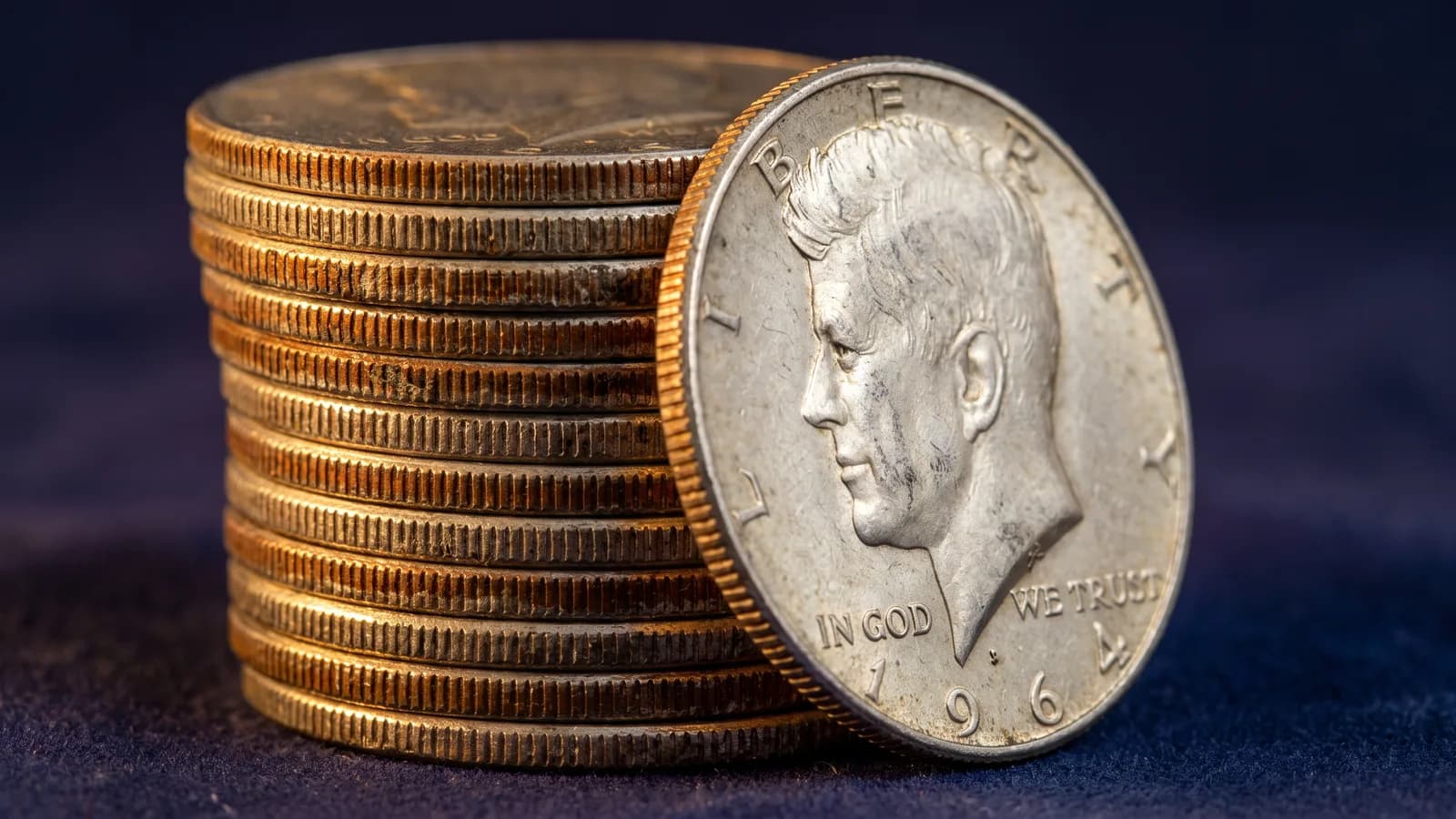
Key takeaways
- 1964 Kennedy half dollars are 90% silver; 1965–1970 are 40% silver; 1971 and later circulation coins are copper-nickel clad with no silver.
- Most circulated Kennedy halves are worth face value or a small premium, with silver issues worth their melt value as a floor.
- A 1964 half contains about 0.3617 troy ounces of silver; a 1965–1970 half contains about 0.1479 troy ounces.
- Key collector pieces include the 1970-D (mint sets only) and various silver proof and special issues.
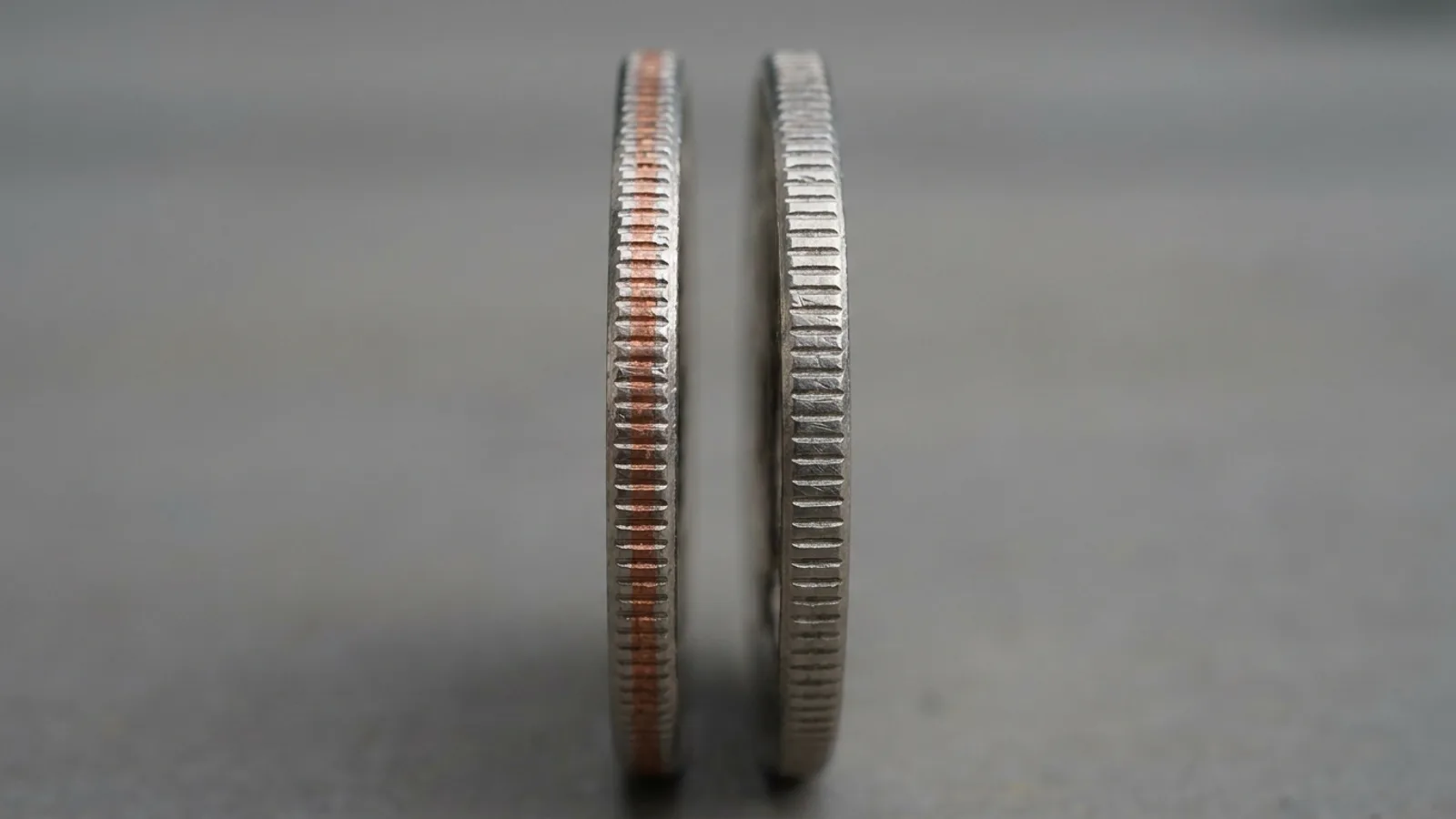
- You can tell silver from clad by the date and by checking the coin's edge — silver coins lack the copper stripe seen on clad coins.
How much is a Kennedy half dollar worth?
It depends almost entirely on the year. A 1964 Kennedy half is 90% silver and worth several dollars in silver alone; 1965–1970 coins are 40% silver and worth a smaller premium; and most 1971-and-later coins are clad and worth face value unless uncirculated or a special issue.
For silver issues, the melt value — the raw value of the metal at the current silver price — sets a floor under the coin. Collector premiums on top of that apply mainly to high grades, key dates, and proofs.
Which Kennedy half dollars contain silver?
Silver content is decided by the year, as shown below. The first year, 1964, is the only 90% silver circulating issue; the late-1960s coins are a lower-silver 40% alloy; circulation coins since 1971 contain no silver.
Note that the U.S. Mint has struck special 90% and .999 silver Kennedy halves for collectors in some years since 1992 (in silver proof sets), separate from the clad coins made for circulation.
| Years | Composition | Silver content (approx.) |
|---|---|---|
| 1964 | 90% silver | 0.3617 troy oz |
| 1965–1970 | 40% silver (clad) | 0.1479 troy oz |
| 1971–present (circulation) | Copper-nickel clad | None |
| Select 1992–present (silver proofs) | 90% or .999 silver | Varies by issue |
How can you tell if your Kennedy half is silver?
Check the date first: 1964 (90%) and 1965–1970 (40%) are the silver-bearing circulating years. After that, circulating coins are clad.
You can confirm by looking at the coin's edge. A copper-nickel clad coin shows a distinct copper-colored stripe around the rim; a 90% silver coin shows a solid silvery edge. The 40% coins are in between and can be subtler, so rely on the date for those.
What is a 1964 Kennedy half worth?
A 1964 Kennedy half is worth its silver content as a minimum — about 0.3617 troy ounces of silver — plus a collector premium in higher grades. Circulated examples trade close to melt; uncirculated and proof coins bring more.
A few 1964 varieties are sought after, including the 'accented hair' proof and the extremely rare 1964 Special Mint Set coins. For ordinary circulated 1964 halves, think of them first as junk silver.
What about 1965–1970 (40% silver) halves?
These contain about 0.1479 troy ounces of silver each, so they carry a real premium over face value but less than the 1964 coins. Most circulated examples are valued for their silver.
The standout date is the 1970-D, which was issued only in mint sets and not released for circulation, making it scarcer and more valuable than its mintage alone suggests. The 1970-S was a proof-only issue.
Which key dates and special issues should you look for?
Beyond the 1970-D, watch for silver proof issues, high-grade uncirculated coins, and special collector strikes. Condition and a trusted grade matter most here — see our coin grading explained guide.
For everyday coins, the bigger picture is the silver. Our what U.S. coins are silver guide puts the Kennedy half in context with other silver coins.
How much is the silver worth?
Multiply the silver content by the current silver price. At a silver price of, say, $30 per ounce, a 1964 half's melt value is roughly 0.3617 x $30 = about $10.85, and a 40% half is roughly 0.1479 x $30 = about $4.44. Silver prices move constantly, so use a live figure.
Our silver coin melt value guide explains the math, and the precious metals value calculator computes it at today's price.
Where should you sell Kennedy half dollars?
Sell silver halves to an established gold and silver buyer or coin shop, and ask how their offer compares to melt. For key dates and high-grade coins, a rare coin dealer may pay a collector premium.
Compare a couple of offers before selling, and never clean the coins first — cleaning lowers value on any collectible coin.
Frequently asked questions
Are all Kennedy half dollars silver?+
No. Only 1964 (90% silver) and 1965–1970 (40% silver) circulating coins contain silver. From 1971 on, circulating Kennedy halves are copper-nickel clad, though the Mint has made special silver versions for collectors.
How much silver is in a 1964 Kennedy half dollar?+
About 0.3617 troy ounces of silver, since it is 90% silver. Its melt value is that figure multiplied by the current silver price.
What is the rarest Kennedy half dollar?+
Among circulation-era coins, the 1970-D (issued only in mint sets) is a notable key, and the 1964 Special Mint Set coins are extremely rare. Most other dates are common.
Is a 1971 Kennedy half dollar worth anything?+
Circulating 1971 and later halves are clad with no silver and are usually worth face value, though high-grade uncirculated examples and special silver proof issues can be worth more.