
Coin Grading Companies: Which to Trust and Which to Avoid
Not all coin grading companies are equal, and the difference can mean hundreds or thousands of dollars. A grade is only as trustworthy as the company that assigned it, and the market rewards the two industry leaders — PCGS and NGC — while discounting coins in unrecognized 'self-slabbed' holders. This guide explains what a grading company actually does, ranks the major services by reputation, shows the red flags of a slab to avoid, and covers what grading costs and when it is worth it.
Key takeaways
- PCGS and NGC are the two most trusted coin grading companies; their slabs trade sight-unseen and command the strongest prices.
- ANACS and ICG are legitimate, established services, but their coins often sell for somewhat less than equivalent PCGS or NGC coins.
- CAC adds a sticker verifying a coin is solid or premium for its grade, and now grades coins itself as CACG; stickered coins often carry a premium.
- 'Self-slabbed' coins from unrecognized companies are a red flag — the market frequently values them as if the coin were raw (ungraded).
- Grading is worth paying for mainly on coins valuable enough to justify the fee and the protection a trusted slab provides.
Which coin grading companies can you trust?
Two companies lead the market: PCGS (Professional Coin Grading Service) and NGC (Numismatic Guaranty Company). Coins in their holders trade sight-unseen and bring the strongest prices.
Two more — ANACS and ICG — are legitimate, long-established services, though their coins usually sell for a little less than the same coin graded by PCGS or NGC. CAC sits alongside these as a verification service and, more recently, its own grading company.
Beyond those, dozens of unrecognized companies grade coins; the market treats their holders with skepticism, often valuing the coin as if it were raw. The rest of this guide explains why, and how to tell the difference.
What does a coin grading company actually do?
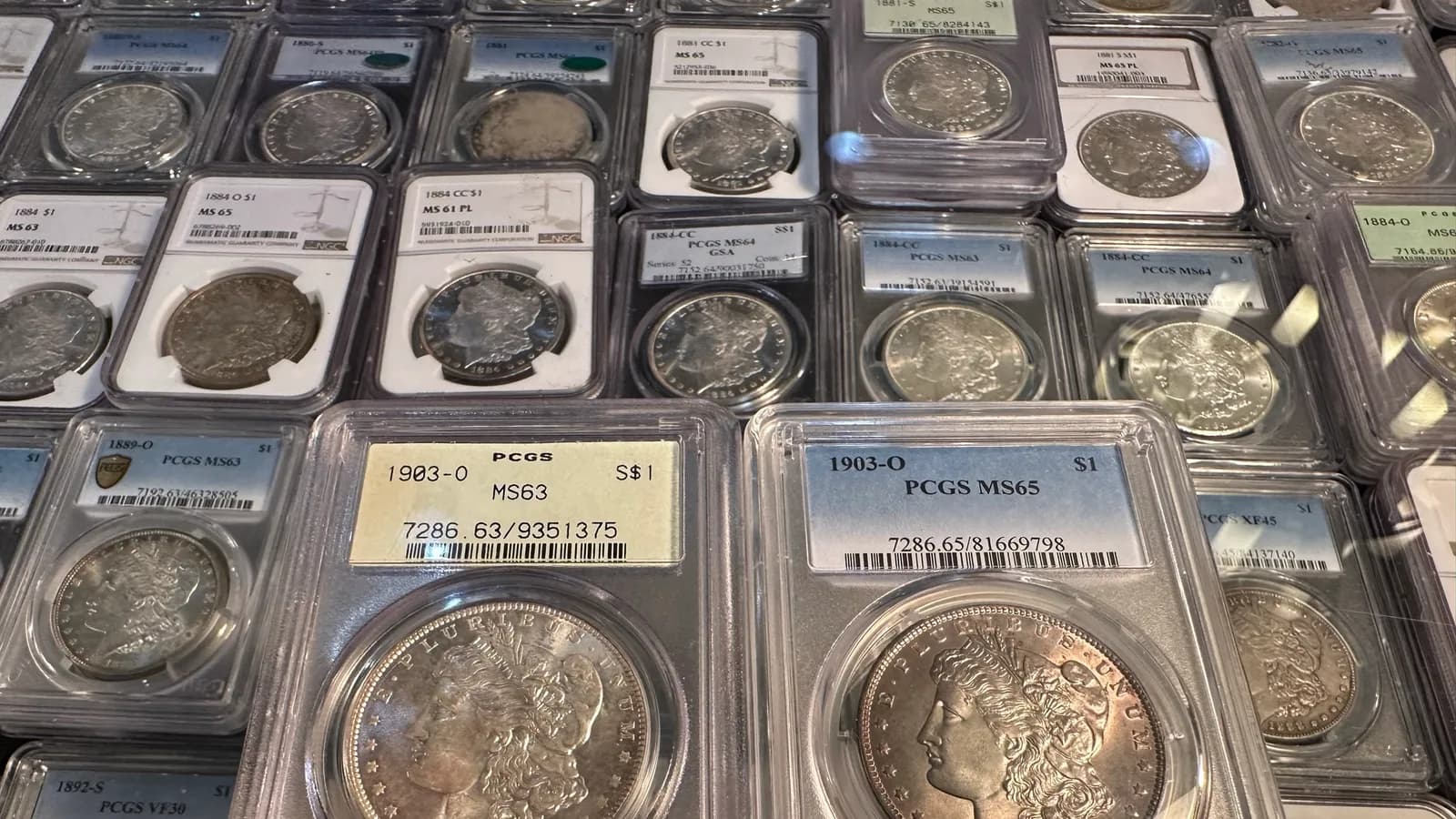
A third-party grading service authenticates a coin, assigns it a grade, and seals it in a tamper-evident plastic holder called a 'slab.' The grade uses the 70-point Sheldon scale explained in our coin grading explained guide.
Authentication — confirming the coin is genuine — is as important as the grade itself, and it is a key defense against the counterfeits covered in how to spot fake coins. The slab also protects the coin and records the company, grade, and a unique certification number.
The leading services publish population reports: counts of how many coins they have graded at each level. These reports help establish condition rarity and are a feature unrecognized companies generally lack.
Why does the grading company matter for value?
Because a grade is only as trusted as the company behind it. The same coin can be worth substantially more in a PCGS or NGC holder than in an unrecognized one, even with the same number on the label.
Recognized slabs are effectively a common currency: dealers and collectors will buy a PCGS or NGC coin sight-unseen because they trust the grade. An unfamiliar holder forces the buyer to re-grade the coin themselves and assume it may be over-graded — so they pay less.
This is the practical heart of the buy the best you can afford rule: when you pay up for grade, the holder you pay into matters as much as the number on it.
PCGS (Professional Coin Grading Service)
Founded in 1986, PCGS helped create the modern third-party grading model and is widely regarded as the market leader. Its coins are heavily traded and its population report is an industry reference.
PCGS backs its grades with a guarantee of grade and authenticity, which is part of why its holders trade sight-unseen. For high-value coins, a PCGS holder is often the benchmark other services are measured against.
NGC (Numismatic Guaranty Company)
Founded in 1987, NGC is the other industry leader and the official grading service of the American Numismatic Association. It grades enormous volumes of U.S. and world coins and also guarantees its grades.
For most series, PCGS and NGC coins trade at strong, comparable levels. Some specialists prefer one over the other for particular series, but both are top-tier and trusted across the market.
What are CAC and CACG?
CAC (Certified Acceptance Corporation) does not grade coins from scratch in its original form — it reviews already-graded PCGS and NGC coins and adds a sticker (a green or gold 'bean') to those it judges solid or premium for their grade.
A CAC sticker often adds a premium, because it signals the coin is at the strong end of its grade rather than the weak end. More recently, CAC launched CACG (CAC Grading), its own grading service, which has quickly gained respect for strict standards.
Where do ANACS and ICG fit?
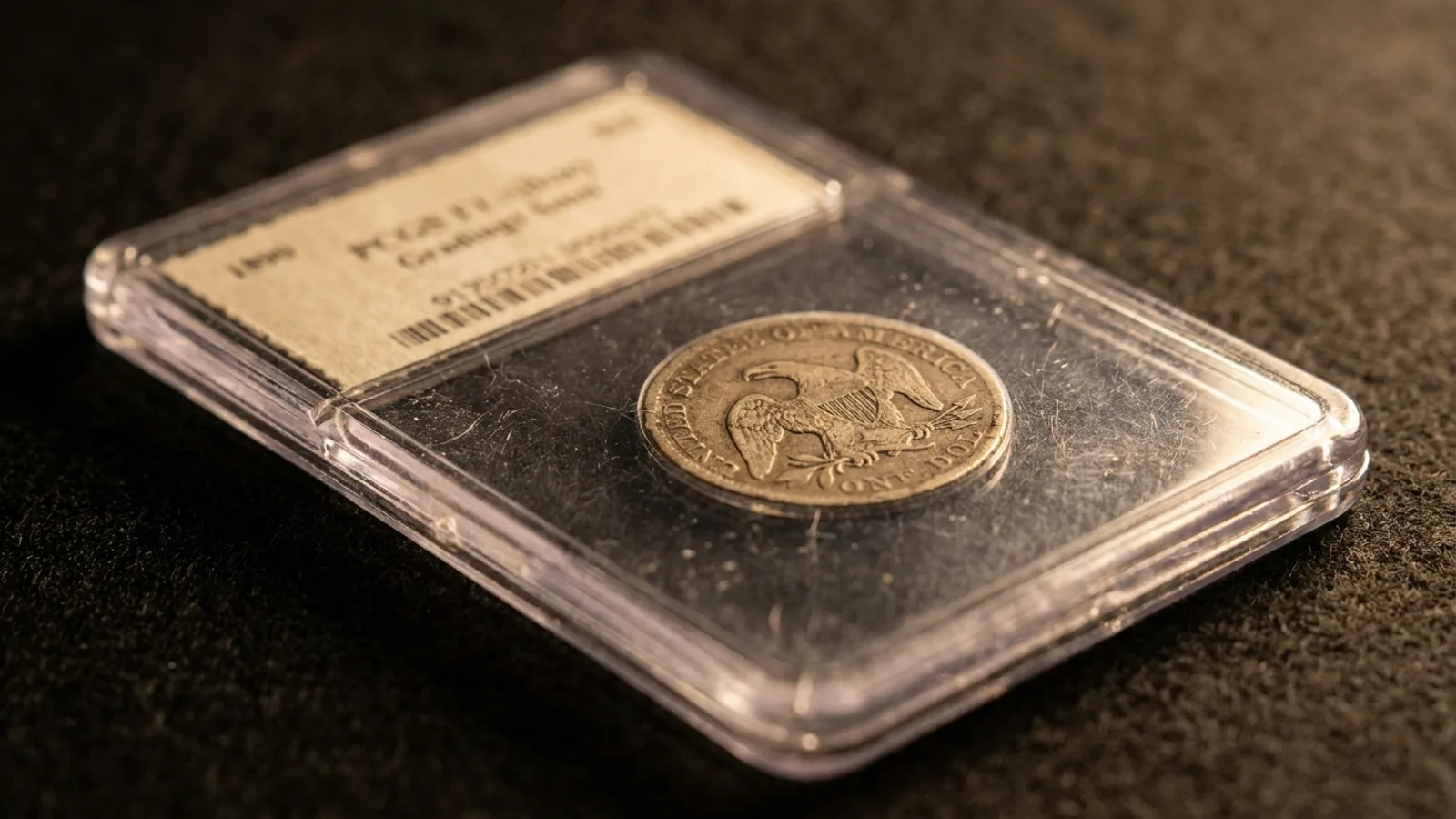
ANACS is the oldest U.S. grading service, with roots tracing to the ANA in 1972, and ICG (Independent Coin Graders) dates to 1998. Both are legitimate, recognized companies that authenticate and grade competently.
In practice, coins in ANACS and ICG holders often sell for somewhat less than the same coin in a PCGS or NGC holder. They are a reasonable, lower-cost option — and some collectors crossover valuable coins to PCGS or NGC to maximize resale.
What is 'self-slabbing' and why is it a red flag?
'Self-slabbing' refers to companies that grade coins to loose or inflated standards and seal them in official-looking holders that the broader market does not trust. Some grade their own inventory before selling it — an obvious conflict of interest.
The tell is the gap between the label and the market: a coin graded gem by an unrecognized company will often be valued as raw, or worse, by experienced buyers. The slab adds cost and packaging, not confidence.
This is most common with coins sold heavily on television and some online marketplaces, where an impressive-sounding grade props up a high price for a common coin.
How do you spot an untrustworthy slab?
Watch for these red flags. Any one of them is a reason to slow down; several together mean treat the coin as ungraded.
An unfamiliar company name, a grade that looks too high for the coin in hand, no published population report, no online certification-number lookup, and coins sold mainly through high-pressure TV or marketplace listings. Trusted slabs from PCGS and NGC let you verify the certification number on the company's website.
When in doubt, ask a dealer at a local coin shop or rare coin dealer — they handle slabs daily and can tell you in seconds whether a holder is one the market respects.
PCGS vs. NGC vs. ANACS vs. ICG
The table summarizes how the recognized services compare. All four are legitimate; the difference is mostly in what the market will pay for coins in each holder.
| Company | Founded | Market standing | Notes |
|---|---|---|---|
| PCGS | 1986 | Industry leader | Guarantee; coins trade sight-unseen |
| NGC | 1987 | Industry leader | Official ANA grading service; guarantee |
| CAC / CACG | 2007 / 2023 | Verification + strict grading | Green or gold sticker; CACG grades coins too |
| ANACS | 1972 | Reputable, established | Oldest U.S. service; often sells below the big two |
| ICG | 1998 | Reputable | Recognized; typically valued below PCGS/NGC |
How much does coin grading cost, and is it worth it?
Grading fees vary by service and by the coin's value, typically starting around $20 to $40 per coin at the economy tier and rising for higher-value coins, with extra charges for fast turnaround. Always check the current fee schedule before submitting.
Because of those fees, grading is worth it mainly when the coin is valuable enough to justify the cost — usually coins worth well into the tens of dollars or more, key dates, or coins whose authenticity you want guaranteed. Grading a common coin worth a few dollars rarely makes sense.
If you are preparing to sell a collection, a dealer can advise which pieces are worth grading first.
Where should you get coins graded?
Most collectors submit through a dealer or a coin show rather than directly. PCGS and NGC require membership for direct submission, but an authorized dealer at a local coin shop can submit on your behalf, and major coin shows host on-site grading.
A trusted appraiser or dealer will also tell you honestly when grading is not worth the fee — which, for most everyday coins, is the most valuable advice of all.
Frequently asked questions
What is the most trusted coin grading company?+
PCGS and NGC are the two most trusted. Coins in their holders trade sight-unseen and bring the strongest prices, because both companies guarantee their grades and publish population reports.
Is PCGS or NGC better?+
Both are top-tier and widely trusted, and coins from either trade at strong, comparable levels. Some specialists prefer one for a particular series, but neither is broadly considered better than the other.
What is a CAC sticker worth?+
A CAC sticker verifies that a PCGS- or NGC-graded coin is solid or premium for its grade, and stickered coins often carry a premium over non-stickered examples of the same grade.
Are self-slabbed coins worth anything?+
The coin itself may have value, but an unrecognized slab adds little. The market often values such coins as if they were raw, so judge the coin on its own merits, not the label.
How much does it cost to grade a coin?+
It varies by service and the coin's value, typically starting around $20 to $40 per coin at the economy tier and rising for higher-value coins or faster turnaround. Check the current fee schedule before submitting.
Is it worth grading my coins?+
Usually only if a coin is valuable enough to justify the fee — a key date, a high-grade example, or a coin whose authenticity you want guaranteed. Grading common, low-value coins rarely pays off.