
Buffalo Nickel Value: Key Dates and What Yours Is Worth
Buffalo nickel value ranges from a few cents to tens of thousands of dollars, and the difference comes down to date, mint mark, condition, and a handful of famous varieties. Most Buffalo nickels you'll find are common and worth a small premium, but a short list of key dates makes the series one of the most exciting in U.S. coins. This guide shows what the series is, which dates are valuable, and how to tell what you have.
Key takeaways
- Buffalo nickels (1913–1938) are mostly worth a small premium over face in worn grades, but several key dates are worth thousands.
- The famous key dates are the 1913-S Type 2, the 1918/7-D overdate, the 1937-D 'three-legged,' and low-mintage issues like the 1926-S.
- Dateless Buffalo nickels — worn smooth so no date shows — are worth only a few cents each.
- Condition matters enormously: a worn key date is valuable, but a high-grade example can be worth many times more.
- Check the date, mint mark, and any unusual features, and get a second opinion before selling anything that looks like a key date.
Are Buffalo nickels worth anything?
Most are worth a modest premium over face value, but a handful of key dates and varieties are worth thousands. Which one you have depends on the date, the mint mark, and the coin's condition.
So don't assume a Buffalo nickel is rare, but do check it before spending or selling. This guide shows exactly what to look for, and our what your coins are worth guide covers the broader method.
What is a Buffalo nickel?
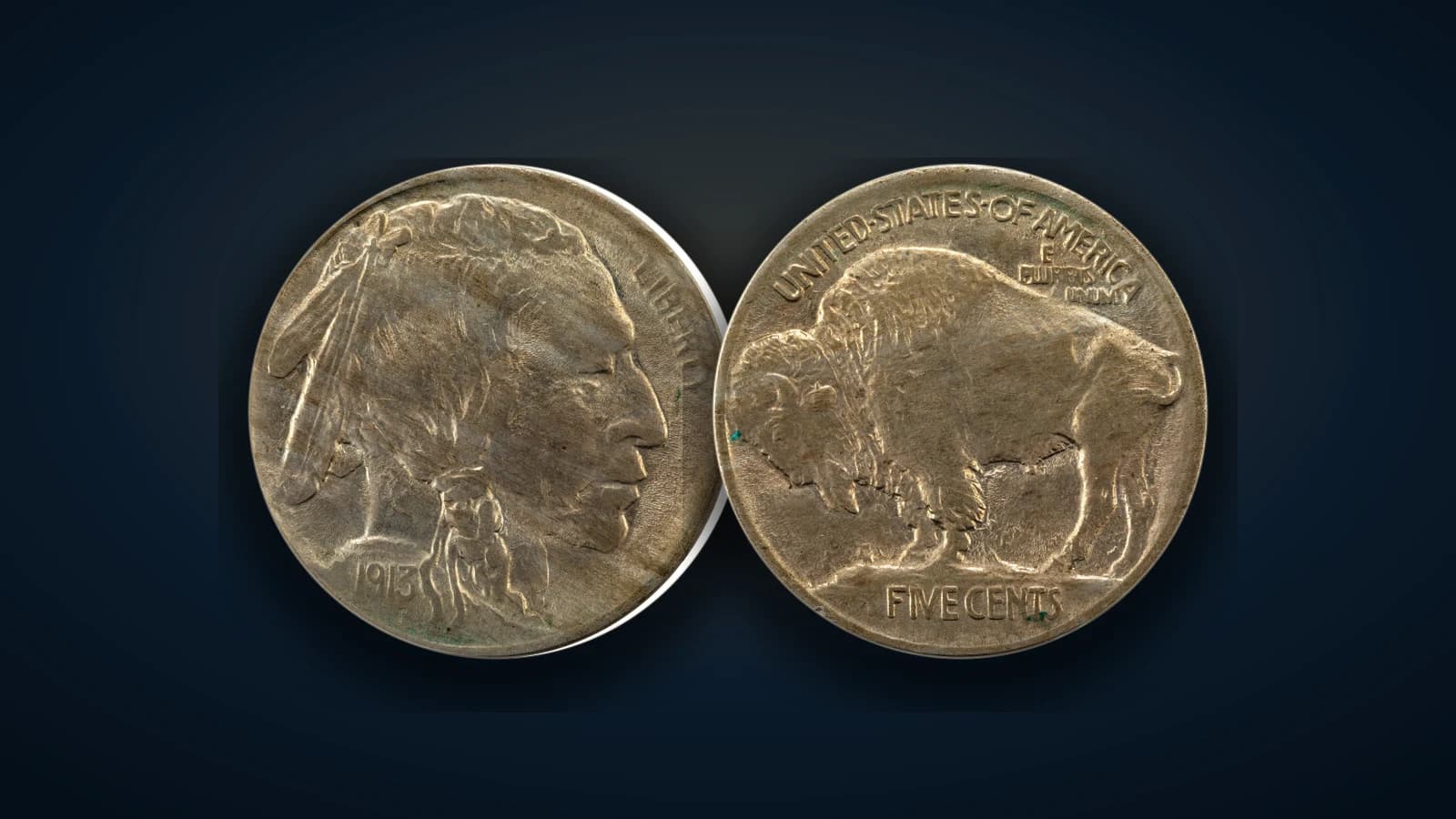
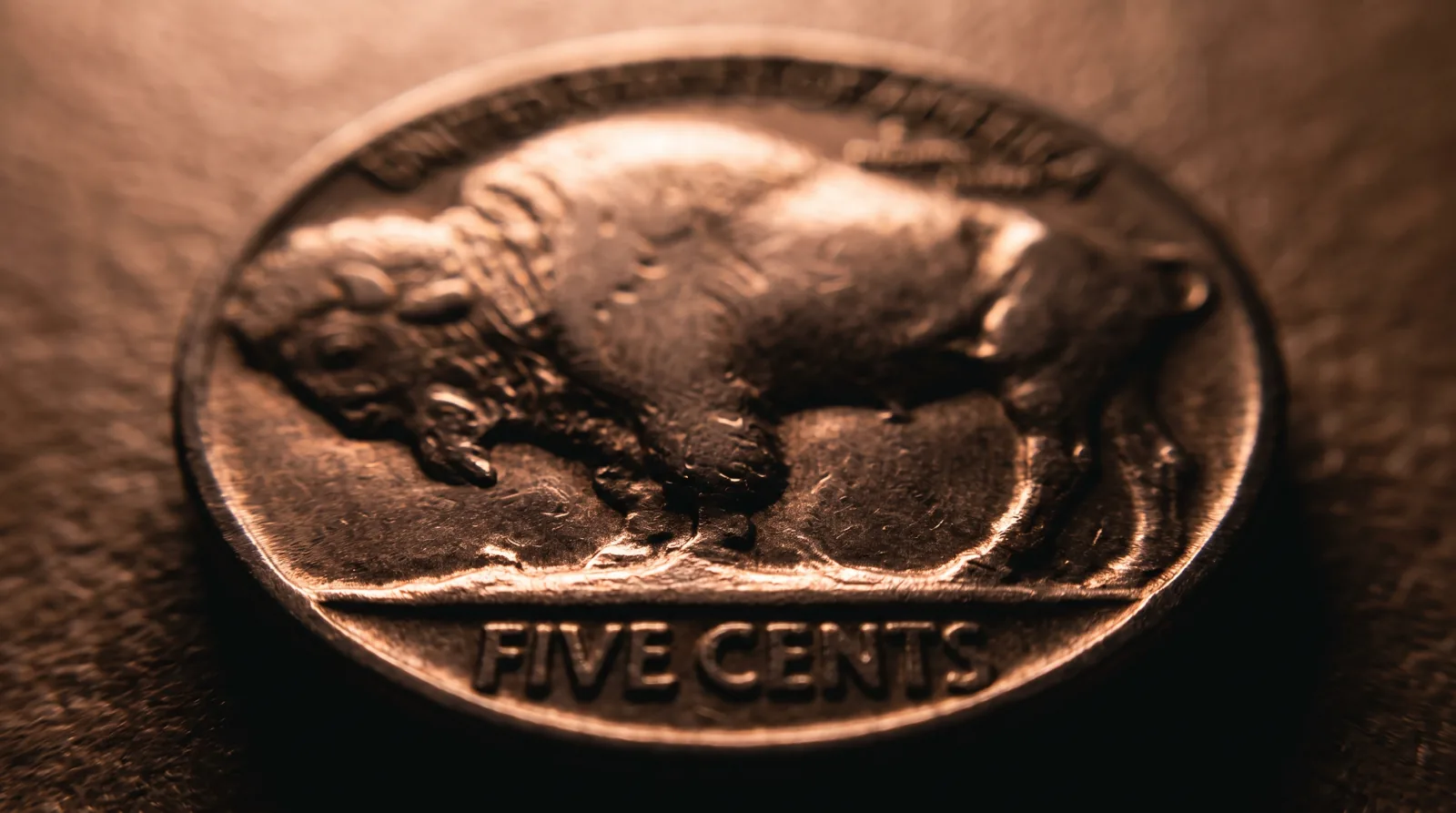
The Buffalo nickel — also called the Indian Head nickel — is a U.S. five-cent coin struck from 1913 to 1938, designed by sculptor James Earle Fraser. The obverse shows a Native American profile and the reverse an American bison.
It's made of 75% copper and 25% nickel (no silver), so its value is numismatic, not metal-based. The U.S. Mint has the history of the series.
What are the Buffalo nickel key dates?
A few dates and varieties hold most of the series' value. The table lists the most important, with the verified mintages or causes that make them scarce. Values are wide ranges that depend heavily on grade.
| Date / variety | Why it's scarce | Approx. value range |
|---|---|---|
| 1913-S Type 2 | ~1.2 million struck | Hundreds to thousands |
| 1918/7-D overdate | 1918 punched over 1917 die | Thousands to very high |
| 1937-D 'Three-Legged' | Over-polished die removed a leg | Hundreds to many thousands |
| 1926-S | Low mintage | Hundreds to thousands |
| 1921-S | Low mintage | Tens to thousands |
What is the 1937-D three-legged Buffalo?
The 1937-D 'Three-Legged' is the most famous Buffalo nickel variety. A mint worker over-polished a damaged die, which removed most of the bison's front leg, so the buffalo appears to stand on three legs.
It's popular and valuable in every grade, but beware fakes — some people grind a leg off a common 1937-D to imitate it. A genuine example shows other specific die characteristics, so have a suspected three-legged authenticated. See how to spot fake coins.
Why are 'dateless' Buffalo nickels worth so little?
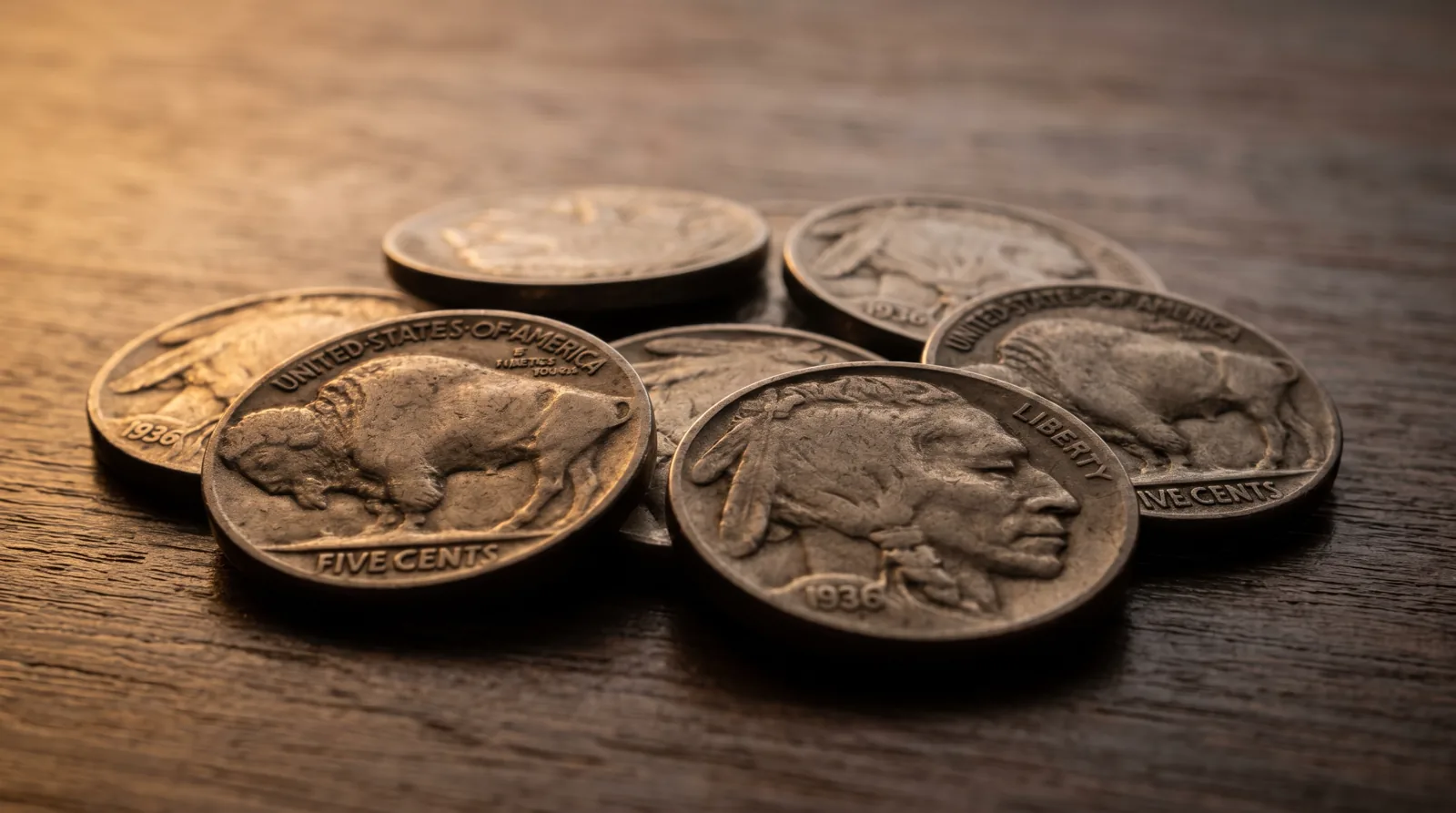
Buffalo nickels wore quickly, and on many the date — struck on a raised area — wore completely smooth. A Buffalo nickel with no readable date can't be attributed to a specific issue, so it's worth only a few cents for its novelty.
If you can't read the date, the coin generally has no collector value. The key dates above all require a visible date and mint mark to command a premium.
How does condition affect the value?
Condition can multiply a Buffalo nickel's value many times over. A worn common date is worth a small premium; the same date with sharp detail and original luster is worth far more, and key dates climb steeply with grade.
Grade is the coin's condition on the 70-point scale (see coin grading explained). Valuable Buffalo nickels are often certified by PCGS so buyers trust the grade and authenticity.
How do I identify and sell mine?
Check the date and mint mark first (the mint mark is on the reverse, below 'FIVE CENTS'), then compare against the key-date list and look for the famous varieties. Set aside anything that matches or looks sharp and uncirculated.
Don't clean them, and get more than one offer on anything promising at a coin shop or rare coin dealer. For a larger group, our selling a coin collection guide walks through the process.
Frequently asked questions
How much is a Buffalo nickel worth?+
Most worn common dates are worth a small premium over face. Key dates like the 1913-S Type 2, 1918/7-D overdate, and 1937-D three-legged can be worth thousands, with high grades worth far more.
Are Buffalo nickels with no date worth anything?+
Very little — only a few cents. If the date wore off, the coin can't be attributed to a specific issue and has no collector premium.
What is the rarest Buffalo nickel?+
The 1918/7-D overdate is among the most valuable, along with the 1937-D three-legged and the 1913-S Type 2. All command strong premiums, especially in high grade.
Where is the mint mark on a Buffalo nickel?+
On the reverse, below the words 'FIVE CENTS.' An S means San Francisco, a D means Denver, and no mark means Philadelphia.