
Hard Times Tokens vs. Large Cents: How to Tell Them Apart
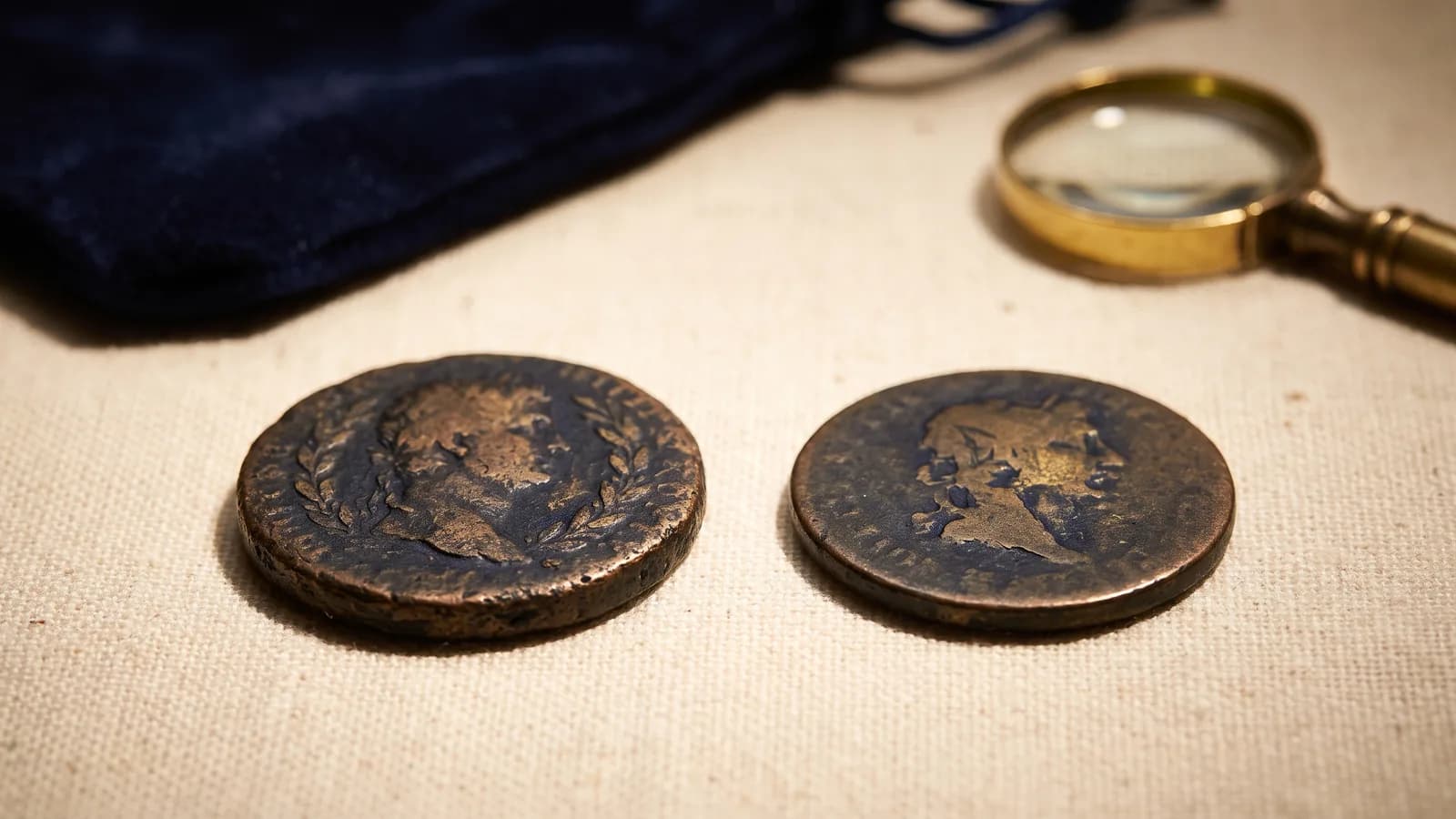
The core of the hard times token vs large cent question is simple: Hard Times tokens were made about the size of the federal large cent on purpose, so they would circulate as a one-cent piece, which is why the two are so easy to mix up. The difference is not the size but the design and the wording. A genuine United States large cent shows the official Liberty-and-wreath design, a date between 1793 and 1857, and nothing else. A Hard Times token, a privately made copper piece from roughly 1832 to 1844, carries a political slogan, a merchant name, a satirical picture, or the telltale phrase NOT ONE CENT. This guide walks through each giveaway so you can sort a cent-sized copper in seconds. For the full background, see the [Hard Times tokens pillar guide](/guides/hard-times-tokens-guide).
Key takeaways
- Hard Times tokens were deliberately struck about the size of the U.S. large cent (roughly 28-29mm copper) so they would pass as one cent, which is exactly why the two are so easy to confuse.
- The reliable test is the design and legends, not the diameter: a genuine large cent shows the U.S. Mint Liberty-and-wreath design with a date from 1793 to 1857 and no merchant name or slogan.
- A Hard Times token carries a political slogan, a merchant name and city, a satirical image, or the phrase NOT ONE CENT, which was added partly to sidestep laws against imitating federal coin.
- Both series contain common pieces and genuine rarities, so a cent-sized copper in an old lot could be either an inexpensive worn cent or a token worth far more.
Why Hard Times Tokens and Large Cents Look So Alike
They look alike because Hard Times tokens were designed to imitate the coin already in people's pockets. During the Hard Times era, the money in daily use for one cent was the large cent, a copper coin roughly 28-29mm across. Token makers matched that size so their pieces would be accepted at one cent without a second glance.
A large cent is an official United States coin struck by the U.S. Mint from 1793 to 1857 in nearly pure copper. It is called large because it is about the size of a modern quarter, much bigger than today's cent, which replaced it in 1857. A Hard Times token is a privately made copper piece, never legal tender, that passed for one cent by public acceptance during the economic depression that followed the Panic of 1837. Reference works and the Hard Times token overview at Wikipedia date the series from about 1832 to 1844.
So the resemblance is not a coincidence or a fake in the modern sense. The tokens copied the large cent's size and general look on purpose. That shared size is exactly why you cannot identify a piece by diameter alone.
Match on Size, Differ on Design
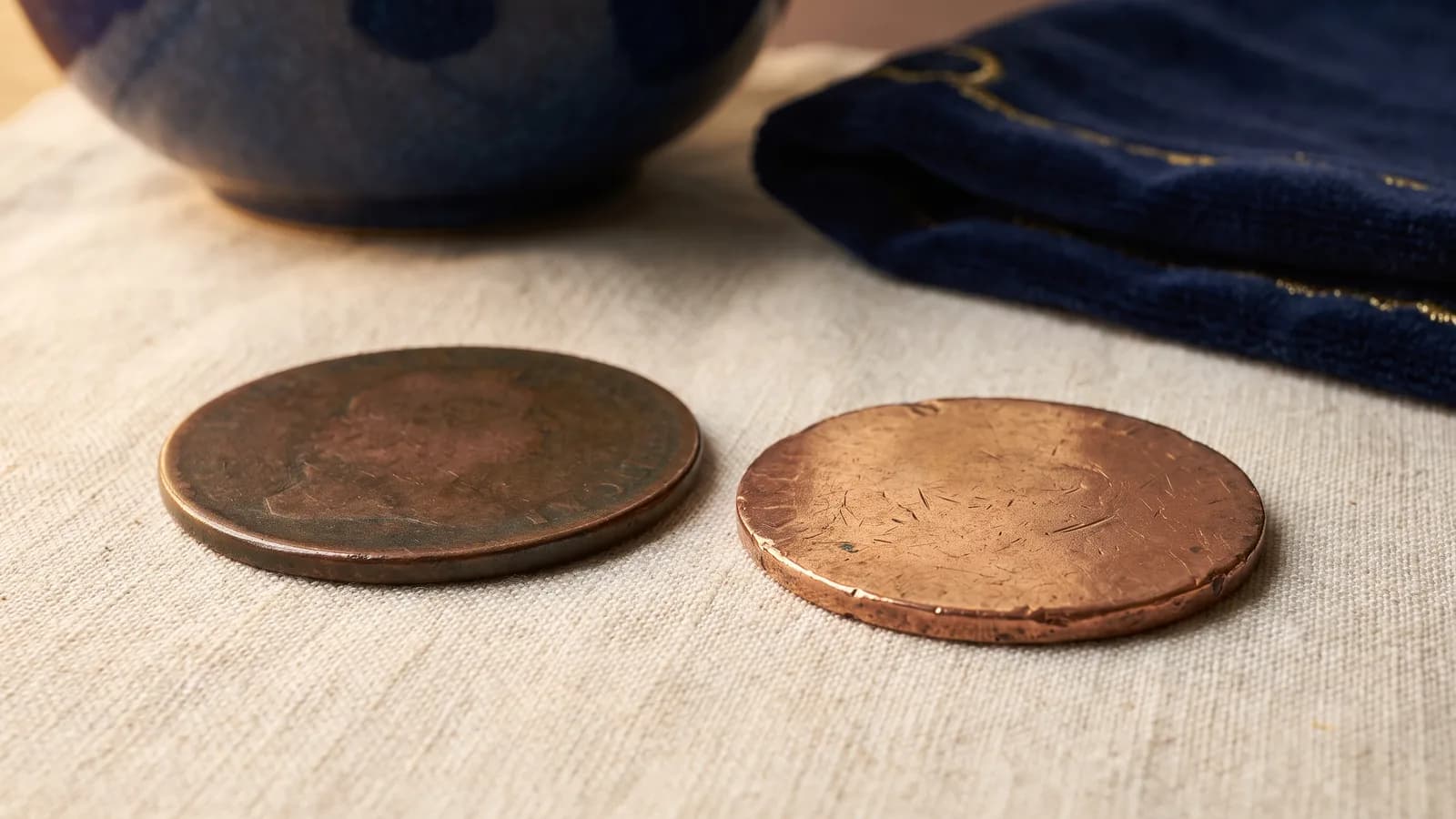
Start with what they share, then move to what separates them. Both are cent-sized copper pieces of the same era, so size and metal will not settle the question. The design, the date, and the wording will.
A genuine large cent shows a bust of Liberty on the front and a wreath around ONE CENT on the back, with a date and stars, and no business name, city, or political phrase anywhere. A Hard Times token breaks at least one of those rules: it names a merchant, carries a slogan, shows a satirical scene, or reworks the Liberty head with different wording such as NOT ONE CENT.
The table below lays the two side by side so you can run down the row that matches the piece in your hand.
| Feature | U.S. large cent | Hard Times token |
|---|---|---|
| Maker | United States Mint (official) | Private makers (button and medal firms, merchants) |
| Dates | 1793 to 1857 | About 1832 to 1844 |
| Size | Roughly 28-29mm copper | Most about 28-29mm copper (a few half-cent sized) |
| Design | Liberty bust, wreath around ONE CENT | Political scenes, satire, Liberty imitations, or plain merchant text |
| Legends | Date, LIBERTY, stars, UNITED STATES OF AMERICA | Slogans, a merchant name and city, or NOT ONE CENT |
| How to ID | Official design plus a date 1793-1857 and no merchant or slogan | Any merchant name, political slogan, satire, or the word NOT before ONE CENT |
The Fastest Test: Read the Wording
The single quickest check is to read the legends out loud. Federal coins do not advertise a store or take a political side, so any business name or slogan means you are holding a token, not a cent.
If you see a person's or firm's name, a trade such as HARDWARE or DRY GOODS, and a city, it is a merchant store card, a token that doubled as an advertisement. These are covered in detail in Hard Times tokens store cards. If you see a slogan or a satirical image instead, it is a political token, described in Hard Times tokens designs and slogans.
A real large cent, by contrast, says only what a coin needs to say: LIBERTY, UNITED STATES OF AMERICA, ONE CENT, a date, and stars. Nothing about a shop, a president, or a bank.
The NOT ONE CENT Trick
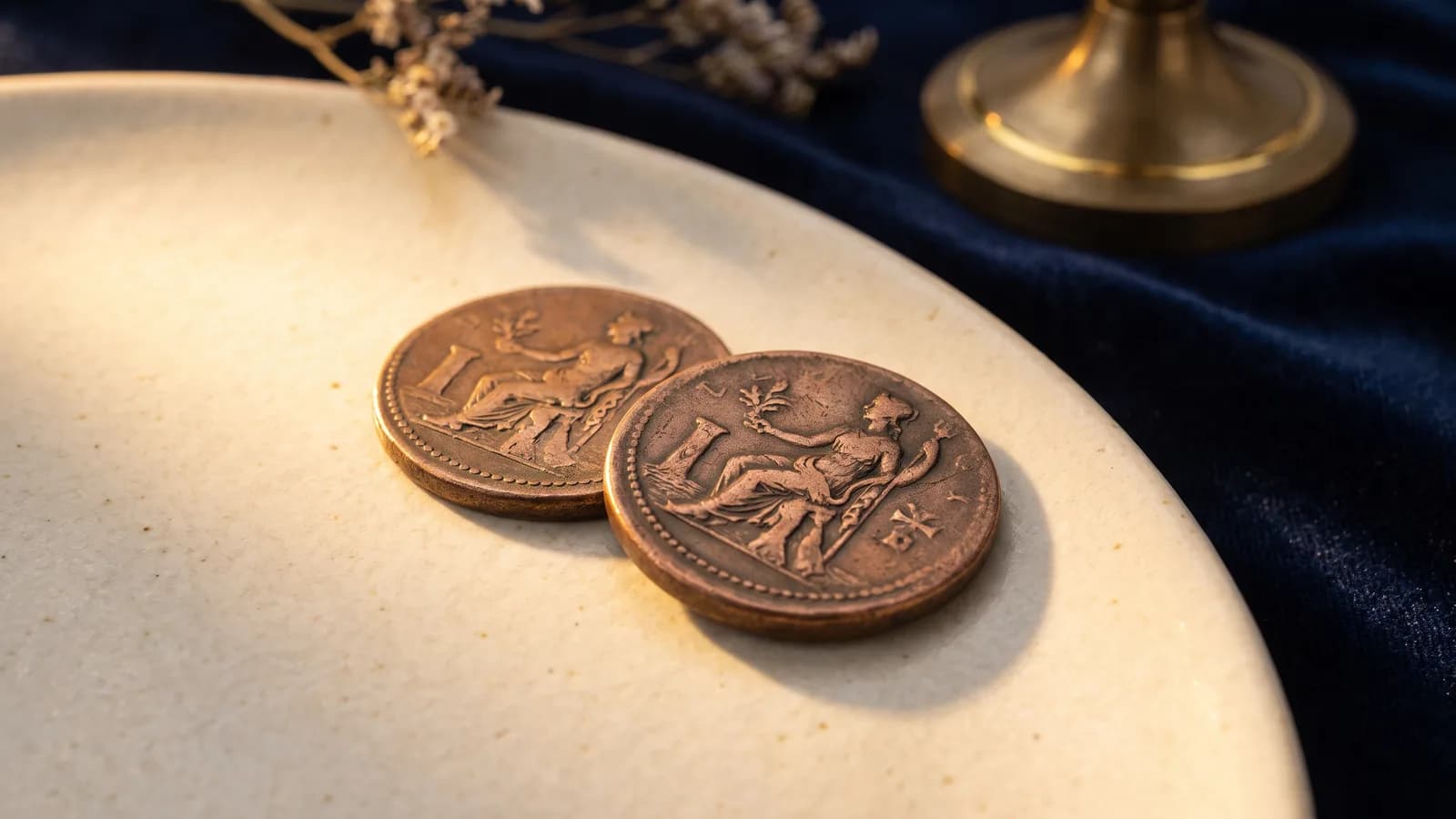
One legend deserves its own note. Many political tokens read NOT ONE CENT rather than ONE CENT, and that extra word was a deliberate legal hedge. Laws discouraged copying federal coinage, so adding NOT let makers argue the piece did not claim to be a cent, even though it circulated as one.
Because these tokens often reworked the large cent's Liberty head, the design can look convincingly official at a glance. Read the full legend before deciding. If the wording is NOT ONE CENT, or it pairs the Liberty head with a slogan such as MILLIONS FOR DEFENCE NOT ONE CENT FOR TRIBUTE, you are looking at a Hard Times token, not a Mint product.
This is the trap that catches beginners, because the front can mimic a cent while the wording quietly gives it away. When in doubt, treat a Liberty-head copper with any extra slogan as a token until proven otherwise.
A Worked Example: Sorting a Mixed Copper Lot
Say you buy an old box lot described as large cents and pull out three worn coppers of the same size. Here is how the checks play out.
The first shows a Liberty bust, a wreath around ONE CENT, and the date 1847, with no other words. That is a genuine large cent. The second shows a Liberty head but reads NOT ONE CENT with a small slogan around the rim. Despite the familiar face, the wording marks it as a political Hard Times token. The third names a merchant and a city with a trade line and no Liberty design at all. That is a merchant store card.
Two of the three are tokens, and they may be worth more, or less, than the cent depending on rarity. This is why reading each piece matters when you buy a group described only by size. For a step-by-step routine, see how to identify Hard Times tokens.
What Each Is Worth, and Why It Matters When You Buy
Both series run from common to genuinely rare, so the label on a lot tells you little about value. A worn common large cent and a worn common token can both be modest, while scarce examples of either climb quickly.
As hedged ranges, common Hard Times store cards and political tokens in Fine to Very Fine commonly run about $20 to $60, with nicer uncirculated common types often about $75 to $250. Scarcer satires and rare designs reach the hundreds or thousands, and the most famous pieces, such as abolitionist tokens, can bring five figures. Common large cents in low grades are often inexpensive as well, while key dates and high grades command strong premiums. For how these markets are priced, see how coin prices are determined and the broader large cents and half cents guide.
The practical lesson: when a seller lumps everything as large cents, a token hiding in the group could be the most valuable piece, or an overpriced common one. Sort by wording first, then value each piece on its own. A numismatic appraiser or a shop from the medals and tokens directory can confirm a scarce or high-value example.
Hard Times Tokens vs. Civil War Tokens: A Quick Size Note
One more size clue helps place a piece in the right era. Hard Times tokens are large-cent sized, roughly 28-29mm, while Civil War tokens are small-cent sized, roughly 19mm, because each series imitated the federal cent of its own time.
So a cent-sized copper token in the larger diameter points to the Hard Times era of the 1830s and 1840s, and a noticeably smaller one points to the Civil War era of 1861 to 1864. The two clusters are closely related, and the differences are drawn out in Civil War tokens vs. Hard Times tokens.
Used together, size and wording will place almost any piece: size narrows the era, and the legends confirm whether it is a federal cent or a private token.
Frequently asked questions
Is a Hard Times token the same size as a large cent?+
Most Hard Times tokens are about the same size as the U.S. large cent, roughly 28-29mm in copper, because they were made to pass as a one-cent piece. A few are half-cent sized. Size alone will not tell them apart, so read the design and legends.
How can I tell a large cent from a Hard Times token quickly?+
Read the wording. A genuine large cent shows only the Mint's Liberty-and-wreath design, a date from 1793 to 1857, and standard legends. A Hard Times token adds a merchant name, a political slogan, a satirical image, or the phrase NOT ONE CENT.
Why do some Hard Times tokens say NOT ONE CENT?+
The word NOT was a legal hedge. Laws discouraged imitating federal coinage, so makers argued the piece did not claim to be a cent even though it circulated as one. Many of these tokens also copy the large cent's Liberty head, which adds to the confusion.
Are Hard Times tokens worth more than large cents?+
It depends on the piece. Both series have common and rare examples. Common tokens in circulated grades commonly run about $20 to $60, while scarce designs reach the hundreds or thousands. Common large cents can be inexpensive, but key dates and high grades bring strong premiums.
Is it legal to own and sell Hard Times tokens?+
Yes. Hard Times tokens were privately made and never legal tender, but owning, buying, selling, and collecting them is completely legal today. They are a well-established part of United States numismatics.
Where can I get a cent-sized copper identified?+
A numismatic appraiser or a coin shop that handles tokens can confirm whether a piece is a large cent or a Hard Times token and estimate its value. Grading firms such as [PCGS](https://www.pcgs.com) and [NGC](https://www.ngccoin.com) also authenticate and grade both.