
How to Buy Silver: Coins, Rounds, and Bars — What to Expect
Buying silver is straightforward once you understand the three forms it takes, the premium you pay over spot, and where to buy from a source you can trust. Silver is one of the most accessible precious metals for new investors and collectors — available in small denominations, widely traded, and stored easily. This guide covers what to buy, what to pay, where to buy it, and what to watch out for.
Key takeaways
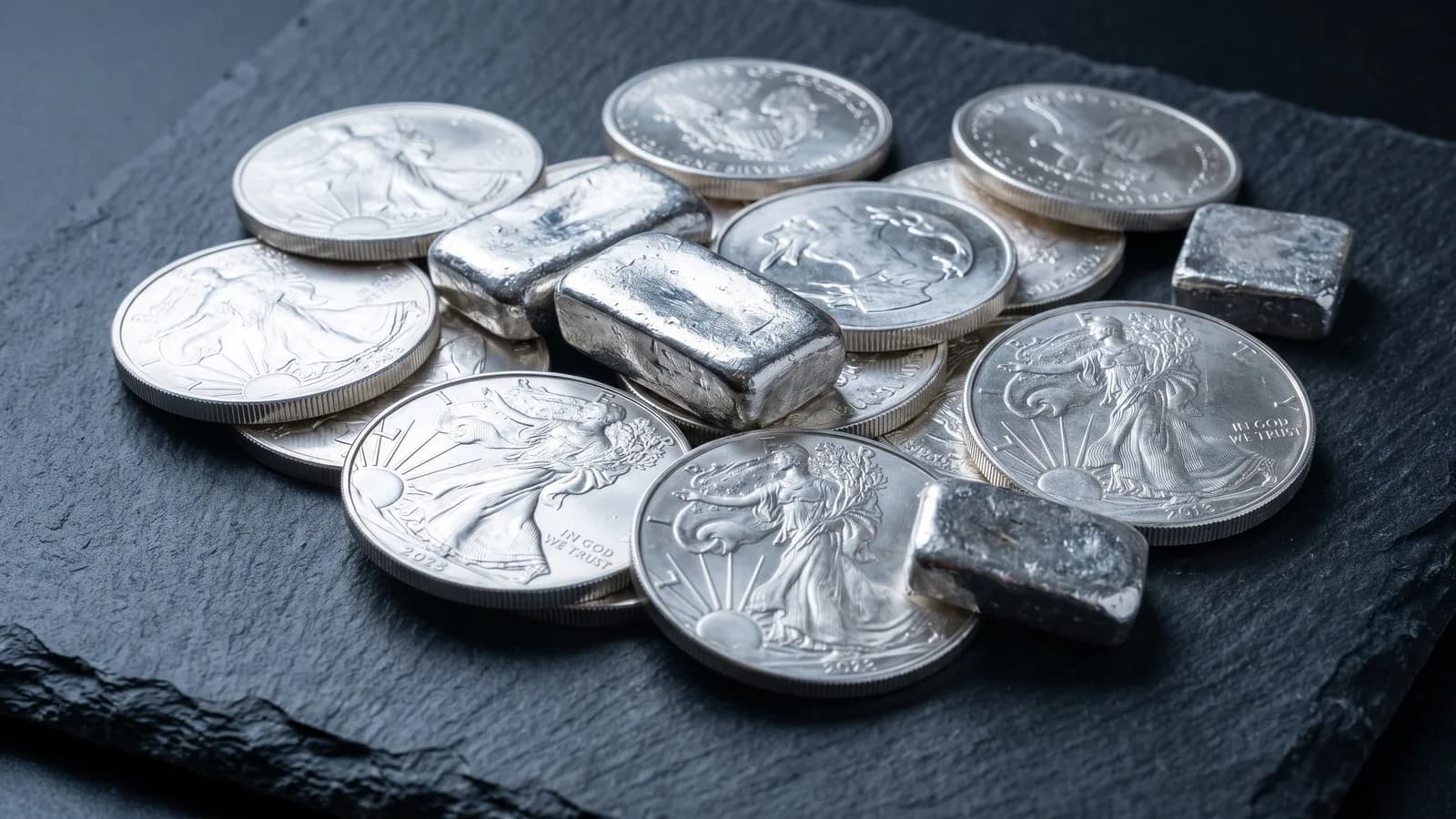
- Silver is available in three main forms: coins (government-minted legal tender), rounds (privately minted medallions), and bars (cast or minted rectangular ingots).
- All three forms contain the same silver at spot price; the difference is the premium — the amount above spot that you pay.
- American Silver Eagles typically carry the highest premiums ($3–$5+ over spot); rounds and bars carry lower premiums ($1–$3 over spot).
- Buy from a reputable coin dealer, authorized bullion dealer, or U.S. Mint authorized purchaser — not from unknown online sellers.
- Premiums are a sunk cost: the premium you pay does not typically come back when you sell. Buying lower-premium silver maximizes the metal you get per dollar spent.
The Three Forms of Silver: Coins, Rounds, and Bars
Coins are government-minted, legal tender silver pieces: the American Silver Eagle (U.S.), Canadian Silver Maple Leaf (Canada), Austrian Philharmonic, British Britannia, and others. They carry the issuing government's guarantee of weight and purity. Coins command the highest premiums of the three categories — typically $3–$6 per ounce over spot for Silver Eagles.
Rounds are privately minted silver discs that look like coins but are not legal tender. They usually contain 1 troy oz of .999 fine silver and carry premiums of $1–$3 over spot — lower than coins because there is no government backing or collector demand. Bars are silver in rectangular ingot form, cast or minted, ranging from 1 oz to 100 oz and larger. Bars carry the lowest premiums ($0.75–$2 over spot for common sizes) and are the most cost-efficient way to buy silver by weight.
Where to Buy Silver
Local coin and bullion dealers: The best option for new buyers. You see what you are buying before paying, you can ask questions, and you build a relationship with a dealer who will also buy when you want to sell. Find reputable local dealers at TheCoinHQ.
Online authorized dealers: APMEX, JM Bullion, Kitco, and Provident Metals are large U.S. bullion dealers with established reputations. They sell directly at competitive premiums and ship insured. Prices are often marginally better than local dealers, but you lose the in-person inspection and relationship advantages. U.S. Mint direct (usmint.gov): For proof and special edition Silver Eagles, buying direct is the only way to guarantee authenticity, but supply is limited and premiums are higher.
What to Avoid When Buying Silver
Private sellers without verification: Counterfeit silver rounds and bars exist — tungsten-filled silver bars and silver-plated rounds are documented. Never buy silver from unknown individuals without a way to verify authenticity. A Sigma Metalytics tester or professional scale and density test can confirm authenticity, but these require expertise to interpret.
"Silver" coins sold as collectibles by TV infomercials, home shopping channels, or direct mail: These are almost universally overpriced — often sold at 5–10× spot value based on "limited edition" or "collector" framing. Their secondary market value is near melt. Avoid these entirely. See our guide to avoiding coin scams for more red flags.
Storing Silver Safely
Silver requires thoughtful storage. It tones (darkens) in air over time, especially in humid environments. Airtight capsules (like those used for Silver Eagles) slow toning. Anti-tarnish strips in sealed bags help. A home safe is practical for smaller quantities; a bank safe deposit box works for larger holdings (though contents are not insured by the bank).
A dedicated, insured precious metals storage vault is the best option for larger quantities ($5,000+ in silver). Companies like Brinks, Delaware Depository, and CNT offer allocated storage. See our coin storage guide for home storage tips that apply to silver rounds and bars as well as coins.
Frequently asked questions
What is the cheapest way to buy silver?+
By premium percentage, 100 oz silver bars carry the lowest premium over spot — typically $0.50–$1/oz above spot. Generic 1 oz rounds are the next most cost-efficient. American Silver Eagles cost the most per ounce but are the most widely recognized and liquid.
Is pre-1965 junk silver a good way to buy silver?+
Yes, for buyers who want well-recognized, liquid silver near spot. Junk silver trades at or near melt and is easily sold. The downside is that the 90% (not .999) purity is slightly less pure than modern bullion, and the denominations are irregular.
Can I put silver in an IRA?+
Yes, with specific restrictions. American Silver Eagles (.999 fine) are IRA-eligible. Rounds and bars must meet .999 minimum purity and come from an approved refiner. Consult an IRA custodian for details and avoid scammers who oversell gold/silver IRA products.
Do I pay taxes when I sell silver?+
Yes, if you sell for a profit. Silver coins and rounds are collectibles under IRS rules, subject to a maximum 28% federal long-term capital gains rate under current law. Keep records of your purchase price and date.
How do I know if a silver coin or bar is genuine?+
Buy from reputable dealers. For verification: check the weight and dimensions against known standards; a Sigma Metalytics verifier (available at many coin dealers) can confirm silver content non-destructively; and PCGS/NGC certification confirms authenticity on coins.