
Buy the Best You Can Afford: Coin Collecting's Golden Rule
'Buy the best you can afford' is the most repeated piece of advice in coin collecting, and for good reason: a few high-quality coins almost always serve you better than a drawer full of mediocre ones. Better coins hold their value, sell faster when you need them to, and are simply more rewarding to own. This guide explains what the rule really means, why condition drives value so heavily, which coins to avoid at any price, and — just as important — when it makes sense to ignore the rule and buy in quantity instead.
Key takeaways
- 'Buy the best you can afford' means choosing fewer, higher-quality coins over many lower-grade ones, because quality holds value and sells more easily.
- Condition is often as important as date: each meaningful jump in grade can multiply a coin's price, and the finest examples carry the steepest premiums.
- 'Best' means more than a grade number — original surfaces and strong eye appeal matter, and cleaned or damaged 'problem' coins should be avoided at almost any price.
- The rule is a guide, not a law: bullion stacking, beginner type sets, and coins for kids are all good reasons to favor quantity or lower grades.
- Apply it by setting a firm budget, saving for one better coin instead of several lesser ones, and never overextending to chase a grade.
What does 'buy the best you can afford' mean?
It means spending your budget on fewer, higher-quality coins rather than spreading it across many lower-grade ones. If you have a fixed amount to spend, the rule says one strong coin usually beats three weak ones.
Grade — a coin's condition on the 70-point Sheldon scale — is the main lever here, but quality also includes originality and eye appeal. The phrase is about getting the best example you can responsibly pay for, not the most coins.
It is advice about discipline, not extravagance. 'Afford' is the operative word: the rule never asks you to overspend, only to concentrate the money you do have.
Why does coin quality beat quantity?
Higher-quality coins hold value and stay liquid. When you eventually sell, dealers and collectors compete for attractive, properly graded coins, while common low-grade coins are easy to find and slow to move.
A drawer of mediocre coins is hard to sell as anything but bulk. One desirable coin, by contrast, has a clear market and a defensible price — which matters most on the day you or your family need to sell the collection.
Quality is also more enjoyable to own. Sharper detail, original surfaces, and good eye appeal are the things collectors actually prize, and they are what make a coin worth keeping.
How does condition rarity drive value?
For many coins, condition matters as much as the date. This is called condition rarity: a coin can be common in worn grades but genuinely scarce — and far more valuable — in top condition.
Take a common-date Morgan silver dollar. In a circulated grade it might cost a modest premium over its silver value; in a choice uncirculated grade it can cost several times that; and a gem example with strong eye appeal can command a large multiple again. The exact figures move with the market, but the shape is always the same: each meaningful jump in grade costs more, and the finest examples carry the steepest premiums.
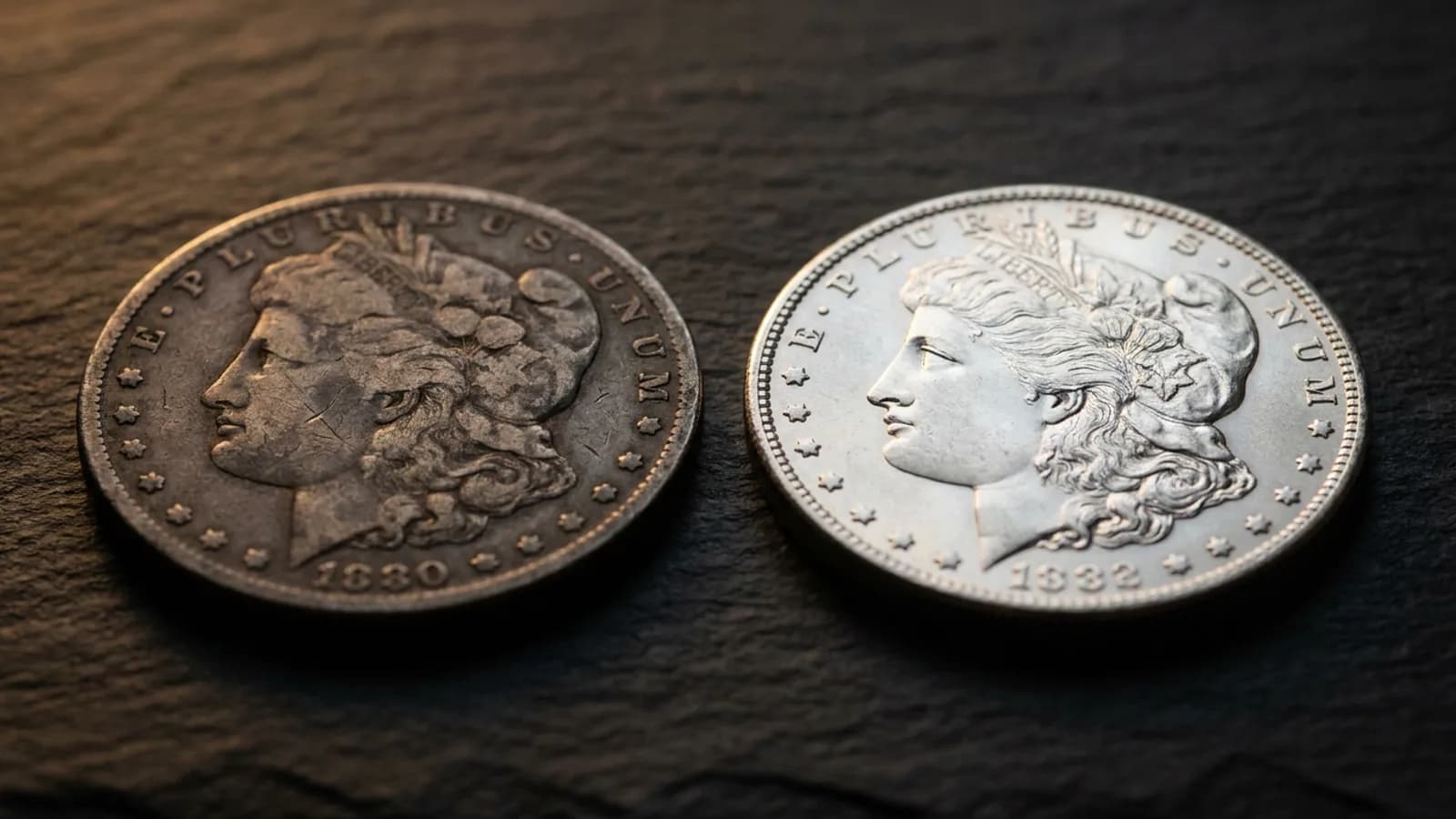
This is exactly why concentrating your budget works. Spreading the same money across several low-grade coins buys pieces that sit on the flat, cheap part of the price ladder; putting it into one better coin buys a rung that is harder to replace.
| Approach | What you get | How it sells later |
|---|---|---|
| One higher-grade coin | A scarce, attractive example | Clear market, defensible price |
| Several low-grade coins | Common pieces near the bottom of the price ladder | Often only sellable as bulk |
What makes a coin the 'best' beyond its grade?
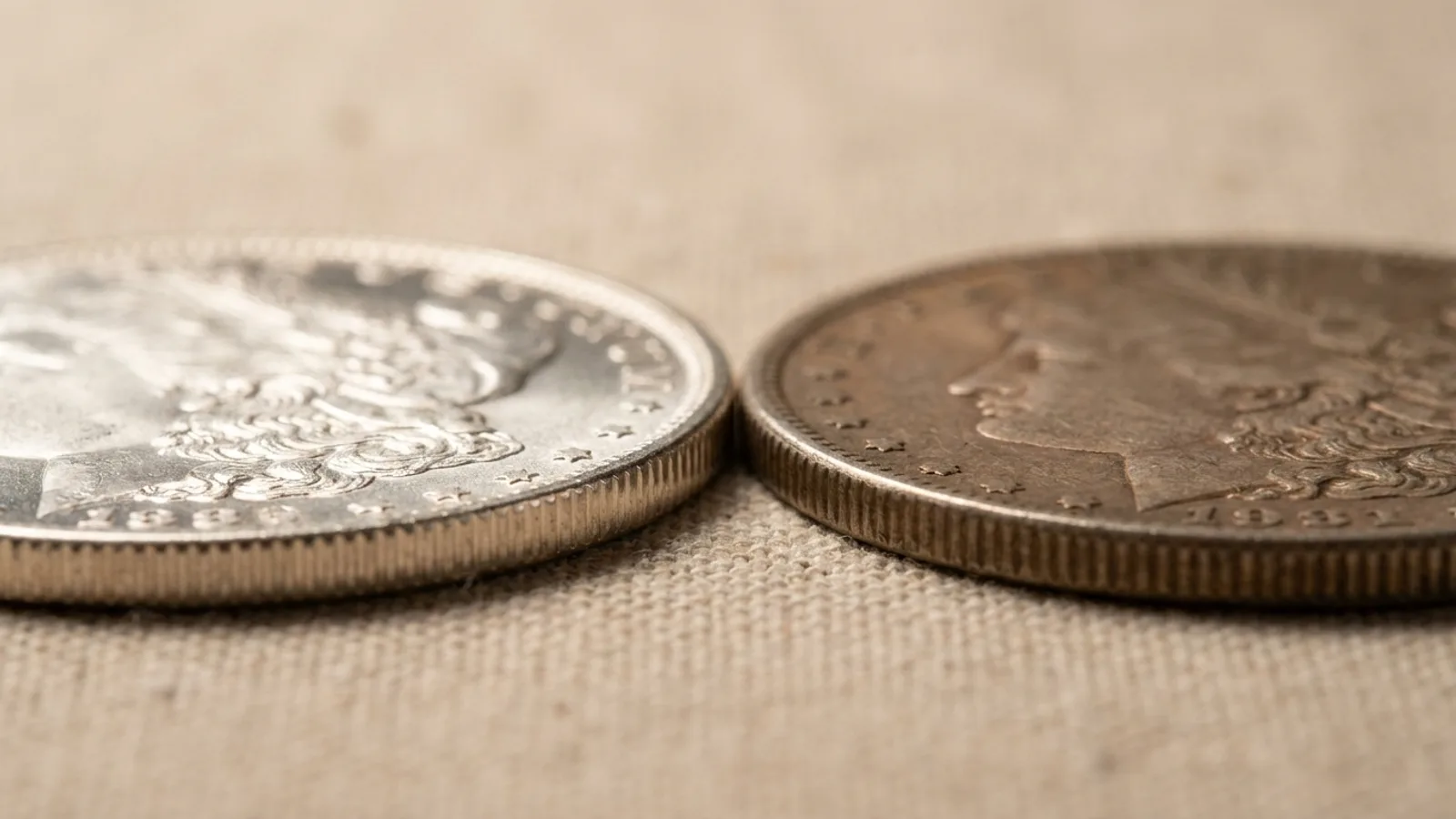
A high grade alone does not make a coin the best. Two coins with the same numerical grade can look very different, and the one with original surfaces and strong eye appeal — good luster, attractive toning, clean focal areas — is the better buy.
Originality matters as much as the number. A coin that has never been cleaned, polished, or doctored is worth more than one that has, even at the same assigned grade.
Our coin grading explained guide covers the 70-point scale and what separates an average coin from a standout one at the same grade.
Which 'problem coins' should you avoid?
Avoid cleaned, polished, scratched, or otherwise damaged coins. These 'problem coins' are discounted heavily and can be nearly impossible to resell, no matter how rare the date.
Cleaning is the most common damage. It leaves hairline scratches and strips the original surface; the American Numismatic Association and the major grading services treat harshly cleaned coins as impaired.
Certification helps you avoid the trap. PCGS and NGC flag or refuse a straight numeric grade to problem coins, which protects you on higher-value purchases. When in doubt, buy certified or buy from a dealer who guarantees the coin.
When does buying in quantity make sense?
The rule is a guide, not a law. Several situations genuinely call for quantity or lower grades instead of chasing the finest example.
When you are stacking metal, weight and premium matter more than condition. Junk silver and bullion are bought by the ounce, so quantity is the entire point — grade barely enters into it.
Beginners filling a type set or a circulated date set are right to buy affordable coins to learn on, and coins bought for children should be cheap and fun, not investment-grade. In those cases, more coins for the money is the better call.
How do you apply the rule without overspending?
Set a firm budget first, then decide how to concentrate it. Saving for one better coin instead of buying several lesser ones on impulse is the practical core of the rule.
Buy fewer times, but buy better. Patience lets you wait for the right coin in the right grade rather than settling for whatever is in front of you.
Lean on a trusted dealer. A good local coin shop or rare coin dealer can steer you toward the best example in your range and away from overpriced or problem coins — and that relationship pays off every time you buy.
Putting the golden rule into practice
In practice, 'buy the best you can afford' means this: pick a focus, set a budget, and spend it on the finest original coin that money will reasonably buy — then wait until you can do it again.
Do that consistently and your collection becomes something with real, defensible value, instead of a box of coins worth little more than face or melt. If you are not sure what your coins are worth today, start with our guide on what your coins are worth.
Frequently asked questions
Does 'buy the best you can afford' mean only buying graded coins?+
No. For valuable coins, certification by PCGS or NGC reduces risk, but inexpensive coins are perfectly fine raw. The rule is about quality within your budget, certified or not.
Is it ever okay to buy a lower-grade coin?+
Yes. For expensive key dates, a problem-free circulated example may be the only affordable option, and a clean lower-grade coin beats an overpriced or damaged higher-grade one every time.
How do I know if I'm overpaying for quality?+
Compare recent sales for the same coin, date, and grade, check published price guides, and get a second opinion from a dealer. Eye appeal commands a premium, but it should be explainable.
Does this rule apply to buying bullion?+
Not really. Bullion is priced on metal weight and premium over spot, not condition, so low premiums and quantity matter more than grade. The golden rule is about collectible coins.