
Hall of Fame for Great Americans Medals (Bronze and Silver)
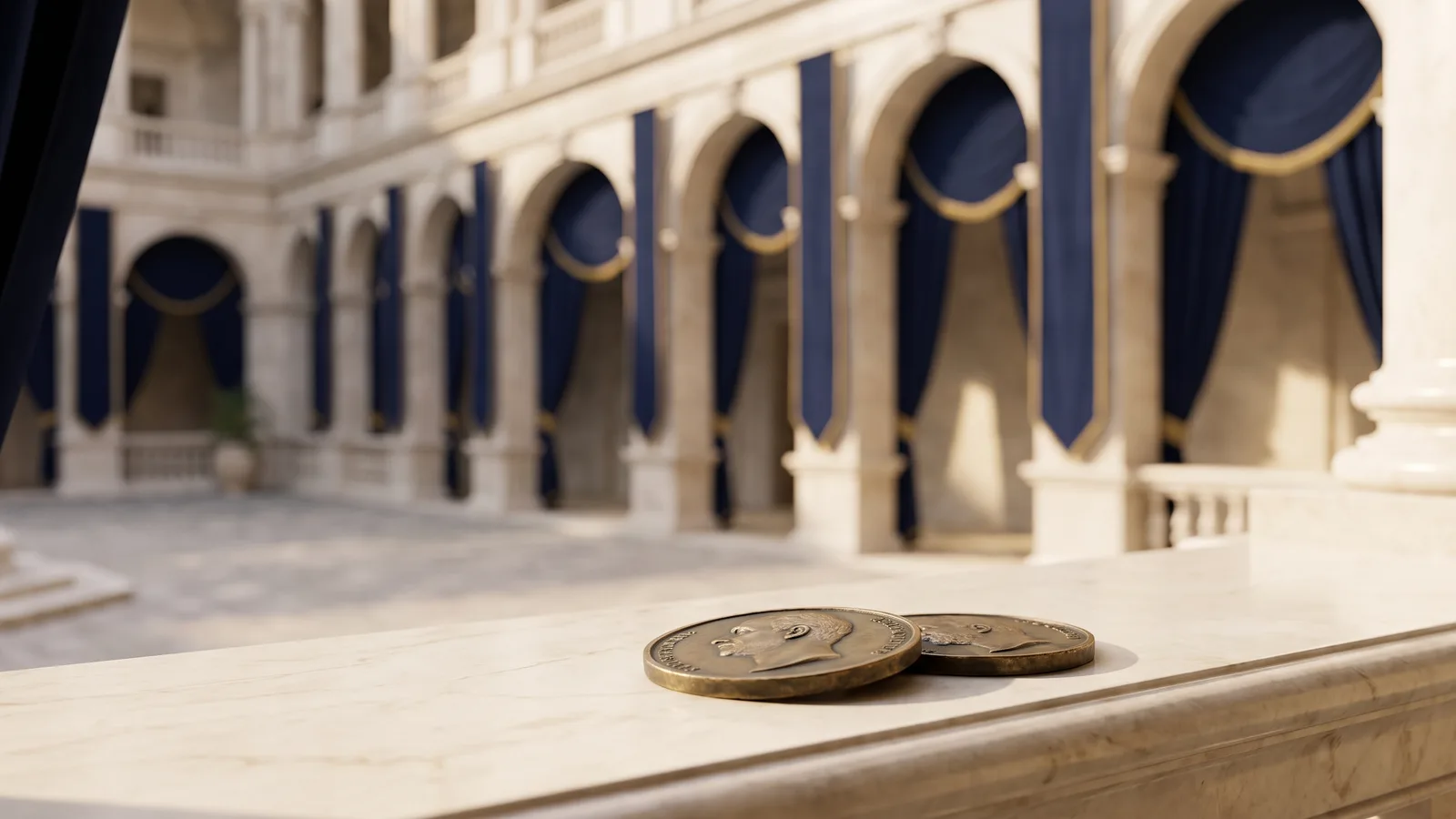
The Hall of Fame for Great Americans medals are a fine-art medal series honoring the electees of New York University's Hall of Fame for Great Americans, struck by the Medallic Art Company from 1963 to 1974. Each medal pairs a portrait of an honored American with a reverse designed by a leading sculptor. The series was produced in a large 3-inch bronze and a smaller 1-3/4 inch format in bronze and in .999 silver. Because it sold poorly and ended in 1974, many pieces remain affordable, and collectors often treat the series as an overlooked corner of American art medals.
Key takeaways
- The Hall of Fame for Great Americans medals are a fine-art series honoring the electees of NYU's Hall of Fame, struck by the Medallic Art Company from 1963 to 1974.
- Medals came in three formats: a large 3-inch (76mm) bronze, and a smaller 1-3/4 inch (44mm) medal in both bronze and .999 silver.
- About 43 leading sculptors contributed designs, coordinated with the National Sculpture Society.
- The series underperformed commercially and was discontinued after 1974, which keeps many bronzes affordable today.
- The standard reference is Alexander and Plasencia, 'Medals of the Hall of Fame for Great Americans at New York University.'
What Are the Hall of Fame for Great Americans Medals?
They are a series of art medals honoring the individuals elected to New York University's Hall of Fame for Great Americans. A medal is a metal piece made to commemorate a person, place, or achievement, carrying no denomination and not intended to circulate as money.
The medals were struck by the Medallic Art Company, the leading American maker of art medals, between 1963 and 1974. Each issue depicts an elected honoree on one side, with a reverse composition created by a working sculptor. The result is closer to portable sculpture than to commemorative coinage.
For a broader grounding in how art medals differ from coins and tokens, see our pillar guide to collecting medals.
The Hall of Fame Itself
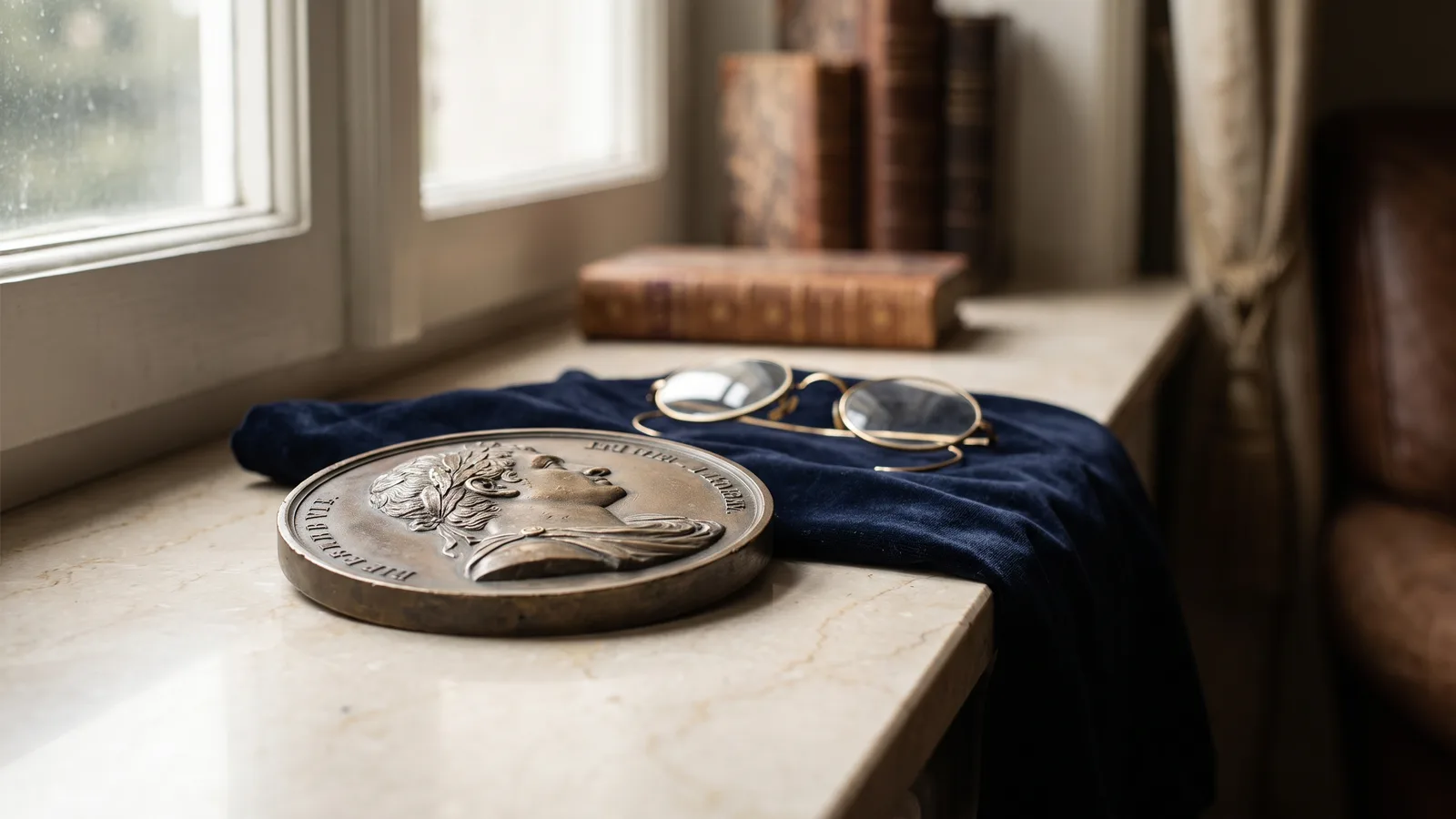
The Hall of Fame for Great Americans is an open-air colonnade established in 1900, the first hall of fame in the United States. It originally stood on NYU's University Heights campus and is now on the campus of Bronx Community College in New York City.
Honorees were chosen by election and commemorated with bronze portrait busts set along the curved colonnade. The roster spans statesmen, authors, scientists, inventors, and reformers from American history. The medal program, launched decades later, was conceived as a way to carry those same portraits into a collectible art-medal form.
How the Medal Program Began
The medal series grew out of a 1962 coalition of three organizations: New York University, which administered the Hall of Fame; the National Sculpture Society, which coordinated the participating artists; and the Medallic Art Company, which struck the pieces.
That partnership set the pattern for the series. Rather than assign one house style, the program invited many different sculptors to interpret the honorees, which is why the medals vary widely in composition and relief from issue to issue. This artist-driven approach echoes the model of the Society of Medalists, the long-running subscription art-medal series also struck by the Medallic Art Company.
Sizes, Metals, and Designs

The series was issued in three formats. The large medal measures 3 inches (76mm) and was struck in bronze. A smaller 1-3/4 inch (44mm) medal was offered in both bronze and .999 fine silver.
Designs were the work of dozens of leading sculptors, roughly 43 in all, contributing under the coordination of the National Sculpture Society. Because so many artists took part, no single design vocabulary defines the set, and quality of relief and portraiture can differ noticeably between issues.
Like most Medallic Art Company work, pieces commonly carry an edge hallmark from the firm, which helps confirm the maker. Bronze medals may show color designations used by graders, from brown through red-brown to red, when they are professionally graded.
| Format | Metal | Value and availability (hedged) |
|---|---|---|
| 3-inch (76mm) | Bronze | Most affordable; large bronzes commonly turn up in the low tens of dollars, popular subjects higher |
| 1-3/4 inch (44mm) | Bronze | Small, inexpensive; typically the lowest-cost format, often well under popular-subject silver |
| 1-3/4 inch (44mm) | .999 silver | Scarcer and carries bullion value; usually the priciest format, popular subjects command a premium |
Why the Series Faded After 1974
The medals never found a large audience. Sales underperformed through the program's run, and production stopped after 1974, leaving the series short of covering every Hall of Fame honoree.
Because it ended quietly and has attracted limited attention since, the series is widely viewed as underappreciated relative to its artistic quality. For collectors, modest demand has translated into modest prices, which is part of the appeal. Popular subjects sold best in period and remain the most sought today, with George Washington, Abraham Lincoln, and Robert E. Lee among the strongest sellers.
What Are They Worth?
Values are generally modest, though they vary by format, subject, and condition. Bronze pieces are the affordable entry point, while silver examples and popular subjects sell higher.
As a rough guide, common bronzes often trade in the low tens of dollars, with sought-after subjects and the .999 silver pieces reaching higher, in part because silver carries bullion value on top of collector demand. Because these are hedged generalizations, confirm current figures against recent sales before buying or selling. You can check the intrinsic silver content of a 44mm .999 piece with our precious metals value calculator.
Subjects with crossover demand outside the medal-collecting world tend to bring the most. Washington material overlaps with the deep field of Washingtoniana, and Lincoln pieces draw interest from collectors of Abraham Lincoln campaign medals and other Lincolniana.
The Standard Reference
The standard catalog is David T. Alexander and Doug Plasencia, 'Medals of the Hall of Fame for Great Americans at New York University.' It documents the issues, sculptors, and formats and is the primary resource for attributing and organizing a collection.
As with most exonumia series, having the reference on hand makes it far easier to identify which honorees were struck, in which formats, and by which artists. General background on the Hall of Fame is available through Wikipedia, and organizations such as Medal Collectors of America publish research useful to art-medal collectors.
How to Collect the Series
Decide on a focus first. Some collectors chase a single format, such as the 3-inch bronzes; others assemble by subject, favorite sculptor, or the silver 44mm pieces. A focused approach is more achievable than trying to complete an entire artist-driven run.
Buy pieces with clean surfaces and original color, and use the Medallic Art Company edge hallmark to confirm the maker. Because prices are generally low, condition and eye appeal matter more to long-term satisfaction than chasing rarity. Local shops in our tokens and medals directory and general coin shops can be good sources for individual medals, and coverage in outlets such as Coin World can help you track the wider art-medal market.
Frequently asked questions
Who made the Hall of Fame for Great Americans medals?+
The Medallic Art Company struck the series, working with New York University and the National Sculpture Society. The Medallic Art Company was the foremost American maker of art medals for over a century.
What years were the medals produced?+
The program was organized in 1962, and medals were struck from 1963 to 1974. The series was discontinued after 1974 because it underperformed commercially.
What sizes and metals were issued?+
A large 3-inch (76mm) medal in bronze, and a smaller 1-3/4 inch (44mm) medal in both bronze and .999 fine silver.
Are these medals valuable?+
Most are modestly priced. Bronzes are the affordable entry point, while .999 silver pieces and popular subjects such as Washington, Lincoln, and Lee sell higher. Confirm current figures against recent sales.
What is the standard reference book?+
David T. Alexander and Doug Plasencia, 'Medals of the Hall of Fame for Great Americans at New York University,' is the standard catalog for the series.
Where is the Hall of Fame for Great Americans located?+
It is an open-air colonnade established in 1900, originally on NYU's University Heights campus and now on the campus of Bronx Community College in New York City.