
How to Spot Fake Coins and Counterfeit Bullion
Spotting a fake coin is mostly about a few quick, reliable checks. Counterfeit coins and bullion exist, but most are caught with a magnet, an accurate scale, a pair of calipers, and a careful look — because faking a coin's exact weight, dimensions, and metal properties all at once is genuinely hard. This guide walks through each test, the visual red flags, and when to hand a coin to a professional instead.
Key takeaways
- A few simple checks catch most fakes: a magnet test, precise weight and dimensions, and the 'ping' sound test.
- Genuine silver and gold are not magnetic — if a coin sticks to a strong magnet, it is fake.
- Counterfeits rarely match weight and diameter and thickness all at once; precise measurement is one of the most reliable home tests.
- Buying recognized products from established dealers, or coins certified by PCGS or NGC, is the best protection against counterfeits.
- For high-value coins, no home test replaces professional authentication.
How can I tell if a coin is fake?
Run a short sequence of tests: check whether it sticks to a magnet, weigh and measure it against the official specs, listen to its ring, and inspect it closely. Most counterfeits fail at least one of these.
No single test is conclusive on its own, but together they catch the large majority of fakes. The surest prevention, though, is where you buy — recognized products from established dealers, or coins already certified by PCGS or NGC.
The magnet test
Gold and silver are not magnetic, so a genuine precious-metal coin should not stick to a magnet. Use a strong neodymium magnet: hold the coin at an angle and watch how the magnet behaves — it should slide off, and on silver it slides noticeably slowly because silver's conductivity creates a braking effect.
A coin that sticks is definitely fake. But passing the magnet test does not prove a coin is genuine — sophisticated fakes use non-magnetic base metals — so always pair it with weight and dimension checks.
The weight-and-dimensions test
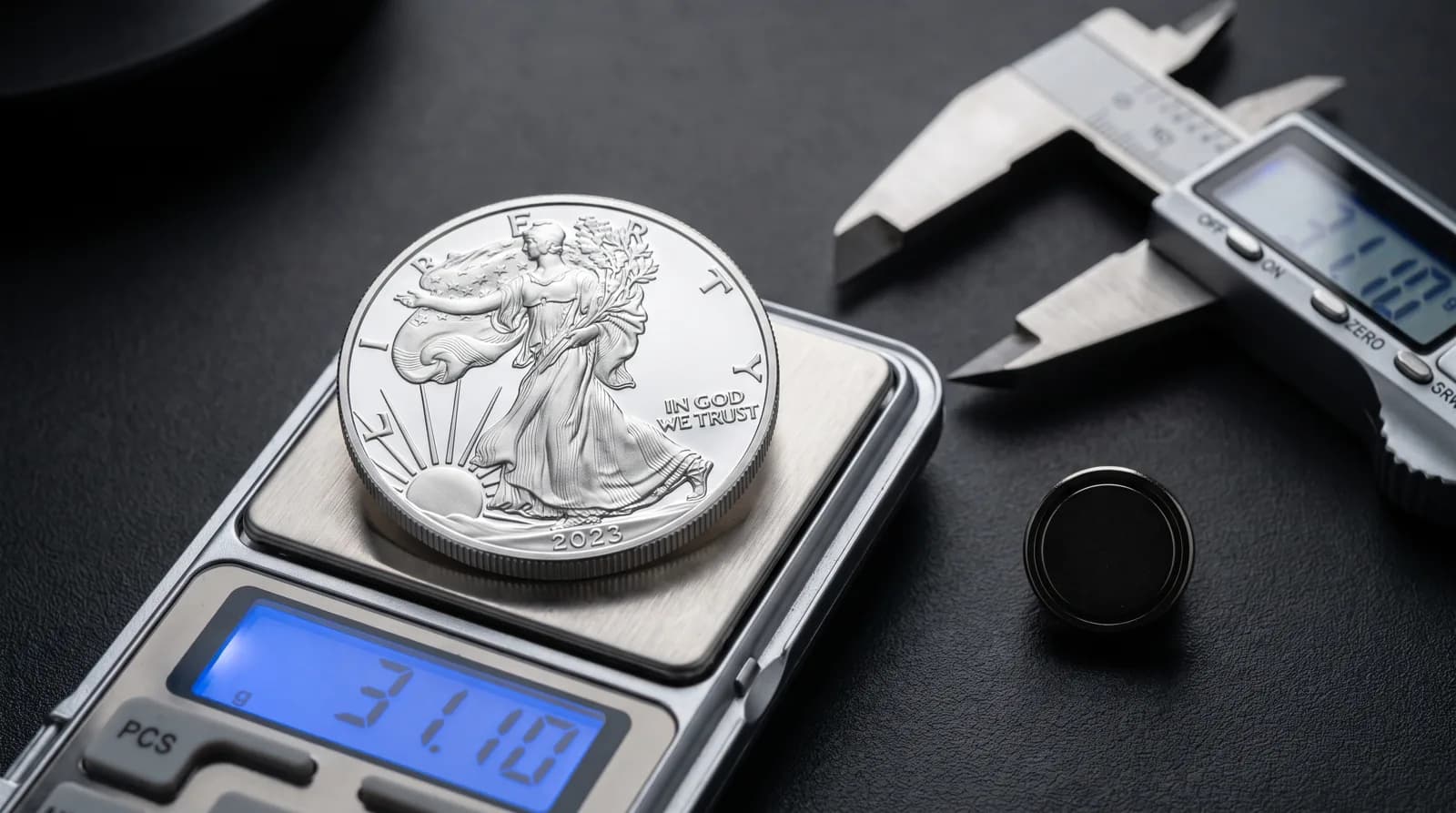
This is the most reliable home test. Every genuine coin has an exact weight, diameter, and thickness, and counterfeiters cannot match all three at once: if a fake gets the weight right using a cheaper, less dense metal, the diameter or thickness comes out wrong, and vice versa.
Use a digital scale accurate to 0.01 gram and a set of calipers that read in millimeters, and compare to the official specifications — the U.S. Mint publishes them for every coin it strikes. The table shows the figures for the most-faked U.S. bullion coin.
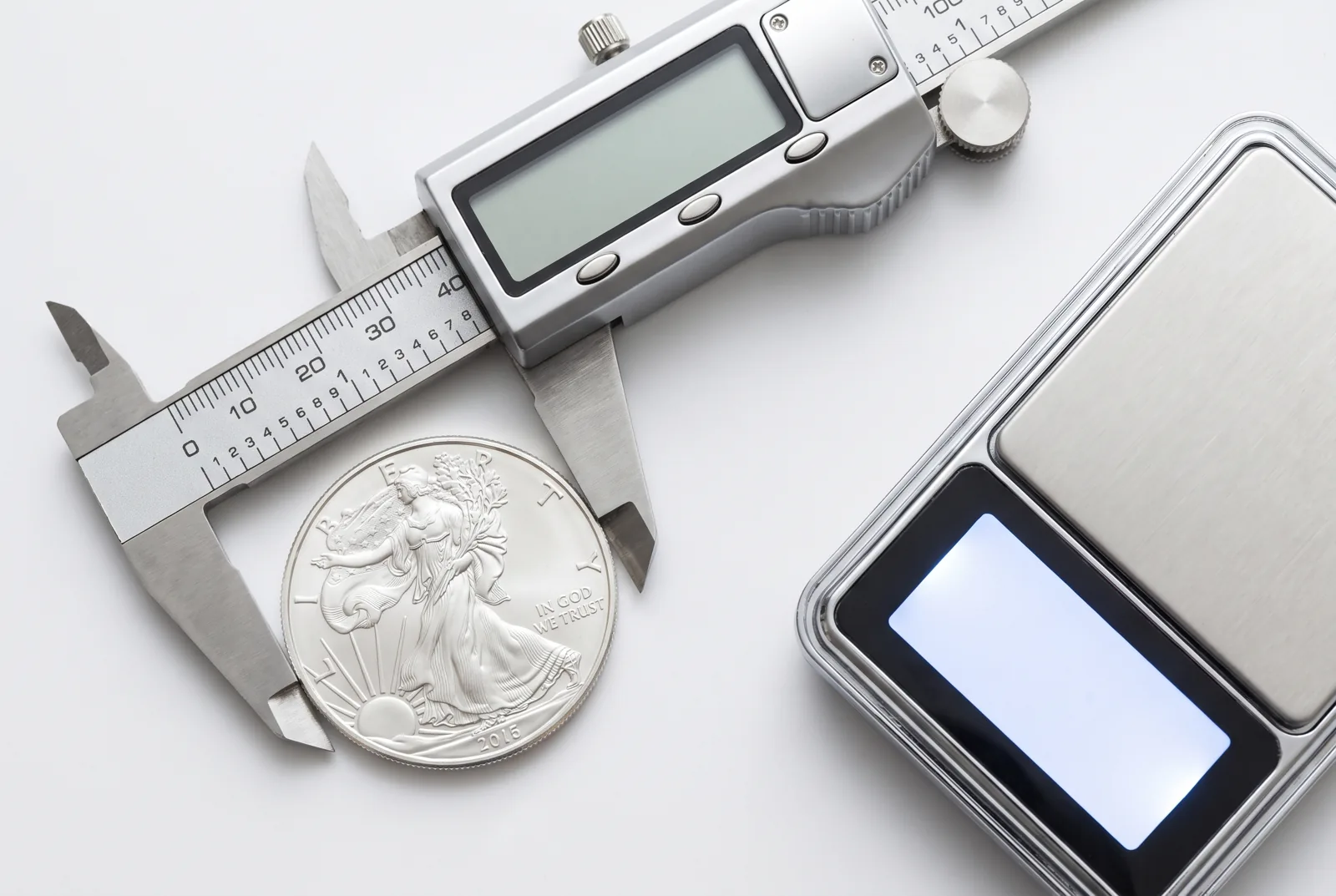
| Measurement | Genuine spec | Tool |
|---|---|---|
| Weight | 31.103 g (1 troy oz) | Digital scale (0.01 g) |
| Diameter | 40.6 mm | Calipers |
| Thickness | 2.98 mm | Calipers |
| Fineness | 99.9% silver | Cross-check with above |
The ping test
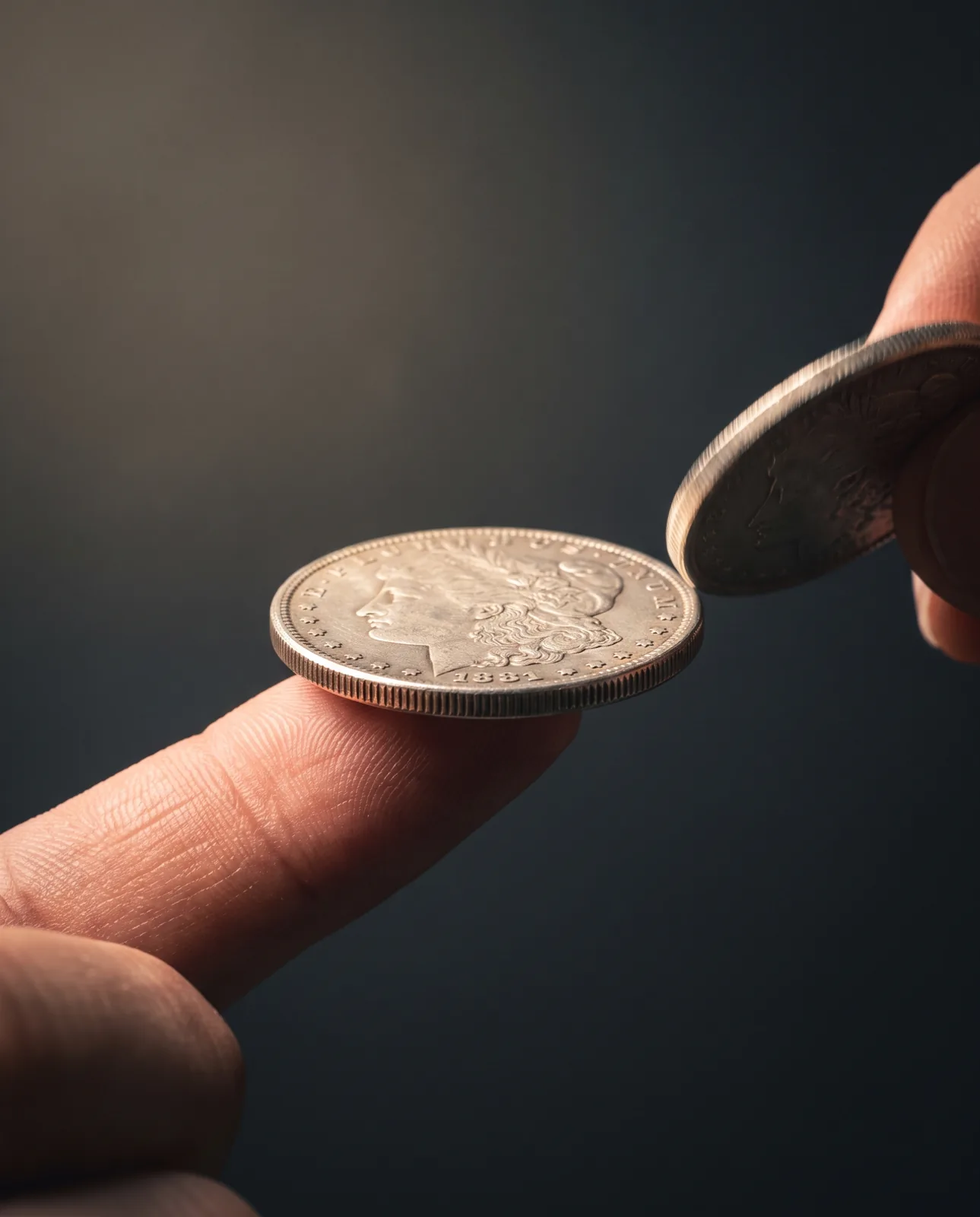
Silver has distinctive acoustic properties, so a genuine silver coin produces a long, clear, high-pitched ring when tapped. Balance the coin on a fingertip and tap it lightly with another coin: real silver rings, while a base-metal fake gives a short, dull thud.
It takes a little practice to recognize the difference, and the test is a useful first screen rather than proof on its own. Phone apps can analyze the tone, but treat the ping as one signal among several.
What visual red flags should I look for?
Examine the coin under magnification and compare it to a known-genuine example or a reference image. Look for soft, mushy details, wrong fonts or spacing in the lettering, a date or mint mark that looks off, seams around the edge, a wrong reeded edge, or surfaces that look cast and pitted rather than struck.
Color and luster can also give a fake away — gold plating over a base metal often looks too brassy, and wear can reveal a different metal underneath. If something looks subtly wrong next to a genuine coin, trust that instinct and test further. Our coin grading guide explains what an authentic struck surface should look like.
Why certified slabs are the best protection
The strongest protection against a fake is to buy coins already authenticated and graded by PCGS or NGC. Their experts verify the coin and seal it in a tamper-evident holder, so you are buying a guaranteed-genuine coin, not taking a chance.
Counterfeit slabs do exist, so verify the certification number on the grading service's website and check that the coin matches the label. Buying from established coin shops adds another layer — a reputable dealer stands behind what they sell.
What should I do if I suspect a fake?
Stop before you spend money. If you're buying, walk away from a deal that fails any test or comes at a suspiciously low premium. If you already own a coin you doubt, don't clean it or alter it — that only makes assessment harder.
Take it to a numismatic appraiser or an established coin shop for a professional opinion, and for a high-value coin, submit it to PCGS or NGC for authentication. No home test replaces an expert's eye on a coin worth real money. Before buying any bullion, run through our questions to ask before buying gold or silver.
Frequently asked questions
Will a magnet tell me if a silver coin is real?+
Partly. Silver isn't magnetic, so if a coin sticks to a strong magnet it's fake. But a coin that doesn't stick can still be a non-magnetic base-metal fake, so always combine the magnet test with weight and dimension checks.
What's the most reliable way to test a coin at home?+
Precise weight and dimensions. Counterfeiters can't match a coin's exact weight, diameter, and thickness simultaneously, so a 0.01-gram scale and calipers compared to the official specs catch most fakes.
How do I authenticate a high-value coin?+
Submit it to PCGS or NGC, or take it to a trusted dealer or numismatic appraiser. Home tests are useful screens, but professional authentication is the standard for coins worth significant money.
Can fake coins come in PCGS or NGC slabs?+
Counterfeit slabs exist, so verify the certification number on the grading service's website and confirm the coin matches the label. Buying from established dealers reduces the risk further.
Are counterfeit coins illegal to own or sell?+
Selling a counterfeit as genuine is illegal, and U.S. law requires copies to be marked 'COPY.' If you suspect you were sold a fake as real, keep your records and contact the seller and relevant authorities.