
How to Identify Hard Times Tokens (Low and Rulau Numbers)
To identify Hard Times tokens, start with three things: size, date, and the wording on the coin. Most are copper pieces about the size of the old U.S. large cent (roughly 28-29mm) struck from about 1832 to 1844, and instead of a federal design they carry a political slogan such as NOT ONE CENT or a merchant's name and city. Once you confirm it is a Hard Times token, you attribute it with a Low number (L-#) from Lyman Low's 1899 catalog and a Rulau number (HT-#) from Russell Rulau's later expansion. This guide walks through that workflow step by step. For background on the series, see the [Hard Times tokens pillar guide](/guides/hard-times-tokens-guide).

Key takeaways
- Most Hard Times tokens are copper, roughly 28-29mm (large-cent sized), and date from about 1832 to 1844, so they look like a large cent but carry a merchant or political legend instead of a federal design.
- A common tell is the legend NOT ONE CENT or MILLIONS FOR DEFENCE, or a named merchant, trade, and city, rather than the U.S. Mint wording found on a genuine large cent.
- Attribution uses two catalog systems: Lyman Low numbers (L-#) from his 1899 reference and Russell Rulau numbers (HT-#) from his later expansion, and both are still cited together.
- Attribution drives value, so confirm the exact Low or Rulau number, the metal, and the rarity before pricing a piece or getting it appraised.
What Is a Hard Times Token?
A Hard Times token is a privately made copper token, most about the size of the contemporary U.S. large cent, that circulated as an unofficial one-cent substitute during the economic turmoil of the 1830s and early 1840s. They were never legal tender; the public simply accepted them at one cent when official small change was scarce.
The name comes from the Hard Times era that followed the Panic of 1837. Button and medal makers struck cent-sized tokens to fill the gap in small change and, often, to carry a political message or a merchant's advertisement. Owning, buying, and selling them today is completely legal.
Hard Times Token vs. Large Cent: The First Check
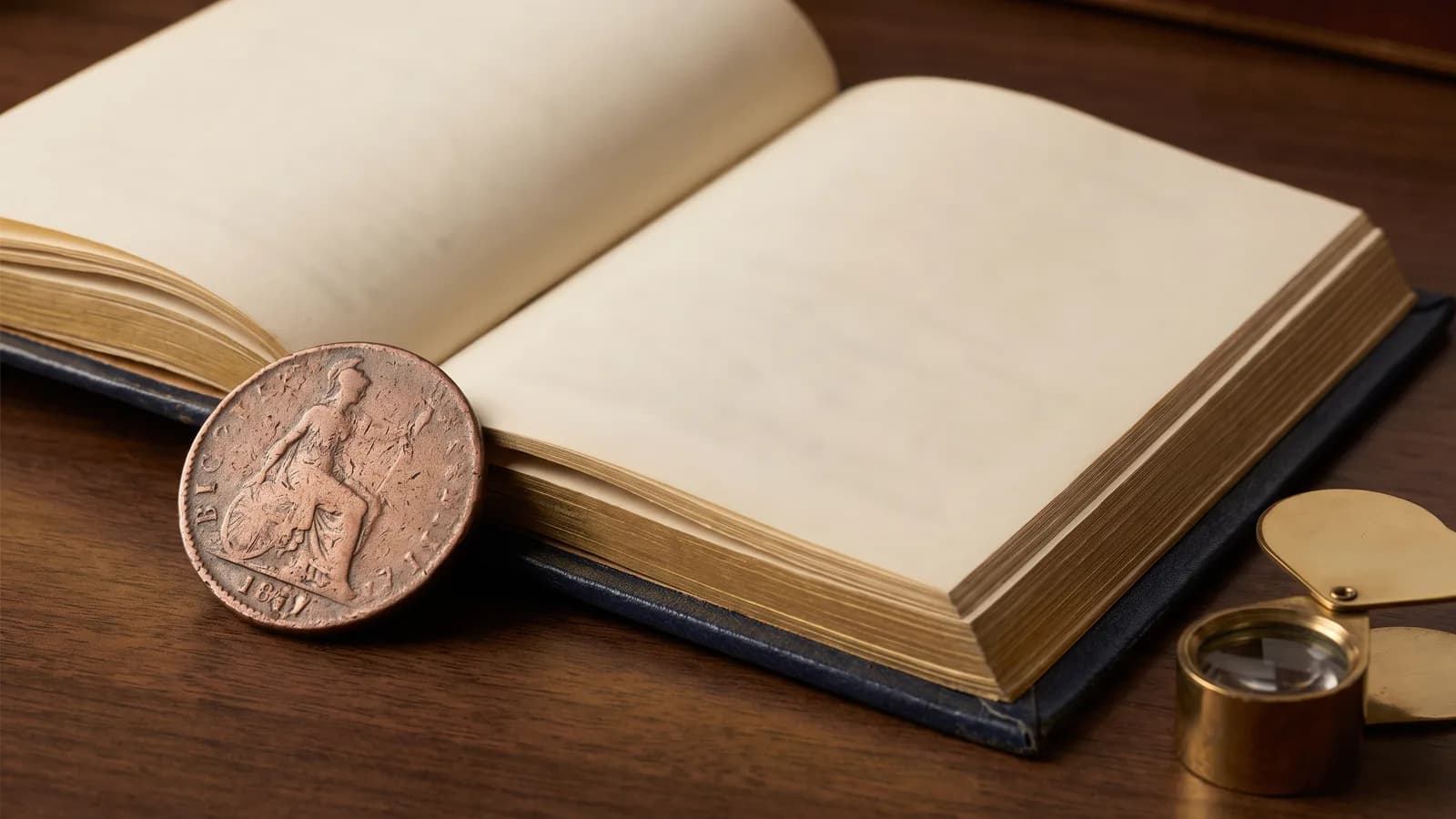
The fastest way to separate a Hard Times token from a genuine U.S. large cent is to read the legend. A large cent carries U.S. Mint wording and denomination; a Hard Times token instead reads NOT ONE CENT, a patriotic slogan, or a named merchant, trade, and city. The word NOT in NOT ONE CENT was deliberate, giving legal cover against laws on imitating federal coin.
Size and date help too. Hard Times tokens run roughly 28-29mm, close to a large cent, with dates commonly in the 1832 to 1844 range. If the piece is small-cent sized (about 19mm), you are likely looking at a Civil War token instead, not a Hard Times token. For a full side-by-side, see Hard Times tokens vs. large cents.
| Feature | Hard Times token | U.S. large cent |
|---|---|---|
| Diameter | About 28-29mm | About 28-29mm |
| Metal | Copper (a few brass) | Copper |
| Legend | NOT ONE CENT, slogan, or merchant name | Federal wording and denomination |
| Design | Political satire or store card | Official Mint design |
| Typical date | About 1832-1844 | 1793-1857 |
Political Token or Store Card? Identify the Type
Hard Times tokens fall into two main types, and naming the type narrows your search before you ever open a catalog. Political and satirical tokens attack or mock President Andrew Jackson, Martin Van Buren, and the Bank of the United States; many imitate the large cent's Liberty head but read NOT ONE CENT. Merchant store cards, by contrast, advertise a private business by name, trade, and city.
Look for a person's or shop's name. If there is one, you likely have a store card, which you can read more about in Hard Times tokens store cards. If the piece carries slogans and satire with no merchant, it is a political token; the Andrew Jackson Hard Times tokens guide covers those designs in depth.
Match the Design or Legend
Once you know the type, match the specific design and legend, because that is what a catalog is organized around. Several political designs are well documented. I TAKE THE RESPONSIBILITY shows Jackson rising from a strongbox holding a sword and a money bag, often paired with a jackass (donkey) reverse. A tortoise carrying a box marked SUB TREASURY satirizes Van Buren's Independent Treasury plan as slow.
Other recurring designs include a full-sailed ship reading WEBSTER CREDIT CURRENT contrasted with a foundering ship for VAN BUREN METALLIC CURRENCY, a phoenix with SPECIE PAYMENTS SUSPENDED and the May 10, 1837 date, and the patriotic MILLIONS FOR DEFENCE NOT ONE CENT FOR TRIBUTE. The abolitionist AM I NOT A WOMAN AND A SISTER token, dated 1838, is among the most famous. For more on these, see Hard Times tokens designs and slogans.
Look Up the Low and Rulau Numbers
Hard Times tokens are cataloged in two overlapping systems, and serious references cite both. Lyman H. Low first cataloged the series in his 1899 reference and listed 183 types; pieces are still identified by Low numbers, written as L-# (for example, L-1). Decades later, Russell Rulau greatly expanded the reference and added HT numbers, written as HT-# (for example, HT-1).
Rulau's numbering is the modern standard, but because older sources and auction records lean on Low, most listings show both. When you attribute a token, you are matching its design, legend, and metal to a specific L-# and HT-# in the catalog. Slabbed examples from PCGS and NGC usually print these numbers on the label, which makes cross-checking easier.
| Part | Meaning |
|---|---|
| L-# | Lyman Low number, from his 1899 catalog |
| HT-# | Russell Rulau number, the modern standard |
| Metal note | Copper, brass, or other planchet noted separately |
| Rarity | Expressed on a standard numismatic rarity scale |
A Step-by-Step Attribution Workflow
Work in a fixed order so you do not skip a step. First, confirm it is a Hard Times token by size, date, and legend. Second, decide the type, political token or merchant store card. Third, match the exact design and legend, or the merchant name and city. Fourth, look up the corresponding Low (L-#) and Rulau (HT-#) numbers. Fifth, note the metal and the cataloged rarity.
A worked example: you have a 28mm copper piece dated 1837 showing a ship in full sail with WEBSTER CREDIT CURRENT. That is a political token (step 2), a known Webster ship design (step 3). You then find its matching L-# and HT-# in a Hard Times reference (step 4) and record that it is copper with its listed rarity (step 5). At that point you can price it or take it to a numismatic appraiser with confidence.
How Mules Are Noted
A mule is a token struck from an obverse and reverse die pair that were not originally intended to go together. Catalogs note mules as distinct varieties, so the same familiar obverse can appear under more than one L-# or HT-# depending on the reverse it is paired with.
This matters for identification because two tokens can share a face yet be different catalog entries and different rarities. When a listing calls a piece a mule, read both sides carefully and confirm the exact number rather than assuming it from one side alone.
Why Attribution Drives Value and Where to Verify
Attribution drives value because two similar-looking tokens can differ widely once you know the exact variety, metal, and rarity. A common merchant store card or political token in Fine to Very Fine commonly runs about $20 to $60, while scarcer satires climb into the hundreds and genuine rarities reach the thousands. Confirming the number before you buy or sell is what separates a guess from a valuation.
To verify, use the standard references and neutral sources. The Newman Numismatic Portal hosts digitized numismatic literature, PCGS and NGC publish attribution details and labels, and the Wikipedia overview of Hard times tokens is a useful starting summary. For the broader token world and how these connect to the 1860s series, see how to identify Civil War tokens and browse the medals and tokens directory to find a specialist.
Frequently asked questions
How can I tell a Hard Times token from a large cent quickly?+
Read the legend. A large cent carries federal Mint wording and denomination, while a Hard Times token reads NOT ONE CENT, a patriotic slogan, or a named merchant and city. Both are about 28-29mm, so the wording is the decisive clue.
What is the difference between a Low number and a Rulau number?+
Low numbers (L-#) come from Lyman Low's 1899 catalog. Rulau numbers (HT-#) come from Russell Rulau's later expansion and are the modern standard. Most references and auction records cite both together.
Are Hard Times tokens legal to own?+
Yes. They were privately made and never legal tender, passing at one cent only by public acceptance in the 1830s and 1840s. Owning, buying, selling, and collecting them today is completely legal.
What does it mean when a token is called a mule?+
A mule is a token struck from an obverse and reverse die pairing that was not originally intended. Catalogs list mules as separate varieties, so the same obverse can appear under different Low or Rulau numbers.
Where can I look up a specific Hard Times token number?+
Use standard references digitized on the Newman Numismatic Portal, and cross-check attribution details published by PCGS and NGC. Graded examples usually print the L-# and HT-# on the label.