
How to Buy Gold: Coins, Bars, and Premiums
Buying gold is simpler than it looks once you understand two things: the premium you pay over the spot price, and which products are easy to resell. This guide walks through coins versus bars, which gold products suit a first-time buyer, how to make sure the metal is genuine, where to buy, how to store it, and the tax basics — so you own real gold at a fair cost from a dealer who will buy it back fairly later.
Key takeaways
- Physical gold sells above the live spot price; the gap is the premium, and it is smallest on bars and largest on government coins.
- Beginners are usually best served by recognized products — American Gold Eagles or Buffalos, Canadian Maples, Krugerrands — which are easy to authenticate and resell.
- A one-ounce Gold Eagle and a one-ounce Buffalo both contain a full ounce of pure gold; the Eagle is 22-karat and heavier, the Buffalo is 24-karat and pure.
- Buy from established dealers, ask what they'd pay to buy the item back, and decide on storage before you purchase.
- Buying gold is generally not taxable, but selling at a profit usually is — keep your receipts and cost basis.
How do I start buying physical gold?
Start by deciding why you're buying — long-term savings in metal, not a quick trade — and then buy recognized products at a fair premium over spot from an established dealer. Those two choices, the right product and a fair premium, drive almost everything else.
If you're still weighing gold against collectible coins or silver, read coin shop vs. bullion dealer first; this guide assumes you've decided to buy gold as an investment.
Should I buy gold coins or bars?
Both are good ways to own gold; the choice is a trade-off between premium and recognizability. Bars give you the most metal per dollar, while coins are easier to sell and split. The table sums it up.
| Format | Premium over spot | Best for |
|---|---|---|
| Government coins (Eagle, Buffalo, Maple) | Highest | Recognizability and easy resale |
| Smaller bars (1 oz and under) | Moderate | Flexibility, lower premium than coins |
| Large bars (10 oz, kilo) | Lowest | Maximum metal per dollar |
| Fractional coins (1/10, 1/4 oz) | Highest per ounce | Smaller budgets, divisibility |
Which gold coins should a beginner buy?
Stick to widely recognized, sovereign-mint coins for your first purchases — they are the easiest to authenticate and the most liquid when you sell. The American Gold Eagle and Gold Buffalo, the Canadian Gold Maple Leaf, and the South African Krugerrand are all sound choices.
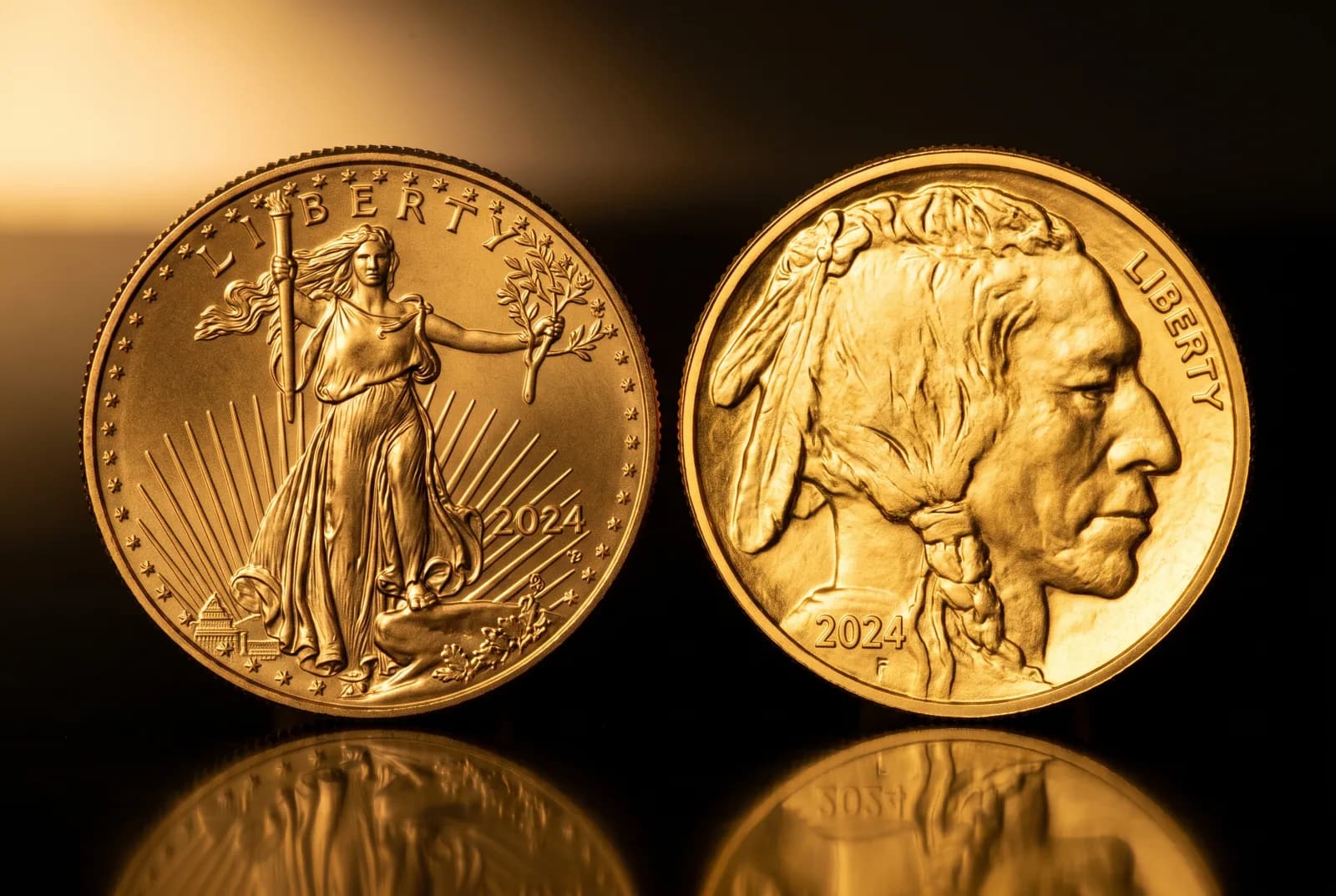
One detail trips up new buyers: a one-ounce American Gold Eagle is 22-karat (91.67% gold, alloyed with copper and silver for durability) and weighs about 33.9 grams, while the U.S. Mint Gold Buffalo is 24-karat (99.99% pure) at 31.1 grams. Both contain exactly one troy ounce of pure gold — the Eagle just carries extra alloy metal that makes it more scratch-resistant.
How do I know the gold is genuine?
Buy recognized products from established dealers and the authenticity question largely takes care of itself. Sovereign-mint coins have precise, published specifications — weight, diameter, and thickness — that fakes struggle to match on all three at once.
Be wary of any price well below normal premiums; if a deal seems too cheap, the metal may not be what it claims. Our guide on how to spot fake coins covers the magnet, weight, and dimension checks that catch most counterfeits.
Where should I buy gold?
You can buy from a local dealer or a reputable online dealer; each has trade-offs. A local bullion dealer or gold and silver buyer lets you inspect, pay, and walk out with the metal — and build a relationship with someone who'll buy it back. Online dealers often post lower premiums but add shipping and a wait.
Whichever you choose, compare the all-in price against spot and against one other seller. Our checklist of questions to ask before buying gold or silver is worth running through before you commit.
What will the dealer pay to buy it back?
Liquidity matters as much as the purchase price. Before buying, ask the dealer what they'd pay to buy the same coin or bar back today. A tight gap between their sell and buy prices signals a healthy, fair market in that product.
Recognized government coins typically have the tightest buyback spreads, which is part of what you pay their higher premium for. Wide spreads, or a dealer who won't quote a buyback at all, are a reason to reconsider.
How should I store gold and handle tax?
Decide on storage before you buy: a quality home safe, a bank safe-deposit box, or an insured third-party depository, each with its own cost and convenience trade-off. Keep receipts and any assay cards — documentation makes resale smoother and establishes your cost basis.
Buying gold is generally not a taxable event, but selling at a profit usually is — physical gold is typically treated as a collectible for capital-gains tax. Rules and reporting thresholds change, so check current guidance at IRS.gov or with a tax professional before a large sale, and track your holdings' live value with the Stack Tracker.
Frequently asked questions
Is it better to buy gold coins or gold bars?+
Bars carry lower premiums, so you get more metal per dollar, especially in larger sizes. Government coins cost more but are the most recognizable and easiest to resell. Many buyers hold mostly coins with a few bars for efficiency.
What is a reasonable premium over spot for gold?+
It varies with product and market conditions — bars and generic rounds carry the smallest premiums, sovereign coins the largest. Compare the all-in price to live spot and check a second dealer to judge what's fair right now.
How much gold is in a 1 oz Gold Eagle versus a Gold Buffalo?+
Both contain exactly one troy ounce of pure gold. The Eagle is 22-karat and weighs about 33.9 grams because of added copper and silver; the Buffalo is 24-karat pure at 31.1 grams.
Do I have to pay tax when I buy gold?+
Buying gold generally isn't taxable. Selling at a profit usually is, since physical gold is typically treated as a collectible for capital-gains tax. Keep your purchase records and check current IRS rules before a large sale.
Where is the safest place to buy physical gold?+
An established local bullion dealer or a reputable online dealer. Favor recognized products, compare the price to live spot, and confirm the dealer offers a fair buyback before purchasing.