
Liberty Head Double Eagle Value: The $20 Gold Coin That Defined an Era
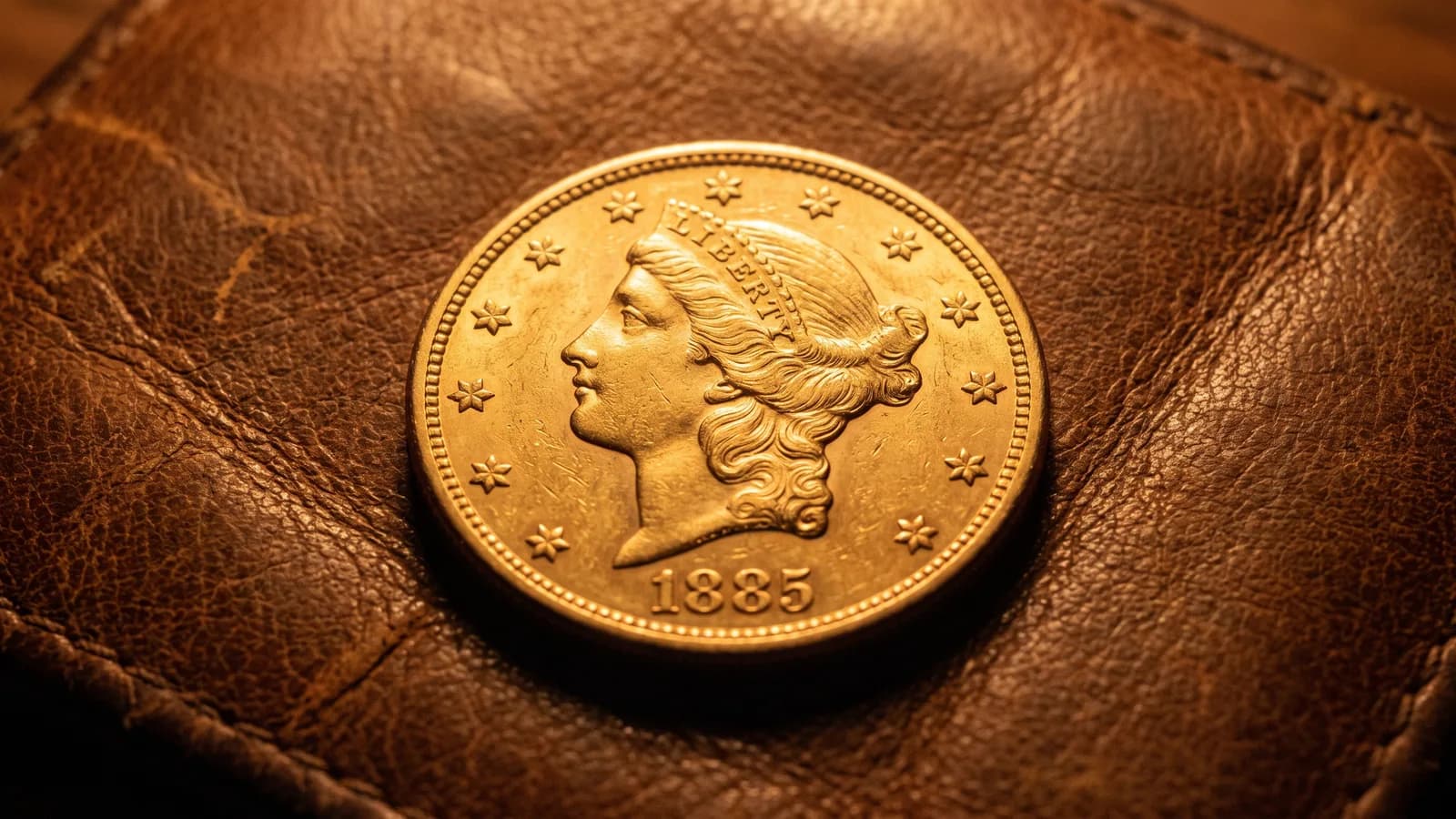
The Liberty Head double eagle — designed by James B. Longacre and struck from 1849 to 1907 — was the backbone of American gold coinage through the Gilded Age. Fifty-eight years of production across multiple mints generated hundreds of date-and-mintmark combinations, with the same 0.9677 troy ounces of gold in every coin. Common circulated examples trade near gold melt value, while key dates, high-grade examples, and the three design types offer layers of numismatic interest well above the metal price.
Key takeaways
- Liberty Head double eagles ($20 face value) were struck from 1849 to 1907 at 90% fineness, containing 0.9677 troy oz of gold.
- Common circulated examples trade at or just above gold melt value — typically a $50–$200 premium over spot.
- The series has three design types based on reverse changes in 1866 and 1877.
- Key rarities include the 1854-O, 1856-O, and 1870-CC, among others.
- The very first Liberty double eagle (1849-C) is unique, residing in the Smithsonian Institution.
Design and Composition
James B. Longacre's Liberty Head design shows a left-facing Liberty wearing a coronet inscribed "LIBERTY" on the obverse, surrounded by thirteen stars. The reverse shows an eagle with a shield and the denomination "TWENTY D." (later changed to "TWENTY DOLLARS"). The coin weighs 33.436 grams at 90% gold fineness — identical to the later Saint-Gaudens double eagle in gold content.
Three types are recognized by PCGS and NGC based on design changes: Type 1 (1849–1866, no motto); Type 2 (1866–1876, "IN GOD WE TRUST" added, reverse lettering changes); and Type 3 (1877–1907, reverse "TWENTY DOLLARS" in full). Each type is collected separately by type-set builders.
What Common-Date Examples Are Worth
Common-date Liberty double eagles in circulated grades (VF-20 to AU-55) trade within a narrow range above gold melt. At current gold prices (roughly $3,000–$3,500+ per troy ounce as of mid-2025), melt value is approximately $2,900–$3,400. Common circulated examples in VF-AU condition typically command $50–$200 above melt, depending on eye appeal and the specific date.
Mint State examples of common dates carry numismatic premiums: MS-62 coins bring $300–$600 over melt, while MS-64 and MS-65 gems command multiples of melt value. Use our gold coin melt calculator to see today's exact gold value.
Key Dates and Major Rarities
Among Type 1 coins, the 1854-O (New Orleans) and 1856-O stand out as key rarities with very low surviving populations. The very first Liberty double eagle — the 1849-C — is unique and resides in the Smithsonian. Among Type 2 coins, several Carson City issues of the early 1870s are scarce in Mint State.
Among Type 3 coins, the 1870-CC is extremely rare (mintage under 4,000, very few survivors), and the San Francisco and New Orleans issues vary considerably by year. Before paying above-melt price for any specific date, verify population data at PCGS CoinFacts or NGC.
Carson City Double Eagles: The Western Connection
The Carson City Mint (CC) struck Liberty double eagles from 1870 to 1893, producing many of the series' most sought-after coins. Nevada silver and gold production was the primary feedstock, and CC-mint coins reflect the Wild West economy of the era. Most CC double eagles have lower mintages and survivorships than their Philadelphia counterparts.
Certain CC-mint dates are dramatically scarce: the 1870-CC (approximately 3,789 struck, very few known) is the series' outstanding rarity. Most other CC double eagles are modestly scarce to common, with circulated examples at modest premiums over Philadelphia dates.
Buying and Selling Liberty Double Eagles
For common circulated dates, any reputable coin dealer or bullion dealer will purchase Liberty double eagles at near-spot prices. They are among the most liquid pre-1933 gold coins because of their recognizable size and consistent gold content. Expect to receive 97–99% of gold melt for common circulated examples when selling.
For key dates or Mint State coins, certification by PCGS or NGC is valuable. Major auction houses are the right venue for key dates — the collector premium they attract exceeds what a dealer will offer. See our guide to selling gold coins.
Liberty vs. Saint-Gaudens: Which Should You Buy?
Both the Liberty Head and Saint-Gaudens double eagles contain identical amounts of gold (0.9677 oz), so as bullion vehicles they are equivalent. The Saint-Gaudens commands slightly higher premiums in the collector market due to its celebrated design — but for common dates in circulated condition, the price difference is often minor.
If design matters to you: the Saint-Gaudens is widely considered more artistic. If historical depth matters: the Liberty Head series spans 58 years and multiple eras of American history. Both are excellent. See our pre-1933 gold coins guide for broader context.
Frequently asked questions
How much gold is in a Liberty double eagle?+
The same as a Saint-Gaudens: 0.9677 troy ounces of fine gold. Total weight is 33.436 grams at 90% (900/1000) fineness.
Is the Liberty double eagle a good investment?+
Common dates track gold prices closely. They are popular pre-1933 gold coins that avoid some bullion reporting requirements, which makes them appealing to some buyers. As with any investment, future price is not guaranteed.
What are the three types of Liberty double eagle?+
Type 1 (1849–1866): no motto. Type 2 (1866–1876): "IN GOD WE TRUST" added; some lettering changes. Type 3 (1877–1907): reverse "TWENTY DOLLARS" in full. The types reflect design modifications, not changes in gold content.
Can I sell a Liberty double eagle to a coin shop?+
Yes — common-date Liberty double eagles are among the easiest pre-1933 gold coins to sell. Any reputable [coin dealer](/coin-shops) or bullion dealer will buy them at close to gold spot. Bring multiple coins if you have them; dealers prefer buying in quantity.
What is the rarest Liberty double eagle?+
The unique 1849-C (in the Smithsonian) and the 1870-CC (extremely low mintage, few survivors) are the most prominent rarities. Several early New Orleans issues are also key dates worth significant premiums.