
What to Know Before Selling a Coin Collection
Selling a coin collection — especially one you inherited — can feel overwhelming. There may be hundreds of pieces, no inventory, and no obvious way to tell the valuable from the ordinary. A little preparation protects you from lowball offers and costly mistakes.
Key takeaways
- Never clean the coins — even gentle cleaning damages the original surface and almost always lowers value.
- Sort the collection into rough groups and note dates and mint marks so a buyer can assess it efficiently.
- Value comes from metal content, rarity, grade, and demand; most circulated 20th-century coins are common, while a few key dates carry the real premiums.
- For a sizable or mixed lot, use an estate coin buyer and get two or three offers — an informed seller is hard to lowball.
Where do I start when selling a coin collection?
Start by slowing down and getting organized — don't sell anything until you know roughly what you have. The biggest losses come from rushed sales and cleaned coins, not from dishonest dealers.
The path is straightforward: leave the coins as they are, sort them into rough groups, learn what drives value, decide whether you need an appraisal, then get two or three offers from the right kind of buyer. This guide walks through each step.
Why should I never clean the coins?
Never clean a coin you intend to sell. Cleaning — even gently — almost always lowers value, sometimes sharply, by leaving microscopic scratches and stripping the original surface collectors prize.
That dull, toned look is often desirable, not dirt to be removed. Resist the urge to polish, and leave every coin exactly as you found it. If a coin is worth real money, a cleaned example can sell for a fraction of an original one.
How should I organize the collection before selling?
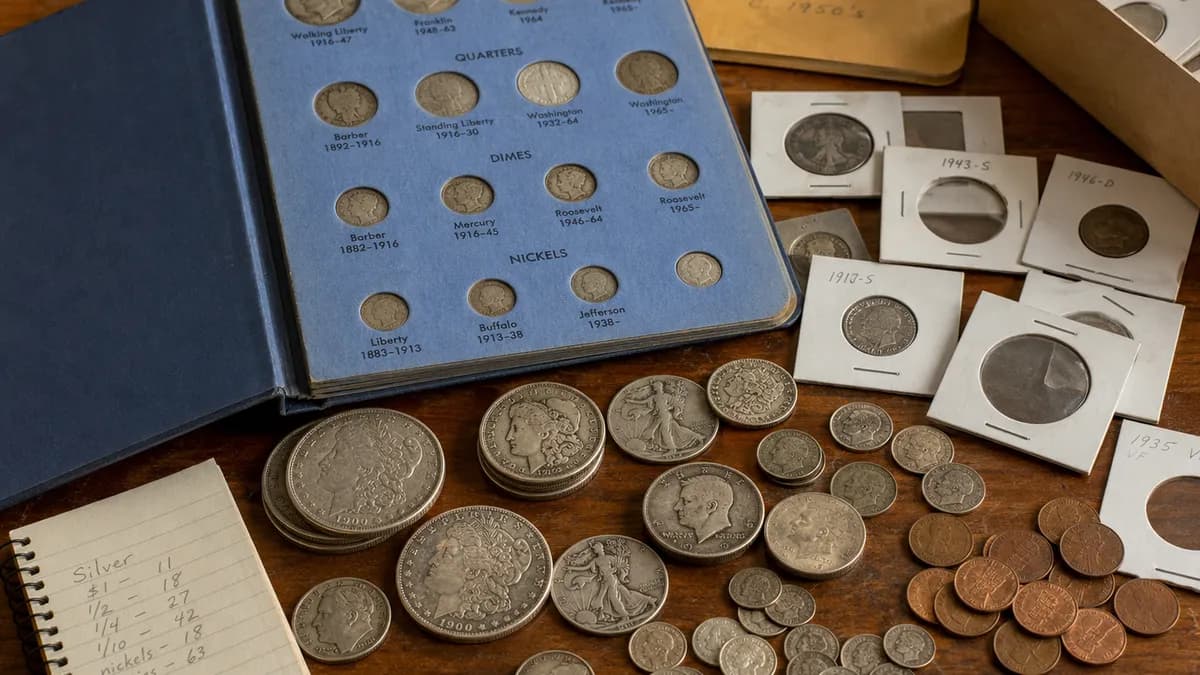
Sort the collection into rough groups so a buyer can assess it efficiently: U.S. coins by denomination, world coins, currency, bullion, and anything already in graded holders (PCGS or NGC slabs). Note dates and mint marks on older U.S. coins.
Separate obvious bullion — Eagles, rounds, bars, and pre-1965 90% silver — from potential collectibles. Bullion is easy to value against spot; collectibles need a dealer's eye. You don't need to value everything yourself; you just need enough order that you can tell whether an offer covers the whole lot fairly.
What gives a coin collection its value?
A coin's worth comes from four things: metal content, rarity (date and mint mark), grade (condition), and demand. Most circulated 20th-century coins are common and trade near bullion or face value; a small number of key dates and high-grade pieces carry the real premiums.
Our guide on what your coins are worth breaks this down. One hard truth: inherited 'collections' are often mostly common coins someone paid collector prices for, so resale value can be well below what was originally spent. That's the market, not a dishonest dealer.
Should I get an appraisal before selling?
Get an independent appraisal first for a large, old, or potentially valuable collection — especially for insurance or dividing an estate among heirs. An appraisal is a paid, written opinion of value; a dealer's offer to buy is necessarily lower because they resell at a margin.
For a small, mostly-bullion lot, comparing a couple of dealer offers is usually enough. See how coin appraisals work to decide which you need.
Where is the best place to sell a coin collection?
The right venue depends on what you have. The table compares the common options.
| Venue | Best for | Trade-off |
|---|---|---|
| Local coin shop | Quick sale, bullion, common coins | Convenient; get more than one offer |
| Estate coin buyer | Whole or mixed inherited collections | One offer for the lot; compare a few |
| Auction house | Genuinely rare, high-value coins | Fees and a wait, but top prices |
| Online marketplace | Selling piece by piece yourself | Most work; fees and shipping risk |
How do I get a fair price and avoid being lowballed?
Get two or three offers from buyers suited to your material, and bring your sorted groups so each can move quickly. Reputable buyers are patient, explain their valuation, and don't pressure you to decide on the spot.
Find estate coin buyers, appraisers, and rare coin dealers near you in the directory, and read how to choose a local coin shop before you visit. An informed seller is hard to underpay.
What's different about selling an inherited collection?
Inherited collections add a few wrinkles: there may be no inventory, multiple heirs to satisfy, and a deadline tied to settling the estate. A written appraisal helps divide value fairly and supports the estate's records.
There can also be tax to consider — coins are generally treated as collectibles for capital-gains purposes, so for a high-value sale it's worth checking the current rules at IRS.gov or with a tax professional.
Frequently asked questions
Should I get the collection appraised before selling?+
For a large, old, or potentially valuable collection, an independent appraisal is worth it — especially for insurance or estate purposes. For a small, mostly-bullion lot, comparing a couple of dealer offers may be enough.
Will one dealer buy the whole collection?+
Often yes. Estate coin buyers specialize in taking entire collections, sorting common from valuable, and making one offer for the lot. That's usually more convenient than selling piece by piece.
How do I avoid being lowballed?+
Don't clean the coins, organize them so they're easy to assess, learn the rough melt value of any bullion, and get more than one offer. An informed seller is hard to underpay.
Do I owe tax when I sell an inherited coin collection?+
Possibly. Coins are generally treated as collectibles for capital-gains tax, and inherited assets often receive a stepped-up cost basis. Rules change and depend on your situation, so check current IRS guidance or a tax professional before a large sale.