
The Medallic Art Company: America's Great Medal Maker
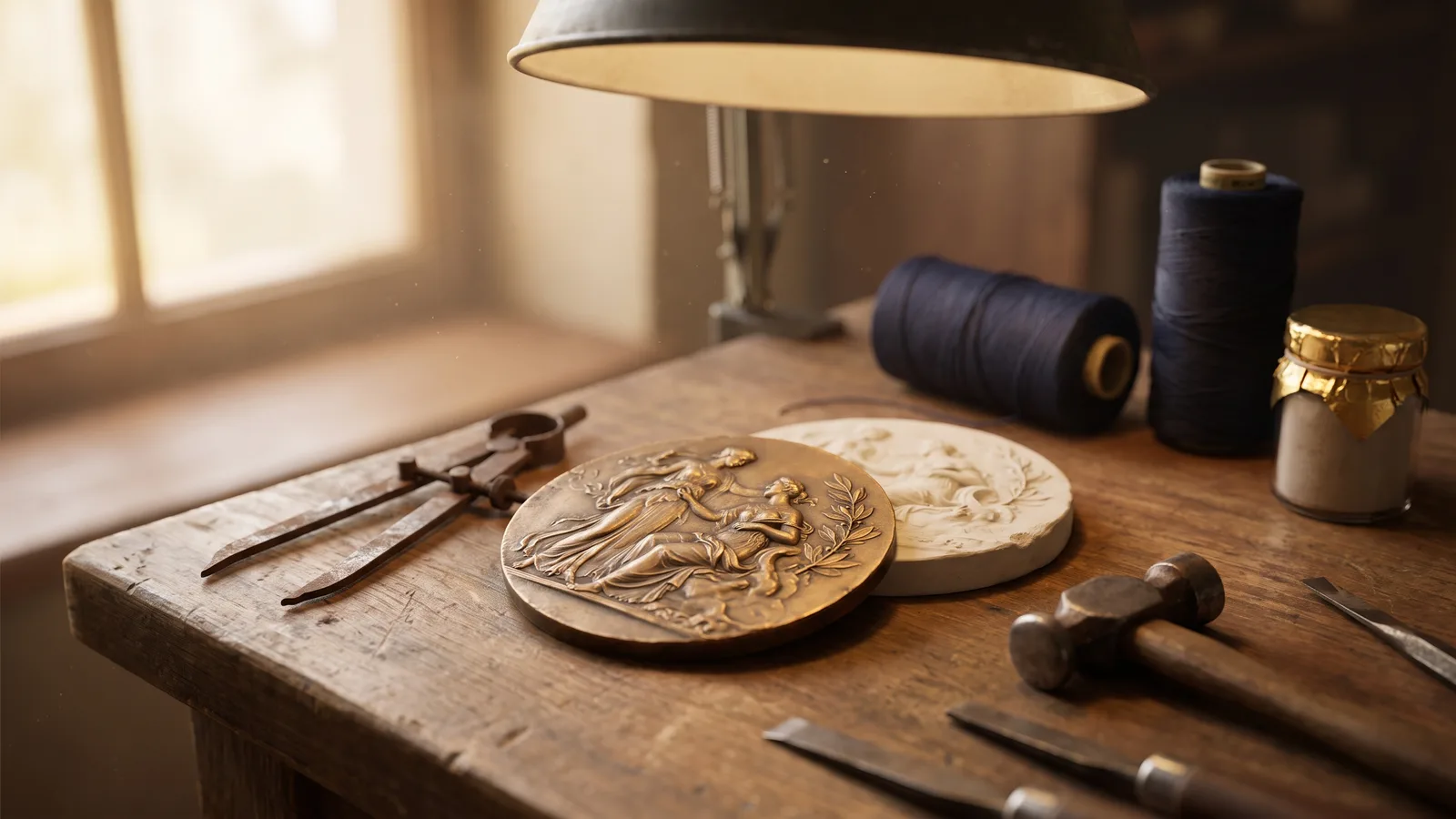
The Medallic Art Company, often abbreviated MACO, was the foremost American private maker of art medals for over a century. Founded in New York in the early 1900s by French-trained artisans, it struck fine-art series, prize medals, and official awards for museums, universities, and the U.S. government. Its work includes the Society of Medalists series, the Hall of Fame for Great Americans medals, the Pulitzer Prize medal, and many Congressional Gold Medals. Most MACO medals carry an edge hallmark that helps collectors date and authenticate them. Common bronze pieces stay affordable today, while sought designs and metals command more.
Key takeaways
- The Medallic Art Company (MACO) was the foremost American private maker of art medals for over a century, founded in New York in the early 1900s.
- MACO struck the Society of Medalists series, the Hall of Fame for Great Americans medals, the Pulitzer Prize medal, and many U.S. Congressional Gold Medals.
- Most MACO pieces carry an edge hallmark such as 'MEDALLIC ART CO.' that helps date and authenticate a medal.
- The firm ceased operations around 2016; common bronze MACO medals remain affordable, while sought designs and metals bring more.
What Was the Medallic Art Company?
The Medallic Art Company was a private American firm that designed, engraved, and struck art medals, prize medals, and commissioned awards for more than a hundred years. A medal is a metal piece made to commemorate a person, place, event, or achievement, or as a work of art. Unlike a coin, it carries no denomination and is not meant to circulate as money.
MACO was best known for turning the designs of leading sculptors into finished struck medals, usually in high relief. When a museum, university, prize committee, or government body needed a medal, MACO was often the firm that produced it. For an overview of the wider field, see our medals collecting guide.
How the Medallic Art Company Began
The Medallic Art Company was founded in New York in the early 1900s (records point to about 1903) by French-trained artisans who brought European die-engraving methods to the United States. The Weil brothers, Henri and Felix Weil, built the firm in its early decades, and the medalist Jules Edouard Roine was associated with the company early on.
The figure most tied to MACO's long success is Clyde Curlee Trees, who joined in 1919, became president in 1927, and bought the company in 1929. Under Trees, MACO grew into the dominant American maker of art medals and helped launch subscription medal series that gave collectors a steady supply of sculptor-designed work. For a fuller company history, see the overview at Wikipedia's Medallic Art Company entry.
What the Medallic Art Company Produced
MACO produced fine-art medal series, official award medals, and one-off commissions. Its output ranged from affordable collector series to some of the most prestigious awards in American life.
Among its best-known work: the Society of Medalists series, a subscription art-medal program that ran from 1930 to 1995 and is the most successful American art-medal series; the Hall of Fame for Great Americans medals struck from 1963 to 1974; the Pulitzer Prize medal; and many U.S. Congressional Gold Medals. MACO also struck countless society, university, corporate, and commemorative medals, which is why its edge mark turns up so often in exonumia collections. Exonumia is the collecting field of numismatic items other than government coins and paper money.
How to Identify a MACO Medal by Its Edge Hallmark

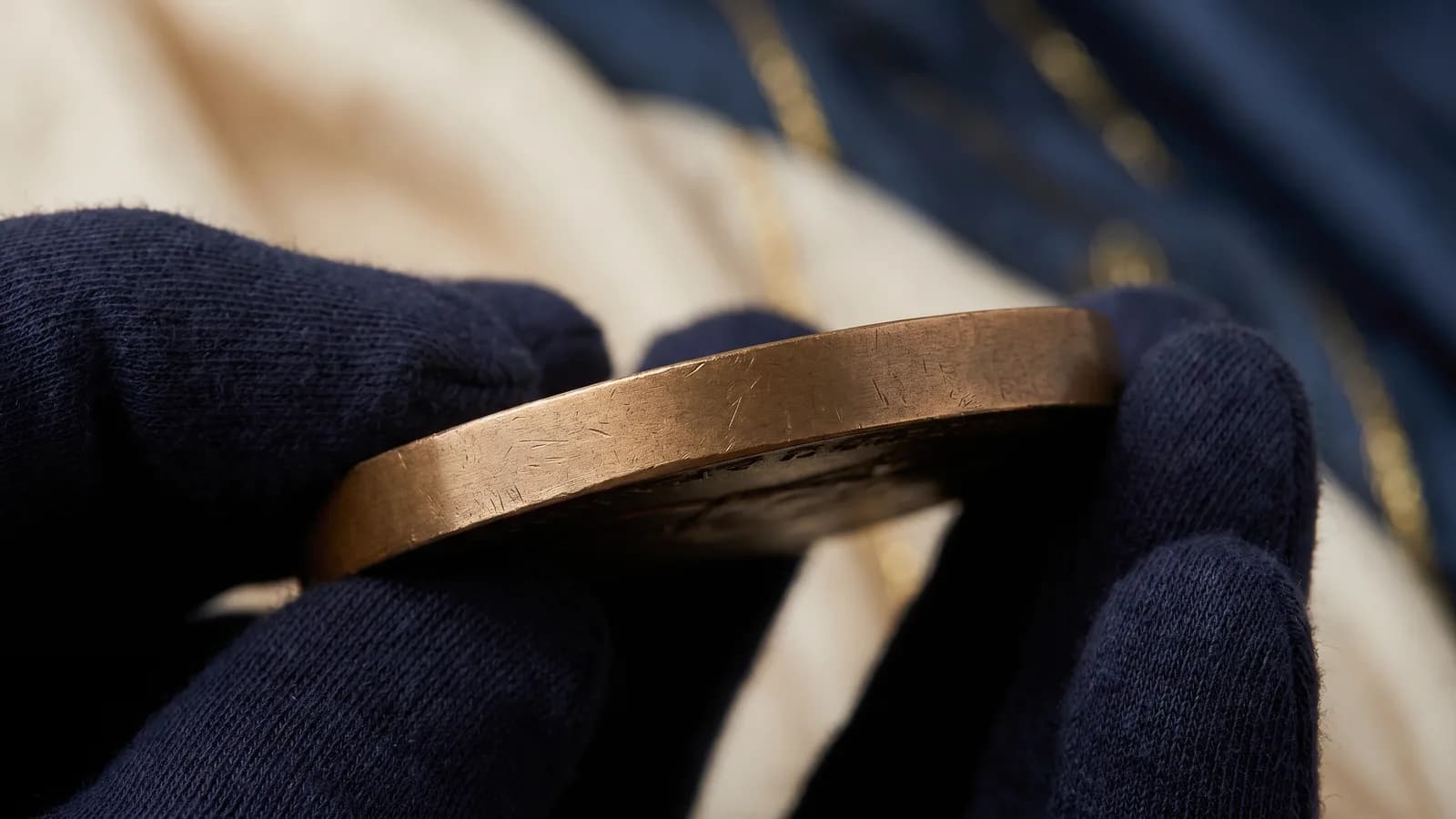
The quickest way to attribute a Medallic Art Company medal is to read its edge. MACO pieces usually carry an edge hallmark such as 'MEDALLIC ART CO.', often with a location mark, and the wording changed over time in ways that help date a medal.
Because the mark evolved as the firm relocated, the style of the hallmark narrows down when a piece was made. Early production may be unsigned or lightly marked; New York marks point to the long period before the company left the city; and marks naming later locations point to production after those moves. Treat the eras below as approximate guides rather than exact cutoffs, and confirm unusual pieces against a reference or a specialist.
Edge marks also support authentication. A struck, crisp edge hallmark that matches a known MACO style is a good sign, while a mark that looks added, tooled, or inconsistent with the medal's design is a reason to seek an expert opinion. For hands-on help, browse a local shop in the tokens and medals directory.
| Edge hallmark style | Approximate era |
|---|---|
| Unsigned or minimal maker mark | Earliest pieces, roughly the 1900s to 1910s |
| 'MEDALLIC ART CO.' with New York marks (for example N.Y.) | New York period, roughly the 1920s to early 1970s |
| Marks naming Danbury, Connecticut | After the move to Danbury, roughly the 1970s onward |
| Marks naming later locations | Final decades before the firm closed |
Later Years and Closure
The Medallic Art Company left New York and moved to Danbury, Connecticut, in the early 1970s, then relocated again in its final decades before ceasing operations around 2016. A long decline in demand for medallic art put steady financial pressure on the firm.
The company's dies, hubs, and archive were not lost when it closed. Large portions of the MACO archive, reported to include tens of thousands of objects such as medals, die shells, hubs, and working dies, were later acquired and preserved by a numismatic institution, which keeps the historical record available to researchers and collectors.
Why MACO Medals Are Collectible and What They Are Worth
MACO medals are collected for their artistry, their link to famous sculptors and prestigious awards, and their generally high production quality. Values vary widely by design, metal, size, and condition, so treat any single figure as a range rather than a fixed price.
As a rough guide, common bronze MACO medals often trade modestly, commonly in the tens of dollars up to around $100, with many Society of Medalists issues sitting in an accessible range. Sought-after designs, larger sizes, silver strikes, low mintages, and top condition push prices higher, into the low hundreds and sometimes well beyond for the most desirable pieces. Because so many medals were struck in bronze, condition and eye appeal often drive the difference in price between two examples of the same design.
Worked example: a collector finds two 3-inch bronze medals with MACO edge marks at an estate sale. One is a common award medal with heavy handling marks; the other is a scarcer sculptor-designed art medal with original surfaces. The common piece might sit at the low end of the range, while the scarcer, better-preserved art medal could bring several times more. Checking the design, mintage, and grade before buying or selling is what separates a fair price from a guess.
How to Collect Medallic Art Company Medals
The simplest way to start is to pick a focus: a single series such as the Society of Medalists, a favorite sculptor, or a theme like award and prize medals. A focus keeps a collection coherent and makes it easier to learn fair prices.
Buy the best condition you can afford, since eye appeal drives value in a field where bronze is common. Learn the edge marks so you can attribute pieces confidently, and keep any paperwork, boxes, or subscription inserts that came with a medal, as these add to desirability. Store pieces to protect their surfaces, and when in doubt about value or authenticity, get a second opinion from a dealer or appraiser. To find help nearby, use the coin shops directory, and for related American exonumia see our guide to the die-sinker John Adams Bolen.
To go deeper, the Medal Collectors of America and the American Numismatic Association both publish research and connect collectors who specialize in medals.
Frequently asked questions
What does MACO stand for?+
MACO is the common abbreviation for the Medallic Art Company, the American firm that struck art medals, prize medals, and official awards for more than a century.
How can I tell if a medal was made by the Medallic Art Company?+
Check the edge. Most MACO medals carry an edge hallmark such as 'MEDALLIC ART CO.', often with a location mark. The wording style also helps estimate when the medal was made.
Are Medallic Art Company medals valuable?+
Some are, but many are affordable. Common bronze pieces often trade in the tens of dollars up to around $100, while sought designs, silver strikes, and top condition bring more.
Is the Medallic Art Company still in business?+
No. The firm ceased operations around 2016 after a long decline in demand for medallic art. Much of its archive of dies and medals was later preserved by a numismatic institution.
What famous medals did MACO make?+
MACO struck the Society of Medalists series, the Hall of Fame for Great Americans medals, the Pulitzer Prize medal, and many U.S. Congressional Gold Medals, among many others.