
Military Challenge Coins: History, Tradition, and Collecting
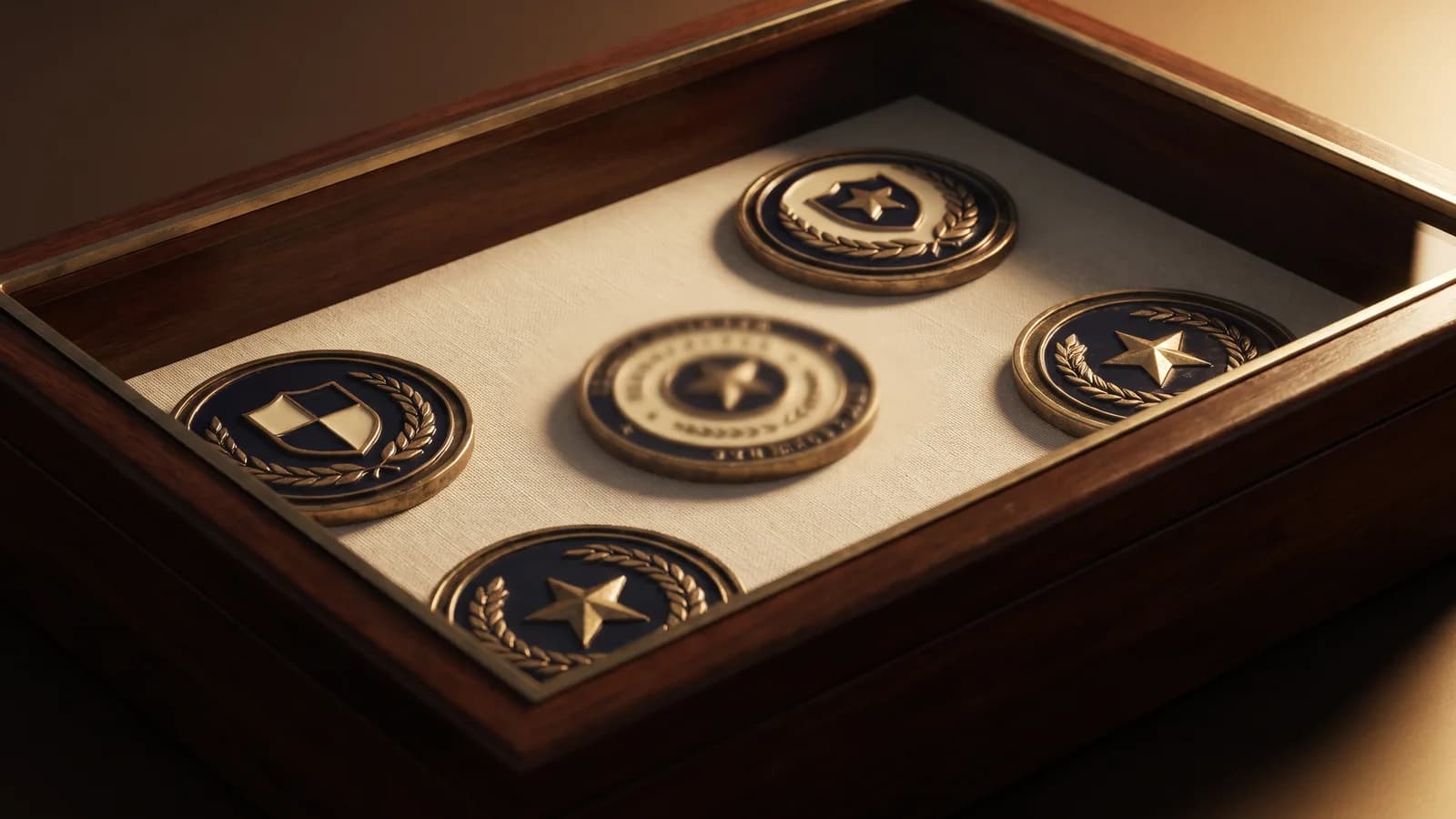
Military challenge coins are small medallions bearing a unit's or organization's insignia, carried by members and often exchanged by handshake. They are collected as modern exonumia, which is the collecting of numismatic items other than government coins and paper money. Most challenge coins are valued sentimentally or at a few dollars, but scarce historic unit coins, early presidential coins, and low-numbered pieces can command real premiums. This guide covers what they are, the debated origin story, the coin check tradition, how they are made and issued, how they differ from official medals, and how to start collecting them.
Key takeaways
- A challenge coin is a small medallion bearing a unit's or organization's insignia, carried by members and often exchanged by handshake.
- The origin story is genuinely debated; a popular account dates it to a World War I aviator, but the first well-documented unit coins appeared in the Korean and Vietnam eras.
- Most modern challenge coins are valued sentimentally or at a few dollars, while scarce historic unit coins, early presidential coins, and low-numbered pieces command real premiums.
- The coin check is a bar tradition in which a member produces a coin and everyone present must produce theirs or buy a round.
- Challenge coins are collected as modern exonumia, which is the collecting of numismatic items other than government coins and paper money.
What Is a Military Challenge Coin?
A challenge coin is a small medallion, usually round and roughly the size of a large coin, that bears the insignia or emblem of a military unit, command, agency, or other organization. Members carry it as a token of belonging and often exchange it by a discreet handshake.
Challenge coins are not legal tender and were never issued by a mint as money. They belong to exonumia, the branch of collecting that covers numismatic items other than government coins and paper money. For the wider family of related pieces, see the pillar guide to collectible tokens.
Beyond the military, coins are now issued by police and fire departments, federal agencies, corporations, and civic groups. The military tradition remains the best known and the most sought after by collectors.
The Debated Origins of the Challenge Coin
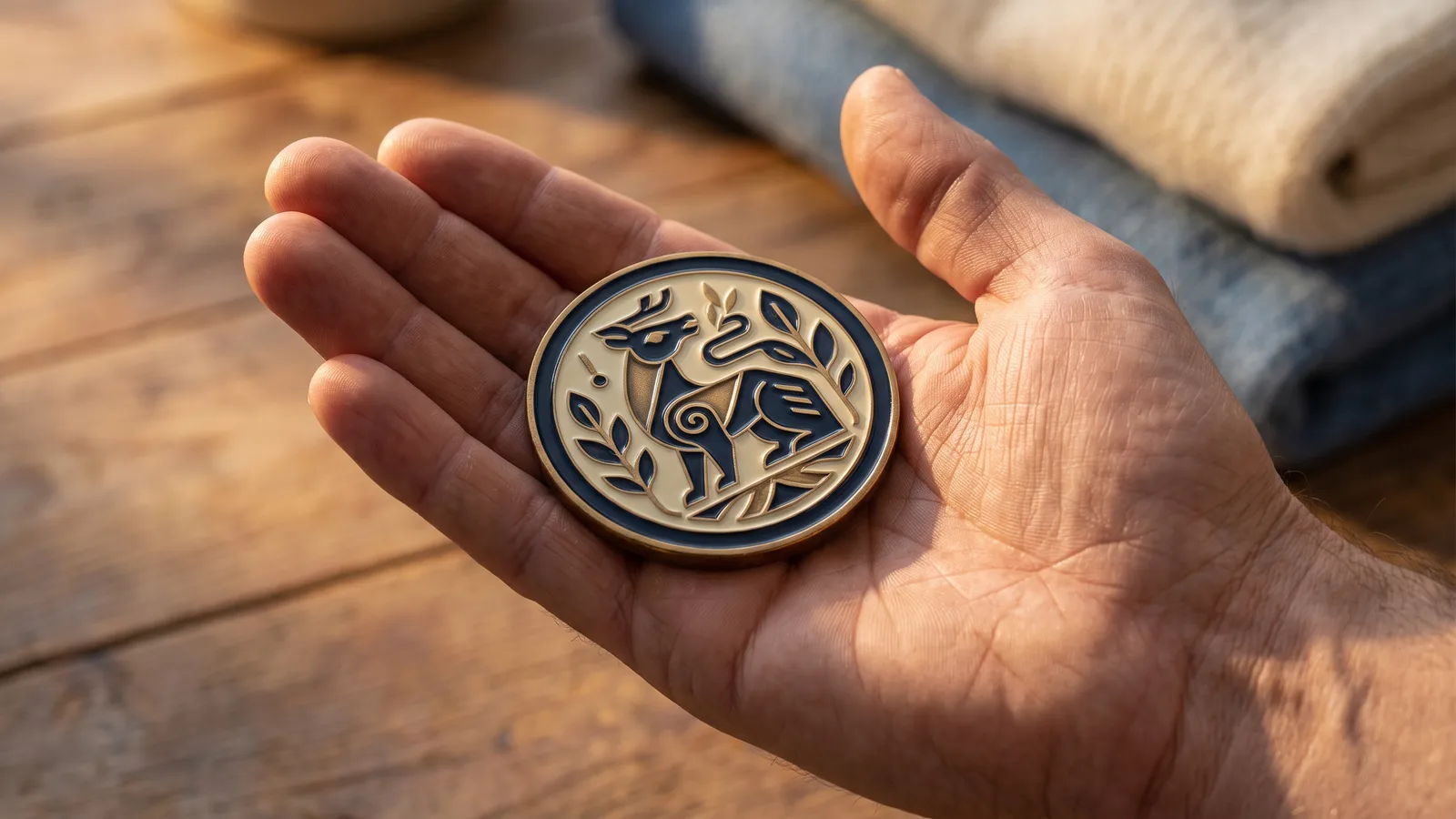
The origin of the challenge coin is genuinely debated, and no single account is settled. Collectors should treat the popular stories as tradition rather than documented fact.
One widely repeated account dates the practice to a World War I aviator whose squadron struck small medallions; the story holds that a captured pilot used his medallion to prove his identity to friendly forces. The tale is colorful, but it is difficult to verify from period records, and historians treat it with caution.
What is better documented is that unit coins in the modern sense appeared during the Korean and Vietnam eras. Pieces tied to units such as the 17th Infantry Regiment and the 10th Special Forces Group are among the early examples often cited. The practice then spread widely through the armed forces in the later twentieth century.
For general background, see the overview at Wikipedia's challenge coin entry.
The Coin Check Tradition
The coin check is a social ritual tied to challenge coins, most often carried out in a bar or at a gathering. A member produces a coin, and everyone present is expected to produce theirs.
By common custom, anyone who cannot produce a coin buys a round for the group, while if everyone produces a coin, the person who issued the challenge buys instead. Rules vary by unit and are informal rather than official.
The tradition is one reason members carry their coins at all times, and it helps explain why so many coins survive in worn, pocket-carried condition.
How Challenge Coins Are Made and Who Issues Them
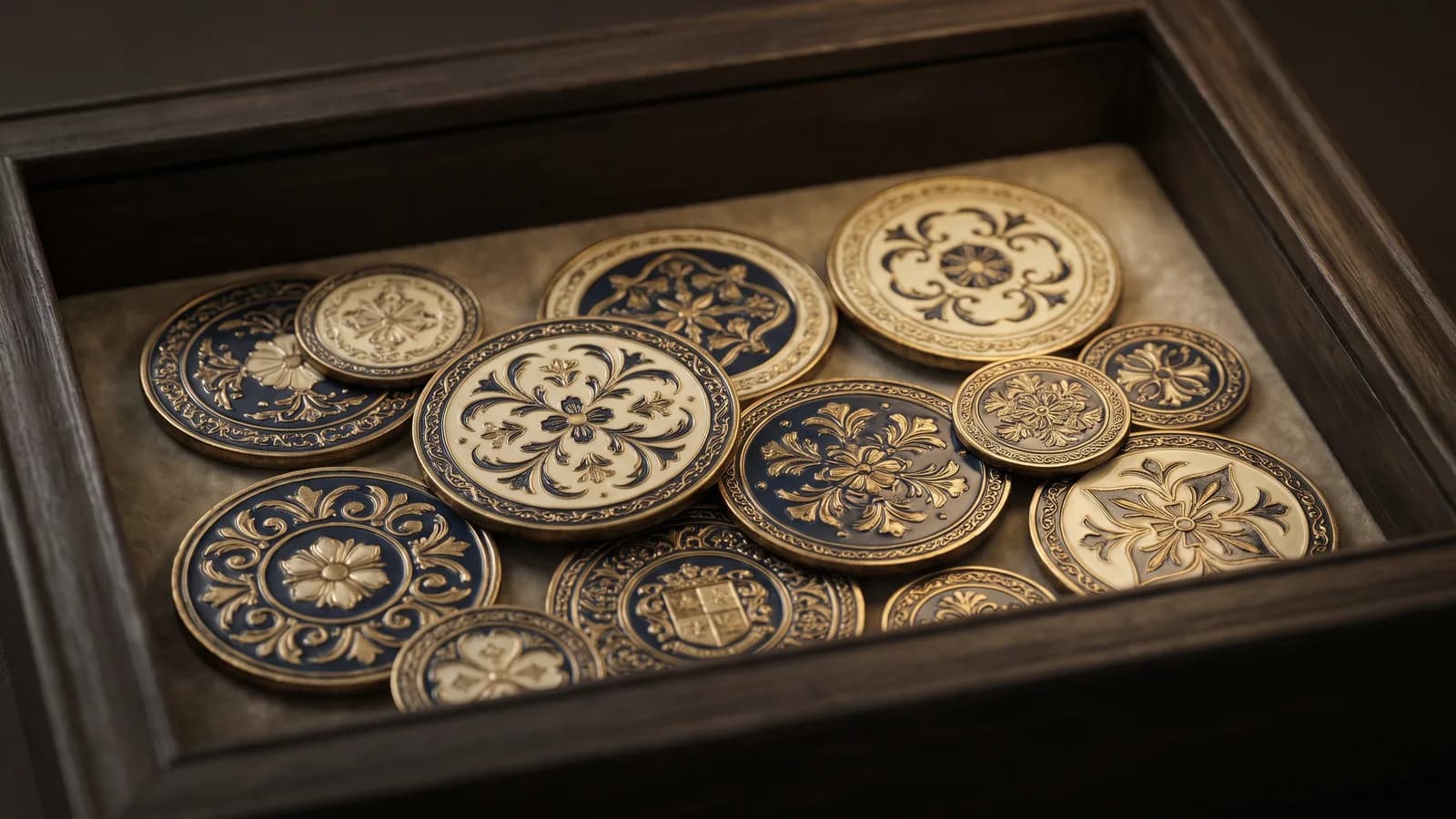
Most challenge coins are die-struck from base metal and often finished with colored enamel, giving them the raised designs and bright unit colors collectors recognize. Some are cast, plated, or cut into custom shapes, and modern examples can be quite elaborate.
Coins are issued by a wide range of authorities. Individual units and commands issue their own; so do federal agencies and, notably, the office of the president, whose presidential coins are a distinct collecting area. A commander may present a coin as informal recognition for good work, separate from the formal awards system.
Because a unit or leader controls its own designs and quantities, mintages are usually small and undocumented, which matters when judging scarcity later.
How They Differ From Official Medals and Coins
A challenge coin is not the same as an official military decoration or a government-issued coin. Medals are formal awards conferred under regulation for specific service or valor, with defined criteria and records.
Challenge coins, by contrast, are unofficial tokens of membership or informal recognition, and carrying one carries no rank or entitlement. They are also distinct from commemorative medals struck by mints, which are covered in the guide to collecting medals, and from privately struck exposition medals such as so-called dollars.
That unofficial status is part of the appeal for collectors, since it produced enormous variety with no central catalog.
What Drives Collector Value
Most challenge coins carry sentimental value or sell for only a few dollars, because they were made recently and in quantities collectors cannot easily gauge. Value rises with genuine scarcity, documented history, and provenance.
The strongest premiums attach to scarce historic unit coins from early eras, early presidential coins, and low serial-numbered pieces where numbering exists. Coins tied to a notable event, a specific person, or a small short-lived unit also draw more interest. Because there is no universal price catalog, hedged estimates and recent sales are the best guide.
The table below gives broad, hedged ranges rather than firm prices; condition, provenance, and demand can move any piece well outside them.
| Type | Typical range | What raises value |
|---|---|---|
| Modern unit or agency coin | A few dollars to about $20 | Documented issue, unusual shape, discontinued unit |
| Historic unit coin (early eras) | Tens to several hundred dollars | Verified early origin, provenance, small mintage |
| Presidential or high-office coin | Tens to several hundred dollars or more | Early issue, named administration, documented source |
How to Start Collecting and Display Them
A practical way to begin is to focus a collection: one branch, one command, presidential coins, or coins from your own service and family. A theme keeps buying disciplined and makes gaps easy to spot.
Store coins in acid-free flips, capsules, or foam-lined display cases, and keep the enamel from rubbing against hard surfaces. Many collectors use tiered racks or framed shadow boxes so designs stay visible without repeated handling.
Local shops can be a good source and a place to ask questions in person. Browse the directory of medals and tokens dealers or nearby collectibles shops to find sellers, and expect challenge coins to turn up in general exonumia lots.
A Note on Authenticity of Historic Coins
Treat any coin described as historic or rare with healthy skepticism, since age and provenance are exactly what create value and are also easy to overstate. Reproductions and later restrikes of desirable designs exist.
Ask for the story behind a piece: which unit, which era, and how the seller knows. Photographs of the original owner, unit records, or a documented chain of ownership matter far more than a coin simply looking old. Reputable dealers should be comfortable explaining what is known and what is assumed.
For a general overview of the tradition and its documented history, the American Numismatic Association and the Smithsonian National Museum of American History are useful starting points.
Frequently asked questions
Are military challenge coins worth money?+
Most are worth only a few dollars or carry mainly sentimental value. Scarce historic unit coins, early presidential coins, and low serial-numbered pieces can bring tens to several hundred dollars or more, depending on provenance and demand.
Where do challenge coins come from?+
The origin is debated. A popular story dates the practice to a World War I aviator, but that account is hard to verify. The first well-documented unit coins appeared in the Korean and Vietnam eras.
What is a coin check?+
It is a social tradition in which a member produces a challenge coin and everyone present must produce theirs. By custom, anyone who cannot buys a round, and if all produce a coin the challenger buys instead.
How are challenge coins different from medals?+
Medals are formal awards conferred under regulation for specific service or valor. Challenge coins are unofficial tokens of membership or informal recognition, with no rank, entitlement, or central issuing authority.
How can I tell if a historic challenge coin is genuine?+
Look for provenance rather than appearance: the unit and era, how the seller knows, and any documentation or original-owner history. Reproductions of desirable designs exist, so a coin looking old is not proof on its own.