Love Tokens: Hand-Engraved Coins and Their Value
Love tokens are coins that an engraver smoothed on one or both sides and then hand-engraved with initials, a monogram, a name, a date, or a small scene, given as a keepsake or worn as jewelry. A dime is the classic host coin. They were popular in the United States from about the Civil War era through the turn of the 20th century. Simple initialed pieces commonly sell for about $20-$50, while elaborate engravings, gold hosts, and love-token jewelry bring considerably more. This guide explains what love tokens are, why they are collected as folk art rather than for the coin itself, what drives their value, and how to tell a genuine period piece from a modern engraved coin.
Key takeaways
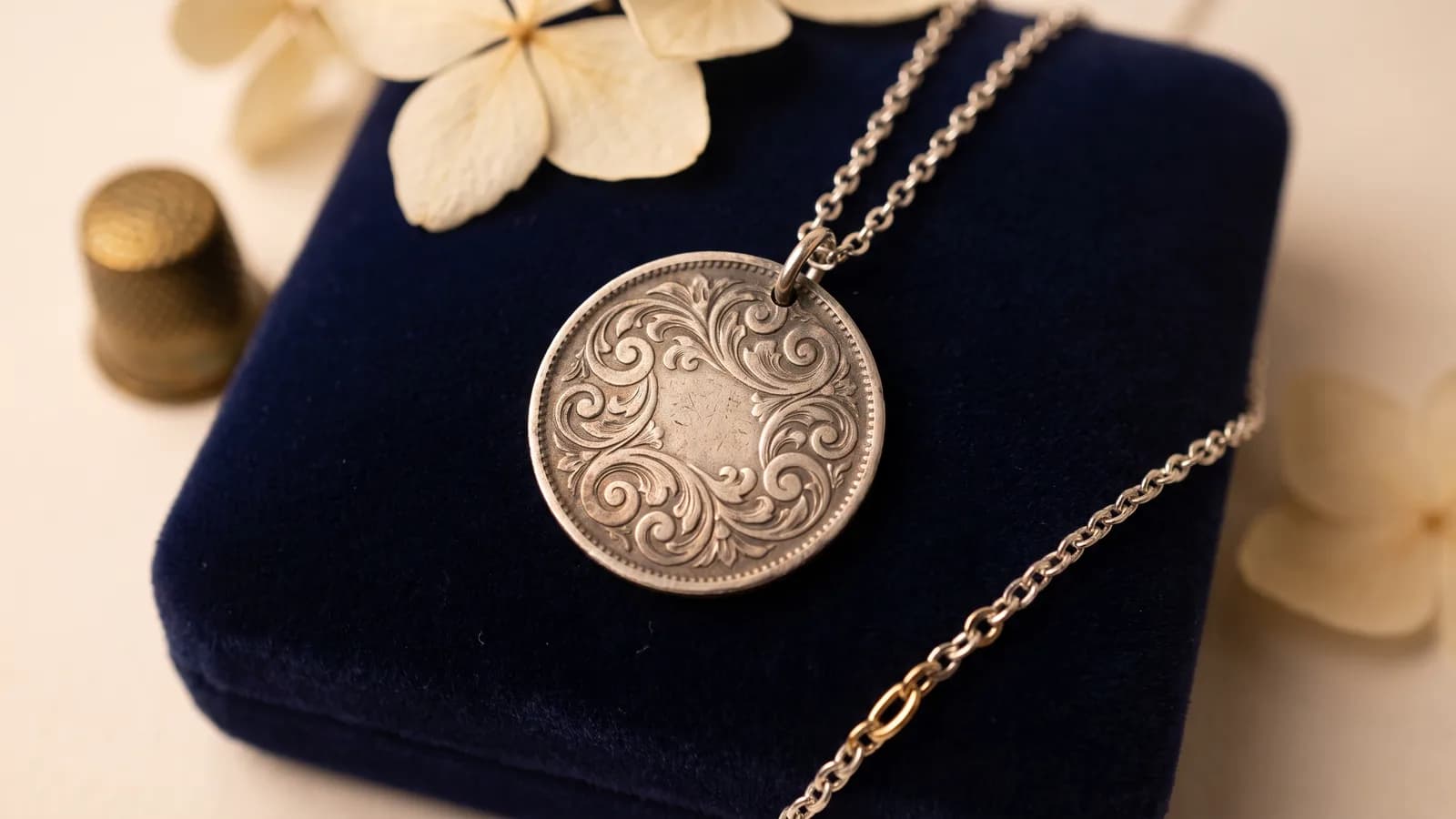
- A love token is a coin (a dime is the classic host) that an engraver smoothed on one or both sides and then hand-engraved with initials, a monogram, a name, a date, or a small scene.
- They were popular in the United States from roughly the Civil War era through the turn of the 20th century, given as keepsakes or worn as jewelry.
- Engraving normally destroys a coin's numismatic value, but love tokens are collected as folk art and personal history, not for the host coin.
- Simple initialed pieces commonly sell for about $20-$50; elaborate engravings, gold hosts, and love-token jewelry run much higher.
- Collectors organize through the Love Token Society, and telling a genuine period piece from a modern engraved coin is a core skill.
What Is a Love Token?
A love token is a coin that someone smoothed down on one or both faces and then hand-engraved with a personal design. The most common host is a U.S. dime, small enough to wear yet large enough to carry a monogram, though other denominations were used too.
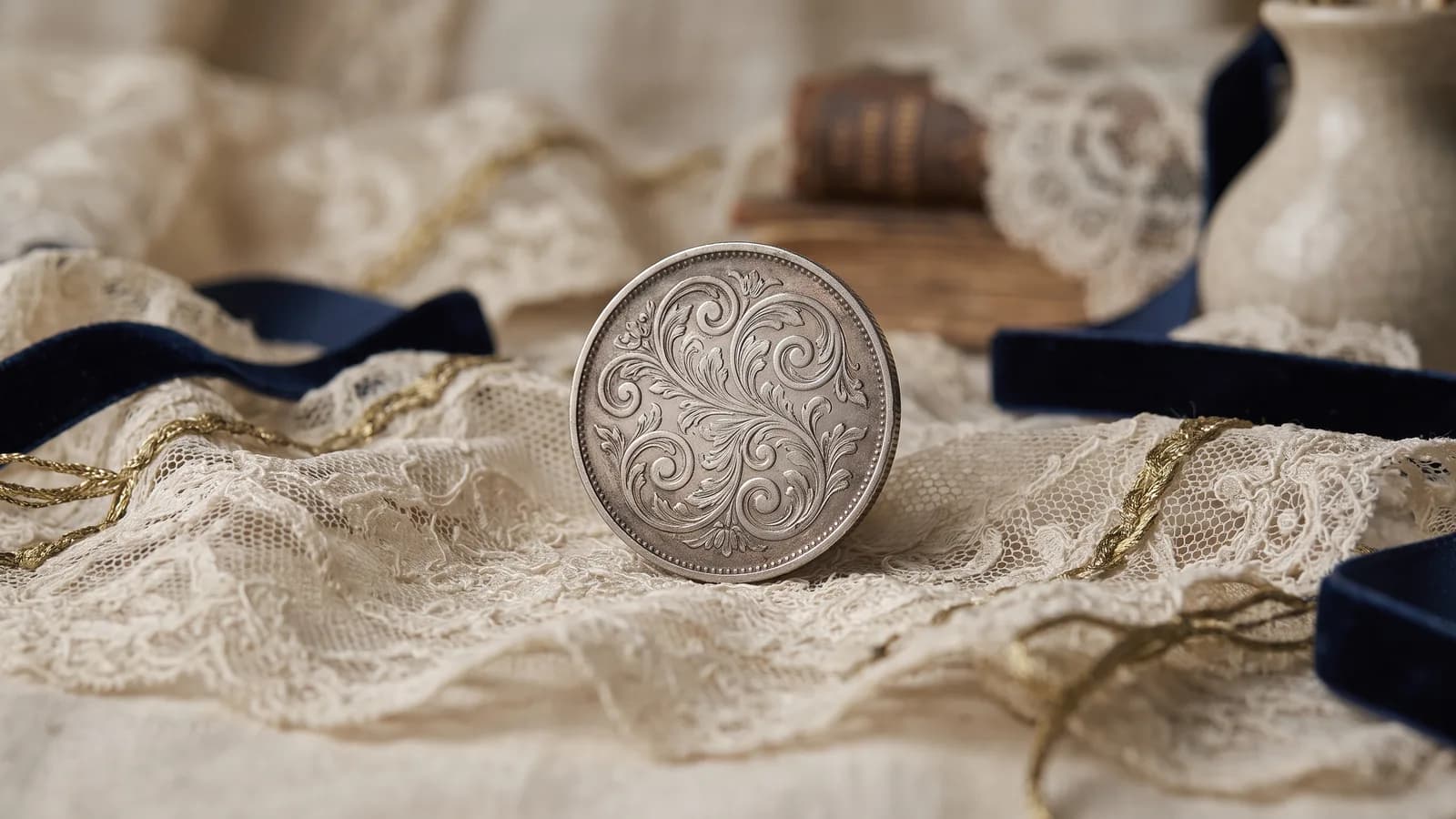
The engraving is the point. Typical designs include a set of initials, an intertwined monogram, a first name, a date, a hand or flower, or a small pictorial scene. The finished piece was given as a token of affection or friendship, kept as a memento, or mounted into jewelry.
Love tokens are one of several everyday families within exonumia, the collecting of numismatic items other than regular government coins and paper money. Unlike a trade token or a fare token, a love token was never meant to spend. Its value was sentimental.
When Were Love Tokens Made?
Love tokens were most popular in the United States from about the Civil War era through the turn of the 20th century. Hand-engraving a small coin was an affordable, personal gift in a period before mass-produced keepsakes were common.
The custom drew on an older European tradition of engraved coins given between sweethearts and family members, as summarized in the Wikipedia entry on love tokens. In America the fashion peaked in the late 1800s, when many were worn on bracelets, chains, and brooches. The practice faded in the early 20th century as tastes and jewelry styles changed.
Because they were made one at a time by hand, no two love tokens are exactly alike. That individuality is a large part of why collectors value them today.
Do Love Tokens Have Numismatic Value?
This is the most important nuance for anyone holding one. Engraving or otherwise altering a coin normally destroys its numismatic value, because the coin is no longer in original condition. A dime that would grade and sell as a collectible coin loses that standing once its surfaces are smoothed and cut.
Love tokens sidestep this because they are not collected for the host coin at all. They are collected as folk art and personal history, valued for the engraving, the craftsmanship, and the human story behind them. Museums treat them the same way, and the Smithsonian National Museum of American History holds engraved coins among its numismatic collections. The same logic explains why altering coins is otherwise discouraged, a point covered in our guide on why you should never clean coins.
So the value question is not what the underlying dime is worth. It is how appealing, elaborate, and well-documented the engraving is.
What Makes a Love Token Valuable?
Value is driven by the engraving and the host metal, not by the face value of the coin. As a rough guide, simple initialed pieces commonly sell for about $20-$50, while elaborate, gold, or jewelry pieces run much higher.
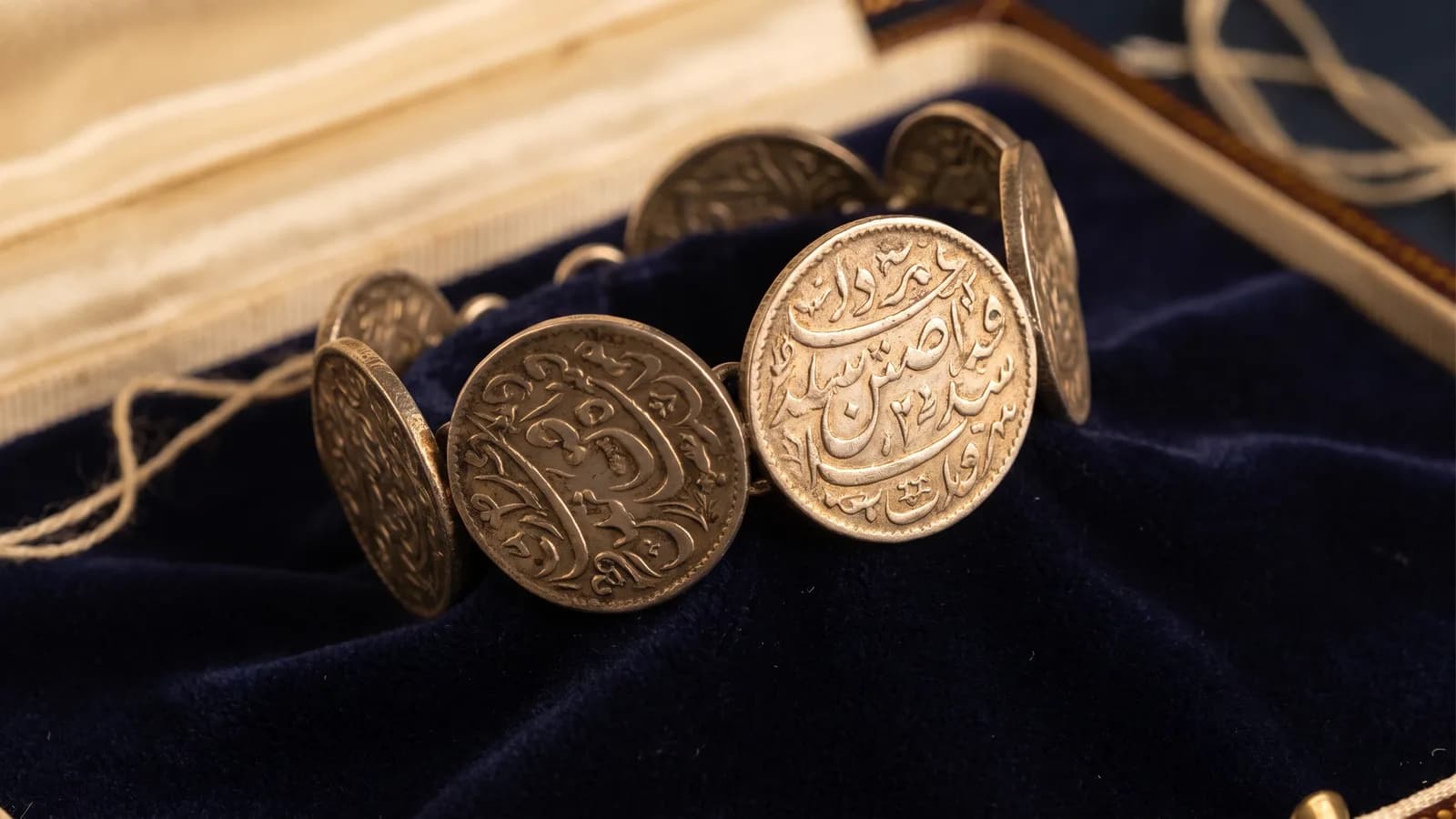
Several factors push a piece toward the upper end. Elaborate or pictorial engraving with multiple symbols or a scene is worth more than plain initials. A gold host coin carries both the appeal of gold and the scarcity of gold love tokens. A readable date or a full name adds documentary interest. Finished love-token jewelry, such as a bracelet assembled from many tokens or a mounted brooch, commands the most because it combines several engraved pieces with wearable craftsmanship.
The ranges below are typical, not guarantees. Condition, the quality of the engraving, and buyer demand all move the final price.
| Type | Typical range | Notes |
|---|---|---|
| Simple initials or monogram | $20-$50 | Silver host, plain design |
| Elaborate or pictorial scene | $50-$200+ | Multiple symbols, fine cutting |
| Gold host coin | $150-$600+ | Scarcer, gold appeal plus engraving |
| Love-token jewelry (bracelet, brooch) | $150-$1,000+ | Many tokens plus mounting and craftsmanship |
Love Token Jewelry
Love-token jewelry is a finished wearable piece built from one or more engraved coins, and it usually sits at the top of the market. The classic example is a charm bracelet strung with a dozen or more love tokens, but brooches, stickpins, cufflinks, and pendants are all found.
These pieces are prized because they bundle several hand-engraved tokens with the metalwork of the mounting. A bracelet of matching or themed tokens, or one that can be tied to a single family, is especially sought after.
When buying jewelry, look at both the tokens and the setting. Original period mountings add value, while later additions or replaced pieces reduce it. Because condition and completeness matter, a careful appraisal is worthwhile. You can find help through the numismatic appraisers in our directory.
How to Tell a Genuine Period Love Token from a Modern Engraved Coin
The key test is the host coin combined with the style of engraving. A genuine period love token sits on a coin from the love-token era or earlier, so a dime dated in the 1900s cannot be a Victorian-era piece. Check the date on any unengraved side and ask whether it fits the roughly 1860s to 1900s window.
Look at the engraving itself. Period hand-engraving shows the small irregularities of hand tools and often a fluid, decorative script consistent with 19th-century styles. Modern machine engraving tends to be more uniform, and modern novelty pieces are frequently cut into recent coins.
Wear is another clue. A token worn on a bracelet for decades will show softened high points and a loop or solder mark where it hung. Skills used to spot altered and fake material, described in our guide on how to spot fake coins and by grading services such as PCGS, apply here too. When a piece is expensive or ambiguous, get a second opinion before buying.
How to Collect and Care for Love Tokens
Collectors organize through the Love Token Society, a group focused on the study and collecting of these pieces. Many collectors specialize, for example by host denomination, by single initials, by full names they can research, or by pictorial designs.
Because these are hand-altered pieces, do not clean or polish them. Cleaning removes the toning and fine detail that give a love token its character and value. Store pieces in inert holders away from moisture, and handle them by the edges.
Love tokens sit alongside related folk-art families such as counterstamped coins and elongated coins, where a coin is deliberately altered to carry a mark or design. If you want to buy, sell, or research a piece in person, browse the medals and tokens and collectibles shops sections of our directory to find dealers who handle exonumia.
Frequently asked questions
What coin is usually used for a love token?+
The dime is the classic host coin because it is small enough to wear yet large enough for a monogram. Other denominations, including gold coins, were also used, and gold hosts are scarcer and more valuable.
Does engraving a coin ruin its value?+
For a standard collectible coin, yes. Engraving alters the surfaces and removes the coin from original condition. Love tokens are the exception because they are collected as folk art for the engraving, not for the host coin.
How much is a typical love token worth?+
Simple initialed pieces commonly sell for about $20-$50. Elaborate pictorial engravings, gold host coins, and finished love-token jewelry run much higher, with bracelets and brooches often reaching several hundred dollars or more.
How can I tell if a love token is genuine and old?+
Check the date on any unengraved side to confirm the host coin fits the roughly 1860s to 1900s era, and look for hand-engraving irregularities, period script, and honest wear. Modern novelty pieces are usually cut into recent coins with more uniform machine work.
Where can I sell a love token or get one appraised?+
A dealer who handles exonumia and folk art is your best option. Browse the medals and tokens and collectibles shops sections of our directory, or use a numismatic appraiser for jewelry and higher-value pieces.