
Coin Shows: The Complete Guide to Buying, Selling, and Grading
A coin show is a temporary marketplace where dozens or hundreds of dealers gather to buy, sell, and trade coins, currency, and bullion under one roof. For collectors and sellers, a coin show is the single best place to compare prices, find specific coins, sell a collection to competing buyers, and even get coins professionally graded on the spot. This guide explains how a show works, exactly what you can do there, what to bring, how to negotiate, and which 2026 shows are worth the trip.
Key takeaways
- A coin show is a temporary marketplace where many dealers set up tables on a 'bourse' floor to buy, sell, and trade coins, currency, and bullion.
- Shows are the best place to compare many offers at once — walk the floor, get several quotes, and you gain real leverage whether buying or selling.
- Major grading services like PCGS and NGC accept on-site submissions at large shows, so you can hand off coins for certification without mailing them.
- Bring your sorted coins, a price reference, a loupe, photo ID, and a plan; admission is often free or a few dollars, and most dealers expect polite negotiation.
- The biggest 2026 U.S. shows include FUN (Orlando, January), the ANA World's Fair of Money (Pittsburgh, August), and regional expos throughout the year.
What is a coin show?
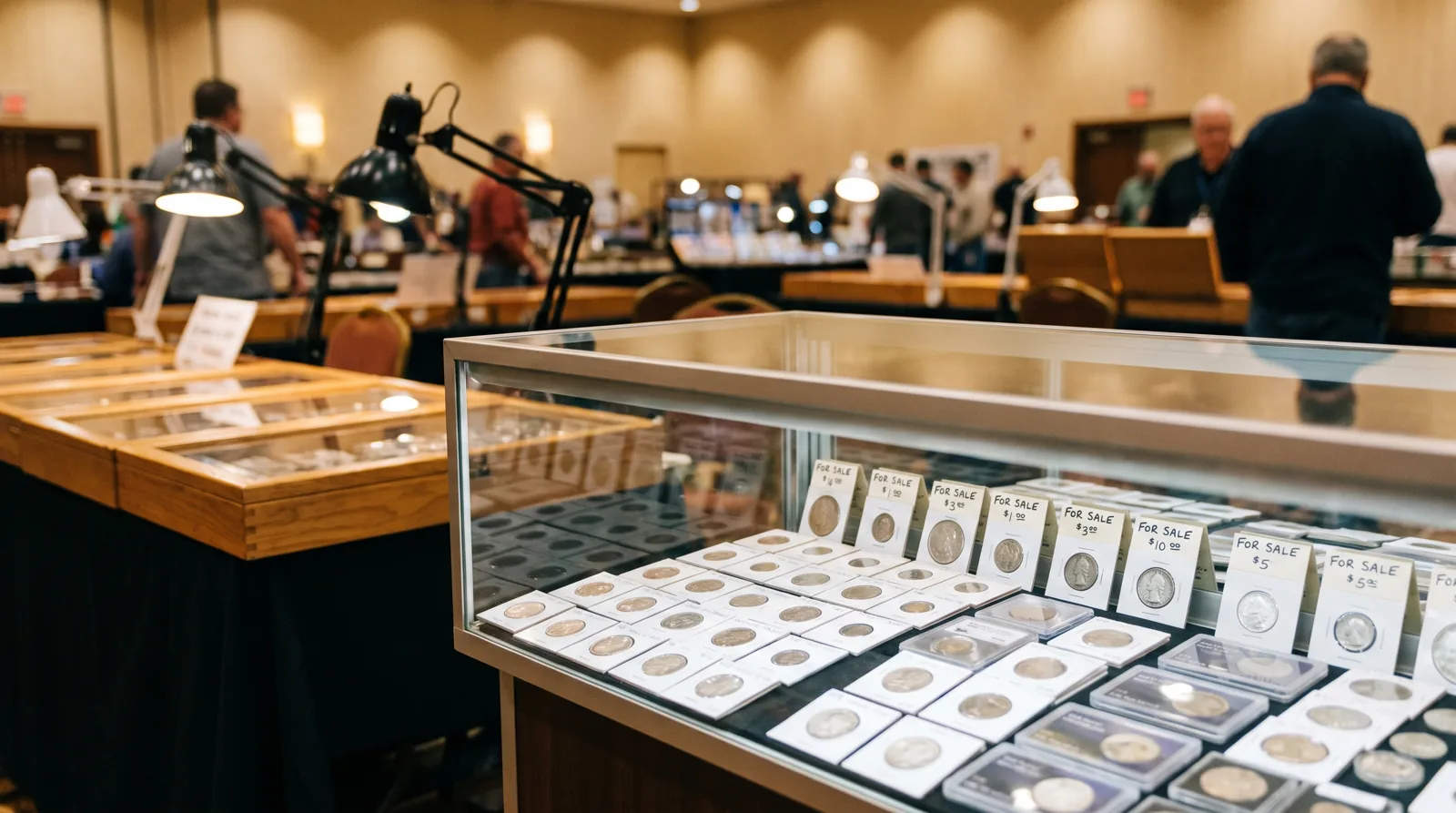
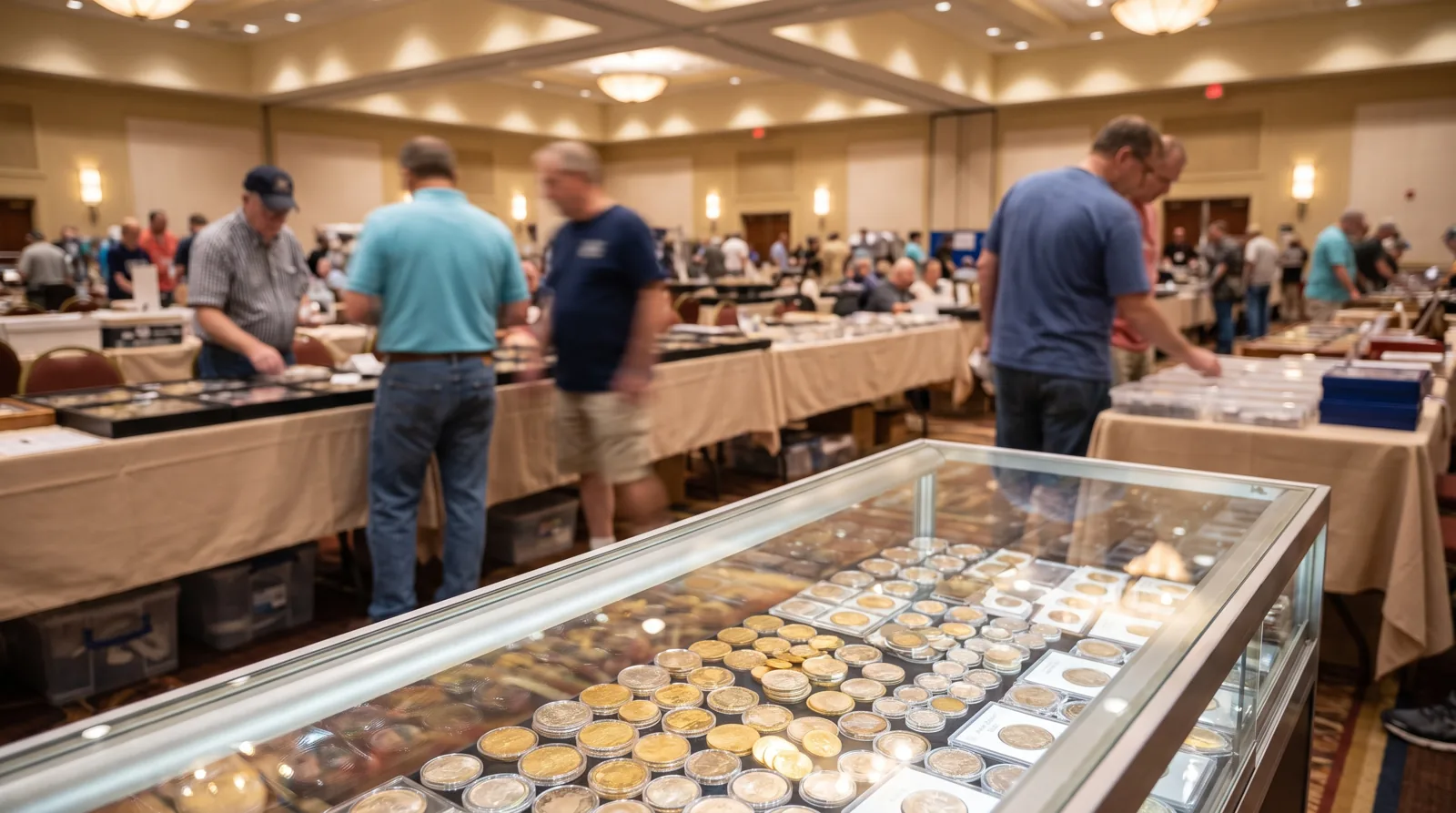
A coin show is an event where many coin dealers set up tables in one large hall — called the bourse floor — to do business with the public and each other. They range from small local club shows with a dozen tables to massive national conventions with hundreds of dealers and millions of dollars in inventory.
For a collector, that concentration is the whole point: instead of visiting one shop, you can walk past dozens of dealers in an afternoon, compare prices, and find material you'd never see in a single store. The American Numismatic Association sanctions many of the largest shows and is a good starting point for understanding the hobby.
How does a coin show work?
Dealers rent tables on the bourse floor and display their inventory in locked cases. You walk the aisles, browse, ask questions, and buy or sell directly across the table. Admission is often free or a few dollars, and you can come and go.
Most shows run two to four days, with a dealer-only setup period before public hours. Larger shows add auctions, educational talks, club meetings, and exhibits. There's no obligation to buy — plenty of people attend just to learn and look.
What can you do at a coin show?
A show is a one-stop venue for almost everything in the hobby. The table below sums up the main activities.
| Activity | What it looks like |
|---|---|
| Buy coins | Compare many dealers' inventory and prices in one place |
| Sell coins | Get competing offers from multiple buyers the same day |
| Get coins graded | Submit to PCGS or NGC at their on-site tables |
| Get an opinion | Ask dealers to identify, authenticate, or roughly value a coin |
| Learn | Attend talks, meet clubs, and view exhibits |
How do I buy coins at a coin show?
Walk the whole floor before you buy. Prices for the same coin can vary between dealers, so comparing a few cases first tells you what's fair and where the better deals are. When you find a coin you want, ask the dealer their best price — modest negotiation is expected, especially on collectible (non-bullion) coins.
Buy certified coins from PCGS or NGC holders when you can, since the grade is guaranteed, and check raw coins carefully. Our guide to what your coins are worth helps you judge a fair asking price before you commit.
How do I sell coins at a coin show?
Selling at a show is where the competition works in your favor. Bring your coins sorted and organized, then take them to several dealers for offers — because buyers are side by side, you can compare quotes in minutes and sell to the highest bidder.
Know roughly what you have first so you can't be lowballed; read what to know before selling a coin collection beforehand. For bullion and common silver, confirm the offer tracks the current spot price. Don't feel rushed — a reputable buyer will explain their offer and let you shop it around.
Can I get coins graded at a coin show?
Yes — at larger shows, the major grading services set up tables and accept submissions on site, so you can hand over coins for certification without mailing them. Some shows even offer expedited, while-you-wait grading for an extra fee.
This is one of the biggest advantages of a show for serious coins: you avoid shipping risk and can talk to the graders directly. See coin grading explained for whether a coin is worth submitting in the first place.
What should I bring to a coin show?
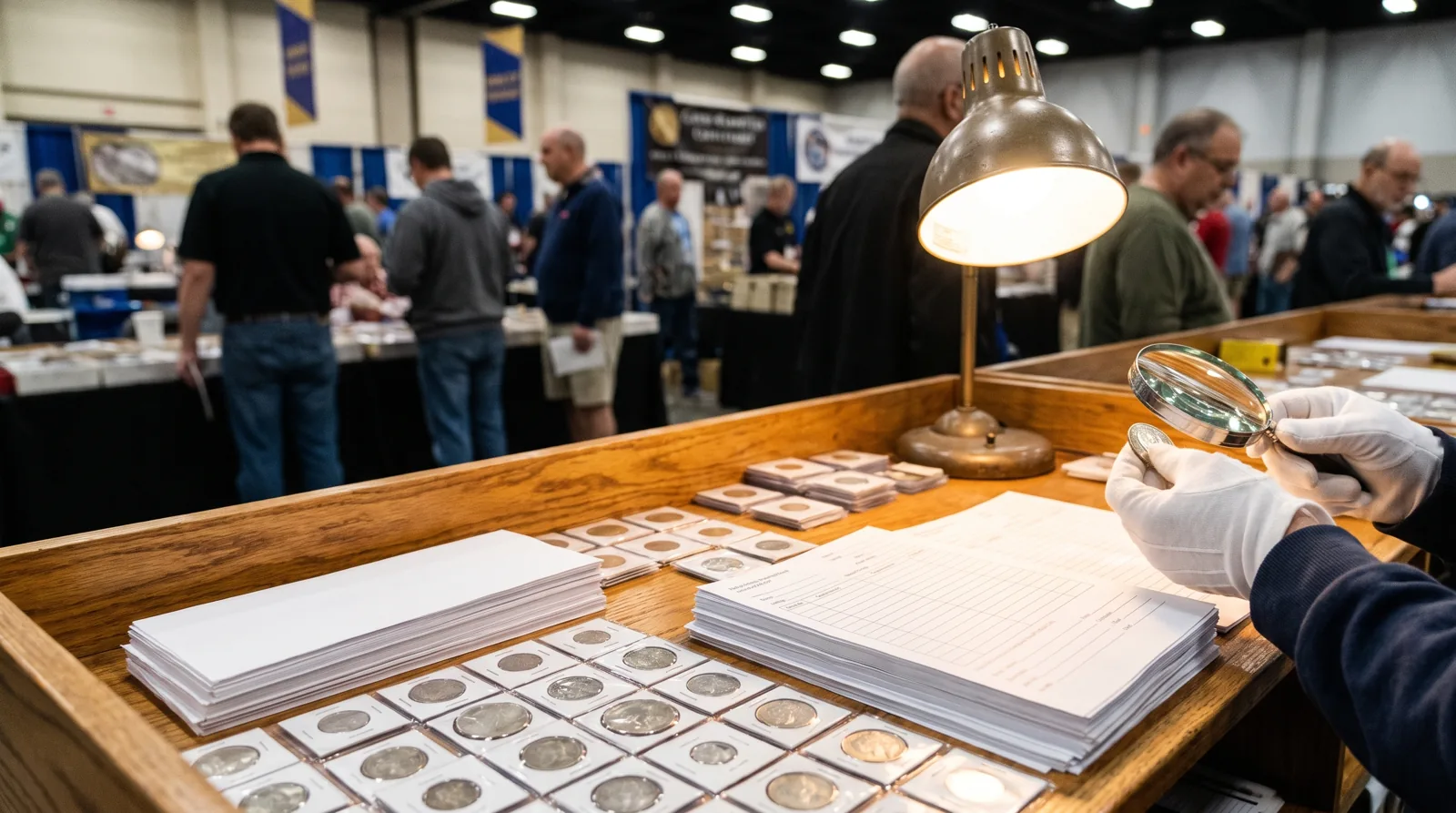
Pack light but smart. The essentials: a magnifying loupe, a small notebook or your phone for prices, a current price reference, photo ID, and cash or a card. If you're selling, bring your coins sorted into groups with any paperwork or grading slabs.
A want-list of dates and varieties you're chasing keeps you focused in a sea of inventory, and a small flashlight helps you examine coins under case glass.
How do I negotiate, and what's the etiquette?
Be polite, be direct, and ask before handling. Always ask permission before picking up a coin, and hold it over the table or a soft pad by the edges — never over a hard floor. To negotiate, simply ask 'what's your best price?' rather than naming a lowball figure.
Bullion has thin margins and little room to move; collectible coins have more. Dealers respect informed, courteous buyers and sellers, and a good relationship at a show can pay off for years.
Is it safe to carry coins and cash at a show?
Shows are generally safe and well-secured, with guards at major events, but use common sense. Keep cash and valuable coins close and out of sight, don't flash large sums, and be aware of your surroundings in the parking lot when leaving.
For a high-value sale, many sellers prefer to deal with established dealers they can look up afterward. If you're carrying a significant collection, consider going with someone and arriving during busy hours.
What are the biggest U.S. coin shows in 2026?
The U.S. show calendar runs all year, anchored by a few national events. The table lists the major 2026 shows worth planning around.
| Show | When (2026) | Where |
|---|---|---|
| FUN Show (Florida United Numismatists) | January 8–11 | Orlando, FL |
| Long Beach Expo | February 18–20 | Long Beach, CA |
| ANA National Money Show | February 26–28 | (ANA spring show) |
| Whitman Baltimore Spring Expo | March 5–7 | Baltimore, MD |
| Central States Numismatic Society | April 23–25 | (Midwest) |
| ANA World's Fair of Money | August 25–29 | Pittsburgh, PA |
How do I find a coin show near me?
Beyond the national events, regional and local club shows happen most weekends somewhere in the country. The American Numismatic Association maintains a show calendar, and local coin clubs and dealers post upcoming dates.
A nearby coin shop is often the best source for local show information — ask the staff which regional shows they set up at. We'll be publishing region-by-region show guides to make these easier to find.
Are coin shows good for beginners?
Absolutely. Shows are welcoming to newcomers, admission is cheap, and there's no pressure to buy. Walking the floor, asking dealers questions, and seeing coins in person is one of the fastest ways to learn the hobby.
Start by browsing, talk to a few friendly dealers, and consider joining a local club. If you're brand new, pair a show visit with our guide on how to choose a local coin shop to build a relationship with a dealer you trust.
Frequently asked questions
Do you have to pay to get into a coin show?+
Often it's free or just a few dollars. Small club shows are usually free; large national shows may charge modest admission, sometimes with free entry for members or on certain days.
Can I sell my coins at a coin show?+
Yes, and it's one of the best places to. Many dealers buy on site, so you can get competing offers in one afternoon. Bring coins sorted and know roughly what you have so you can compare quotes confidently.
Can I get coins graded at a coin show?+
At larger shows, yes — PCGS and NGC accept on-site submissions, sometimes with while-you-wait service for a fee. It saves shipping and lets you talk to the graders directly.
Is it OK to negotiate prices at a coin show?+
Yes, politely. Collectible coins usually have some flexibility; just ask the dealer for their best price. Bullion is priced close to spot with little room to move.
What should a first-timer bring to a coin show?+
A loupe, photo ID, cash or card, a price reference, and a want-list. If selling, bring your coins sorted into groups with any slabs or paperwork.