
Trade Dollar Value: The U.S. Coin Made for Asian Markets
The trade dollar was struck from 1873 to 1885 at a deliberately higher weight than other U.S. silver dollars — 420 grains of 90% silver — to compete with the Mexican peso and other foreign coins in Chinese and Asian trade markets. Common circulated examples sell for $80–$200 in well-worn grades; condition-quality business strikes and key-date proofs bring significantly more.
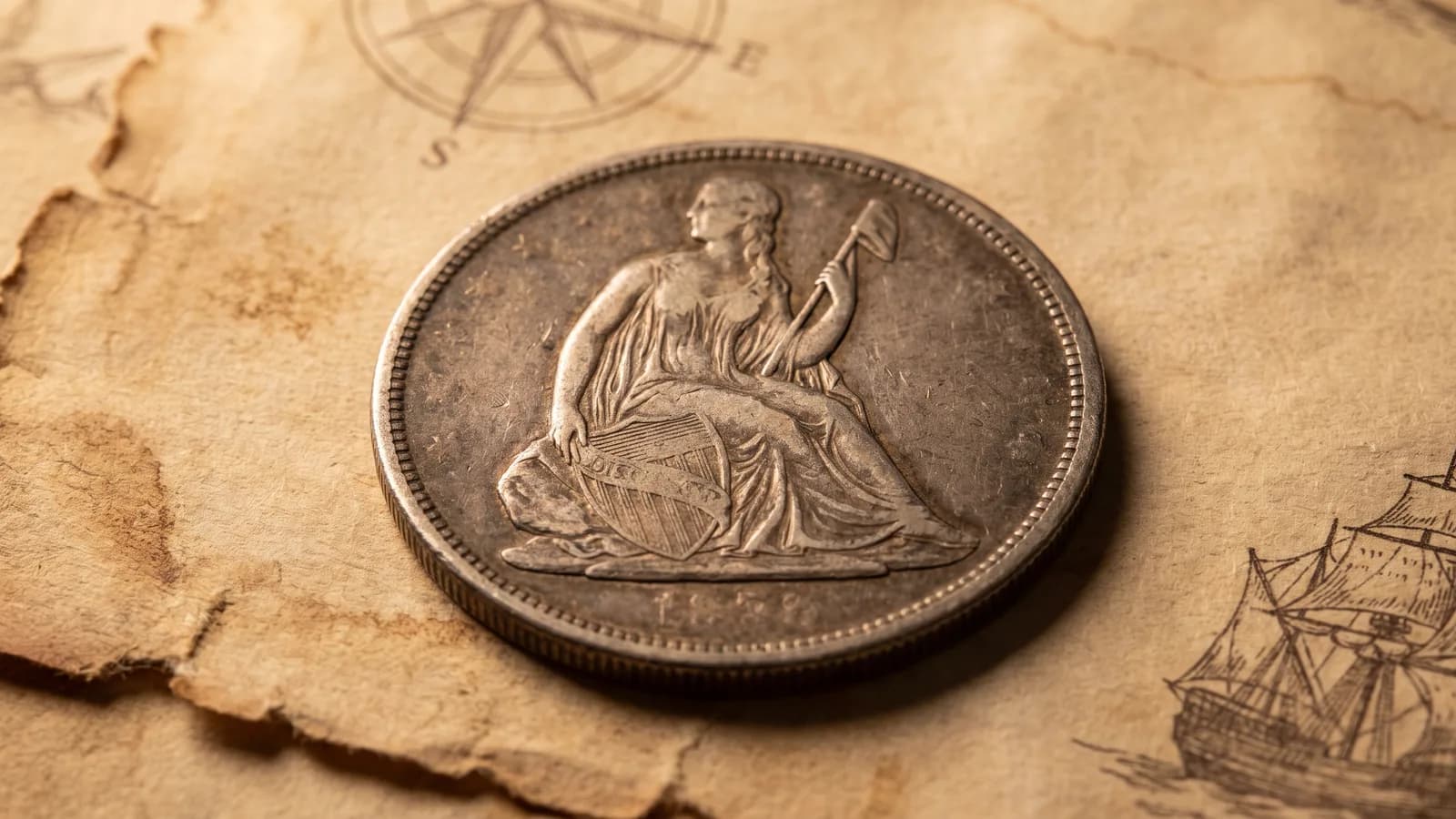
Key takeaways
- Trade dollars (1873–1885) were struck at 420 grains of 90% silver — heavier than the Morgan dollar — specifically to compete in Asian trade.
- Business strikes were made from 1873 to 1878; proofs were made every year through 1885.
- Common circulated business strikes typically sell for $80–$200 in grades Good through Very Fine.
- The 1884 and 1885 trade dollars are proof-only dates of extreme rarity — approximately 10 and 5 pieces known, respectively.
- Despite being demonetized in 1876, trade dollars regained legal tender status in the United States in 1965.
Why Did the U.S. Mint Create the Trade Dollar?
In the early 1870s, U.S. merchants trading with China faced a problem: the standard Morgan-weight silver dollar was lighter than the Mexican peso, and Chinese merchants preferred the heavier peso for large transactions. Congress authorized the trade dollar in 1873 with an elevated weight (420 grains vs. the standard dollar's 412.5 grains) specifically to make the coin competitive in Asian markets.
The trade dollar was legal tender in the United States when issued, but Congress quietly withdrew that status in 1876 once domestic silver miners began flooding the market with coins redeemed at face value. Trade dollars circulated heavily in Asia while simultaneously becoming an unwanted nuisance domestically — a coin with a strange dual biography.
What Is a Trade Dollar Worth Today?
Common-date business strikes (Philadelphia, Carson City, and San Francisco issues 1873–1878) in Good (G-4) to Very Fine (VF-20) condition typically sell for $80–$200. Extremely Fine examples of common dates run $150–$300. Mint State survivors are far scarcer — MS-62 common-date trade dollars bring $300–$600 or more.
Silver content is approximately 0.7876 troy ounces per coin (420 grains × 90% fine ÷ 480 grains per troy ounce). At mid-2020s silver prices, melt value is roughly $25–$28 — well below the numismatic value of even the most common date. Check exact current melt with our precious metals calculator.
Business Strikes vs. Proofs: Two Different Coins
Business-strike trade dollars were made for circulation from 1873 to 1878 at the Philadelphia, Carson City (CC), and San Francisco (S) mints. After 1878, Congress cut off business-strike production — but the Philadelphia Mint continued producing proof trade dollars for collectors annually through 1885.
This creates an unusual collecting situation: the 1879–1883 dates exist only as proofs in moderate quantities (roughly 900–1,500 pieces per year), while the 1884 and 1885 are proof-only issues with approximately 10 and 5 examples known, respectively — placing them among the rarest U.S. coins of any type.
Key Dates and the Legendary 1884 and 1885
Among business strikes, the 1878-CC and 1878-S have lower surviving populations than their mintage figures suggest (many were melted or heavily worn in Asian circulation). The 1875-CC and early San Francisco issues command premiums in high grades. Among proof issues, the 1884 (approximately 10 known) and 1885 (approximately 5 known) are among the most famous rarities in all of American numismatics — genuine examples are verified and certified, and change hands at major auction houses for six figures when they appear.
If you encounter a coin labeled as an 1884 or 1885 trade dollar at a flea market or estate sale, treat it as a fantasy piece or counterfeit until verified by PCGS or NGC. Genuine examples almost never surface outside of major sales.
Chopmarked Trade Dollars: What Are They Worth?
Many trade dollars that circulated in Asia were stamped with chopmarks — punched characters or symbols applied by Chinese merchants and banks to verify a coin's silver purity and authenticity. Chopmarked examples are historically fascinating but are considered damaged in Western numismatic grading and sell at a significant discount — typically 30–60% below the equivalent unchopped coin.
Some collectors specifically seek chopmarked examples for their historical connection to Asian trade. If you have a chopmarked trade dollar, its story is compelling even if its U.S. numismatic value is suppressed.
How to Buy or Sell a Trade Dollar
For business strikes, buy certified coins if spending more than $150 — counterfeits and altered dates exist. For common circulated examples, a reputable local coin dealer or coin show is the right venue. Expect the dealer spread on raw circulated examples to be 25–40% below published retail.
For high-grade or proof examples, major auction houses provide the best prices. If you are selling an inherited or found trade dollar, get it appraised by a numismatic appraiser before accepting any offer — it is one of the series most likely to contain a valuable example in a collection accumulated decades ago.
Frequently asked questions
Is the trade dollar legal tender in the United States today?+
Yes. Legal tender status was restored in 1965 by the Coinage Act of that year, making trade dollars legal tender at their $1 face value. Their silver melt and numismatic values far exceed $1.
Why are chopmarked trade dollars worth less?+
In U.S. numismatic grading, chopmarks are treated as damage to the coin's surface, which reduces collectible value. However, they are historically significant and sought by some specialists, so chopmarked examples are not worthless — just discounted.
How much silver is in a trade dollar?+
A trade dollar contains approximately 0.7876 troy ounces of fine silver (420 grains at 90% purity). At current silver prices, check our [precious metals calculator](/tools/precious-metals-value-calculator) for today's melt value.
Are 1884 and 1885 trade dollars ever genuine?+
Yes, but they are extraordinarily rare — approximately 10 and 5 examples are confirmed, respectively. Any coin presented as an 1884 or 1885 trade dollar should be submitted to PCGS or NGC for authentication before any transaction.
Where is the best place to sell a trade dollar?+
Common circulated examples sell quickly to local coin dealers. High-grade or proof examples bring the strongest prices at major auction houses, where collectors bid competitively for quality trade dollars.