
American Gold Eagle: A Buyer's Guide
The American Gold Eagle is the United States Mint's flagship gold bullion coin, and it is one of the most widely traded gold coins in the world. Issued since 1986 in four sizes, it carries a full troy ounce (or fraction) of gold in a durable 22-karat alloy. This guide explains the sizes and gold content, why it is not pure gold, how premiums work, and how it compares to the pure Gold Buffalo — so you can buy with confidence.
Key takeaways
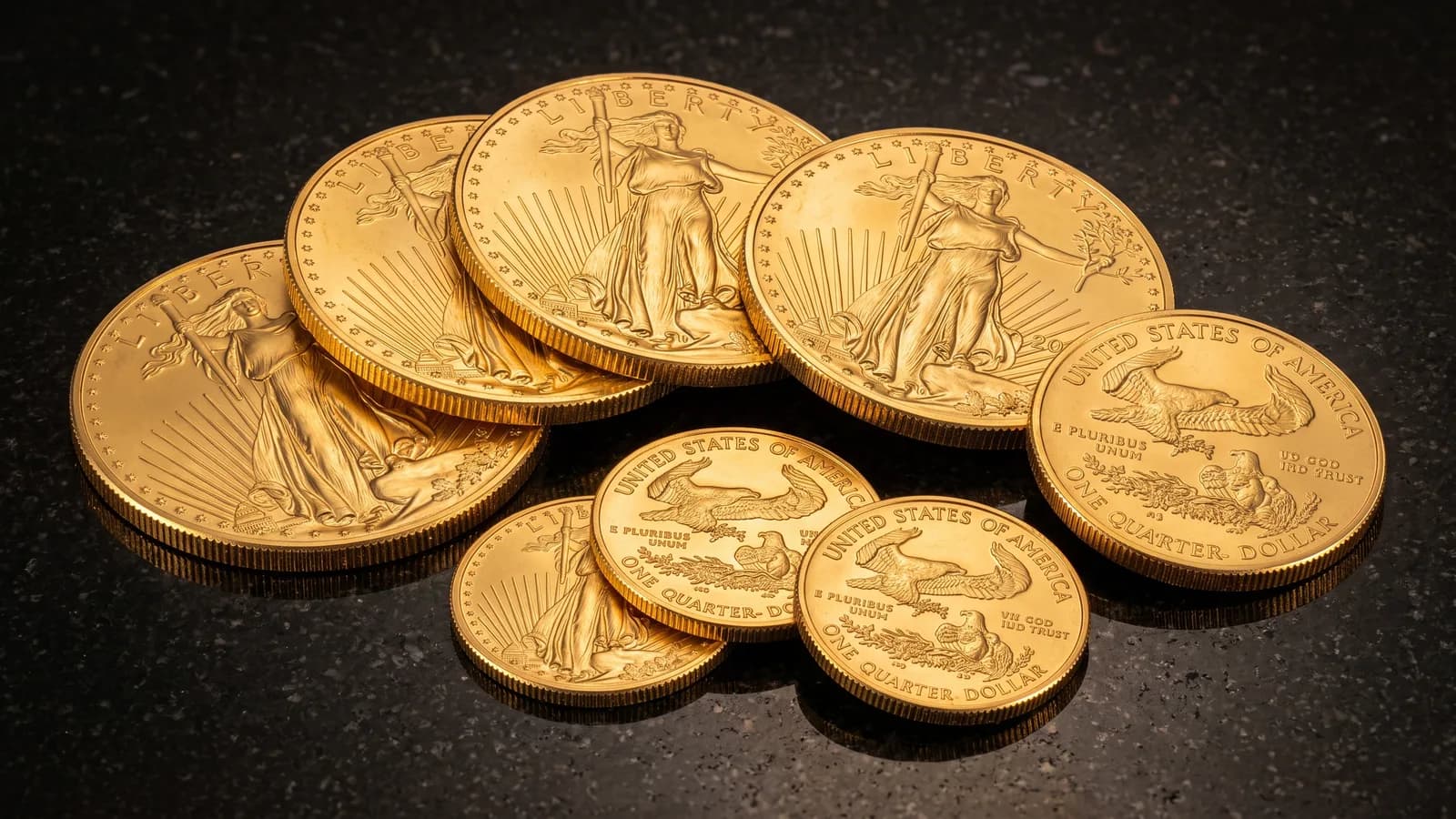
- The American Gold Eagle is the U.S. Mint's official gold bullion coin, issued since 1986 in 1, 1/2, 1/4, and 1/10 troy ounce sizes.
- Gold Eagles are 22-karat (about 91.67% gold) alloyed with silver and copper for durability, but each contains its full stated weight in pure gold.
- A one-ounce Gold Eagle contains exactly one troy ounce of gold and weighs slightly more because of the alloy.
- You pay the gold spot price plus a premium, and smaller fractional coins carry higher premiums per ounce.
- For pure 24-karat gold, the American Gold Buffalo is the Mint's .9999 alternative.
What is an American Gold Eagle?
The American Gold Eagle is the official gold bullion coin of the United States, struck by the U.S. Mint since 1986. It is backed by the government for its weight, content, and purity, which is part of why it trades so easily worldwide.
The obverse uses Augustus Saint-Gaudens' classic Liberty design; the reverse showed a family of eagles from 1986 to 2021 and a redesigned eagle portrait from mid-2021 on. Its sister coin in silver is covered in our American Silver Eagle guide.
What sizes does the Gold Eagle come in?
Gold Eagles are made in four sizes, each containing a stated amount of pure gold and carrying a nominal face value (which is symbolic — the gold is worth far more). The table lists them.
Smaller coins let you buy gold in smaller increments, which is convenient but costs more per ounce in premium.
| Size | Pure gold content | Face value |
|---|---|---|
| 1 oz | 1 troy oz | $50 |
| 1/2 oz | 0.5 troy oz | $25 |
| 1/4 oz | 0.25 troy oz | $10 |
| 1/10 oz | 0.10 troy oz | $5 |
Is the Gold Eagle pure gold?
Not quite — it is 22-karat, about 91.67% gold, with the balance silver and copper added for durability so the coins resist scratches and wear. Importantly, the alloy is extra metal: a one-ounce Gold Eagle still contains a full troy ounce of pure gold and simply weighs a bit more overall.
So 22-karat does not mean less gold than stated; it means added alloy on top of the stated gold weight. If you want a pure coin, the next section covers the 24-karat option.
How does the Gold Eagle compare to the Gold Buffalo?
The American Gold Buffalo is the U.S. Mint's .9999 (24-karat) pure gold coin, introduced in 2006, while the Gold Eagle is 22-karat. Both one-ounce coins contain one troy ounce of gold; the difference is purity and durability.
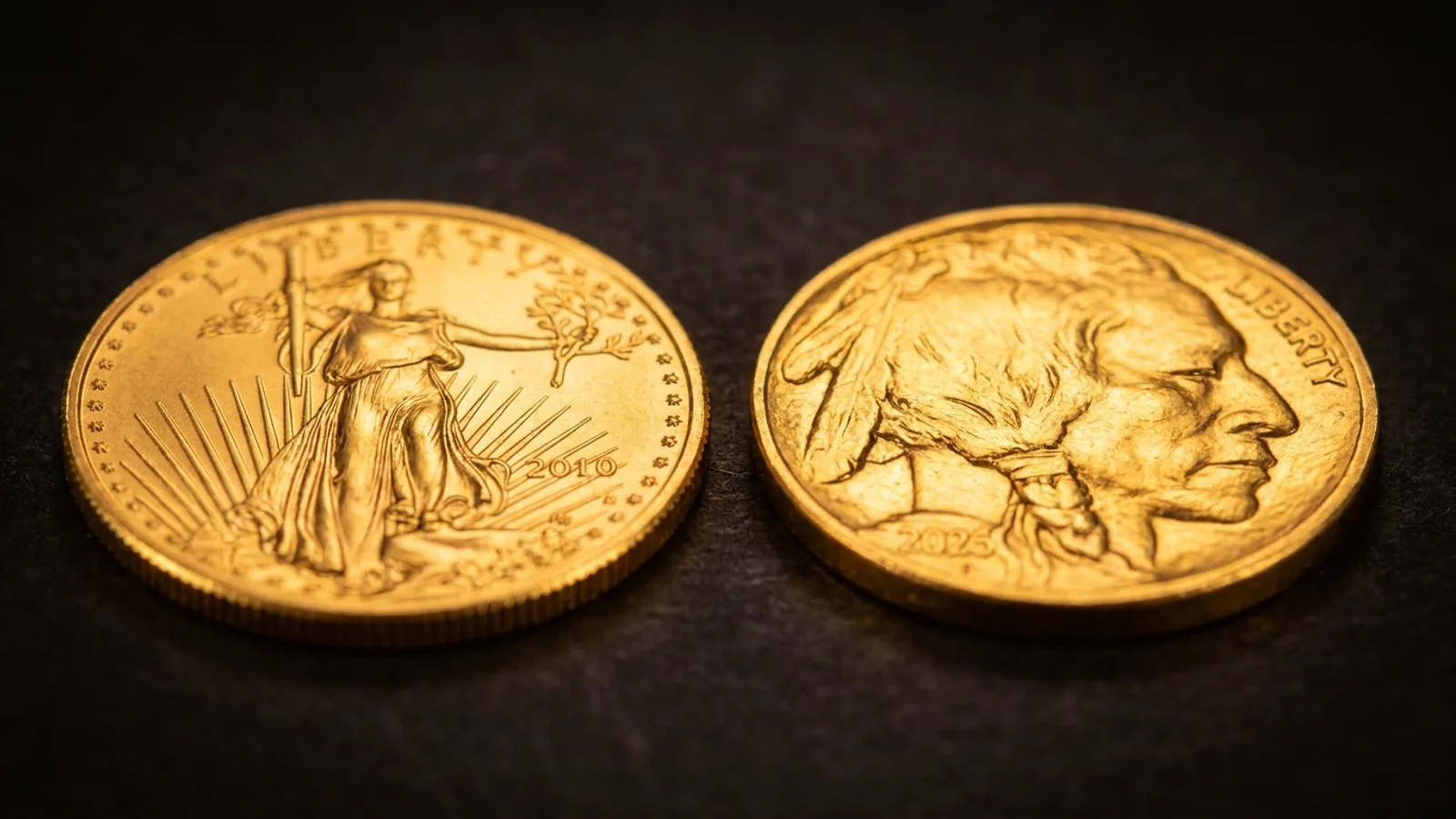
The 22-karat Eagle is more scratch-resistant; the 24-karat Buffalo is softer but pure. Both are popular and IRA-eligible; the choice comes down to preference and premium.
| Feature | Gold Eagle | Gold Buffalo |
|---|---|---|
| Purity | 22-karat (91.67%) | 24-karat (99.99%) |
| Gold content (1 oz coin) | 1 troy oz | 1 troy oz |
| Durability | More scratch-resistant | Softer, pure gold |
| Introduced | 1986 | 2006 |
How much does a Gold Eagle cost?
You pay the current gold spot price for the coin's gold content plus a premium — the dealer's markup over spot. Premiums vary with the coin's size, demand, and whether it is bullion or a collector version, and fractional coins carry a higher premium per ounce than the one-ounce coin.
Estimate the gold value with our gold coin melt calculator, then compare a dealer's price to that figure. Our how to buy gold guide covers premiums and spreads in detail.
Bullion, proof, or burnished?
The Mint issues Gold Eagles in three formats: standard bullion coins (bought for metal value), proof coins (mirror finish, sold to collectors at a higher premium), and burnished uncirculated coins (a special finish, also collector-oriented).
For stacking gold by value, standard bullion Eagles are the most cost-effective. Proof and burnished coins are collectibles and carry premiums beyond their gold content.
How do you buy and store Gold Eagles safely?
Buy from established bullion dealers and reputable coin shops, and compare the total price to the live gold value. Be cautious with sellers pushing 'rare' or heavily marked-up versions of common bullion coins — our questions to ask before buying gold or silver guide lists what to ask.
Store coins securely and keep them in their original condition; see how to store and protect your coins. When you sell, gold and silver buyers and bullion dealers will price Eagles on their gold content plus the going premium.
Frequently asked questions
How much gold is in a 1 oz American Gold Eagle?+
Exactly one troy ounce of pure gold. Because the coin is 22-karat, it also contains a small amount of silver and copper alloy, so it weighs slightly more than one ounce overall.
Is the American Gold Eagle pure gold?+
No. It is 22-karat, about 91.67% gold, with silver and copper added for durability. The alloy is extra metal, so the coin still holds its full stated weight in pure gold.
Should I buy a Gold Eagle or a Gold Buffalo?+
The Eagle is 22-karat and more scratch-resistant; the Buffalo is 24-karat pure gold but softer. Both one-ounce coins contain an ounce of gold and are IRA-eligible, so it comes down to preference and premium.
Why does a Gold Eagle cost more than the spot price?+
You pay spot for the gold content plus a premium, the dealer's markup over spot. Premiums vary by size and demand, and fractional coins carry higher premiums per ounce.
Are American Gold Eagles a good investment?+
They are a widely traded, government-backed way to own physical gold. Like all bullion, their value tracks the gold price, so buy at a fair premium and view them as a long-term metal holding.