
Civil War Tokens: A Complete Collector's Guide
Civil War tokens are privately minted, cent-sized pieces (about 19mm, mostly copper) that circulated in the Northern states during the American Civil War as an unofficial stand-in for the federal cent. They appeared because wartime hoarding emptied the country of small change, and they were made from about 1861 to 1864, with the vast majority struck in 1863. This guide explains what a Civil War token is, the three main types, how they are cataloged with Fuld numbers, the R-1 to R-10 rarity scale, what they are worth, how they are graded, why they ended, and how to start collecting them safely.
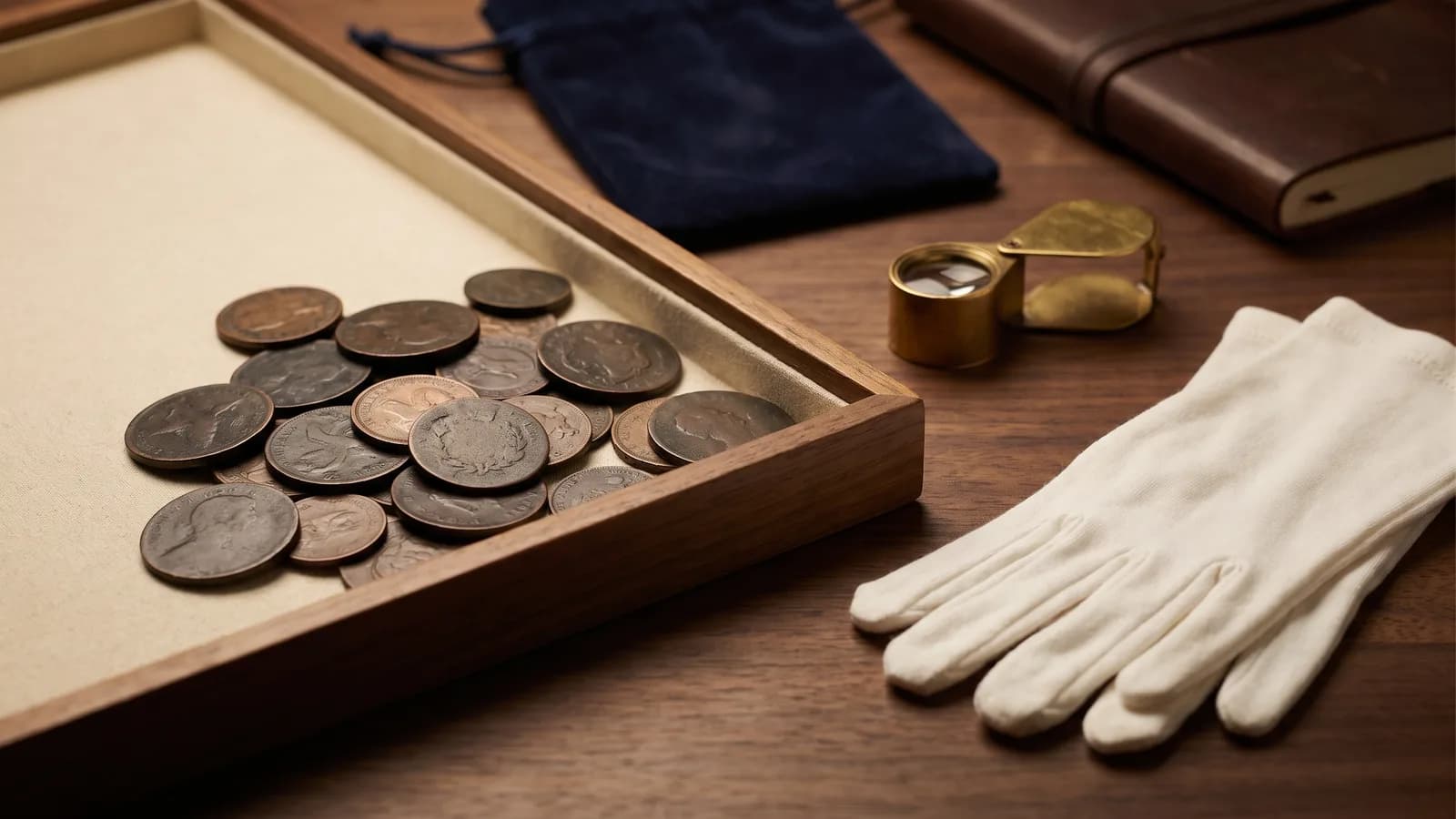
Key takeaways
- Civil War tokens are privately made, cent-sized pieces (about 19mm, mostly copper) that circulated in the North during 1861-1864, with the vast majority struck in 1863.
- They appeared because wartime hoarding drove federal small change out of circulation, and private die-sinkers filled the gap so merchants could make change.
- There are three types: patriotic tokens (slogans, no merchant name), store cards (a business name and city), and sutler tokens (issued to army regiments and by far the rarest).
- The Fuld reference system catalogs the tokens and ranks survival with an R-1 to R-10 rarity scale; common pieces run roughly $15 to $40, while true rarities reach the thousands.
- Owning and collecting Civil War tokens is legal today; a June 8, 1864 federal law (now 18 U.S.C. section 486) ended their production, and they are not legal tender.
What Is a Civil War Token?
A Civil War token is a privately made, cent-sized piece (roughly 19mm, usually copper or bronze) that circulated in the North during the Civil War and was accepted informally as one cent. It was never issued by the U.S. Mint and had no official legal-tender status.
These tokens looked and felt like the small cent people already used, which is exactly why merchants and customers accepted them. They were made by private die-sinkers and struck in large numbers, an estimated 25,000,000 in circulation by 1864, across roughly 7,000 to 8,000 or more varieties (some catalogs now list 8,500-plus). Despite that scale, third-party graders have certified only a few thousand, so most survivors trade raw.
The takeaway: a Civil War token is emergency small change, born of necessity, that became one of the most affordable and historically rich fields in American numismatics. To see where they sit among related pieces, browse the tokens and medals directory.
Why Did Civil War Tokens Appear?
Civil War tokens appeared because coin hoarding during the war drained circulating small change, leaving merchants unable to make change. Private tokens filled that vacuum.
As the war created uncertainty, people hoarded money in order of value. Gold vanished first, then silver, and eventually even the copper-nickel Indian Head cent disappeared as its metal value and its reliability made it worth holding. With no federal cents to be had, a shopkeeper could not complete an ordinary sale. Private die-sinkers responded by striking their own cent-sized pieces, which cost less to make than one cent of face value and circulated at par.
The result was a bottom-up, market-driven money supply. For background on the same coin-shortage dynamic in an earlier era, see the large cents and half cents guide.
When and Where Were They Made?
Civil War tokens circulated from about 1861 to 1864, with the overwhelming majority struck in 1863, and they were used almost entirely in the Northern states. The earliest examples appeared in autumn 1862.
The first widely cited issuer was H.A. Ratterman of Cincinnati, who put out tokens in late 1862. Production then exploded through 1863 as die-sinkers in the Northeast and Midwest met demand. Because the pieces served Northern commerce, they cluster in states like New York, Ohio, Illinois, Michigan, Indiana, Wisconsin, and Pennsylvania. Southern issues are rare.
In short, when you hold a Civil War token you are almost always holding a piece of 1863 Northern commerce.
The Three Types of Civil War Tokens
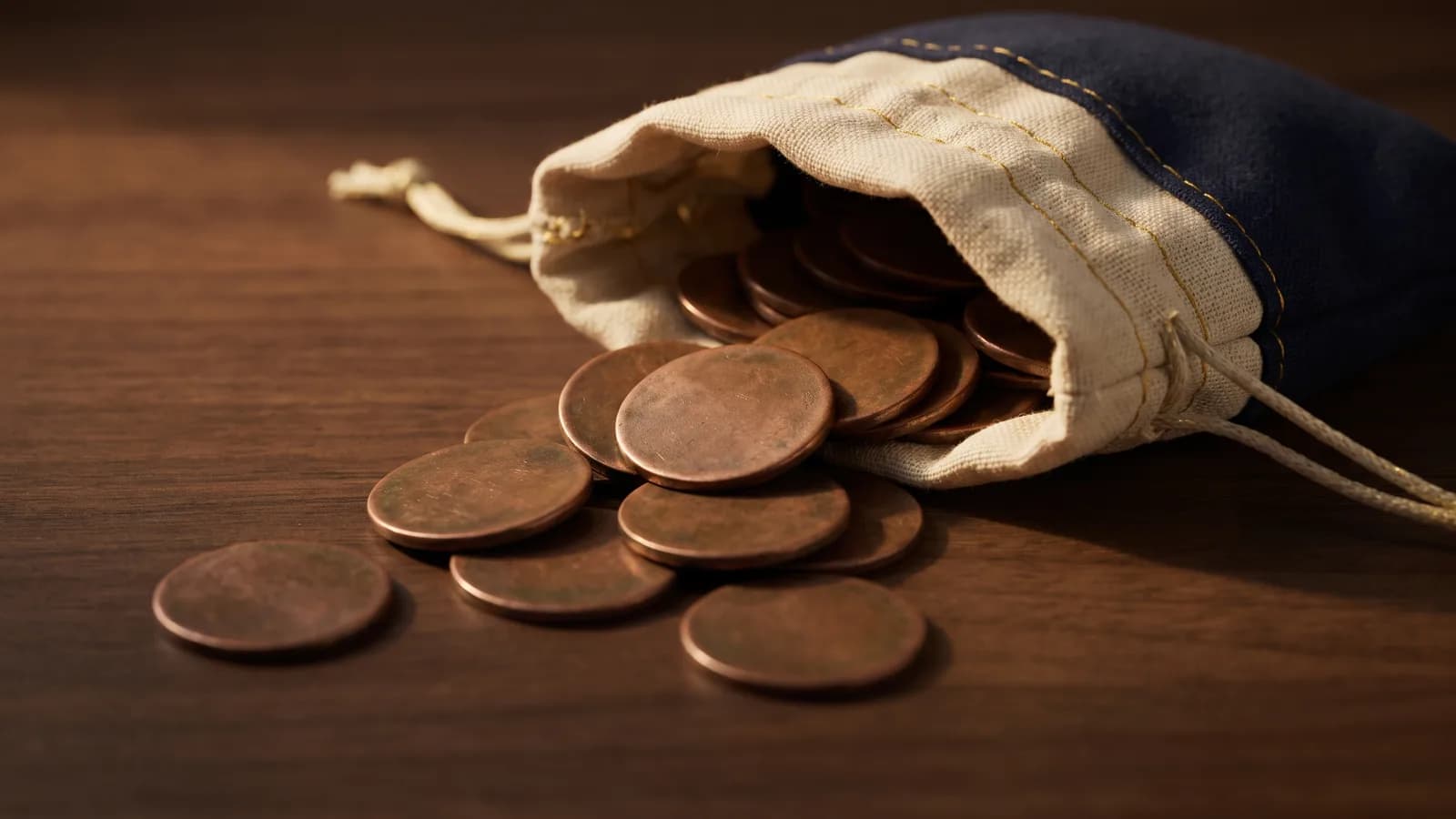
There are three types of Civil War token: patriotic tokens, store cards, and sutler tokens. The type you own is the single biggest clue to its history and often to its value.
A patriotic token carries a patriotic slogan or design (a flag, eagle, Indian head, Washington, a cannon, or lines like "The Union Must and Shall Be Preserved" and "Not One Cent") and shows no merchant name. A store card is a Civil War token that advertises a private business, naming the merchant and the city and state; a merchant who could afford two custom dies advertised on both sides. A sutler token was issued by a sutler, a licensed merchant attached to an army regiment, and bears a regiment designation; it was redeemable at the sutler's tent and is by far the rarest of the three.
For a deeper look at each family, read the guides on patriotic Civil War tokens and Civil War store cards.
| Type | What it shows | Relative availability |
|---|---|---|
| Patriotic | A slogan or patriotic design, no merchant name | Most common |
| Store card | A private business name plus city and state | Common overall, scarce cities cost more |
| Sutler | A regiment designation, redeemable at the sutler's tent | By far the rarest |
What Metals Were Used?
Most Civil War tokens are copper (often called bronze), but they were also struck in brass, copper-nickel, tin, German silver, and white metal, with rare off-metal strikes in silver and a few in hard rubber. The metal is part of how each piece is described and priced.
Because metal matters, the Fuld system adds a letter suffix to record it. The three you will see most often are "a" for copper, "b" for brass, and "f" for silver. Other letters cover nickel, German silver, white metal, and tin, but you rarely need to memorize beyond a, b, and f to get started. Off-metal silver strikes are scarce and carry strong premiums.
The practical point: note the metal when you record a token, because the same design in copper and in silver can be worlds apart in value.
How Are Civil War Tokens Cataloged?
Civil War tokens are cataloged with the Fuld system, developed by Melvin and George Fuld, which gives each variety a standard number. The format differs between patriotic tokens and store cards.
Patriotic tokens use an obverse-die number, a slash, a reverse-die number, and a metal letter. For example, Fuld 207/409a means obverse die 207, reverse die 409, struck in copper. Store cards use a geographic code: state, then a city number, then merchant letters, then a die letter. For example, NY-630-BD means New York, city number 630 (New York City), merchant "BD"; a metal or die suffix such as "a" may follow.
Getting the Fuld number right is the foundation of everything else, because rarity and value are assigned per variety. For a hands-on walkthrough, see how to identify Civil War tokens.
Understanding the Fuld R-1 to R-10 Rarity Scale
The Fuld rarity scale, maintained with the Civil War Token Society, rates each variety from R-1 (most common) to R-10 (unique) based on the estimated number of surviving pieces. Rarity is assigned to the specific variety, not to Civil War tokens as a group.
This scale is why two tokens that look almost identical can carry very different prices. A common R-1 patriotic type is easy to find, while an R-8 or higher variety may have only a handful of known survivors. Learn to read the scale before you chase a "rare" listing, and see the dedicated Civil War token rarity scale guide for examples.
| Rating | Estimated survivors | Description |
|---|---|---|
| R-1 | More than 5,000 | Common |
| R-2 | 2,000 to 4,999 | Common |
| R-3 | 500 to 1,999 | Common to slightly better |
| R-4 | 200 to 499 | Better date |
| R-5 | 75 to 199 | Scarce |
| R-6 | 20 to 74 | Very scarce |
| R-7 | 10 to 19 | Rare |
| R-8 | 5 to 9 | Very rare |
| R-9 | 2 to 4 | Extremely rare |
| R-10 | 1 known | Unique |
What Are Civil War Tokens Worth?
Most Civil War tokens are affordable: common patriotic tokens (R-1 to R-3) run about $15 to $40 in circulated grades, with attractive uncirculated common types roughly $50 to $150 and more with full red mint color. Scarcer varieties, sutler tokens, and off-metal silver strikes climb into the hundreds and low thousands.
Common store cards are priced similarly to patriotic pieces, though scarcer cities and merchants cost more. Across the market, most pieces sell somewhere between about $10 and $1,000, with true rarities (R-8 to R-10, off-metals, and famous pieces) reaching into the thousands. Rarity, metal, condition, and eye appeal all push a price up or down.
For a deeper pricing breakdown, see the Civil War token value guide and the roundup of the most valuable Civil War tokens. You can check current metal content for silver strikes with the precious metals value calculator.
| Situation | Circulated | Uncirculated |
|---|---|---|
| Common patriotic or store card (R-1 to R-3) | $15 to $40 | $50 to $150+ |
| Scarcer variety (R-6 and up) | $100s | $100s to low $1,000s |
| Sutler, off-metal silver, famous piece | $100s to $1,000s | $1,000s |
A Worked Example: How Number, Rarity, and Grade Set a Price
Price comes from combining the Fuld number, its rarity rating, the metal, and the grade. Change any one input and the value can shift dramatically.
Consider a well-known patriotic type, the Dix token, whose obverse shows a U.S. flag reading "The Flag of Our Union" and whose reverse quotes Treasury official John Adams Dix: "If any one attempts to tear it down shoot him on the spot." A common copper Dix token is R-1, and a circulated example commonly sells for about $10 to $40, while a choice uncirculated copper piece runs roughly $150 to $250. Now suppose the same design turned up as a scarcer die pairing rated R-6, or as an off-metal silver strike. A single Fuld-number difference can move a $50 token to $500, because you are now buying a variety with far fewer survivors.
The lesson: attribute the piece first, confirm the rarity of that exact variety, then grade it. Guessing at any step can cost or overpay hundreds of dollars.
How Are Civil War Tokens Graded?
Civil War tokens are graded on the standard numismatic scale by PCGS and NGC, and because most are copper, color designations apply: BN (brown), RB (red-brown), and RD (red). Full red (RD) commands large premiums.
Wear is only part of the story. Problems such as corrosion, porosity, cleaning, and environmental damage hurt value more than honest circulation wear, so an evenly worn brown token can be worth more than a bright but corroded one. If grading terms are new to you, start with coin grading explained, then read how to grade Civil War tokens for token-specific advice.
In practice, color and originality drive premiums as much as the numeric grade does.
Were Civil War Tokens Legal, and How Did They End?
Civil War tokens were a legal gray area while they circulated, and federal law ended their production in 1864. Owning and collecting them today is fully legal, though they are not legal tender.
Two laws closed the era. The Coinage Act of April 22, 1864 introduced a new bronze cent (95 percent copper) and the two-cent piece, which was the first U.S. coin to carry "In God We Trust," giving the public an official small coin again. A follow-up act of June 8, 1864, later codified as 18 U.S.C. section 486, made issuing private one-cent tokens a federal crime, which stopped new production. Many tokens had already hedged their legal risk by reading "Not One Cent," since the word "not" gave cover against laws about imitating federal coin.
So the tokens you collect now are lawful artifacts of a brief, specific window, not counterfeits and not spendable money. For the historical record, see the U.S. Mint's history and the Wikipedia entry on Civil War tokens.
How and Where to Collect Civil War Tokens
You can collect Civil War tokens through coin shops, coin shows, and numismatic auctions, and the field rewards reading the standard references first. Because most pieces trade raw, knowing attribution protects you.
The Civil War Token Society (founded 1967) is the specialty club; it publishes the standard Fuld references, "Patriotic Civil War Tokens" and "U.S. Civil War Store Cards," and maintains the rarity system. Start by picking a focus, such as a home-state store-card set or a run of patriotic slogans, then buy the reference for that area. To find dealers who handle tokens and exonumia, use the coin shops directory or search dedicated rare coin dealers; for larger pieces, watch established auction houses. For a step-by-step plan, see how to collect Civil War tokens.
A common gateway to the field is the adjacent world of encased postage stamps, another emergency-money format from the same years. The Civil War Token Society site at cwtsociety.com is the best next stop.
How to Avoid Fakes and Concoctions
To avoid fakes, buy attributed pieces from knowledgeable dealers, learn what corrosion and cleaning look like, and understand the difference between wartime originals and later concoctions. Most trouble comes from misrepresented condition and manufactured rarities rather than outright forgeries.
A mule is a token struck from two dies that were not originally meant to be paired. After the war, some die owners and later restrikers deliberately created mules and off-metal strikes (silver, white metal) for collectors. Specialists prize these, but their concoction status should be disclosed, so a genuine wartime rarity and a postwar fantasy are not the same thing even when they share a design. When a deal seems unusually cheap for its stated rarity, slow down and verify. General habits from how to spot fake coins apply here too.
The safest rule: confirm the Fuld attribution, insist on disclosure of any restrike or off-metal status, and lean on graded pieces or trusted specialists for higher-value buys.
Frequently asked questions
Are Civil War tokens legal to own?+
Yes. Owning and collecting Civil War tokens is legal and always has been. A federal law of June 8, 1864 (now 18 U.S.C. section 486) ended their production, but it did not make ownership illegal. They are not legal tender.
How much is a common Civil War token worth?+
Common patriotic tokens and store cards (R-1 to R-3) commonly sell for about $15 to $40 in circulated grades. Attractive uncirculated examples run roughly $50 to $150 or more, especially with full red (RD) color.
What are the three types of Civil War tokens?+
Patriotic tokens (a slogan or design with no merchant name), store cards (advertising a business with its city and state), and sutler tokens (issued to army regiments and redeemable at the sutler's tent). Sutler tokens are by far the rarest.
What is a Fuld number?+
The Fuld number is the standard catalog identifier for a Civil War token. Patriotic tokens use an obverse-die/reverse-die format with a metal letter (for example Fuld 207/409a), while store cards use a geographic code such as NY-630-BD.
Why were Civil War tokens made?+
Wartime hoarding pulled gold, then silver, then even the copper-nickel cent out of circulation, so merchants could not make change. Private die-sinkers struck cent-sized tokens to fill the gap, and they circulated informally at one cent.
How can I tell if a Civil War token is rare?+
Attribute the exact variety with a Fuld number, then check its Fuld/CWTS rarity rating from R-1 (more than 5,000 known) to R-10 (unique). Rarity is assigned per variety, so two similar-looking tokens can differ greatly in value.