Hard Times Token Designs and Slogans Explained
If you are trying to make sense of hard times token designs and slogans, the good news is that the same small set of scenes and legends repeats across most of the series. Hard Times tokens are privately made copper pieces, about the size of the large cent, that circulated as a one-cent substitute in the United States from roughly 1832 through 1844. Their designs work like political cartoons, satirizing President Andrew Jackson, President Martin Van Buren, and the era's fights over paper money and hard coin. This guide groups the recurring designs by theme, explains what each meant, and notes which are common and which are scarce.
Key takeaways
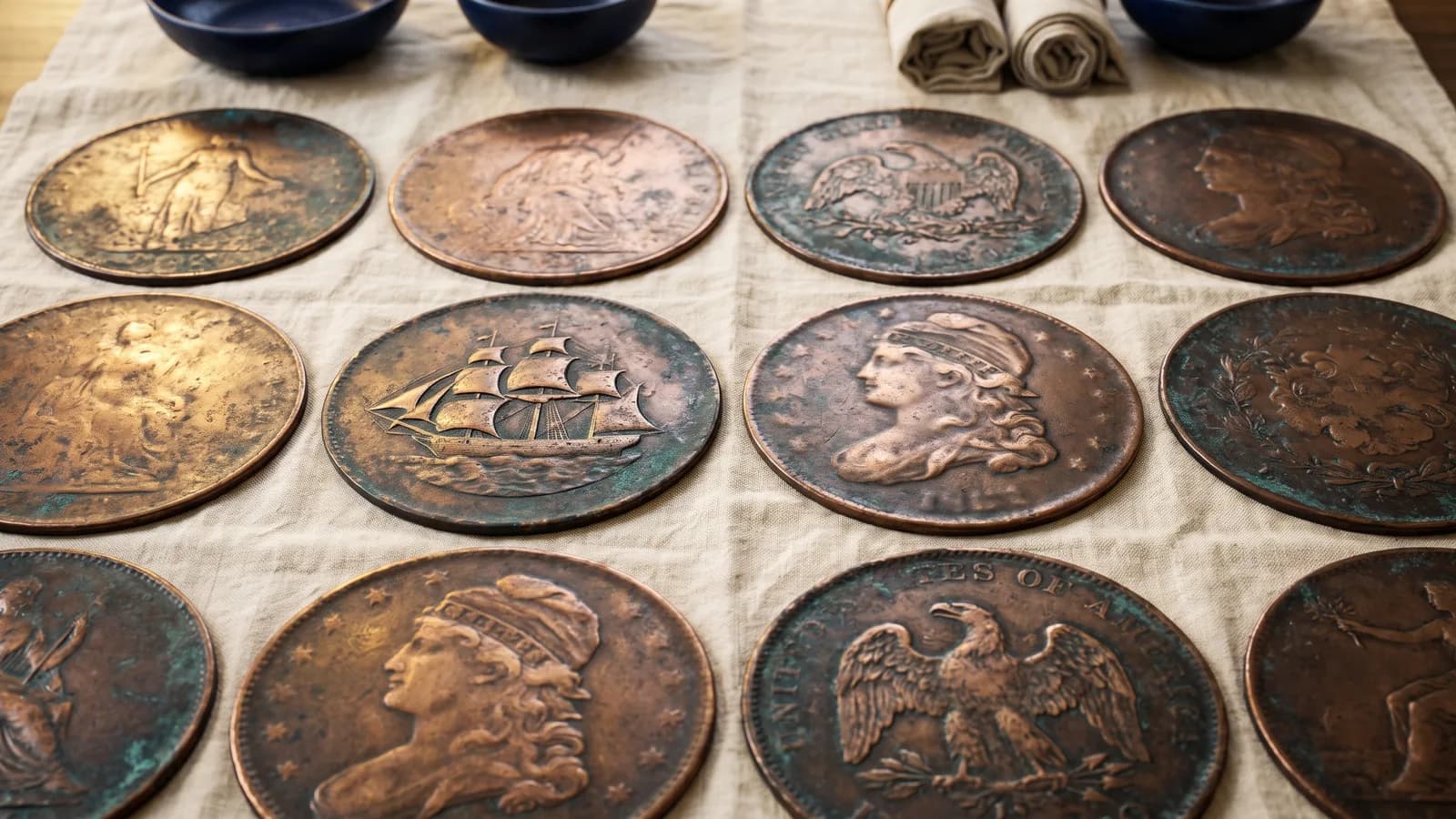
- Hard Times token designs fall into a few repeating families: Jackson satires, Van Buren and Sub Treasury satires, currency-debate ship scenes, the Specie Payments phoenix, patriotic cent imitations, abolitionist tokens, and plain merchant store cards.
- The word NOT in legends like NOT ONE CENT was a deliberate legal hedge, letting makers imitate the large cent without technically claiming to strike federal coin.
- Common political satires and merchant store cards in circulated grades commonly run about $20 to $60, while scarce designs reach the hundreds and famous rarities like the abolitionist tokens reach the thousands.
- The designs are political cartoons in copper, so identifying the scene and legend is usually enough to place a piece even before you look up a Low or Rulau catalog number.
What Designs and Slogans Appear on Hard Times Tokens?
Most Hard Times tokens fall into a handful of design families, so learning the themes lets you place almost any piece. The main groups are Jackson satires, Van Buren and Sub Treasury satires, currency-debate ship scenes, the Specie Payments phoenix, patriotic cent imitations reading NOT ONE CENT, abolitionist tokens, and plain merchant store cards that advertise a business by name.
The table below is a quick map of those families, what each design meant in the 1830s, and how often collectors encounter them. For a fuller history of the era and why these tokens exist at all, see the Hard Times tokens pillar guide.
| Design or legend family | Short description and meaning | How often seen |
|---|---|---|
| Jackson satire (I Take the Responsibility) | Jackson rising from a strongbox with sword and money bag, mocking his removal of federal deposits | Common to scarce by variety |
| Running jackass | A donkey ridiculing Jackson and Van Buren, often paired with the strongbox scene | Common |
| Sub Treasury tortoise | A tortoise carrying a strongbox marked SUB TREASURY, mocking Van Buren's plan as slow | Scarce |
| Currency-debate ships | A sound ship (Webster) versus a foundering ship (Van Buren), arguing over credit and hard money | Common in some varieties |
| Specie Payments phoenix | A phoenix in flames with SPECIE PAYMENTS SUSPENDED and the May 10, 1837 date | Scarce |
| NOT ONE CENT cent imitation | A Liberty head copied from the large cent, with NOT ONE CENT as a legal hedge | Common |
| Abolitionist token | A kneeling figure with AM I NOT A WOMAN AND A SISTER, dated 1838 | Scarce and sought after |
| Merchant store card | Business name, trade, and city, advertising a private shop | Very common overall |
The Jackson Satires: I Take the Responsibility and the Jackass
The most recognizable Hard Times designs mock President Andrew Jackson over his Bank War. The best known shows Jackson emerging from a strongbox or trunk, clutching a sword in one hand and a money bag in the other, ringed by the legend I TAKE THE RESPONSIBILITY. It ridicules his decision to remove federal deposits from the Second Bank of the United States in 1833.
These pieces often carry a jackass, a running donkey, on the other side, sometimes with legends such as THE CONSTITUTION AS I UNDERSTAND IT or ROMAN FIRMNESS and VETO, jabbing at Jackson's use of the presidential veto. The donkey as a symbol of the Jackson wing of politics predates its later party use. For a deeper look at these pieces, see the guide to Andrew Jackson Hard Times tokens. Common Jackson satires in circulated grades commonly run about $20 to $60, with scarcer die pairings higher.
The Van Buren and Sub Treasury Satires: The Tortoise
A second family targets President Martin Van Buren and his Independent Treasury, often called the Sub Treasury. The signature design shows a tortoise plodding along while carrying a strongbox labeled SUB TREASURY, usually with the legend EXECUTIVE EXPERIMENT and FISCAL AGENT.
The meaning is direct. Critics argued that Van Buren's plan to hold government funds in a slow, standalone treasury rather than in banks would move money at a tortoise's pace. Because these satirize a narrower policy fight, the tortoise pieces are generally scarcer than the broad Jackson designs, and clean examples tend to command a premium.
The Ship and Currency-Debate Pieces
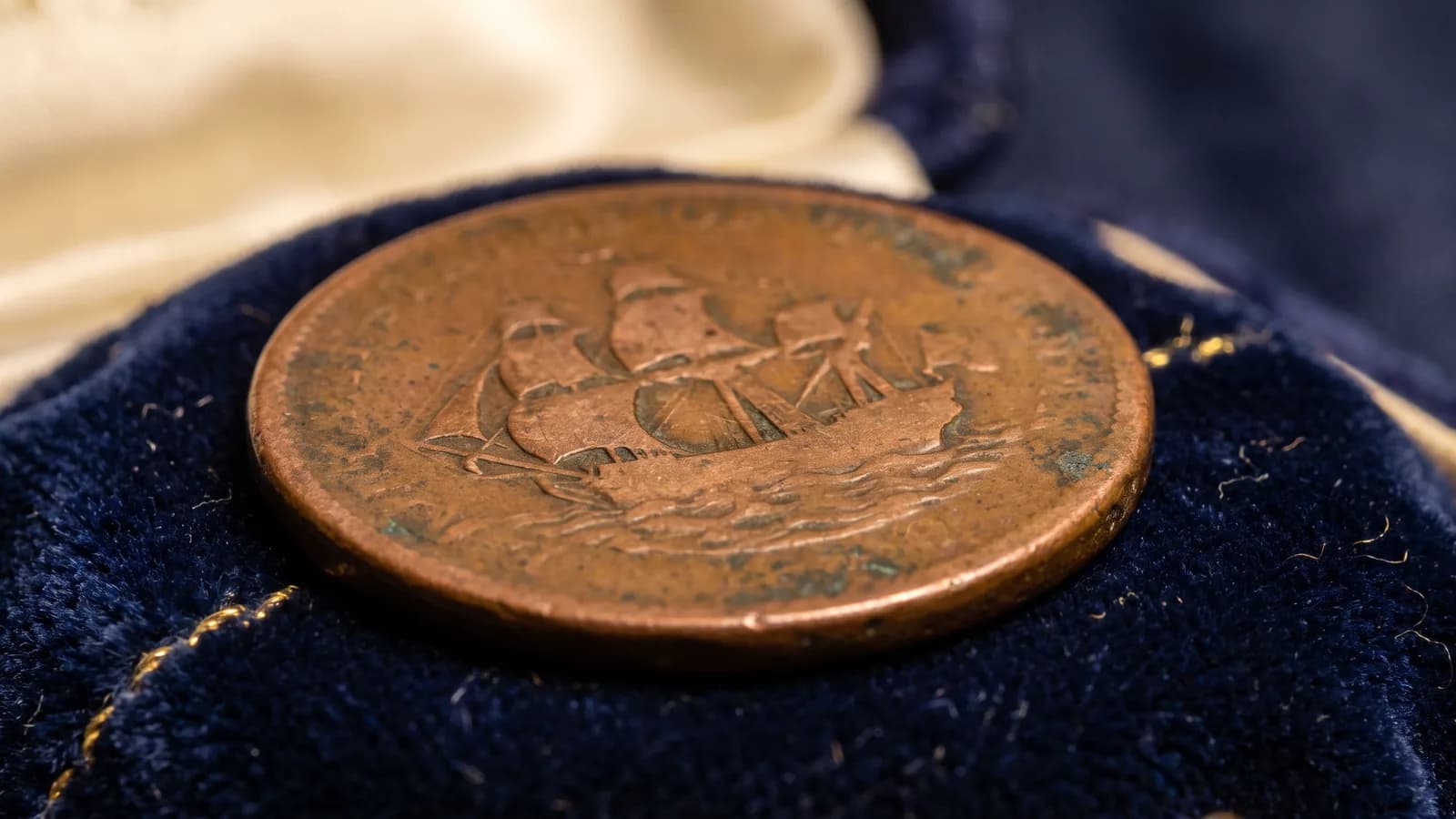
Several Hard Times tokens argue the paper-versus-hard-money debate through ships. The classic pairing sets a sound, full-sailed ship labeled WEBSTER CREDIT CURRENT, favoring available credit, against a foundering or storm-tossed ship labeled VAN BUREN METALLIC CURRENCY, mocking the hard-money position associated with Van Buren's supporters.
Made by supporters of the Whig statesman Daniel Webster, the message was that credit kept commerce sailing while a strict metallic policy ran the ship aground. A related design uses a ship named CONSTITUTION as a symbol of stable government. According to the Smithsonian's National Museum of American History, these satirical ship tokens circulated as everyday one-cent substitutes even as they carried a political argument. Some ship varieties are fairly available, so they are a good entry point for a new collector.
The Specie Payments Suspended Phoenix
One of the most historically pointed designs shows a phoenix rising from flames with the legend SPECIE PAYMENTS SUSPENDED and the date May 10, 1837. It marks the day New York banks stopped redeeming paper money for gold and silver coin, a defining moment of the Panic of 1837.
The phoenix, a bird reborn from fire, works as grim commentary and cautious hope that credit would recover from the collapse. These pieces are scarcer than the common cent imitations and are prized for tying directly to a datable event, which makes them popular with collectors who focus on the economic story rather than the personalities.
NOT ONE CENT and the Legal-Evasion Trick
Many Hard Times tokens copy the Liberty head of the contemporary large cent but replace the denomination with NOT ONE CENT, and this wording was a deliberate legal hedge. Laws of the day restricted imitating federal coinage, so adding the word NOT let makers produce a cent-sized copper that looked like money without formally claiming to be the government's cent.
You will also see the patriotic legend MILLIONS FOR DEFENCE NOT ONE CENT FOR TRIBUTE on these imitations, borrowing a famous slogan from earlier American diplomacy. The hedge was not bulletproof. At least one prominent maker was indicted on counterfeiting-related charges, and worn examples sometimes turn up with the word NOT scraped off so the piece could pass as a real cent. To sort genuine tokens from altered or fake pieces, see how to identify Hard Times tokens. These cent imitations are among the most common designs, commonly a few tens of dollars in circulated grades.
The Abolitionist Am I Not a Woman and a Sister Token
The most famous non-political Hard Times design is the abolitionist token reading AM I NOT A WOMAN AND A SISTER, dated 1838. It shows a kneeling enslaved woman in chains, adapted from the Wedgwood antislavery medallion of the previous century, and it circulated as both a one-cent substitute and a piece of moral argument.
A rarer companion piece reads AM I NOT A MAN AND A BROTHER. Because they combine a powerful message, real historical weight, and limited surviving numbers, the abolitionist tokens are among the most sought-after and valuable in the series, with strong examples reaching well into the thousands of dollars. The dedicated guide to the Am I Not a Woman and a Sister token covers its history and varieties in detail.
Merchant Store Card Layouts
Not every Hard Times token is a political cartoon. Many are merchant store cards, sometimes called tradesman's cards, that simply advertise a business by name, trade, and city, and these are the direct ancestors of the later Civil War token designs.
A typical store card layout puts the merchant's name and product on one side, such as a grocer, hardware dealer, or coach maker, and the city and state on the other, often with a small emblem tied to the trade. Some borrow political or patriotic reverses, creating mules where two unrelated dies were paired. As a group, merchant store cards are the most numerous Hard Times tokens, though a specific rare merchant from a small town can be worth far more than a common political satire.
Which Designs Are Common, and What Are They Worth?
As a rule, the broad Jackson satires, the NOT ONE CENT cent imitations, and everyday merchant store cards are the most common, while the tortoise, the phoenix, and the abolitionist tokens are scarcer and more valuable. Common political and merchant pieces in Fine to Very Fine commonly run about $20 to $60, nicer common types about $75 to $250, scarcer satires into the hundreds, and famous rarities into the thousands.
As with all copper, color and surface quality drive price, so a common design with original red-brown surfaces can outsell a scarcer piece that is corroded. To handle and compare pieces in person, or to get a design attributed, visit a shop or event through the medals and tokens directory, and read the neutral overview from the American Numismatic Association and the general history at Wikipedia's Hard times token article. The takeaway is simple: identify the scene and legend first, then let condition and rarity set the value.
Frequently asked questions
Why do so many Hard Times tokens look like large cents?+
They were meant to pass as one-cent pieces during a coin shortage, so makers copied the Liberty head of the contemporary large cent. Adding the word NOT to legends like NOT ONE CENT was a legal hedge against laws on imitating federal coinage.
What does I Take the Responsibility mean on a Hard Times token?+
It quotes and mocks President Andrew Jackson over his removal of federal deposits from the Second Bank of the United States in 1833. The scene usually shows Jackson rising from a strongbox with a sword and a money bag.
Are the ship tokens common?+
Some Webster Credit Current and Van Buren Metallic Currency ship varieties are fairly available in circulated grades, which makes them a common and affordable entry point. Others and the Constitution ship pieces are scarcer.
Which Hard Times design is the most valuable?+
The abolitionist tokens, especially Am I Not a Woman and a Sister and the rarer Am I Not a Man and a Brother, are among the most valuable, reaching into the thousands of dollars for strong examples.
Do I need a catalog number to identify a design?+
Not to start. Because the designs are political cartoons, the scene and legend usually place a piece. Low numbers from Lyman Low and Rulau HT numbers from Russell Rulau then pin down the exact variety.