
Why You Should Never Clean Coins
You should never clean collectible coins because cleaning almost always destroys value rather than restoring it. What looks like grime is often original surface, patina, or toning that collectors pay premiums for, and any abrasive cleaning strips that away and leaves permanent fine scratches called hairlines. Grading services can spot a cleaned coin and label it accordingly, which drops its value sharply. This guide explains what cleaning really does, how to tell dirt from toning, how buyers and graders detect it, the few real exceptions, and what to do instead.
Key takeaways
- You should never clean collectible coins: abrasive cleaning removes the original surface and luster and leaves fine scratches (hairlines) that cannot be undone.
- Grading services flag a cleaned coin as "Details" or a similar problem designation instead of a normal numeric grade, and its market value usually falls well below an original coin of the same wear.
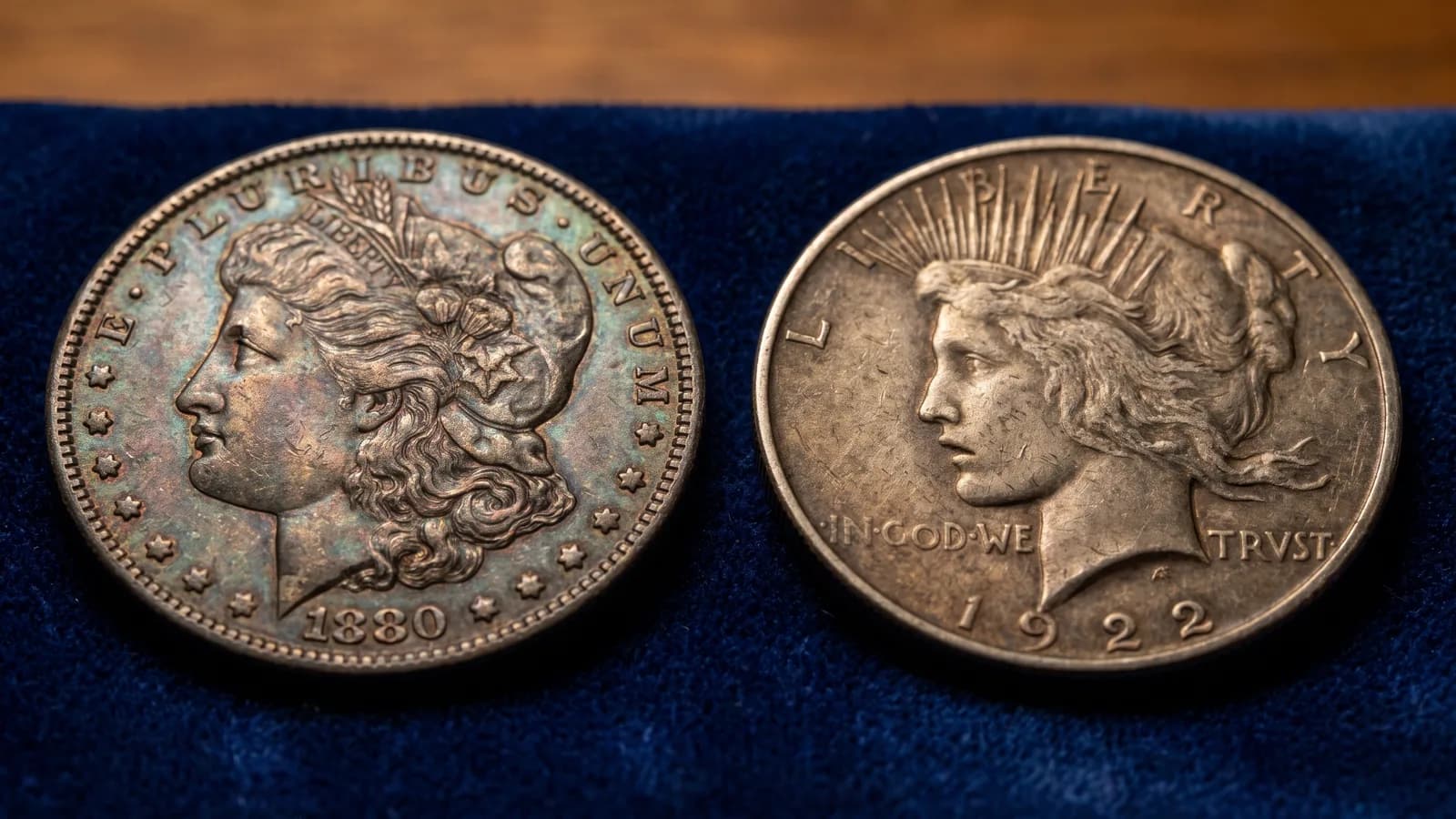
- Dirt and debris are not the same as toning: toning is original patina that many collectors prize, so wiping it off almost always hurts value.
- The narrow exceptions are professional conservation (for example removing active PVC residue through NGC's NCS) and pure bullion, where only metal weight matters.
- When in doubt, do nothing: get the coin appraised or graded first, and let a professional conservator decide if anything should be done.
Why is cleaning a coin so damaging?
Cleaning is damaging because it permanently alters the coin's surface, and that surface is a large part of what determines the coin's grade and value. A coin's original luster and patina develop over decades and cannot be put back once they are gone.
Any rubbing, dipping, polishing, or scrubbing removes microscopic metal and the natural film on top of it. According to PCGS, abrasive cleaning can leave hairlines and surface disruptions that may only be visible at a certain angle or under magnification, and those hairlines cannot be removed. The coin may look shinier to an untrained eye, but to a grader or an experienced buyer it looks impaired.
The core problem is that collectors value originality. A coin that still wears its original skin, even with honest dirt or dark toning, is generally worth more than the same coin scrubbed bright. New collectors often get this exactly backwards, which is why it is one of the first cautions in our coin collecting for beginners guide.
Dirt vs. toning vs. damage: what is actually on my coin?
Before you touch anything, you need to know what you are looking at, because the three most common surface conditions call for very different responses. Loose dirt sits on top of the coin, toning is a chemical change in the metal itself, and old cleaning or corrosion is damage that is already done.
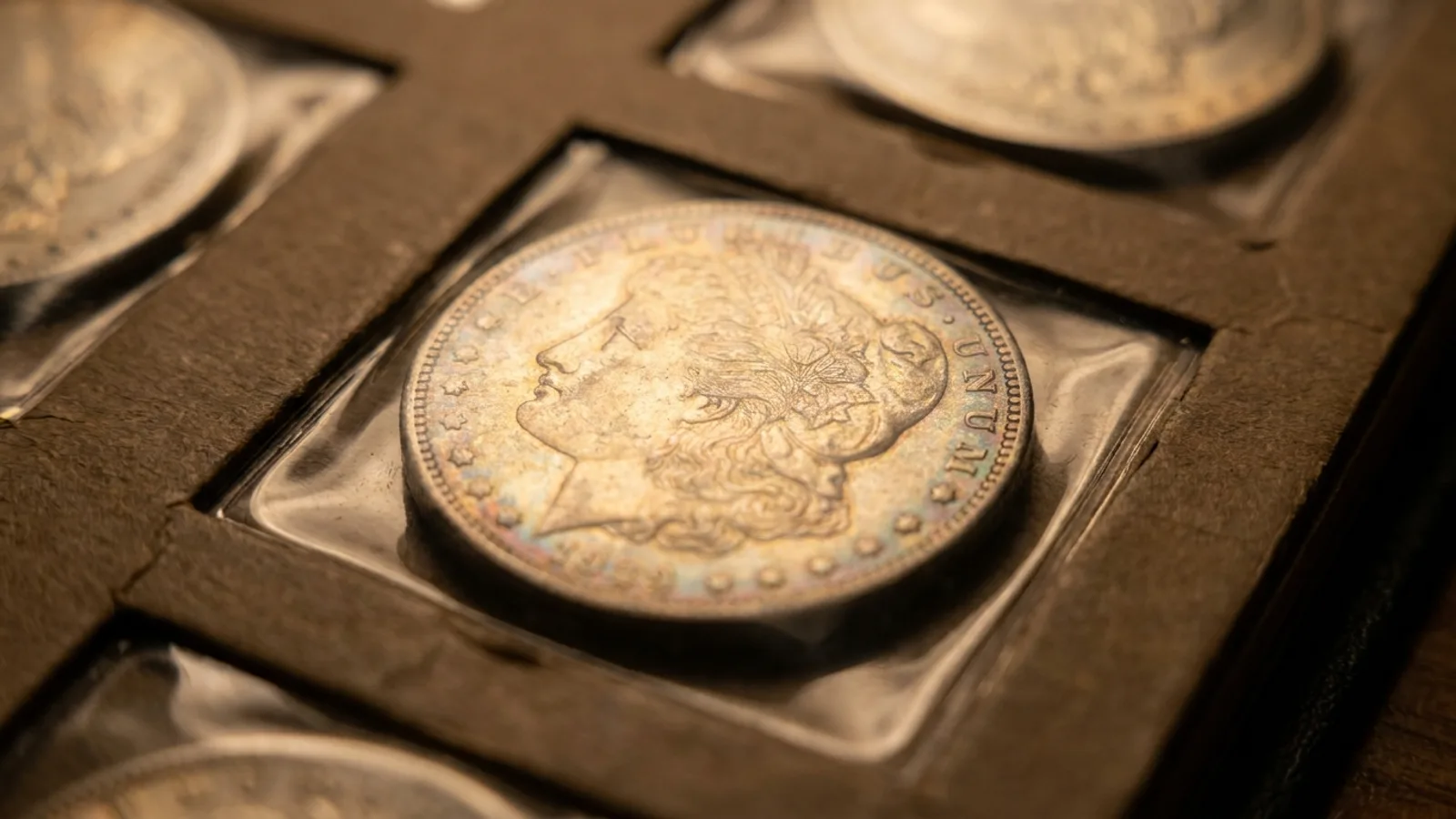
Toning is the natural discoloration that forms as metal reacts with sulfur and oxygen in the air, in albums, or in original packaging. It can range from pale gold to deep blue and violet, and attractive original toning often adds value rather than subtracting it. Wiping it off is one of the most common and costly mistakes, which we cover in depth in what coin toning is. The table below sums up how to read each condition.
| Surface condition | What it is | Effect on value | What to do |
|---|---|---|---|
| Loose dirt or debris | Surface grime sitting on top of the coin | Neutral; it is not part of the coin | Leave it, or ask a professional; never rub it |
| Toning / patina | Original chemical film from aging | Often adds value when attractive and original | Preserve it; do not remove |
| Old cleaning / hairlines | Fine scratches from past abrasive cleaning | Reduces value, usually substantially | Nothing reverses it; disclose it when selling |
| Active PVC residue | Green, sticky film that keeps corroding the coin | Damaging and worsening over time | Send to a professional conservator promptly |
How do graders and buyers detect a cleaned coin?
Professional graders detect cleaning by examining the surface under strong, angled light and magnification, where hairlines, unnatural brightness, and disrupted luster stand out. Both major services treat cleaning as a problem that disqualifies a coin from a normal grade.
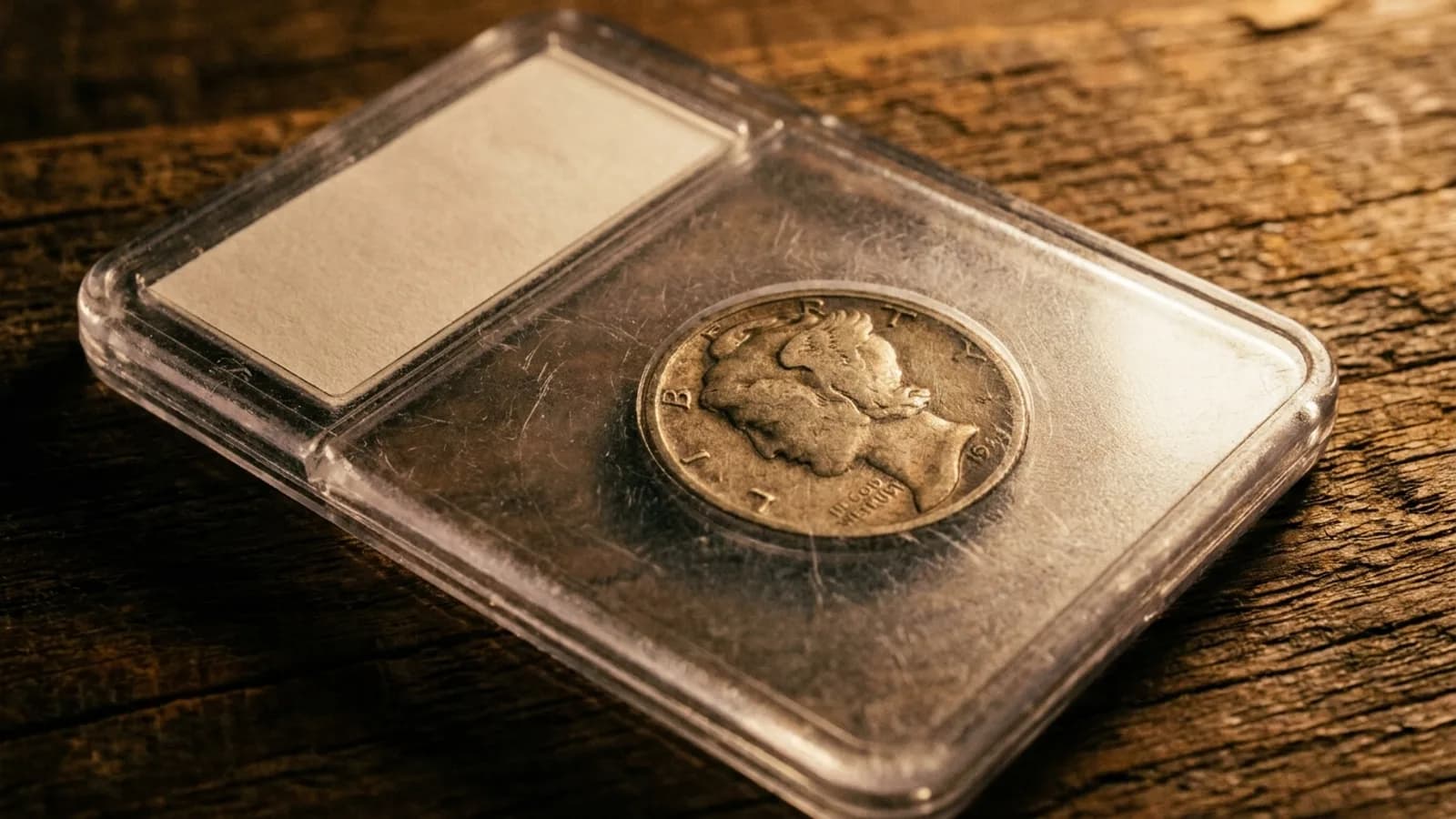
When NGC or PCGS determines a coin has been harshly or improperly cleaned, they do not assign a standard numeric grade on the 1 to 70 scale. Instead they encapsulate it with a "Details" grade (NGC) or hold it as "Genuine" with a Details designation (PCGS), noting the problem, such as "Improperly Cleaned," on the label. NGC notes that light, non-destructive cleaning on older coins may still permit a numeric grade, but harsher cleaning that damages the coin's appeal results in Details grading only.
Experienced dealers and collectors learn to spot the same signs by eye, which is why a cleaned coin is hard to quietly pass along. If you want to understand how the whole scale works, see coin grading explained.
How much value does cleaning actually destroy?
Cleaning can cut a collectible coin's value by a large margin, though the exact hit depends on the coin, the severity of the cleaning, and how visible the damage is. There is no single fixed percentage, so treat any precise figure with caution.
As a rule of thumb, a coin in a Details holder trades below a comparable problem-free coin, and NGC has noted that a Details coin's value is often set at least one grade lower, sometimes two. For a common coin that gap may be small in dollar terms; for a scarce date in high grade it can be severe. The safest assumption is that cleaning removes value and never adds it.
This is also why price alone can mislead you when buying. A bright, freshly cleaned coin offered cheap is usually cheap for a reason. Our guide on what your coins are worth walks through how originality factors into real market prices.
Are there any exceptions where treatment is okay?
Yes, but they are narrow and none of them involve you scrubbing a coin at home. The two real exceptions are professional conservation of a coin that is actively deteriorating, and pure bullion where only metal weight matters.
The clearest case for intervention is active PVC contamination. Coins stored in soft plastic flips can pick up polyvinyl chloride residue, a green film that combines with moisture to form acid and slowly etches the surface. Left alone it causes permanent damage. NGC's conservation service (NCS) can often remove PVC residue and other harmful contaminants without leaving the hairlines or "Improperly Cleaned" notation that amateur cleaning causes. Conservation is a controlled professional process, not a household one.
The other exception is generic bullion, such as a scratched silver round or a worn common-date coin worth only its metal. If a buyer is paying melt value based on weight and purity, surface appearance is not driving the price. Even then, when there is any chance a coin has collector value, do not clean it first. You can check melt with our precious metals value calculator.
What should I do instead of cleaning?
The best move is almost always to do nothing and get an informed opinion before you act. Leaving a coin untouched preserves every option; cleaning closes most of them.
Start by finding out what you actually have. Take the coin to a reputable dealer or appraiser, or browse the directory of coin shops and numismatic appraisers to find one nearby. A good professional can tell you whether a coin is a candidate for grading, conservation, or simply careful storage. Our overview of how coin appraisals work explains what to expect from that visit.
If a coin is valuable and stable, submit it to a grading service as-is, or store it safely and leave the decision to a conservator. The American Numismatic Association also publishes collector education for those who want to learn more before acting, at money.org. The one thing not to do is reach for a cloth, an eraser, or a dip.
Frequently asked questions
Will a little soap and water hurt a coin?+
It can. Even a gentle wipe with a cloth drags grit across the surface and leaves hairlines. If you must remove loose surface debris from a coin with no collector value, a brief soak in distilled water with no rubbing is the most cautious approach, but for anything potentially valuable, leave it to a professional.
My coin is dirty and ugly. Won't cleaning make it worth more?+
Almost never. What looks like dirt is often original toning or patina that collectors value, and abrasive cleaning replaces it with an unnatural shine plus permanent hairlines. Graders label the result as cleaned, and its value typically drops below an untouched coin of the same wear.
What does a "Details" grade mean?+
It means a grading service judged the coin genuine but affected by a problem, such as cleaning, that prevents a normal numeric grade. NGC calls it Details grading; PCGS holds the coin as Genuine with a Details designation. The label names the issue, and the coin usually sells at a discount to a problem-free example.
Is professional conservation the same as cleaning?+
No. Professional conservation, such as NGC's NCS, uses controlled techniques to remove harmful contaminants like PVC residue and stabilize a coin without adding scratches or an improperly cleaned notation. Amateur cleaning, by contrast, tends to cause the exact irreversible damage conservation is designed to avoid.
Can a cleaned coin ever be fixed?+
Not in the way people hope. Original luster, surface, and hairlines cannot be restored once cleaning has occurred. A conservator can sometimes improve stability or appearance in specific cases, but nothing puts back the original skin that abrasive cleaning removed.
Does cleaning matter for bullion?+
Much less. If a coin or round trades purely on its metal weight and purity, surface appearance is not driving the price, so light cleaning has little effect. The risk is misjudging a coin: if there is any chance it carries collector value above melt, do not clean it first.