Lincoln Memorial Cent Value: Which Pennies Are Actually Worth Keeping
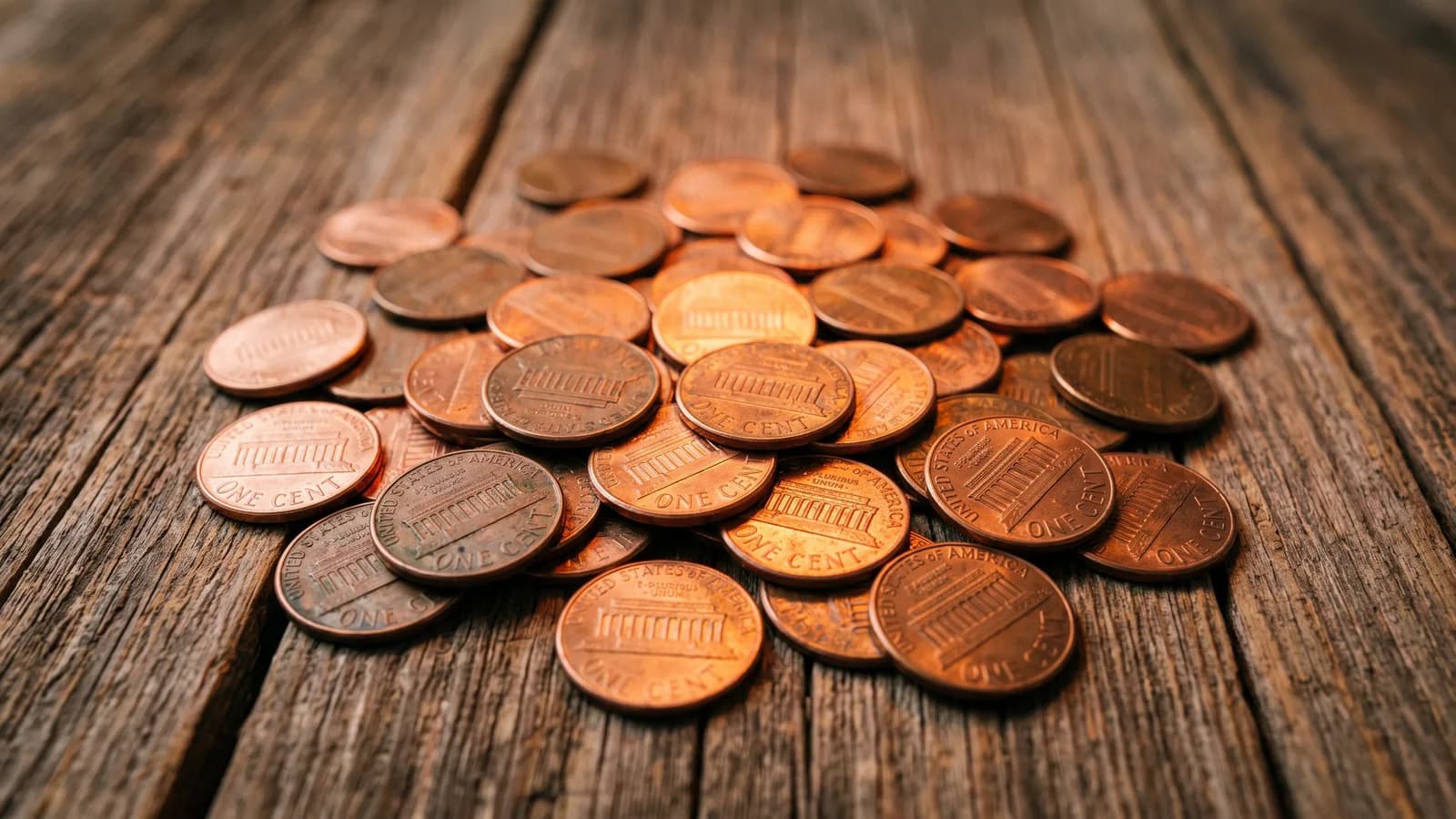
Lincoln Memorial cents — struck from 1959 to 2008 with the Lincoln Memorial on the reverse — are among the most widely collected coins in American numismatics, largely because almost every American has grown up with them. The honest reality is that the overwhelming majority are worth exactly one cent. But a handful of doubled die varieties, off-metal errors, and condition rarities are worth serious money — and they all look identical to a common cent at first glance.
Key takeaways
- Lincoln Memorial cents (1959–2008) used the Lincoln portrait but changed the reverse from wheat ears to a view of the Lincoln Memorial.
- The vast majority of Lincoln Memorial cents in circulation are worth exactly one cent.
- The 1969-S doubled die obverse is the most famous variety — confirmed examples have sold for $10,000–$75,000.
- The 1972 doubled die and 1995 doubled die are significantly more accessible and worth $10–$200 depending on grade.
- The 1983 doubled die reverse and 1984 doubled ear are two more varieties every Lincoln cent collector should know.
What Changed in 1959?
The Lincoln cent obverse (the portrait designed by Victor David Brenner) has been unchanged since 1909. In 1959 — the 150th anniversary of Lincoln's birth — the reverse changed from the twin wheat ears of the 1909–1958 "Wheat Penny" to a view of the Lincoln Memorial in Washington, D.C. The new reverse was designed by Frank Gasparro.
The Memorial reverse era ended in 2008 (the 100th anniversary of the Lincoln cent), replaced by four commemorative reverses in 2009 and the Union Shield reverse in 2010, which continues today.
What Are Common Lincoln Memorial Cents Worth?
The short answer: one cent. Billions were struck annually — circulated examples from Philadelphia (no mintmark), Denver (D), and San Francisco (S) through 1974 are common in any grade. There is no realistic market for worn, common-date Memorial cents.
The exception: uncirculated rolls and sets from certain years. Original BU (Brilliant Uncirculated) rolls of 1960s and 1970s cents sell for $2–$20 per roll at coin shows, mainly as a curiosity. The coins in those rolls remain worth face value unless they are specific varieties.
The 1969-S Doubled Die: The Crown Jewel
The 1969-S doubled die obverse is the most dramatic doubled die in the entire Lincoln cent series. On genuine examples, the date, "LIBERTY," and "IN GOD WE TRUST" show bold, unmistakable doubling visible to the naked eye. PCGS and NGC have certified examples that have sold for $10,000 to $75,000 or more depending on grade.
The 1969-S doubled die is extensively counterfeited — altered dates from common San Francisco cents and machine-doubling (a different, worthless phenomenon) are frequently misrepresented as this variety. Authentication by PCGS or NGC is mandatory. Do not pay a premium for an uncertified coin claiming to be a 1969-S doubled die.
The 1972 and 1995 Doubled Die: More Accessible
The 1972 doubled die obverse (Philadelphia, no mintmark) is the most available major doubled die in the series — bold doubling is visible in "LIBERTY," "IN GOD WE TRUST," and the date without magnification. Circulated examples sell for $10–$50; Mint State examples bring $75–$300+.
The 1995 doubled die obverse shows prominent doubling in "LIBERTY" and the date. Circulated examples sell for $20–$75; Mint State examples are worth $75–$200. Both are far more accessible than the 1969-S and are achievable for most collectors.
Other Key Varieties to Know
1960 small date vs. large date (Philadelphia and Denver): Both issues exist in large and small date varieties. The 1960 Philadelphia small date is the scarcest, worth $20–$75 in circulated grades. 1983 doubled die reverse: Strong doubling on the Memorial pillars and lettering; circulated examples worth $100–$300. 1984 doubled ear: Lincoln's ear shows clear doubling — worth $50–$200 in circulated grades.
1970-S small date: The 1970-S exists in small and large date; the small date is notably scarcer and worth $10–$40 in circulated grades. 1992 Close AM: The letters A and M in AMERICA on the reverse are closer than normal — worth $500–$2,000+ in Mint State. The 1998 and 1999 Wide AM varieties are also sought.
Off-Metal Strikes: The Biggest Sleepers
Lincoln Memorial cents struck on the wrong planchet are among the most valuable Lincoln cent errors. A cent struck on a dime blank, a cent struck on a foreign coin blank, or a cent struck on a zinc-coated steel blank (from an experimental run) are worth $200 to several thousand dollars depending on the specific error and condition. These are rare but not impossible to find.
The experimental 1974 aluminum cents — prototypes that were never approved for circulation — are technically not legal tender and not available on the open market, as the government reclaimed them. Any offered for sale should be treated with great suspicion.
Frequently asked questions
Are all Lincoln Memorial cents with no mintmark from Philadelphia?+
Yes. Through 2008, Philadelphia cents had no mintmark. Denver cents carry a D; San Francisco cents (proofs and some business strikes) carry an S.
How do I spot a genuine doubled die?+
A true doubled die shows separation of the design elements — letters, numerals, devices — in a specific direction, consistent across the coin. Machine doubling looks like a shelf or notch on the edge of letters and is common and worthless. Use a 5× loupe and compare to reference photos of the specific variety.
What is the most valuable Lincoln Memorial cent?+
A gem Mint State 1969-S doubled die obverse is the most valuable regular-issue Lincoln Memorial cent, with high-grade examples fetching $50,000–$75,000 at auction. Authentication is essential.
Should I search my change for valuable Lincoln cents?+
Searching change for the accessible doubled dies (1972, 1995, 1984 doubled ear) is a popular and realistic hobby. The 1969-S is extremely unlikely to appear in circulation. Look for strong doubling visible without magnification on the date and LIBERTY.
Are steel Lincoln cents from 1943 Memorial cents?+
No. The steel cents were struck only in 1943 (during World War II) as Wheat Pennies — 16 years before the Memorial reverse was introduced. Any 1943 cent is a Wheat Penny, not a Memorial cent.